
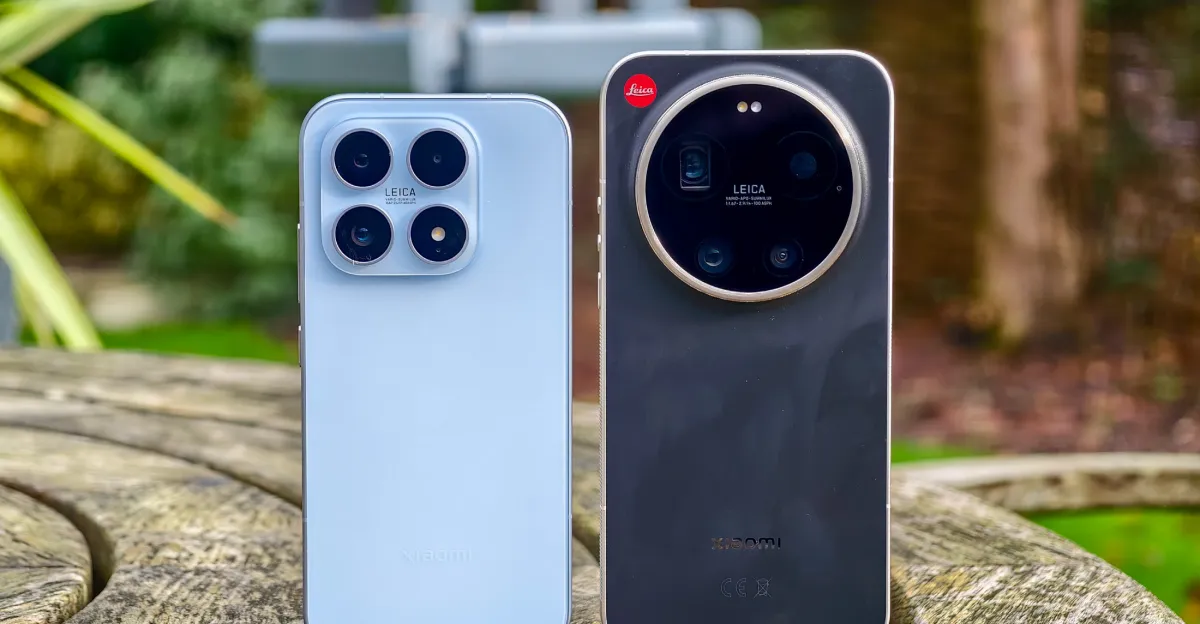
Xiaomi recently introduced two of its newest top-tier smartphones, the Xiaomi 17 and 17 Ultra, to a global audience. These were accompanied by a Leica-emblazoned Leitzphone variant of the Ultra. Nevertheless, the 17 Pro, which debuted in China featuring an auxiliary display alongside its back cameras, was conspicuously absent from this announcement.
Both the 17 and 17 Ultra are anticipated to become accessible shortly in the UK, Europe, and a few other territories. The 17, positioned as a competitor against devices like the iPhone 17 and Samsung Galaxy S26, will bear a price tag of £899 / €999 (approximately $1,200). Meanwhile, the more substantial and potent Ultra model commences at £1,299 / €1,499 ($1,750). The special edition Leitzphone will be considerably pricier, at £1,699 / €1,999 ($2,300); however, it comes equipped with 16GB of RAM and 1TB of storage, in addition to several supplementary peripherals.


The 17 stands as a remarkably competent, moderately sized premium device, featuring a 6.3-inch OLED display, a Qualcomm Snapdragon 8 Elite Gen 5 processor, and a substantial 6,330mAh silicon-carbon power cell (regrettably, a reduction from the 7,000mAh version released in the Chinese market). While I will not be providing a comprehensive critique of the 17, I utilized it as my primary handset for a seven-day period and observed its power cell easily exceeding a full day of operation, though it didn’t quite stretch to a complete forty-eight hours of my customary activities. This represents significantly superior battery longevity compared to comparably dimensioned devices from Apple, Samsung, or Google.
Its photographic features are also striking, with each of its four lenses, including the front-facing one, being backed by a 50-megapixel sensor. Comparatively speaking, few superior camera setups exist in any handset of comparable dimensions.
1/10
The Ultra, as expected, elevates performance to a new echelon. It is considerably bulkier, featuring a 6.9-inch display and possessing a substantial mass of 218g. Notwithstanding this, its 6,000mAh battery is paradoxically less capacious, though I found it provided comparable operational duration.

The colossal camera module remains, consistent with Xiaomi’s Ultra series, its standout feature. Each of the primary, ultrawide, and front-facing cameras is equipped with a 50-megapixel sensor, and a substantial 1-inch-type sensor underpins the main optical component. The periscope telephoto is still more remarkable, boasting a 200-megapixel resolution, a sizable 1/1.4-inch sensor, and offering seamless optical magnification ranging from 3.2x to 4.3x, equating to a 75-100mm focal length. While Xiaomi is not the pioneer in achieving a genuine zoom-capable smartphone — Sony’s Xperia 1 IV accomplished this feat initially in 2022 — the telephoto camera here is considerably more proficient than its counterpart on that device, exhibiting authentic background blur and commendable results even under dim illumination.

Xiaomi’s enduring photographic collaborator, Leica, underpins the device’s imaging prowess. However, it is their collaborative Leitzphone model that truly underscores this partnership. This model, bearing subtle design alterations from the 17 Ultra Leica Edition launched in China last December, features Leica’s distinctive insignia integrated throughout its physical components and digital interface, a diverse array of Leica-inspired photographic filters and capture modes, and a revolving rear camera ring for managing zoom functions. This marks Xiaomi’s inaugural production of a Leica Leitzphone, following three exclusive Sharp models available solely in Japan. Accompanying it are extra branded peripherals, such as a protective case featuring a lens cover and a delicate microfiber cleaning fabric.
Beyond the 17 series smartphones, Xiaomi unveiled numerous other products at this year’s MWC event. These revelations encompass a remarkably slender magnetic portable charger, the Pad 8 and Pad 8 Pro tablet devices, and an intelligent locator tag compatible with both Google’s and Apple’s respective location-tracking ecosystems.
Imagery captured by Dominic Preston / The Verge
{content}
Source: {feed_title}