
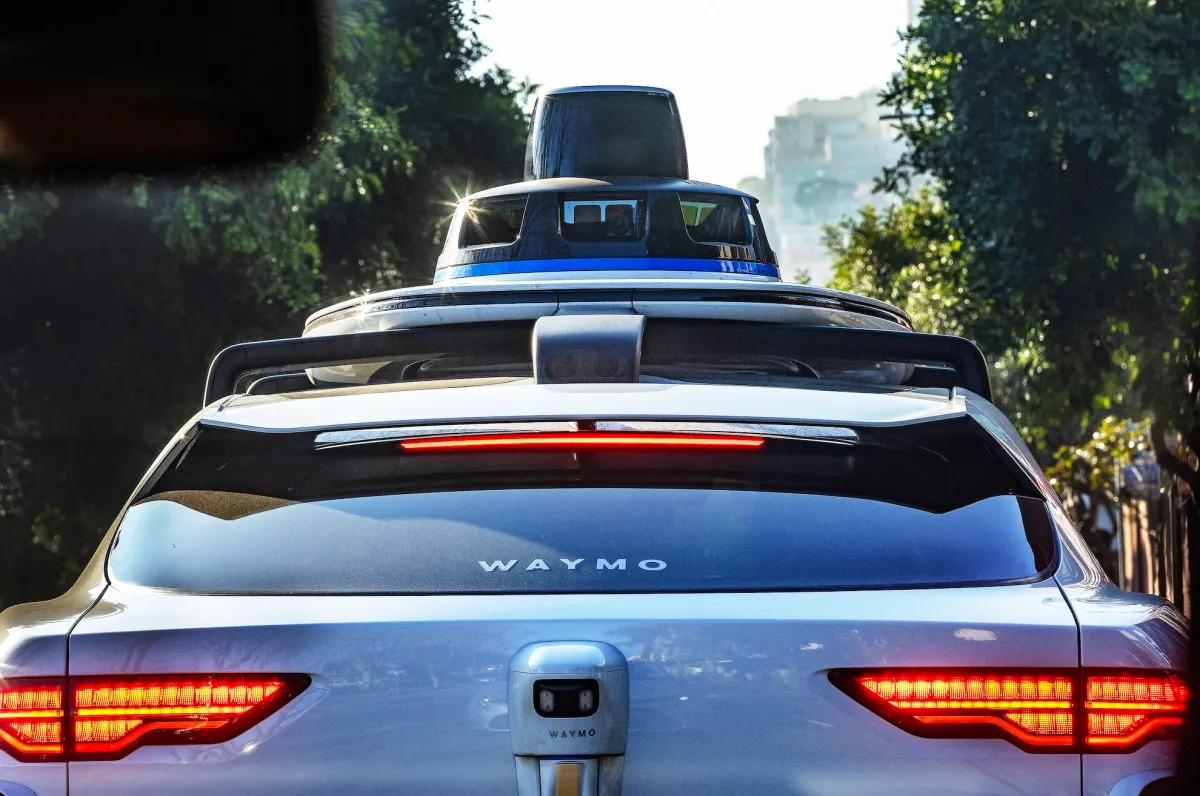
During February, Senator Ed Markey (D-MA) dispatched communications containing a series of inquiries to seven American firms engaged in the development of self-driving vehicle technology. He was particularly keen to ascertain the frequency with which these companies’ conveyances — managed by Aurora, May Mobility, Motional, Nuro, Tesla, Waymo, and Zoox — drew upon contributions from offsite personnel. All of them declined to provide information, as per the findings of Markey’s inquiry, which became public on Tuesday.
The data disseminated by Markey’s office serves as the most recent illustration of the reluctance autonomous vehicle enterprises exhibit in divulging particulars about the actual functioning of their operations — notwithstanding their widespread experimentation with this technology on public roadways.
“This assessment has brought to light a profound absence of transparency from AV companies regarding their utilization of [remote assistance operators] to facilitate the guidance of their AVs. The inquiry uncovered a disparate collection of safety protocols across the sector, marked by considerable differences in operator credentials, response durations, and international staffing, all without any federal benchmarks regulating these activities,” Markey’s office articulated in its dossier.
Markey declared on Tuesday that he is urging the National Highway Traffic Safety Administration to probe these companies’ reliance on remote support operatives, and that he is “crafting legislation to impose stringent safeguards on AV firms’ deployment of remote operators.”
TechCrunch has endeavored to contact each enterprise mentioned. Waymo chose not to comment. The remaining six did not furnish an immediate reply.
Markey commenced his investigation in February subsequent to a hearing of the Senate Commerce Committee focused on the trajectory of self-driving automobiles. During the session, Waymo’s chief safety executive, Mauricio Peña, discussed how the company’s automobiles occasionally require direction from “remote assistance” employees when encountering difficult or unforeseen circumstances. Peña also disclosed that roughly fifty percent of Waymo’s remote assistance workforce is situated in the Philippines.
Autonomous vehicle corporations have, at varying intervals over the years, discussed these types of remote assistance functions. Yet, those discussions were frequently conceptual, given that the technology remained theoretical or deeply embedded in its trial phase.
Techcrunch event
San Francisco, CA
|
October 13-15, 2026
Now that numerous of these entities have commercially deployed robotaxis or, in the instance of Aurora, self-driving semi-trucks, the scrutiny on their complete operations has intensified.
Subsequent to the hearing, Markey dispatched correspondence to those seven companies, soliciting additional intelligence regarding their remote activities. His department posed 14 queries to each firm, encompassing the frequency with which remote personnel offer guidance to autonomous vehicles, the size of these crews, their geographical placement, their licensing procedures, and the specific security measures in effect.
The responses from the companies — which are available in their entirety here — diverged considerably. None of them directly addressed the inquiry concerning how often their remote staff are charged with providing direction to the AVs, with Waymo and May Mobility explicitly asserting this to be “proprietary business information.” Tesla, notably, omitted the question entirely from its reply letter. The reason for this is unclear, and the corporation disbanded its North American communications division years prior.
Waymo did affirm in its missive that enhancements to its self-driving apparatus have “substantially diminished” the volume of assistance requests per mile its vehicles transmit to remote staff, though it furnished no specific figures or corroboration. The enterprise stated that a “sizable majority of requests” its robotaxis dispatch to remote assistance personnel are resolved by the self-driving system “before an agent can even provide a solution.”
Waymo was also the sole company that acknowledged employing remote assistance workers located abroad. While the company maintains that it ensures these workers possess local driving permits, Markey’s office indicated on Tuesday that a “driver’s license obtained in a foreign jurisdiction does not serve as an equivalent to passing a U.S. driver’s license examination, as traffic regulations will almost certainly differ by location.”
All of the companies, with the exception of Tesla, asserted that they either do not permit or lack the capability for remote assistance workers to exert direct command over these autonomous vehicles. Tesla, conversely, stated that its remote assistance personnel “are authorized to temporarily assume direct vehicle command as the ultimate intervention maneuver after all other available remedial actions have been exhausted.”
Tesla clarified that this is only feasible if a vehicle within its trial fleet is traversing at 2 miles per hour or less, and that the remote operator is precluded from propelling the automobile faster than 10 miles per hour.
“This capacity empowers Tesla to promptly reposition a vehicle that might be in a precarious situation, thereby lessening the necessity to await a first responder or Tesla field representative to manually retrieve the vehicle,” the company communicated to Markey’s office.
This has recently emerged as a focal point of critique for Waymo, which confronted pointed inquiries from San Francisco municipal officials at a recent hearing this month regarding its dependence on emergency services to extricate immobilized robotaxis. Waymo does indeed maintain its own specialized “roadside aid” unit distinct from its remote assistance staff, as TechCrunch recently elucidated. However, this particular facet of Waymo’s operations was not a central theme of Markey’s inquiry.
Markey’s office did manage to extract some additional data from these corporations. His report outlines the lag involved in these remote assistance interactions (which varies among companies, with May Mobility reporting the maximum worst-case duration of 500 milliseconds), how some of these firms endeavor to prevent their workers from experiencing exhaustion, and the precautions they implement to safeguard the information they oversee.
These are long-standing questions that autonomous vehicle companies have encountered, and obtaining definitive responses has proven challenging. Nevertheless, with numerous further commercial deployments on the horizon, Markey’s office undoubtedly will not be the last to be seeking — or insisting upon — more granular information.
{content}
Source:{feed_title}