
FOX Business’ Ashley Webster reports on Atlanta’s first government-funded grocery store, where millions in taxpayer-backed loans are fueling a bold experiment to address food deserts.
**Key Takeaways:**
1. **Post-Merger Strategic Re-evaluation:** Albertsons’ aggressive store closures and job cuts underscore the immediate, painful fallout from the collapse of its $24.6 billion merger with Kroger, forcing a rapid, independent strategic pivot towards efficiency and organic growth in a highly competitive sector.
2. **Intensified Competitive Headwinds & Digital Transformation:** Operating margins in the grocery sector remain razor-thin, exacerbated by discounters, e-commerce giants, and shifting consumer preferences for value and convenience, pushing traditional players like Albertsons to double down on technology, automation, and a leaner physical footprint.
3. **Regulatory Scrutiny as a Market Force:** The successful blocking of the Kroger-Albertsons merger by regulators highlights a significant shift in anti-trust enforcement, signaling increased hurdles for consolidation within essential sectors and reshaping future M&A strategies across the broader retail landscape.
Albertsons, a stalwart in the American grocery landscape, is navigating a period of intense operational overhaul and strategic recalibration, marked by an accelerated program of store closures and job reductions across the nation. This decisive, albeit painful, pivot comes in the wake of the spectacular collapse of its proposed $24.6 billion merger with Kroger, a deal that Albertsons had positioned as critical for achieving the necessary scale to compete in an increasingly consolidated and price-sensitive market.
The Boise, Idaho-based grocery giant, which presides over a diverse portfolio of banners including Safeway, Vons, and Pavilions, has initiated a new wave of closures in recent weeks. This aggressive rationalization of its physical footprint is a stark indicator of the company’s newfound singular focus on cost-cutting and operational optimization, necessitated by the absence of the anticipated synergies from the failed merger. By the end of 2025, the company will have shuttered approximately 20 stores, a clear testament to the mounting pressure it faces from larger, more technologically advanced rivals like Walmart, Amazon Fresh, and a growing cohort of low-cost and discount operators such as Aldi and Lidl.
The impact of these decisions is rippling through communities and local economies. In Southern California, two Vons stores in Escondido and Redlands are slated for closure in April, resulting in the elimination of 135 jobs. These closures follow the March shutdown of an Albertsons store near Riverside, California, which displaced 75 workers, and an earlier Safeway closure in Northern California, affecting 76 employees. The geographic reach of these cuts extends beyond the West Coast, with two Albertsons-owned stores in North Texas scheduled to close by late April, impacting 138 workers, and a Safeway in Washington, D.C., preparing for a May shutdown that will eliminate 87 positions. These job losses not only represent individual hardships but also reflect the broader economic pressures within the retail sector, where labor costs, particularly in unionized environments, remain a significant line item on income statements.
Industry analysts are unanimous in attributing these widespread closures to the ongoing fallout from the blocked Kroger merger. The strategic rationale behind the proposed tie-up was clear: the combined entity would have created a formidable competitor with enhanced purchasing power, greater economies of scale, and a more robust digital infrastructure, enabling it to better contend with industry titans and navigate the notoriously thin margins of the grocery business. The inability to realize these projected benefits has forced Albertsons to find alternative avenues for efficiency and competitiveness.
In response to this new reality, Albertsons is aggressively leaning into internal cost reductions and strategic investments in technology. This includes a pronounced focus on automation and artificial intelligence, particularly as digital sales continue their upward trajectory across the grocery sector. The shift towards online ordering, curbside pickup, and home delivery inherently requires a different operational model, often necessitating fewer in-store workers for traditional stocking and checkout roles, while simultaneously demanding investment in fulfillment centers, micro-fulfillment solutions, and last-mile logistics. This technological pivot is not merely about cost reduction; it’s a strategic imperative to meet evolving consumer expectations for convenience, speed, and personalized shopping experiences, which have been irrevocably reshaped by the pandemic and the rise of e-commerce.
Investor sentiment has reflected this period of uncertainty, with Albertsons’ stock performance lagging over the past year. The market, always forward-looking, appears to be grappling with the company’s standalone growth prospects in a highly saturated and competitive environment, especially without the immediate catalyst of a transformative merger. The substantial investment in technology, while necessary for long-term viability, also represents significant upfront capital expenditure that could depress near-term profitability.
Meanwhile, the legal and financial ramifications of the failed merger continue to unfold. California and a coalition of states are seeking more than $10 million to cover the costs incurred in their successful efforts to block the deal. Regulators, citing concerns about reduced competition and the potential for higher grocery prices for consumers, ultimately convinced a federal judge in 2024 to halt what would have been the largest supermarket merger in U.S. history. This regulatory intervention serves as a powerful precedent, signaling an era of heightened antitrust scrutiny for large-scale consolidations, particularly in sectors deemed essential to consumer welfare. The combined expenditure of Kroger and Albertsons, approximately $1.5 billion, spent in pursuit of the deal, underscores the immense financial gamble and strategic importance placed on the tie-up.
Now operating independently, Albertsons is confronting a profoundly altered and more challenging grocery landscape. The imperative is clear: to restructure its operational footprint and workforce to adapt to shifting consumer demands, intense pricing pressure, and the enduring quest for improved margins. This journey will require agile leadership, disciplined execution, and a clear vision for organic growth in a market defined by rapid change and fierce competition.
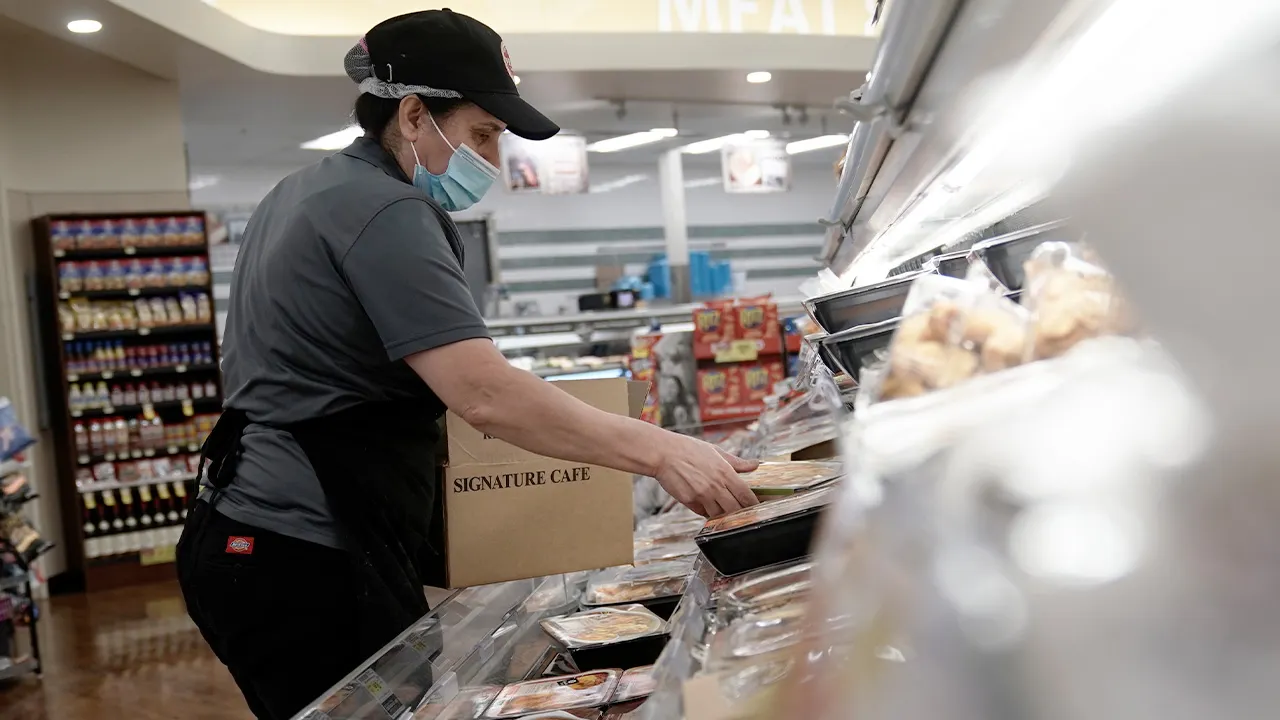
An employee stocks food inside an Albertsons grocery store in San Diego, California.(Bing Guan/Bloomberg via Getty Images)
The cuts extend beyond the West Coast. Two Albertsons-owned stores in North Texas are set to close by late April, impacting 138 workers, and a Safeway in Washington, D.C., is slated to shut down in May, eliminating 87 positions.
Industry analysts say the closures reflect ongoing fallout from the blocked Kroger merger, which Albertsons had framed as key to achieving scale and competing more effectively on pricing.
In response, the company is leaning on cost reductions and technology investments, including automation and artificial intelligence, as digital sales grow – often requiring fewer in-store workers.
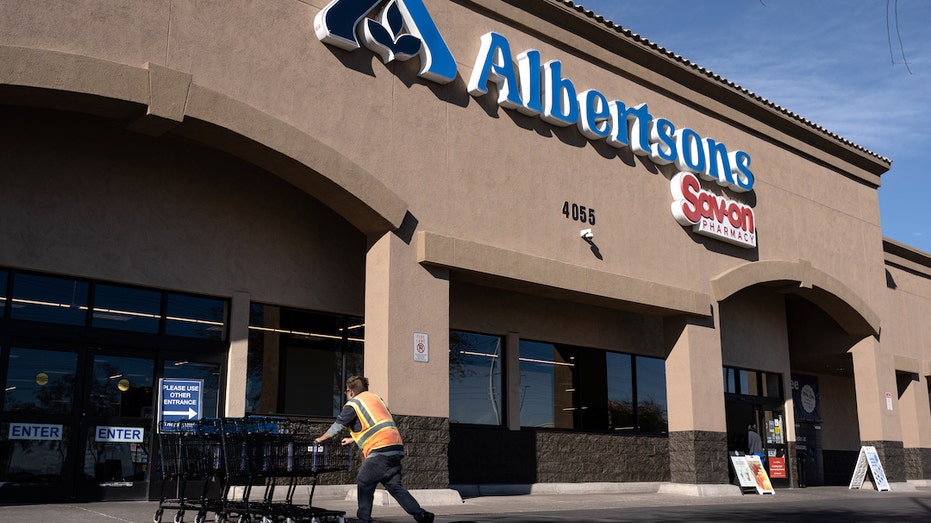
A worker pushes shopping carts outside an Albertsons supermarket in Las Vegas, Nevada.(Bridget Bennett/Bloomberg via Getty Images)
Albertsons is also facing investor skepticism, with its stock down over the past year.
Meanwhile, the legal fight that killed the merger is still playing out. California and a coalition of states are seeking more than $10 million to cover the cost of blocking the deal.
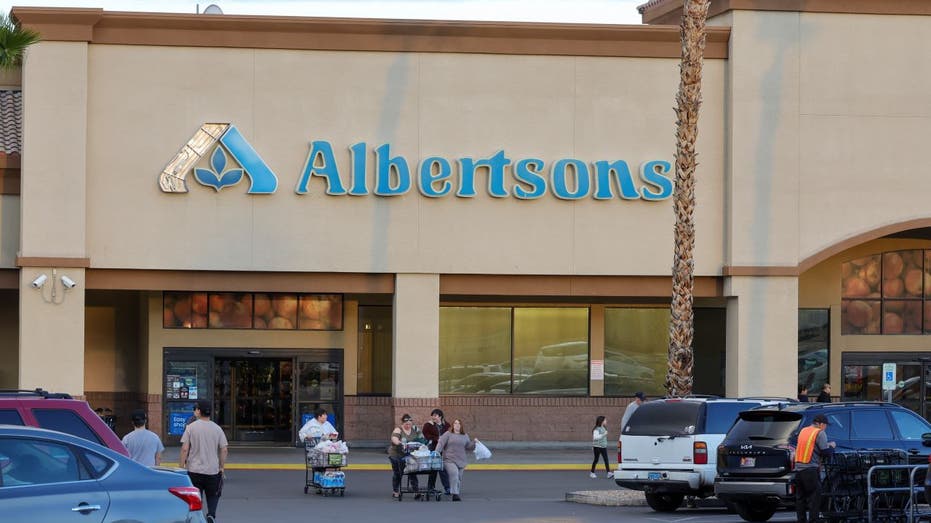
Shoppers walk outside an Albertsons grocery store on February 26, 2024, in Las Vegas, Nevada.(Ethan Miller/Getty Images)
Regulators argued the merger would reduce competition and raise grocery prices. A federal judge agreed in 2024, halting what would have been the largest supermarket merger in U.S. history.
Kroger and Albertsons spent roughly $1.5 billion pursuing the deal, underscoring the scale of the failed tie-up.
CLICK HERE TO GET FOX BUSINESS ON THE GO
Now operating independently, Albertsons is navigating a more competitive grocery landscape while restructuring its footprint and workforce to adjust to shifting consumer demand and margin pressure.
Reuters contributed to this report.
**Market Impact:**
The aggressive restructuring at Albertsons has significant ramifications across the retail and financial markets. For the grocery sector, it underscores the intense competitive pressures from discounters, e-commerce, and general merchandise retailers like Walmart, forcing even established players to critically evaluate every square foot of retail space. This rationalization trend could intensify across the broader industry, leading to more store closures and further consolidation, albeit under a watchful regulatory eye. For investors, Albertsons’ stock will likely remain volatile as the market assesses the efficacy of its independent strategy, its ability to generate sustainable organic growth, and its capacity to manage debt and capital expenditures amidst a challenging macroeconomic backdrop. The regulatory blocking of the Kroger-Albertsons merger also sends a chilling message across all industries: large-scale M&A in essential sectors will face formidable antitrust scrutiny, potentially dampening future deal activity and forcing companies to pursue growth through internal innovation and organic expansion rather than outright acquisition. Finally, for labor markets, the job cuts reflect an ongoing trend of automation and digital transformation displacing traditional retail roles, challenging policymakers and companies to retrain and reskill workforces for the evolving demands of the 21st-century economy.