
Check out what’s clicking on FoxBusiness.com.
Key Takeaways for Investors:
- Escalating Quality Control Concerns:This latest recall, following a series of similar actions, suggests potential systemic issues in Honda’s quality control or component sourcing, raising red flags about future warranty costs and brand reputation.
- Compounding Financial Headwinds:The recall adds to Honda’s existing struggles, including its recent historic annual loss and setbacks in its electric vehicle strategy, potentially further pressuring profitability and investor sentiment.
- Impact on Market Share & Valuation:Repeated safety recalls can erode consumer trust, affecting sales volumes and market share in highly competitive segments, which could translate into downward pressure on Honda’s stock valuation in the medium to long term.
TOKYO/DETROIT– Honda Motor Co. (NYSE: HMC) finds itself under increasing scrutiny from both regulators and investors as it announced another substantial recall in the U.S., impacting nearly 99,000 vehicles. This action, stemming from a defect that could lead to unexpected airbag deployment, is not an isolated incident but rather the latest in a series of quality-related challenges for the Japanese automaker, casting a shadow over its financial performance and strategic pivot during a critical industry transformation.
The recall targets an estimated 98,892 Honda and Acura vehicles spanning a wide range of model years from 2016 through 2026, according to a May 21 notice from the National Highway Traffic Safety Administration (NHTSA). The core issue lies with a front passenger seat weight sensor which federal safety regulators indicate may crack and short-circuit over time. Should this defect manifest during a collision, it could trigger the vehicle’s airbags to deploy unintentionally, significantly increasing the risk of injury to occupants.
This particular recall encompasses a broad portfolio of Honda’s best-selling models, including select Acura MDX, RDX, and TLX models, alongside popular Honda Accord, Civic, CR-V, Odyssey, Pilot, Passport, Ridgeline, HR-V, Fit, Insight, and Accord Hybrid vehicles. The sheer breadth of affected models underscores the potential for a widespread component issue, rather than a localized defect, which could have deeper implications for Honda’s supply chain management and component quality assurance processes.
HONDA POSTS FIRST-EVER ANNUAL LOSS IN NEARLY 70 YEARS AS ELECTRIC VEHICLE BET BACKFIRES
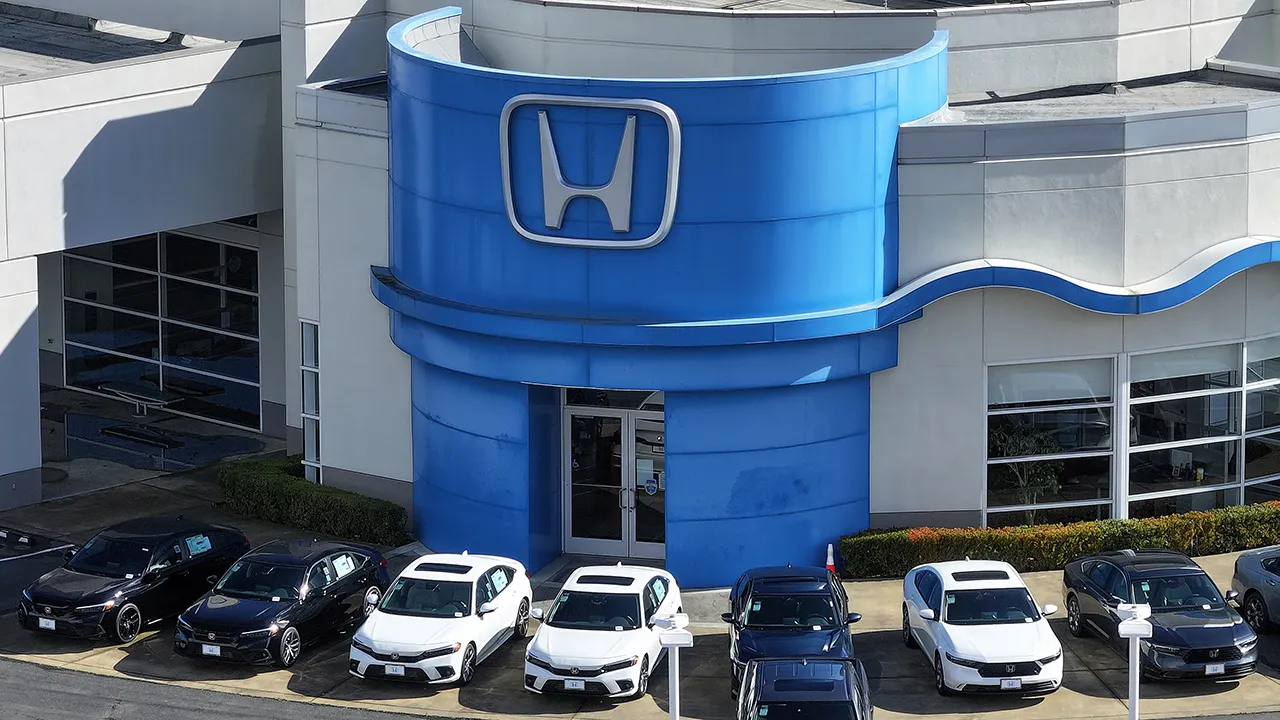
Honda cars are displayed on the sales lot at Honda Marin on Feb. 6, 2024 in San Rafael, California.(Justin Sullivan/Getty Images / Getty Images)
For investors, the direct financial implications of such a recall are multi-faceted. Honda dealers are slated to replace the faulty front passenger seat weight sensors at no cost to owners, meaning the automaker will bear the full burden of parts, labor, and associated logistical costs. While specific cost estimates for this recall were not immediately available, similar large-scale recalls can run into tens of millions, or even hundreds of millions, of dollars depending on the complexity of the repair and the cost of the components. These costs directly impact Honda’s profitability, often leading to increased warranty provisions and a drag on quarterly earnings.
Owner notification letters are expected to commence on July 6. The lag between the announcement and owner notification, while standard practice, adds to the period of uncertainty for consumers and allows for potential negative sentiment to build, which could further influence purchasing decisions in the interim.
Compounding the concern is the fact that this recall is not an isolated event. It expands upon a previous February 2024 recall involving more than 75,000 Honda vehicles for a similar issue. This pattern of recurring safety-related recalls suggests a potential systemic challenge within Honda’s manufacturing or design processes. The repetition elevates the issue beyond a single batch of faulty parts, hinting at broader quality control vulnerabilities that could plague multiple platforms or suppliers.
HONDA CANCELS 3 PLANNED EV MODELS FOR US
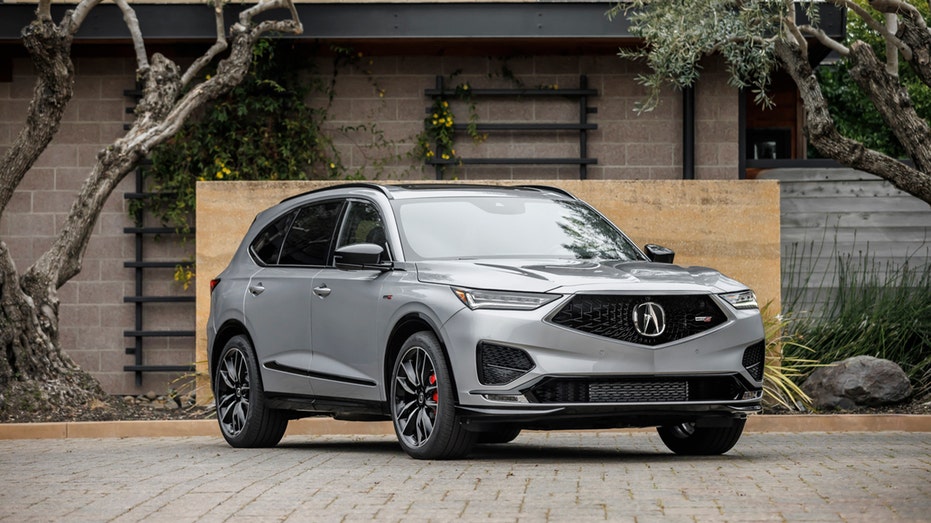
A 2022 Acura MDX is shown in this undated photo. Honda has recalled certain Acura MDX SUVs.(Honda)
Just weeks prior to this latest action, Honda also recalled more than 440,000 Odyssey minivans over a distinct airbag-related issue, where a software programming flaw could cause side curtain airbags to deploy unexpectedly from minor road impacts like potholes or speed bumps. The confluence of these significant, safety-critical recalls within a short timeframe is particularly troubling for an automaker that has historically prided itself on reliability and quality. For institutional investors, this series of events raises legitimate questions about the robustness of Honda’s internal quality assurance protocols and its ability to maintain its competitive edge in a segment where consumer trust is paramount.
The timing of these quality control issues could not be worse for Honda. The company recently reported its first-ever annual loss in nearly 70 years, a stark indicator of the significant headwinds it faces, particularly concerning its ambitious but struggling electric vehicle (EV) strategy. The company has already had to cancel three planned EV models for the U.S. market, signaling a costly recalibration of its electrification efforts. Against this backdrop of strategic missteps and financial losses, persistent safety recalls only serve to exacerbate investor concerns, potentially diverting crucial capital and engineering resources away from future-defining R&D and towards remedial actions.
HONDA ISSUES RECALL FOR 400K CIVICS AFTER FINDING WHEELS ‘MAY DETACH FROM VEHICLE’
The Honda logo is seen on the grill of a Honda minivan at Honda of El Cerrito Feb. 10, 2010 in El Cerrito, California.(Justin Sullivan/Getty Images / Getty Images)
In a fiercely competitive automotive market, where brands like Toyota continue to lead in hybrid and conventional vehicle sales while aggressively scaling up EV production, and newer entrants challenge traditional market structures, Honda’s missteps in quality control could lead to tangible market share erosion. Consumers have numerous alternatives, and safety concerns can quickly shift buying preferences, especially in high-volume segments where Honda’s recalled models operate.
For a full list of recalled vehicles, investors and owners are advised to visit theNHTSA website.
GET FOX BUSINESS ON THE GO BY CLICKING HERE
Honda could not immediately be reached by FOX Business for comment, leaving investors to parse the implications without immediate corporate clarification.
FOX Business’ Bonny Chu contributed to this report.
Market Impact:
The cumulative effect of these repeated and large-scale safety recalls is likely to weigh heavily on Honda’s stock performance and investor confidence. In the short term, increased warranty costs and administrative overhead will eat into profit margins, potentially leading analysts to revise down earnings estimates. Longer term, the erosion of brand reputation, particularly in critical safety areas, could translate into declining sales volumes and market share, further complicating Honda’s already challenging transition to electric vehicles. Investors may demand greater transparency regarding Honda’s quality control processes and supply chain oversight. Should this pattern of recalls persist, it could lead to increased regulatory scrutiny, potential class-action lawsuits, and a sustained discount on Honda’s valuation relative to its peers, as the market prices in higher operational risks and a weakened competitive position.