
Key Takeaways
- Strategic Cloud Pivot:Uber is significantly expanding its reliance on AWS cloud services, specifically leveraging Amazon’s custom-designed Graviton CPUs and trialing its Trainium3 AI chips, signaling a potential shift or diversification from its prior multi-year commitments to Oracle and Google Cloud.
- AWS’s Custom Silicon Advantage:The deal underscores the growing competitive edge of AWS’s in-house chip development, directly challenging rival cloud providers who often depend on third-party silicon or have different internal strategies, particularly in the race for AI workloads.
- Intensifying Cloud Wars:This move highlights the fierce competition in the enterprise cloud market, where optimized, cost-effective, and specialized hardware (like ARM-based CPUs and AI accelerators) is becoming a crucial differentiator for attracting major clients and securing lucrative, long-term contracts.
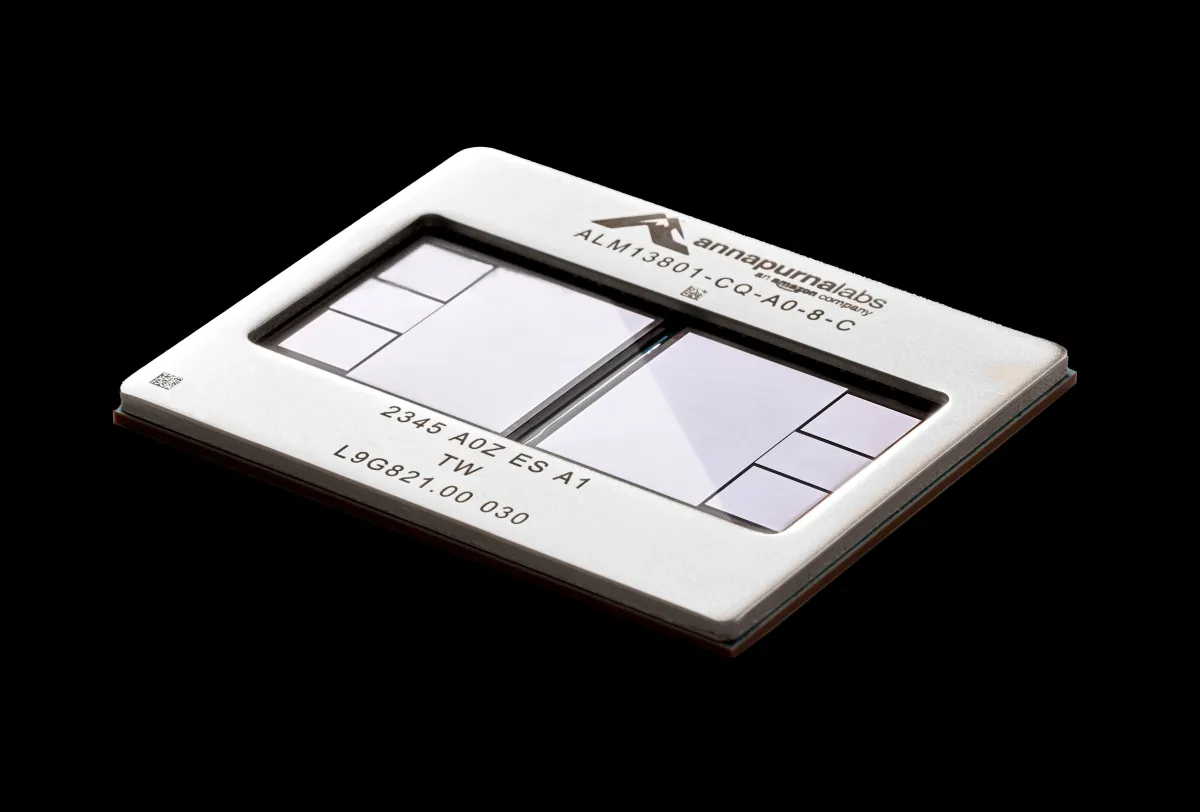
In a significant development that reverberates through the competitive landscape of cloud computing, Amazon announced Tuesday that Uber is dramatically expanding its contract for AWS cloud services. This deepened partnership will see Uber running an even larger portion of its global ride-sharing features and other critical infrastructure on Amazon’s proprietary silicon, specifically increasing its utilization of AWS’s Graviton processors—low-power, ARM-based server CPUs renowned for their efficiency and cost-effectiveness. Furthermore, Uber will commence a new trial to test Trainium3, AWS’s formidable AI chip designed to compete directly with offerings from industry giants like Nvidia.
While the immediate headline might suggest a direct challenge to Nvidia’s dominance in the AI chip arena, the broader implications of this deal are arguably more pointed. It serves as a resounding declaration by Amazon, asserting its vertical integration prowess and delivering a subtle yet undeniable message to its primary cloud competitors: Google Cloud and Oracle Cloud Infrastructure (OCI). For Amazon Web Services, securing an expanded commitment from a high-profile enterprise like Uber, especially one with a well-publicized multi-cloud strategy, is a potent validation of its internal hardware innovation and a testament to the strategic value of its custom silicon.
Uber’s Evolving Cloud Strategy: A Tangled Web
Uber’s journey to the cloud has been anything but straightforward. Historically, the ride-hailing behemoth managed a substantial portion of its IT infrastructure within its own data centers. However, in 2023, Uber famously embarked on a major transformation, signing extensive, multi-year cloud computing deals with both Oracle and Google. The stated objective was ambitious: to migrate the vast majority of its IT infrastructure away from its on-premise facilities and onto these two prominent public cloud platforms. This dual-vendor approach was presented as a strategic move to enhance flexibility, reduce operational overhead, and leverage cutting-edge cloud capabilities.
As recently as December, Uber publicly reaffirmed this ambitious goal. In a detailed blog post, the company articulated its progress, stating, “In February 2023, Uber began transitioning from on-premise data centers to the cloud using OCI and Google Cloud Platform, taking on the dual challenge of shifting massive workloads and introducing Arm-powered compute instances into a previously x86-dominated environment.” Crucially, that same post specifically highlighted Uber’s adoption of ARM chips manufactured by Ampere within Oracle’s cloud environment. This particular detail is where the plot thickens, setting the stage for Amazon’s latest coup.
The Oracle-Ampere-Nvidia Saga: A Lesson in Silicon Valley’s Interconnections
To truly grasp the intricate dynamics at play, one must delve into the fascinating, often circuitous, history of Ampere. The company was founded by Renee James, a former high-ranking executive at Intel who departed after not being promoted to CEO. Leveraging her extensive network and influence, including her role as an investor at private equity firm Carlyle and her board seat at Oracle, James successfully raised the capital to launch Ampere. Oracle, in a significant strategic move, acquired approximately one-third of the company, an investment that necessitated James relinquishing her status as an independent director on Oracle’s board due to the inherent conflict of interest.
The story of Ampere and Oracle’s intertwining interests offers a vivid illustration of Silicon Valley’s deeply connected ecosystem. (It’s worth noting, for instance, that James was a key board member who played a role in the 2016 vote approving Oracle’s $9.3 billion acquisition of NetSuite, a company in which Larry Ellison, Oracle’s co-founder, held a significant stake—a deal that subsequently sparked an unsuccessful shareholder lawsuit alleging overpayment.) Fast forward to December, and Ampere’s trajectory took another turn when its major competitor, Softbank, acquired the company. In the process, Oracle divested its stake, realizing a handsome $2.7 billion pre-tax gain.
This divestment was not an isolated event but part of a larger strategic re-evaluation by Oracle. The company, which is aggressively raising capital to construct massive data centers for partners like OpenAI and its ambitious Stargate project, has shifted its stance on chip design. Larry Ellison, Oracle’s chairman and CTO, publicly stated that he no longer believes designing chips in-house for its data centers provides a competitive advantage. Instead, Oracle has opted for a strategy of buying chips from market leaders, signing massive deals with Nvidia to power its AI ambitions. Indeed, Oracle, Softbank, and Nvidia are all part of the complex web of circular deals and investments intended to fund the monumental data center build-out required by leading AI model makers such like OpenAI.
AWS’s Custom Silicon: A Differentiating Force
Against this backdrop of strategic shifts and interconnected deals, Amazon Web Services’ announcement that it has significantly expanded its contract with Uber—a marquee customer previously touted by Oracle—takes on added significance. The irony is palpable: AWS is winning this larger contract precisely *because* it has invested heavily in developing its own in-house designed chips, a strategy that Oracle explicitly abandoned. This divergence in approach highlights a fundamental debate within the cloud industry about the optimal path to innovation and competitive differentiation.
AWS’s commitment to custom silicon has been a long-term play that is now clearly yielding substantial dividends. The Graviton family of processors, based on ARM architecture, offers superior price-performance ratios for a wide range of general-purpose workloads compared to traditional x86 alternatives, translating directly into cost savings for customers like Uber. Meanwhile, the Trainium series represents AWS’s dedication to accelerating the most demanding machine learning training workloads, offering an optimized, cloud-native alternative to other specialized AI hardware. These custom chips provide AWS with unparalleled control over its hardware stack, allowing for deep integration with its services, optimized performance, and greater cost efficiency—advantages that are increasingly critical in the compute-intensive world of AI.
Uber is far from alone in recognizing the value of AWS’s custom silicon. The list of major tech companies that have either signed on or substantially increased their usage of AWS due to these AI chips continues to grow, including prominent names like Anthropic, OpenAI, and Apple. This trend underscores the broader industry shift towards specialized hardware for AI workloads. In December, Amazon CEO Andy Jassy revealed that Trainium was already a multibillion-dollar business, a testament to its rapid adoption and strategic importance. (For an exclusive glimpse into the innovation engine behind these chips, our previous coverage offered an in-depth tour of the facility and the dedicated team driving these advancements.)
The Bottom Line
Uber’s expanded commitment to AWS is more than just a renewed contract; it’s a potent signal in the ongoing cloud wars. It validates Amazon’s aggressive strategy of vertical integration through custom silicon, demonstrating how in-house chip design for both general-purpose and specialized AI workloads provides a significant competitive advantage in attracting and retaining enterprise clients. This move intensifies pressure on rival cloud providers to differentiate beyond core services, suggesting that the future of cloud dominance will increasingly hinge on proprietary hardware innovation and strategic control over the compute stack, rather than simply relying on off-the-shelf solutions.
{content}
Source:{feed_title}