
AUGUSTA, Ga. — Merely three years prior, the intense rivalry between the PGA Tour and LIV Golf risked engulfing the entirety of professional men’s golf.
The emergent, Saudi Arabian-supported LIV functioned as an innovator, aiming to establish itself as the foremost circuit in the sport. It issued audacious declarations while enticing competitors from the entrenched organization, the United States-headquartered PGA Tour.
The dispute proved fraught, prompting discussions encompassing various topics, from principles and conduct to global golf standing scores, and even whether the whole game could be harmed by a division.
The contention even infiltrated the 2023 Masters, an event typically shielded, or attempting to be, from such conflicts. Almost all players faced inquiries regarding LIV, potential transfers, and the broader implications. Accusations were being hurled across these flawlessly irrigated and meticulously maintained premises.
Several LIV players donned their squad attire (given team play is integral to that tour) during competition to display solidarity and foster publicity, although a good number carried backup outfits, anticipating a potential prohibition from Augusta National.
LIV players frankly discussed the importance should one of their eighteen participants claim the green jacket — “It would be gratifying to confirm the caliber of skill present within the LIV circuit,” stated Phil Mickelson, a LIV representative.
Rumors circulated about all competitors gathering for a celebration behind the 18th if any of them emerged triumphant — “Can you envision the spectacle it would create?” remarked then-LIV CEO Greg Norman.
Augusta National indeed envisioned it and, considering other remarks, evidently remained unimpressed. The tournament chose not to extend an invitation to Norman, while the heads of the PGA and DP World Tour received invitations.
“The foremost concern … is that I desire the attention this week to center on the Masters tournament,” stated Augusta National chairman Fred Ridley. One year subsequent, Norman acquired his own pass through alternative channels.
The LIV celebration did not materialize because Jon Rahm, at that time affiliated with the PGA Tour, emerged victorious. Subsequently, after an eight-month period, Rahm inked a deal with LIV for a sum reportedly exceeding $300 million.
Consequently, back then, the future remained uncertain for everyone. The PGA Tour represented the apparently unyielding force, yet LIV possessed boundless capital.
“I am uncertain about the state of affairs globally next year or in two years,” Ridley commented.
Indeed, three years have elapsed, and while the LIV-PGA dispute isn’t unequivocally “conquered,” it undeniably appears resolved.
The PGA Tour is once more in a commanding position, after curtailing LIV’s impetus. The quality of its golf has improved. Its contests are more compelling. Its broadcast viewership has climbed. And the elite players who previously departed are commencing their comeback.
LIV, concurrently, has positioned itself as an international circuit, adept at organizing thriving tournaments, particularly in regions untouched by the PGA Tour. It staged 14 competitions across 10 different countries on five continents. It is nevertheless no longer presenting a significant peril to the PGA Tour’s survival.
This contention that has faded to a faint echo.
This year, merely ten LIV competitors are participating in the Masters, partially due to a wave of players returning to the PGA. This list includes prominent figures such as Patrick Reed and Brooks Koepka. Reed mentioned the customary 72-hole structure, venerable locations, spectator engagement, and an overall feeling of intensified rivalry.
“I was truly reflecting and understanding that I desired to rejoin not only … the PGA Tour but also revert to golf’s conventional mode of play,” Reed stated Monday at the Masters. “I yearned for that return; I craved that surge of excitement once more.”
The PGA Tour, formerly apprehensive about relinquishing its prominent figures, is now so assured of its standing that its “Returning Member Program” mandates both a substantial penalty for rejoining and the relinquishment of entitlement to specific future earnings. For Koepka, this involved a $5 million contribution to a philanthropic cause.
“Its intention is to cause hardship, and it indeed does,” Koepka informed the AP last year. “But I comprehend. This journey is not intended to be facile.”
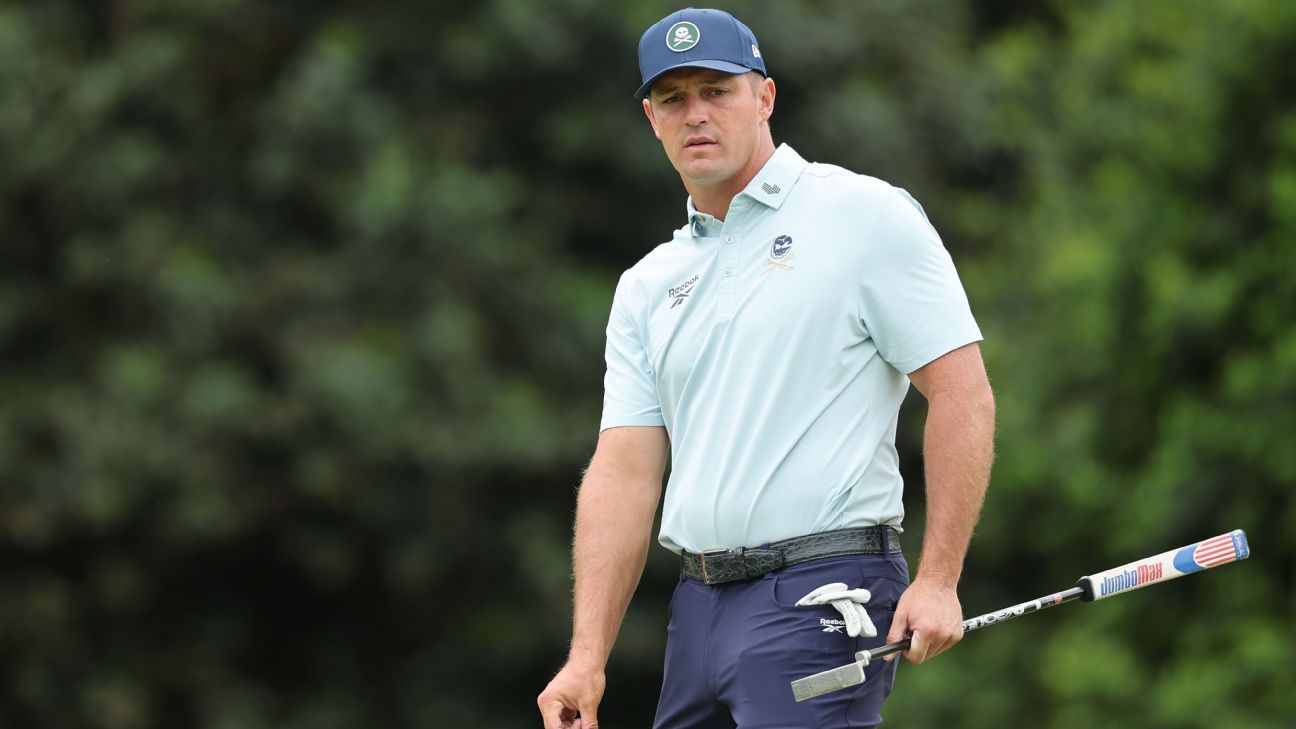
Conjecture no longer centers on who will depart the PGA Tour, but rather on potential returnees — attention is fixed on Bryson DeChambeau, whose LIV agreement concludes by year-end, with Rahm and others possibly following later.
LIV will persist so long as Saudi support remains. The tour reports income surged by twofold in fiscal 2025 and persists in attracting fresh sponsors and worldwide media agreements. Its tournaments frequently attract sizable and fervent audiences. It could still enlist or keep prominent figures.
However, the ambitious pronouncements of 2023 have vanished — for instance, Cam Smith’s prediction that “as the LIV Tour expands, and the competitor pools deepen and strengthen, and these developments materialize, it will only improve further. I eagerly anticipate witnessing its progression myself.”
Conversely, the populace has mostly disregarded LIV’s 54-hole format and overlooked the collective dimension of the sport. Both appeared contrived. The simultaneous start has captivated no one.
It can still organize an enjoyable, spectator-oriented in-person gathering — an abundance of golf is not inherently problematic. Nevertheless, American broadcast viewership has failed to coalesce.
A portion of this can be attributed to the formidable historical power of the PGA, boasting ages of customs, practices, and established venues. The departure of star players was detrimental, yet the entrenched organization held immense influence, rendering its overthrow perhaps unattainable. The PGA Tour also implemented a multitude of athlete-centric programs.
Even Norman, who departed LIV in 2025, remains largely cautious, informing the Australian Golf Digest the previous year, “As with any endeavor, one reflects on forfeiting a golf tournament and queries, ‘what led to that defeat?'”
He mentioned he has yet to receive an invitation to return to the Masters, whereas the current LIV CEO, Scott O’Neil, did.
It could stand as the ultimate testament to a short, yet profoundly unpredictable period for the sport, where golf’s prospective conflict reached the immaculate entrance of Augusta National.
In golf’s characteristic fashion, tranquility ultimately dominated.