
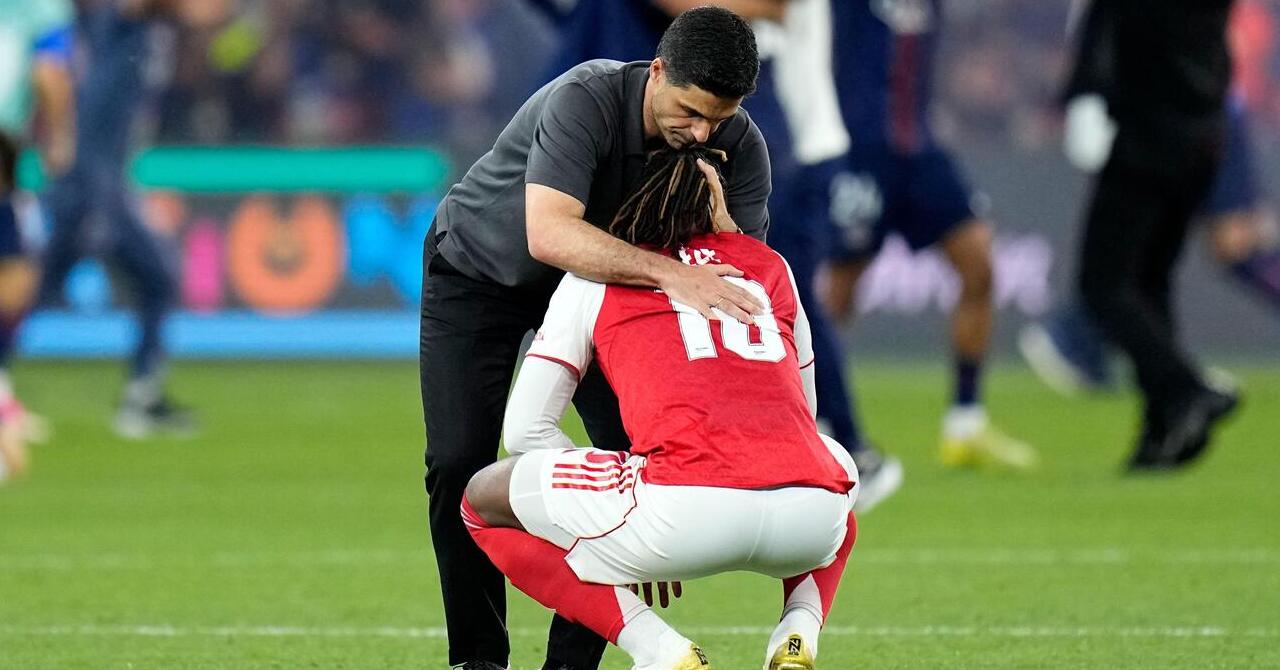
Champions League Final: Arsenal’s Defensive Gamble Sparks Fury as PSG Retain Crown
The air in Budapest crackled with the kind of high-stakes drama only a UEFA Champions League final can deliver. For Arsenal, it was a shot at redemption, a chance to etch their name into footballing immortality. For Paris Saint-Germain, it was about cementing a dynasty. What unfolded, however, wasn’t just a contest of titans, but a tactical tightrope walk by Mikel Arteta’s Gunners that has ignited a firestorm of criticism, most notably from French World Cup winner Christophe Dugarry, who branded their approach “unbearable” and declared a victory for Arsenal would have been a “scandal.”
From the opening whistle, Arsenal seemed torn between their attacking instincts and a desperate conservatism. Kai Havertz’s sixth-minute opener, a moment of pure euphoria for the North London faithful, proved to be a poisoned chalice. Instead of building on their early advantage, the Gunners retreated, ceding possession and initiative to a relentless PSG side. This wasn’t merely a pragmatic shift; it was a wholesale abandonment of their identity, a defensive shell that, for Dugarry, represented a betrayal of the beautiful game itself.
“Arsenal will remain the largest club never to have won the Champions League,” Dugarry declared on the Rothen s’enflamme show on RMC, his words dripping with incredulity. “Their intentions were clear from the start, they did nothing. At no time did they look to create something. All we saw were clearances and an Arsenal team that systematically tried to waste time. It was unbearable.”
The statistics paint a damning picture of a strategy that flirted with success before ultimately crumbling: a solitary shot on target in 120 minutes of football, coupled with a meagre 28% possession. These aren’t the numbers of a side vying for Europe’s most coveted trophy; they are the grim indicators of a team that gambled everything on holding a fragile lead and, ultimately, lost. PSG, in stark contrast, kept pushing, probing, their star-studded lineup growing in confidence and aggression, until Ousmane Dembele’s second-half penalty finally broke Arsenal’s resolve, forcing the tie into extra time and, eventually, the lottery of a penalty shootout.
Game Highlights: A Battle of Wills and Wagers
Early Blitz, Defensive Retreat
The final exploded into life in the sixth minute. A rapid Arsenal counter-attack, perhaps their only truly fluid offensive move of the half, culminated in Kai Havertz finding himself in space within the PSG box. His clinical finish sent the Arsenal end into raptures, a dream start that promised an open, thrilling encounter. However, what followed was a stark pivot. Arsenal immediately dropped deep, forming two rigid banks of four, inviting PSG pressure. The initial joy quickly gave way to a palpable tension as the Gunners prioritised containment over creation, a tactical decision that would define their evening.
PSG’s Relentless Siege
As the first half wore on, and certainly throughout the second, PSG became increasingly dominant. Kylian Mbappé, often double-marked, still found pockets of space to unleash dangerous runs, while Ousmane Dembele’s trickery on the wing tested Arsenal’s full-backs repeatedly. David Raya, Arsenal’s goalkeeper, was called upon for several crucial interventions, bravely denying close-range efforts and commanding his area amidst a barrage of crosses. The Parisian giants meticulously built their attacks, their intricate passing patterns pushing Arsenal deeper and deeper, making every clearance a desperate act of survival rather than a springboard for attack.
The Equaliser and Extra Time Agony
The dam finally broke midway through the second half. A moment of individual brilliance from Dembele, who danced past two defenders before being brought down inside the box, resulted in a penalty. Dembele himself stepped up, coolly dispatching the spot-kick past Raya, sending the PSG faithful into delirium and deflating Arsenal’s weary defence. Extra time became a war of attrition. Both teams, exhausted from the intensity, became more cautious. PSG continued to hold the lion’s share of possession, but Arsenal, perhaps buoyed by reaching this stage, found a renewed defensive discipline, preventing any clear-cut chances and praying for the whistle to signal penalties.
Penalty Shootout Drama
The ultimate test of nerve arrived. Both sides converted their initial penalties with precision, the tension almost unbearable. However, fate had a cruel twist for Arsenal. After several successful conversions, Gabriel stepped up, shoulders heavy with expectation, only to blaze his effort over the crossbar. It was a moment that encapsulated Arsenal’s night – close, but ultimately falling short. PSG converted their next spot-kick confidently, securing the trophy and leaving Arsenal to ponder what might have been, as the Parisian celebrations erupted around them.
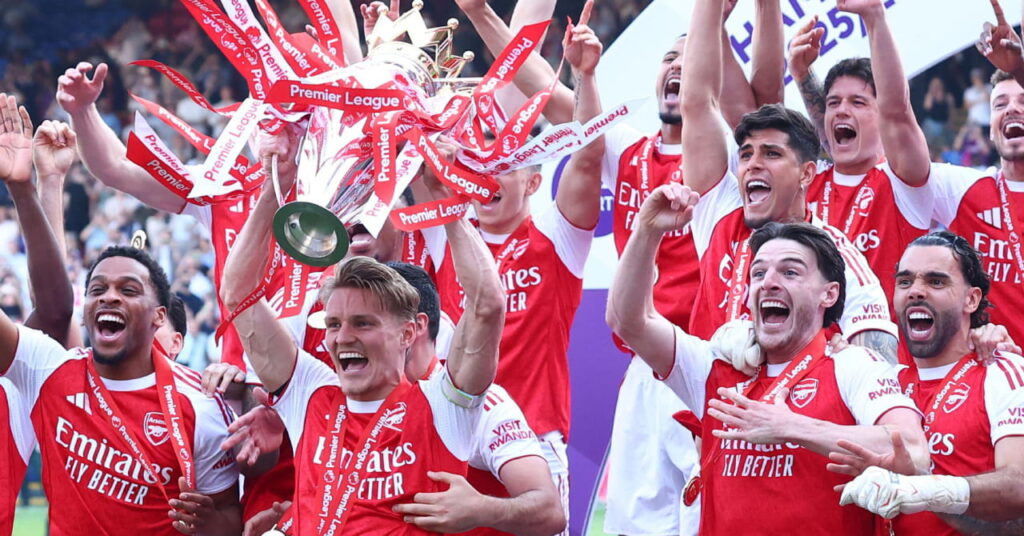
The sight of Arsenal players celebrating their league success on the streets of North London on Sunday, just hours after European heartbreak, presented a stark dichotomy. While pride in their domestic achievements is entirely justified, Dugarry insists that a deep-seated regret will linger. “When you play like that and you lose, you have regrets all your life,” he stated emphatically. “If they had tried to play and lost, they would not have had any regrets. Now, they have a lot of them.”
We need to do better, admits Arteta – The Road Ahead
Mikel Arteta, who has overseen an astonishing £900 million spend since taking the helm in 2019, finds himself at a critical juncture. The Champions League final exposed glaring inconsistencies in his tactical philosophy, despite domestic success. His admission that “We need to do better, we have to improve and find different margins to get the outcome that we want,” speaks volumes. It’s an acknowledgement that the defensive pragmatism, however close it came to glory, is not the sustainable path for a club of Arsenal’s stature and ambition. The echoes of Dugarry’s “not Arsenal” will undoubtedly ring in his ears.
Reports suggest a significant tactical overhaul is on the horizon, with a renewed commitment to a more attacking, front-foot approach. This will undoubtedly influence their summer recruitment, targeting players who can inject creativity, incision, and a more aggressive press into the squad. The challenge for Arteta and sporting director Edu Gaspar will be to marry this attacking intent with defensive solidity, without compromising the balance that brought them so close to European triumph. The £900 million investment demands a more dynamic return, one that aligns with the “Gunners” identity rather than contradicting it.
Prediction: Learning from Heartbreak
This Champions League final defeat, while undoubtedly a bitter pill to swallow, might just be the most pivotal moment of Arteta’s tenure. The scathing criticism, coupled with the raw disappointment, could serve as a powerful catalyst for genuine transformation. I predict that Arsenal will emerge from this experience a stronger, more resolute unit. The intent to play “better” and “more attacking” is not just managerial rhetoric; it’s a necessary evolution for a club striving for elite status. Expect a proactive summer in the transfer market, focusing on a dynamic forward, a robust central midfielder, and perhaps a versatile defender. Next season, Arsenal will not only challenge fiercely for domestic honours but will also approach the Champions League with a bolder, more balanced philosophy, determined to shed the tag of Europe’s nearly-men and finally claim the prize that has so agonisingly eluded them. The regrets of Budapest will fuel a relentless pursuit of glory, and I believe they are closer than ever to achieving it.