
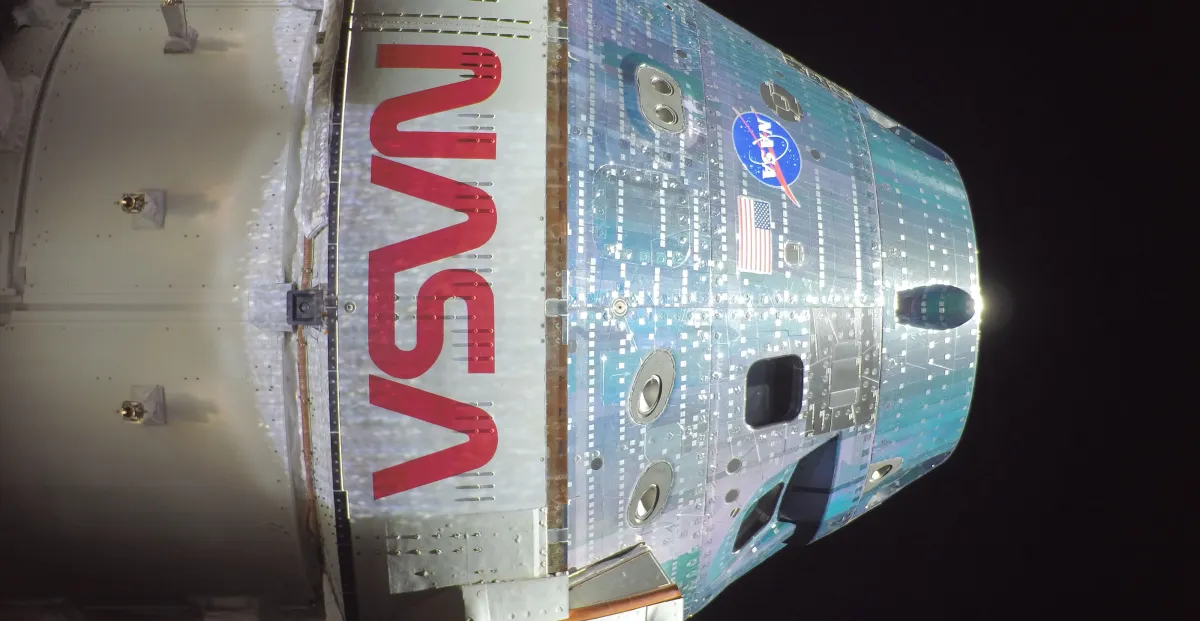
On Thursday, during Artemis II’s journey to the Moon, commander Reid Wiseman ran into a tech issue some of us back on Earth can relate to: Microsoft Outlook wasn’t working. In a conversation captured in NASA’s Artemis livestream and shared on Bluesky, Wiseman reported to Mission Control: “I also see that I have two Microsoft Outlooks and neither one of those are working.”
To take care of the issue, Mission Control had to remotely access Wiseman’s personal computing device (PCD), a Microsoft Surface Pro. During a press conference on Thursday, Artemis flight director Judd Frieling said NASA had fixed the issue, stating, “This is not uncommon. We have this on-station all the time. You know, sometimes Outlook has issues getting configured, especially when you don’t have a network that’s directly connected. And so essentially we just had to reload his files on Outlook to get it working.”
Read Article >
Houston, We Have an Outlook Problem: Even Astronauts Face Relatable Tech Glitches Beyond Earth
Key Takeaways:
- Artemis II Commander Reid Wiseman encountered a common Microsoft Outlook malfunction while en route to the Moon.
- NASA’s Mission Control swiftly resolved the issue through remote access, highlighting robust ground support for space missions.
- The incident underscores the universal nature of software quirks and the sophisticated, yet human-centric, infrastructure supporting space exploration.
In the grand tapestry of humanity’s return to the Moon, one might expect challenges of celestial navigation, advanced propulsion, or the psychological toll of deep space. Yet, during the critical Artemis II mission, commander Reid Wiseman found himself grappling with a foe far more mundane, yet universally frustrating: a malfunctioning Microsoft Outlook.
It was Thursday when Wiseman, aboard his vessel hurtling towards the Moon, reported to Mission Control a problem that resonates with countless office workers and remote employees back on Earth. “I also see that I have two Microsoft Outlooks and neither one of those are working,” he communicated, a sentiment that could easily be overheard in any IT help desk queue. This isn’t a scene from a science fiction movie; it’s a testament to the persistent, often perplexing, nature of software glitches, even at the cutting edge of human endeavor.
A Glitch in Orbit: The Universal Tech Frustration
The device in question was Wiseman’s Personal Computing Device (PCD), a Microsoft Surface Pro, serving as a vital digital hub for the astronaut. In an environment where every system is meticulously tested and redundant protocols are standard, a simple email client failing to launch might seem trivial. However, for an astronaut on a multi-day mission, access to communication, schedules, and critical information can significantly impact morale and operational efficiency. The initial report, captured in NASA’s Artemis livestream and later shared widely, brought a moment of unexpected relatability to the high stakes of lunar exploration.
The humor in the situation was not lost on observers. It served as a stark, yet amusing, reminder that even those venturing beyond Earth’s atmosphere are not immune to the digital demons that plague our everyday lives. From frozen applications to unresponsive interfaces, the experience of “two Outlooks and neither working” is a shared digital trauma.
Ground Control’s Swift Intervention: The IT Department in the Sky
Fortunately, the vast technological infrastructure supporting Artemis II extends beyond the spacecraft itself. Mission Control, acting as the ultimate IT support team, swiftly stepped in. Artemis flight director Judd Frieling later confirmed the issue had been resolved during a press conference. The fix? Remote access to Wiseman’s Surface Pro to “reload his files on Outlook to get it working.”
Frieling’s explanation offered valuable insight into the reality of maintaining complex systems in extreme environments. “This is not uncommon. We have this on-station all the time. You know, sometimes Outlook has issues getting configured, especially when you don’t have a network that’s directly connected,” he stated. This “not uncommon” detail highlights a crucial aspect of space operations: despite rigorous testing, software remains fallible, and the challenges of networking in deep space – without a direct, stable connection – exacerbate these issues.
The ability to remotely diagnose and fix a problem on a device millions of miles away speaks volumes about the sophistication of NASA’s ground support systems. It underscores the continuous, proactive monitoring and intervention capabilities that are paramount to mission success, even for seemingly minor software hiccups. This isn’t just about fixing an email; it’s about maintaining astronaut productivity, communication lines, and overall operational continuity.
Beyond the Moon: Reliability in Extreme Environments
While an Outlook glitch might pale in comparison to a life support system malfunction, its occurrence on a mission like Artemis II carries broader implications. It emphasizes the need for incredibly resilient and adaptable software, designed to function optimally even with intermittent or delayed network access. Furthermore, it highlights the importance of user-friendly interfaces and robust troubleshooting capabilities that can be managed both remotely and, if necessary, by the astronauts themselves.
The incident is a subtle nod to the tireless efforts of the software engineers and IT specialists who ensure that the digital tools integral to space exploration function as seamlessly as possible. From the critical flight software that guides the spacecraft to the personal productivity tools astronauts rely on, every line of code is a potential point of failure that must be anticipated and mitigated. The challenges posed by radiation, microgravity, and the sheer distance from Earth add layers of complexity that conventional software development rarely encounters.
The Human Element in High-Tech Journeys
Ultimately, Wiseman’s Outlook issue brings a touch of humanity to the awe-inspiring endeavor of lunar travel. It reminds us that astronauts, despite their extraordinary training and courage, are still people relying on technology that, at times, can be temperamental. This shared experience creates an unexpected bridge between the everyday struggles of Earth-bound individuals and the pioneering spirit of those venturing into the cosmos.
As humanity pushes the boundaries of exploration, the reliability of our digital tools will become even more critical. From habitats on the Moon to missions to Mars, ensuring that every piece of software, no matter how seemingly minor, performs flawlessly will be key to the success and sustainability of future space endeavors. And perhaps, along the way, we’ll develop Outlook versions that are truly space-proof.
Bottom Line:
The “Outlook problem” on Artemis II serves as a poignant reminder that even the most advanced human endeavors, operating at the very edge of technological capability, are still susceptible to the universal quirks of software. It highlights not only the resilience of astronauts but also the indispensable, often unsung, role of ground control’s IT experts in ensuring that mission-critical, and even mundane, digital tools function effectively across vast cosmic distances. In the journey to the Moon and beyond, reliable tech support is as crucial as rocket science itself.
Source:{feed_title}