
Key Takeaways:
- Massive Capex Hike:Tesla projects an unprecedented $25 billion in capital expenditures for 2026, a significant jump from previous forecasts, signaling a profound strategic shift.
- AI & Robotics Pivot:This aggressive spending underpins Elon Musk’s vision to transform Tesla into a dominant AI and robotics company, moving far beyond its electric vehicle origins.
- Short-Term Financial Impact:While positioning for long-term growth, the substantial investments are expected to result in negative free cash flow for the remainder of the current year, prompting investor scrutiny.
Tesla’s $25 Billion Gambit: Unpacking Musk’s Visionary AI & Robotics Overhaul
In a move that reverberated through the tech and financial worlds, Tesla CEO Elon Musk unveiled a staggering capital expenditure (capex) forecast during the company’s first-quarter earnings call. By 2026, Tesla expects to pour an astonishing $25 billion into physical assets and infrastructure – a figure that not only shatters previous annual spending records but also dramatically surpasses earlier projections. This colossal investment isn’t merely about scaling EV production; it’s the financial bedrock for Tesla’s ambitious metamorphosis into a formidable AI and robotics powerhouse.
The $25 billion projection represents an exponential leap. To put it in perspective, this sum is nearly three times Tesla’s annual capex budget in recent years, which hovered around $8.5 billion in 2025, $11.3 billion in 2024, and $8.9 billion in 2023. Earlier this year, in January, Tesla had already signaled an increase, anticipating expenditures “in excess of $20 billion” for 2026. This latest $5 billion uptick underscores an even more aggressive timeline and a deeper commitment to its emerging technological frontiers than initially communicated. Despite the forward-looking surge, the actual quarterly capital expenditure for Q1 stood at a more moderate $2.5 billion, aligning with historical patterns, suggesting the major spending ramp-up is yet to come.
Beyond EVs: The AI and Robotics Imperative
For Musk, this massive outlay is not a warning but a resounding declaration of intent, framing it as a strategic investment in a “substantially increased future revenue stream.” The core of this expenditure is rooted in Musk’s unwavering belief that Tesla’s future lies beyond merely manufacturing and selling electric vehicles, solar panels, and energy storage solutions. Instead, the company is doubling down on its identity as a leader in artificial intelligence and robotics.
The specific allocation of these billions highlights this strategic pivot. A significant portion will be channeled into bolstering Tesla’s foundational AI infrastructure, including substantial investments in high-performance compute infrastructure and state-ofthe-art data centers. This computational muscle is critical for training advanced AI models that will power everything from autonomous driving to its humanoid robot, Optimus. Further funds are earmarked for sophisticated chip design, a crucial component for achieving vertical integration and optimizing AI performance.
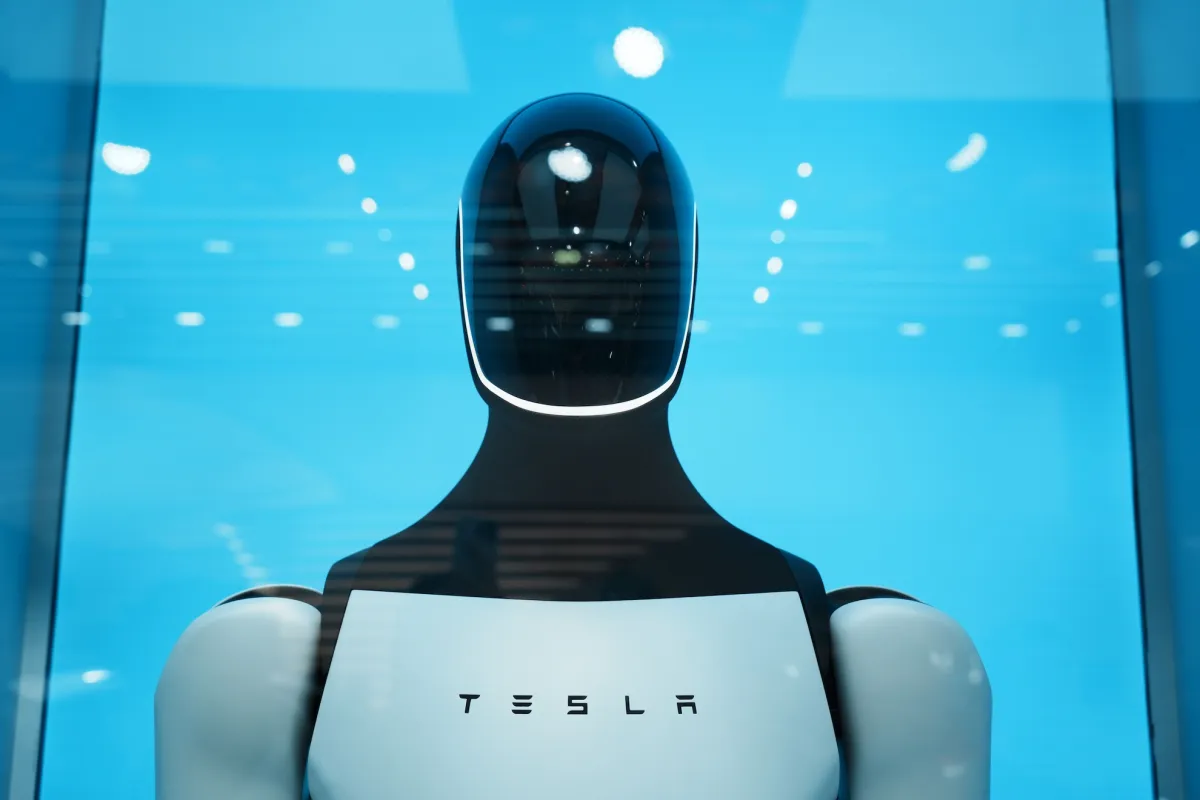
Manufacturing and R&D production lines are also slated for significant expansion and upgrades. This isn’t just about cranking out more Model Ys; it’s about laying the groundwork for entirely new product categories. Chief among these is the Optimus humanoid robot. Tesla is preparing to increase internal production of Optimus for rigorous testing and aims to make the robot “useful outside of Tesla sometime next year,” suggesting a commercial rollout is on the horizon. To facilitate this, the Fremont, California factory will transition from producing Model S and Model X to focusing on Optimus at scale. Additionally, ground has already been cleared outside the Austin factory for a dedicated Optimus manufacturing facility, emphasizing the seriousness of this endeavor.
Other key investment areas include accelerating its nascent robotaxi operations – a long-promised vision of autonomous ride-hailing – and establishing a new semiconductor research fab in Austin. This move into semiconductor research underscores Tesla’s commitment to controlling the core technologies that will drive its AI ambitions. Musk also stressed strengthening the company’s supply chain “across the board,” encompassing critical components for batteries, energy solutions, and the crucial AI silicon.
Techcrunch event
San Francisco, CA
|
October 13-15, 2026
A Trend Among Tech Giants
Musk was quick to contextualize Tesla’s aggressive spending by pointing to similar trends among other tech titans. He cited Amazon’s projected $200 billion in capital expenditures by 2026, spanning “AI, chips, robotics, and low earth orbit satellites,” and Google’s plan to spend between $175 billion and $185 billion in 2026, a substantial hike from $91.4 billion the previous year. This comparison suggests that the race for AI and advanced robotics dominance is not unique to Tesla but a high-stakes, capital-intensive battleground for the world’s leading technology companies. It signals a broad industry consensus that the next wave of innovation and revenue will be driven by these cutting-edge fields, necessitating enormous upfront investments in infrastructure, talent, and R&D.
Navigating the Financial Headwinds
While the strategic vision is bold, it comes with immediate financial implications. Tesla CFO Vaibhav Taneja explicitly stated that this multi-year spending spree would impact the company’s free cash flow. After enjoying an unexpected $1.4 billion in free cash flow in the first quarter, which briefly boosted share prices by 4%, Taneja warned that Tesla would likely head into negative free cash flow territory for the remainder of the year. This prospect immediately erased the earlier gains in after-hours trading, reflecting investor anxiety about short-term profitability.
However, Tesla enters this period of heavy investment from a position of considerable financial strength. At the close of the first quarter, the company reported a robust $44.7 billion in cash, cash equivalents, and short-term investments. Taneja defended the strategy, echoing Musk’s sentiment: “While this may seem like a lot, and we will have the impact of negative free cash flow for the rest of the year, we believe this is the right strategy to position the company for the next era.” This statement underscores a calculated risk, prioritizing long-term market leadership and diversification over immediate financial metrics.
Bottom Line
Tesla’s projected $25 billion capital expenditure for 2026 is more than just a financial forecast; it’s a definitive declaration of its future trajectory. Under Elon Musk’s leadership, the company is embarking on an aggressive, high-stakes pivot, leveraging its financial might to carve out a leading position in the burgeoning fields of AI and robotics. While this ambitious transformation promises substantial long-term revenue streams and redefines Tesla’s identity beyond an EV manufacturer, it will undoubtedly test investor patience with anticipated short-term financial headwinds, making it a critical period to watch for both technological execution and market reception.
When you purchase through links in our articles, we may earn a small commission. This doesn’t affect our editorial independence.
{content}
Source:{feed_title}