
FOX Business’ Lauren Simonetti reports on Iranian attacks on cargo ships in the Strait of Hormuz, the impact on oil and and the economy on ‘Varney & Co.’
**Key Takeaways**
* **Geopolitical Risk & Airline Profitability:** Escalating tensions in the Middle East, particularly impacting the Strait of Hormuz, are driving a significant surge in jet fuel prices, directly eroding airline operating margins and forcing widespread flight cancellations.
* **Industry-Wide Response & Consumer Burden:** Major carriers like Lufthansa, Air Canada, and Delta are trimming capacity and raising ancillary fees, indicating a systemic shift across the aviation sector to manage costs, ultimately transferring higher expenses to the consumer.
* **Persistent Market Volatility:** The “sticky” nature of rising fuel costs and increased baggage fees, coupled with ongoing geopolitical instability, suggests a prolonged period of elevated travel expenses and continued volatility for airline sector investments.
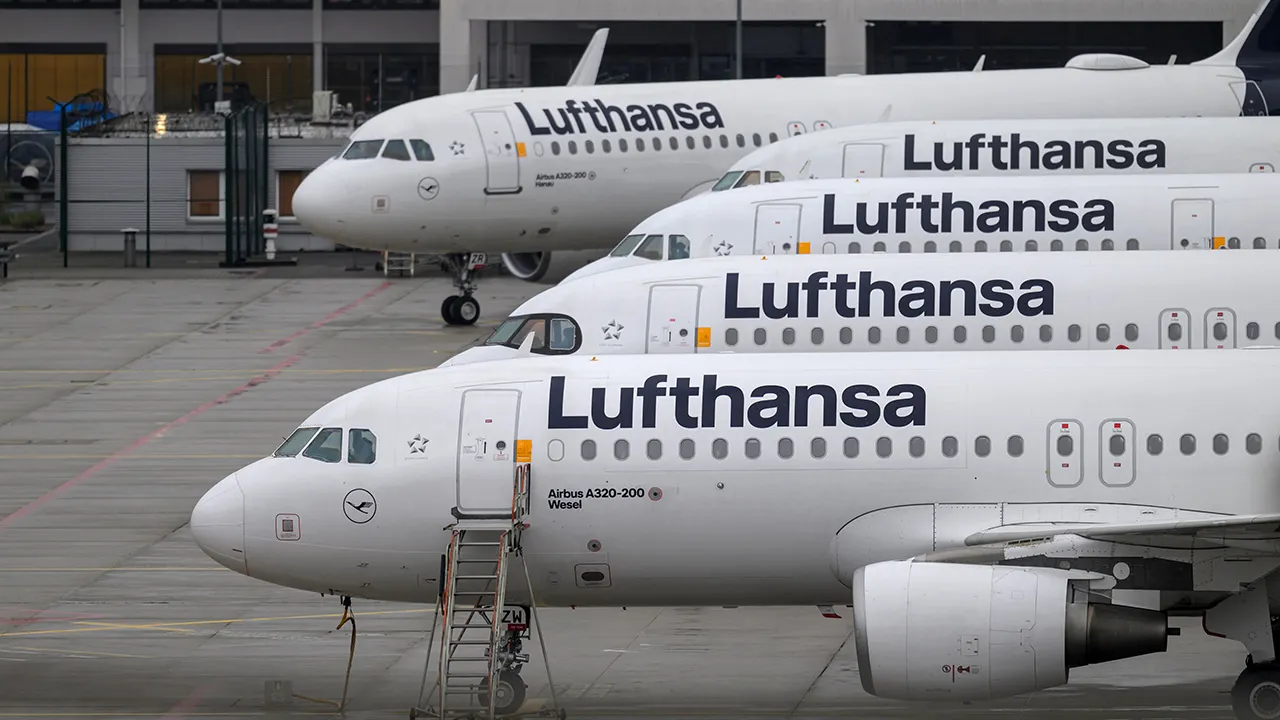
The global aviation sector is bracing for a turbulent period as surging jet fuel prices, exacerbated by geopolitical instability, force major carriers to recalibrate operations and pass rising costs onto consumers. Lufthansa, Germany’s flagship airline, has announced a significant cut of approximately 20,000 short-haul flights through October, directly attributing the move to the spike in jet fuel costs that has rendered many routes “unprofitable.” This strategic decision by a leading European carrier signals a broader market adjustment as airlines worldwide grapple with a new, high-cost operating environment.
Lufthansa’s proactive measure is projected to save about 40,000 metric tons of jet fuel. The company explicitly stated that fuel prices have roughly doubled since the outbreak of the Iran conflict, dramatically altering the economic viability of its extensive short-haul network. “In total, 20,000 short-haul flights will be removed from the schedule through October, equivalent to approximately 40,000 metric tons of jet fuel, the price of which has doubled since the outbreak of the Iran conflict,” the company detailed in a statement. “The schedule adjustments reduce the number of unprofitable short-haul flights across the Lufthansa Group network.” For investors, this highlights the extreme sensitivity of airline profitability to commodity price fluctuations, particularly when fuel constitutes a substantial portion of operational expenditure.
Lufthansa aircraft sit on the tarmac at Frankfurt Airport on April 13, 2026.(Hannes P Albert/picture alliance via Getty Images)
The root cause of this sudden and severe pressure lies squarely in the volatile energy market, specifically impacted by the ongoing geopolitical tensions stemming from the Iran conflict. The Strait of Hormuz, a critical maritime chokepoint connecting the Persian Gulf to the open ocean, is vital for global energy supply, with a significant portion of the world’s seaborne oil passing through it daily. Iranian attacks and threats to cargo ships in this narrow passage have severely constrained the flow of crude oil, introducing a substantial risk premium into global oil prices. This disruption directly impacts the availability and cost of crude, a key input for refined products like jet fuel. A constrained supply environment, coupled with heightened speculative trading reflecting geopolitical uncertainty, has pushed benchmark oil prices like Brent crude to multi-year highs, with the cascading effect on jet fuel being immediate and pronounced.
This isn’t an isolated incident affecting only one airline; it reflects a systemic challenge confronting the entire global aviation industry. Other major carriers are implementing similar strategic adjustments. Air Canada, for instance, recently announced the suspension of select U.S.-bound routes as it contends with the same relentless climb in jet fuel prices. Similarly, Delta Air Lines has trimmed some of its summer routes, describing these adjustments as part of “normal planning” – a euphemism often used to de-emphasize the underlying cost pressures. These synchronized actions across major airlines underscore a collective industry response to manage capacity and protect margins in the face of runaway input costs.
Beyond capacity reductions, airlines are also leveraging other revenue streams to offset the increased operational burden. Several major airlines – including JetBlue, United, Delta, and Southwest – have recently raised baggage fees, a direct move to pass on costs to the consumer. Sean Cudahy, a senior aviation reporter at The Points Guy, accurately summarizes the situation: “We’re seeing airfare increase across the board, from the full-service airlines to the budget carriers, from domestic flights to long-haul international.” He adds, “And it’s not just fares – almost every major U.S. carrier has hiked checked bag fees, too. This is really just a classic case of companies passing on costs to their customers, and it’s a big cost at that.” For the travel industry, this indicates a significant shift, where ancillary fees become not just supplementary income but critical components of an airline’s profitability strategy.
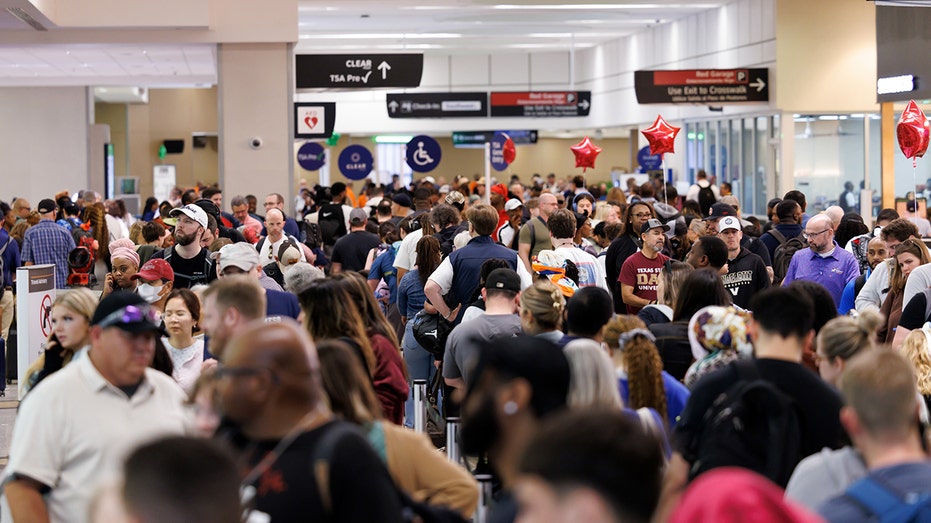
Travelers wait in line at a Transportation Security Administration (TSA) checkpoint at William P. Hobby Airport in Houston, Texas, on March 9, 2026. (Mark Felix/Bloomberg via Getty Images)
Cudahy’s insights further highlight the enduring nature of these financial pressures. He notes that jet fuel is typically airlines’ second-largest expense, making its volatility a primary concern for management teams and investors alike. Furthermore, he cautions against expecting a rapid reversal: “Even if the Strait of Hormuz reopened tomorrow, you’d likely see lingering high fares for months to come. And those checked bag fees that just rose? Those almost never come back down once they go up.” This observation is crucial for market participants, suggesting that the current wave of cost increases may represent a “new normal” for air travel pricing, rather than a temporary blip.
The financial implications for airlines are profound. Reduced capacity, while an attempt to shore up profitability on remaining routes, often means forfeiting potential revenue from higher passenger volumes. The balance between maintaining load factors and ensuring ticket prices cover escalating costs becomes a tightrope walk. Quarterly earnings reports across the sector are likely to reflect these pressures, potentially leading to downward revisions in earnings guidance and putting pressure on airline stock valuations. Investors will be closely scrutinizing how effectively airlines can manage this delicate balance of operational efficiency, cost control, and pricing power in a market where demand remains strong but cost structures are rapidly inflating.
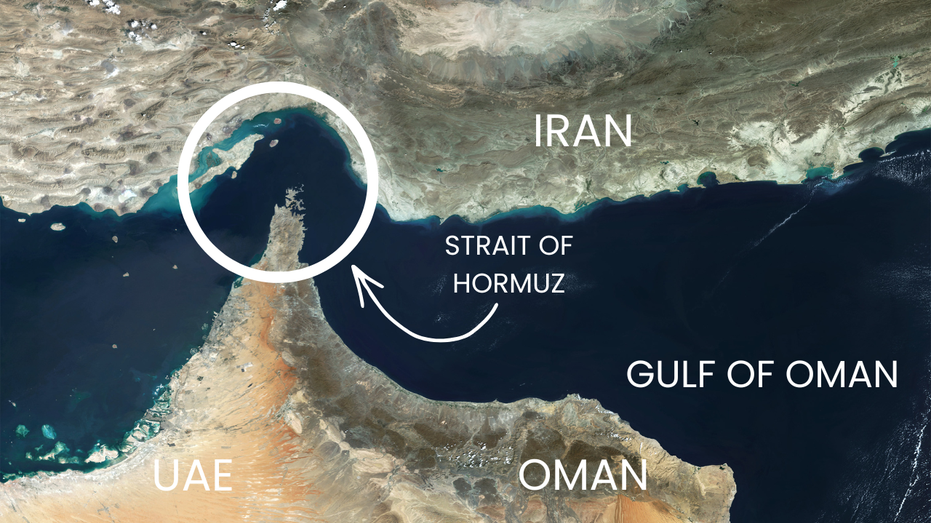
A satellite image shows the Strait of Hormuz, a key maritime passage connecting the Persian Gulf to the Gulf of Oman, vital for global energy supply.(Amanda Macias/Fox News Digital)
GET FOX BUSINESS ON THE GO BY CLICKING HERE
Market Impact
The current confluence of geopolitical risk and soaring energy prices presents a significant headwind for the airline sector and broader travel industry. Investors in airline equities should anticipate continued margin compression, potential downgrades in earnings forecasts, and increased stock price volatility as companies navigate this high-cost environment. The sustained upward pressure on jet fuel, driven by enduring geopolitical tensions around critical chokepoints like the Strait of Hormuz, establishes a fundamental risk premium for all energy-intensive industries. For consumers, the market impact is a ‘new normal’ of higher airfares and persistent ancillary fees, potentially dampening discretionary travel demand and shifting consumer spending patterns. Furthermore, the ripple effect could extend to related sectors such as tourism, hospitality, and even cargo logistics, as reduced capacity and higher costs impact global supply chains. Financial markets will closely monitor crude oil benchmarks, particularly Brent, as a leading indicator for the airline industry’s future profitability and the broader economic implications of elevated energy costs.
FOX Business reached out to Lufthansa and Delta Air Lines for comment.
FOX Business’ Eric Revell and Bonny Chu contributed to this report.