
British Army’s 3rd Division Unveils Future Combat Strategy Incorporating Autonomous Systems
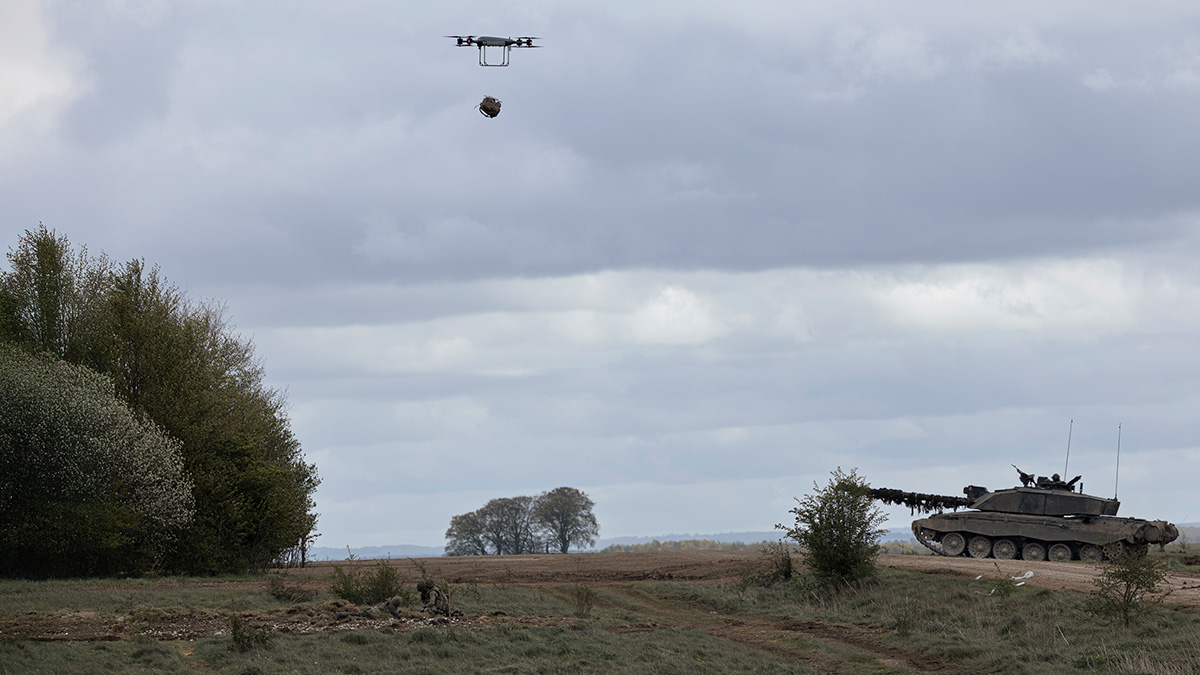
The British Army’s 3rd Division recently showcased its future operational doctrine at an Armoured Expo event held on Salisbury Plain. The demonstration illustrated how autonomous ground vehicles, uncrewed aerial systems (drones), and human soldiers are intended to operate in concert, forming an integrated force capable of operating across traditional domains of land, air, and sea, as well as the emerging frontiers of space and cyberspace. This strategic approach, as articulated by Army leadership, marks a significant evolution in military thinking and capability development.
This event served as a practical manifestation of the vision put forth by the Chief of the General Staff, General Sir Roly Walker. General Walker’s strategy aims to create an Army that is both more lethal and more resilient to adversary actions, fundamentally altering the conventional deployment and utilization of military assets. A core tenet of this vision is a rebalancing of combat power, with a specific breakdown: 20 percent of the Army’s fighting capability is projected to derive from conventional, crewed armoured vehicles. These vehicles are designed for durability and troop transport, providing essential protection and mobility on the battlefield. The remaining 80 percent represents a significant shift towards uncrewed systems. Of this, 40 percent will comprise reusable uncrewed robots and drones, valued for their relative cost-effectiveness in production and their expendable nature in high-risk scenarios. The final 40 percent is allocated to simple, low-cost, and largely disposable drones and missiles, designed for mass production and deployment to overwhelm adversaries and generate numerical superiority on the battlefield.
Major General Olly Brown, General Officer Commanding the 3rd Division, addressed industry partners at the expo, emphasizing the critical challenges confronting the Army. He specifically highlighted the “demanding challenge to be ready to fight, pick apart, and destroy a Russian warfighting enterprise.” This statement underscores the prevailing geopolitical landscape and the perceived threats informing the Army’s strategic priorities. Major General Brown made it clear that achieving this formidable objective would necessitate extensive collaboration, stating, “we cannot do that alone; we must do it with our mission partners.” He further stressed the indispensable role of industry in generating the advanced capabilities required for the Army to succeed in future conflicts, asserting that such capabilities would not materialize “without you.” This emphasis on partnership signifies a recognition that cutting-edge military technology development often relies on the innovation and production capacity of the private sector, requiring a symbiotic relationship between defense forces and industrial entities.
The Armoured Expo provided attendees with a range of interactive experiences. These included immersive simulations designed to place guests within a virtual combat scenario, effectively demonstrating the operational concepts and the progress achieved by the 3rd Division, often referred to as the “Iron Division,” and its industry collaborators. A central feature of the event was a live demonstration showcasing the synchronized operation of autonomous armoured ground vehicles, various types of drones, and human soldiers. This live exercise illustrated the practical integration of these diverse assets into a cohesive fighting unit. Concurrently, industry partners hosted workshops where they previewed innovative equipment currently under development. These sessions provided soldiers with the opportunity to test the nascent technology and offer immediate feedback, a crucial step in the iterative process of refining capabilities and ensuring their practicality and effectiveness in real-world combat environments. This collaborative feedback loop is vital for agile development and ensuring that equipment meets the specific needs of end-users.
In his concluding remarks, Major General Brown reiterated his profound appreciation for the contributions of the Army’s mission partners. He commended their “openness, challenge, and creativity,” acknowledging that the rapid pace of technological evolution demands an equally agile and innovative approach from all stakeholders. He articulated that when the ingenuity and innovation of industry partners are combined with the “imagination, professional skill and discipline of soldiers,” it forms “an unbeatable battle-winning team.” This statement highlights that despite the increasing reliance on advanced technology and autonomous systems, the human element—the skill, adaptability, and decision-making of soldiers—remains central to the British Army’s vision for future combat success.
Why This Matters
The British Army’s demonstration and articulated strategy represent a significant pivot in military doctrine, with far-reaching implications for global defense, technological development, and the future of warfare. This shift is not merely an incremental upgrade but a fundamental rethinking of how land forces will operate in an increasingly complex and contested battlespace.
Firstly, this strategy underscores a clear recognition of the changing nature of warfare, heavily influenced by lessons drawn from recent conflicts, such as the ongoing war in Ukraine. The effectiveness of commercially available drones, the challenges of traditional armoured warfare against modern anti-tank capabilities, and the importance of mass and expendability have all reshaped military thinking. By prioritizing uncrewed systems and massed, low-cost drones, the British Army is adapting to a future where saturation attacks, persistent surveillance, and reducing human risk in dangerous zones become paramount. This approach also seeks to leverage economic warfare, forcing adversaries to expend high-value assets to counter numerous low-cost threats.
Secondly, the focus on integration across land, air, sea, space, and cyberspace reflects a comprehensive understanding of multi-domain operations. Modern conflicts are no longer confined to a single physical domain; success increasingly depends on the seamless coordination of capabilities across all these spheres. The ability of autonomous ground vehicles to communicate with drones, which in turn feed intelligence to human commanders and potentially guide precision strikes, creates a highly networked and adaptive force structure. This integrated approach aims to create a disproportionate advantage by overwhelming enemy decision-making cycles and disrupting their command and control networks.
Thirdly, the explicit call for collaboration with industry partners highlights a critical trend in defense procurement and innovation. Traditional, lengthy procurement cycles are often too slow to keep pace with rapid technological advancements. By engaging industry early and fostering a culture of “openness, challenge, and creativity,” the Army seeks to accelerate the development, testing, and deployment of cutting-edge technologies. This model encourages agile development, iterative improvements, and the co-creation of solutions, ensuring that the capabilities developed are both technologically advanced and practically effective for soldiers on the ground. This also has broader economic implications, driving investment and innovation within the defense technology sector.
Finally, the strategy addresses the persistent challenge of deterrence in a volatile geopolitical environment, particularly in light of the explicit mention of a “Russian warfighting enterprise.” By demonstrating a commitment to advanced, integrated capabilities, the British Army aims to signal its readiness and capacity to deter potential aggressors. The emphasis on lethality combined with resilience and adaptability serves as a powerful message that the United Kingdom is preparing for future high-intensity conflicts. This strategic evolution will likely influence the defense doctrines of allied nations and contribute to ongoing discussions within NATO regarding collective security and technological superiority, ultimately shaping the balance of power on the global stage for decades to come.