
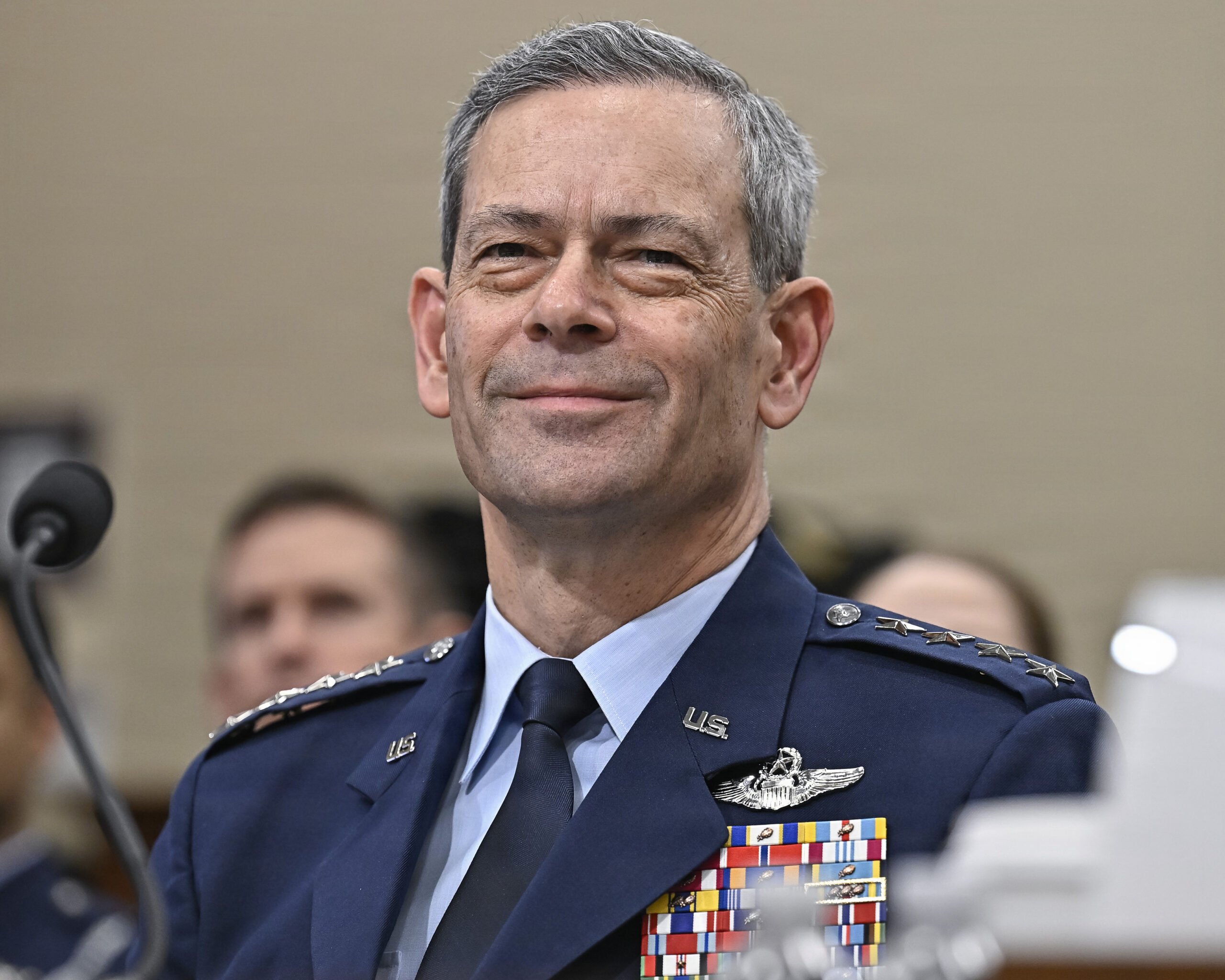
The U.S. Air Force is seeking a supplemental budget request from Congress to replace aircraft lost during “Operation Epic Fury,” its ongoing military campaign against Iran. This marks the first public acknowledgment from the service that it will pursue additional funding beyond its regular annual procurements to replenish its fleet, according to Chief of Staff Gen. Kenneth S. Wilsbach.
Gen. Wilsbach made these comments on April 30, though he did not specify the exact number of aircraft the Air Force would request through the supplemental funding. The challenge of replacement is compounded by the fact that some of the aircraft types lost are no longer in production, making direct procurement of identical models impossible.
Since the air campaign against Iran commenced on February 27, the U.S. Air Force has sustained significant losses. Confirmed figures indicate at least nine manned aircraft and approximately two dozen unmanned aerial systems (UAS) have been destroyed. Additionally, an unspecified number of other aircraft have sustained damage, with their repairability and the extent of their damage remaining uncertain.
Specific losses and major damages, as confirmed by Pentagon officials or sources familiar with the matter, include:
- One F-15E Strike Eagle fighter jet
- One KC-135 Stratotanker aerial refueling aircraft
- One MC-130J Commando II special operations transport aircraft
- One E-3 Sentry Airborne Warning and Control System (AWACS) aircraft
- Five A-10 Thunderbolt II close air support aircraft
- Approximately 24 MQ-9A Reaper unmanned aerial systems
During a House Appropriations defense subcommittee hearing, Representative Pete Aguilar (D-Calif.) questioned Gen. Wilsbach about the impact of these aircraft losses on the Air Force’s strategic plans. Wilsbach’s response shed light on the service’s two-pronged approach to address the issue.
“We hope to be able to address this in a supplemental for the aircraft that we’ve lost,” Wilsbach stated. He further added, “And the procurement going forward is meant to increase the number of tails we have, especially in the fighter force, but it will also include bombers and tankers as well. So both the supplemental and the ’27 budget is supposed to address those losses.” This indicates that while the supplemental request would cover immediate replacements for war losses, the annual 2027 defense budget would also incorporate long-term fleet expansion and modernization efforts, potentially factoring in the attrition experienced in Operation Epic Fury.
Discussions regarding a supplemental funding request to cover the costs of the Iran conflict have been ongoing for several weeks. Initial reports suggested a potential White House request of $200 billion, though this figure has since reportedly been scaled down to somewhere between $50 billion and $100 billion. On April 29, acting Pentagon comptroller Jules “Jay” Hurst III informed lawmakers that the cost of Operation Epic Fury to date has reached $25 billion. This figure, according to Hurst, encompasses expenditures on munitions, operations and maintenance, and “equipment replacement.” However, in a subsequent hearing on April 30, Hurst did not explicitly clarify whether this $25 billion estimate specifically includes the cost of aircraft losses.
Hurst also confirmed on April 29 that a supplemental funding request is imminent, though its final amount will depend on comprehensive cost estimates that are not yet complete. It is important to note that the planning for the 2027 defense budget was largely concluded before the initiation of the Iran conflict, meaning it did not account for the financial or material impact of the ongoing war.
The Air Force faces varying degrees of difficulty in replacing its lost aircraft. For some platforms, direct replacements are available or already in the procurement pipeline. The F-15EX Eagle II, for instance, is currently replacing older F-15E models, and the KC-46 Pegasus is taking over from the aging KC-135 Stratotanker fleet. The service’s proposed 2027 budget already includes plans to acquire 24 F-15EXs and 15 KC-46s, which could potentially be augmented by the supplemental request to accelerate replacements.
However, other aircraft present a more complex replacement challenge. The last MC-130J Commando II special operations variant finished production in January 2025, although its base airframe, the C-130J Super Hercules, remains in production. This means a direct replacement for the specific special operations variant would be difficult or require modifying existing C-130Js. The E-3 Sentry AWACS aircraft poses another dilemma; its planned successor, the E-7 Wedgetail, is still in development, and its long-term acquisition future remains uncertain, leaving a potential gap in vital airborne command and control capabilities. Furthermore, production of the MQ-9A Reaper unmanned aerial system concluded in recent years, though other variants of the MQ-9 family might still be manufactured, complicating a like-for-like replacement.
Perhaps the most contentious replacement issue involves the A-10 Thunderbolt IIs. The Air Force has publicly stated its intention to retire the majority of its A-10 fleet within the next few years, citing its obsolescence in modern combat environments. It remains unclear whether the service will deviate from its divestment plan to retain additional A-10 airframes to account for the five aircraft lost, or if it will simply accelerate their planned retirement without replacement.
Why This Matters
The U.S. Air Force’s request for supplemental funding to replace combat losses in Operation Epic Fury highlights several critical issues with significant implications:
- Military Readiness and Capability:The loss of nine manned aircraft and dozens of unmanned systems, including critical platforms like AWACS, tankers, and specialized transport, directly impacts the Air Force’s operational readiness and its ability to project power globally. Replenishing these assets is essential to maintain strategic advantages and respond to future threats effectively.
- Defense Budget and Public Spending:A large supplemental budget request, potentially in the tens of billions of dollars, represents a substantial additional burden on the U.S. defense budget. This decision will face scrutiny from Congress and the public, raising questions about the financial sustainability of ongoing military operations and the overall allocation of taxpayer funds.
- Geopolitical Signaling:The sustained losses and the need for replenishment underscore the intensity and cost of Operation Epic Fury. This signals the U.S.’s continued commitment to the conflict and its willingness to absorb significant material costs, potentially influencing regional dynamics and the calculations of adversaries and allies alike.
- Challenges for the Defense Industrial Base:The difficulties in replacing certain aircraft types, particularly those out of production or with uncertain successors, reveal potential vulnerabilities in the U.S. defense industrial base. It highlights the long lead times required for manufacturing complex military hardware and the strategic implications of retiring older platforms without clear, immediate replacements.
- Future Procurement and Strategic Planning:The losses could significantly influence the Air Force’s long-term procurement strategies. It may accelerate the acquisition of newer platforms like the F-15EX and KC-46, or prompt a reevaluation of retirement plans for older aircraft like the A-10. It also emphasizes the growing reliance on, and vulnerability of, unmanned systems in modern warfare.
- Transparency and Accountability:The varying estimates for the cost of Operation Epic Fury and the lack of explicit clarification on whether aircraft losses are included in current figures raise questions about transparency in wartime expenditures. Congress and the public will seek clear accounting of funds and justification for future requests.