
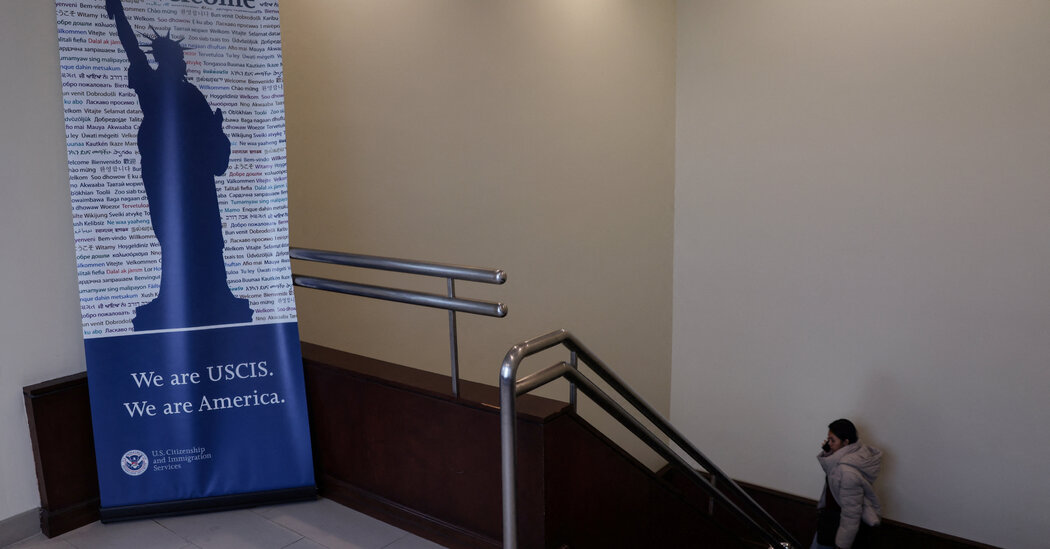
A significant new federal immigration policy is poised to reshape the path to permanent residency in the United States, potentially requiring thousands of individuals currently residing in the country to return to their home nations before they can finalize their applications for green cards. The announcement has triggered widespread concern and uncertainty among immigrant applicants and legal professionals alike, who are now grappling with the implications of the change.
On Friday, U.S. Citizenship and Immigration Services (USCIS), the federal agency responsible for administering the country’s lawful immigration system, declared a shift in its approach to “adjustment of status” applications. Historically, many immigrants eligible for permanent residence were able to apply for and receive their green cards while remaining within the United States, a process known as adjusting their immigration status. Under the new directive, USCIS stated that individuals already in the U.S. would only be granted permanent residence through this domestic process in “extraordinary circumstances.” Otherwise, the default expectation is that anyone seeking permanent U.S. residence must apply and complete the process at an American consulate located in their country of origin.
Immigration lawyers and advocacy organizations quickly responded over the weekend, asserting that this policy change is likely to lead to a substantial reduction in the number of successful green card applications. In the year 2024, approximately 1.4 million green cards were issued. Notably, more than 800,000 of these recipients were already present in the United States and had their immigration status adjusted domestically, highlighting the scale of the population that could be directly impacted by this new requirement.
The altered policy is expected to be particularly problematic for immigrants who are married to U.S. citizens and are seeking permanent residence, according to Charles Kuck, a prominent immigration lawyer and former president of the American Immigration Lawyers Association. These individuals often need to resolve previous immigration issues or periods of unlawful presence before their green card application can be approved. Traditionally, they have been able to address these complexities and complete the adjustment of status process without having to leave the United States, allowing them to remain with their U.S. citizen spouses and families.
“This is simply an attempt to slow immigration,” Mr. Kuck stated, criticizing the policy. He added that the change appears designed to “make immigration so unpleasant that you go home,” suggesting an intent to deter potential applicants through increased difficulty and inconvenience.
Conversely, Zach Kahler, a spokesman for USCIS, defended the new policy on Friday, explaining that it aims to close what the agency perceives as a “loophole.” According to Kahler, this loophole has allowed immigrants to “slip into the shadows and remain in the U.S. illegally after being denied residency.” He underscored the agency’s position by citing an internal memo, which clarifies that allowing immigrants to remain in the country while their green card applications are undergoing processing is “a matter of discretion and administrative grace,” not an inherent right.
Efrén Olivares, the vice president of litigation and legal strategy at the National Immigration Law Center, strongly contends that the new policy’s primary effect will be to significantly disrupt the established green card application process and, by extension, people’s lives. “It’s going to upend people’s lives in every sense of the word,” he remarked, expressing deep concern over the human impact.
Previously, it was common practice for most applicants to be allowed to stay in the United States, often alongside their U.S. citizen spouses and children, while their green card applications proceeded through the lengthy administrative channels. Under the new policy, however, remaining in the country during this period is likely to become an infrequent exception rather than the norm. Mr. Olivares noted that in the past, an immigrant might have been asked to apply from their home country only under truly extraordinary and severe circumstances, such as a history of multiple deportations or a serious criminal record. The new policy reverses this precedent, making overseas processing the default unless extraordinary circumstances warrant an exception to stay.
The approval timelines for permanent residency can vary widely depending on the relationship to the U.S. citizen petitioner, Mr. Olivares further explained. While a spouse might face a waiting period of approximately one year, siblings could wait upward of five years, and for parents of U.S. citizens, the process could extend for as long as a decade. The requirement to return to one’s home country for these extended periods could place immense strain on families and individuals, forcing prolonged separations.
Several immigrants, who spoke on the condition of anonymity due to fears of potential retaliation against their applications or current status, shared their confusion and anxiety on Saturday. They expressed profound worry about what this abrupt change could mean for their personal applications or those of their partners. One Albanian woman, who obtained a green card in 2022 through the diversity lottery system, immediately contacted her fiancé, who resides in Italy, after the announcement. Her fiancé is anticipated to arrive in the United States this year on a work visa, and the couple is now urgently seeking legal counsel from an immigration lawyer to navigate the complex new landscape and determine the best course of action for their future.
Karla Ostolaza, the managing director of the immigration practice at the Bronx Defenders, a public defense nonprofit, emphasized that while the full impact of this policy may not be immediately apparent, its effects will be deeply and broadly felt over time. She warned that the stricter requirements could push vulnerable individuals further into precarious situations. “They will stay in the shadows, remain without status and vulnerable to exploitation, and fence off any better opportunities to obtain status, even if they’re completely eligible,” Ostolaza predicted, highlighting concerns about increased undocumented populations and human rights issues.
Maia Coleman and Oishika Neogi contributed reporting.
Why This Matters
This new federal immigration policy represents a significant recalibration of a key pathway to legal permanent residency in the United States, with far-reaching implications for hundreds of thousands of individuals, their families, and the broader U.S. society and economy. The shift from allowing many applicants to adjust their status from within the U.S. to primarily requiring them to return to their home countries for consular processing introduces several critical concerns.
Firstly, the humanitarian impact is substantial. Requiring individuals, including those married to U.S. citizens, to leave the country for potentially years to complete their green card processing will lead to prolonged family separations. This creates immense emotional and financial strain on U.S. families, challenging the fundamental right to family unity often cited in immigration law. Children of U.S. citizens could be separated from a parent for extended periods, or U.S. citizens might be forced to choose between leaving their country to be with a spouse or enduring long-distance relationships.
Secondly, the policy could have significant economic repercussions. Immigrants already in the U.S., often working and contributing to the economy, may be forced to abandon jobs and businesses, resulting in lost tax revenue and reduced economic activity. The “brain drain” of skilled or educated individuals having to leave could also impact various sectors. Moreover, the increased complexity and cost associated with international travel and legal fees for consular processing will be a financial burden on applicants and their U.S. citizen sponsors, potentially deterring eligible individuals from pursuing legal immigration altogether.
Thirdly, there are concerns about administrative efficiency and justice. Shifting a large volume of applications from domestic USCIS offices to overseas consulates could overwhelm these facilities, leading to increased backlogs and even longer processing times. This could exacerbate the very “shadows” that USCIS claims to be addressing, as individuals might opt to remain in the U.S. without legal status rather than face the daunting prospect of leaving for an uncertain, years-long wait abroad. This could inadvertently increase vulnerability to exploitation among undocumented populations.
Finally, this policy reflects a broader, ongoing debate about the future of legal immigration in the United States. While USCIS frames the change as a measure to enforce existing rules and prevent misuse of the system, critics view it as a deliberate move to reduce legal immigration and make the process more punitive. How this policy is implemented and its ultimate effects will serve as a crucial indicator of the country’s stance on immigration, impacting its international image, its economic dynamism, and the lives of millions.