
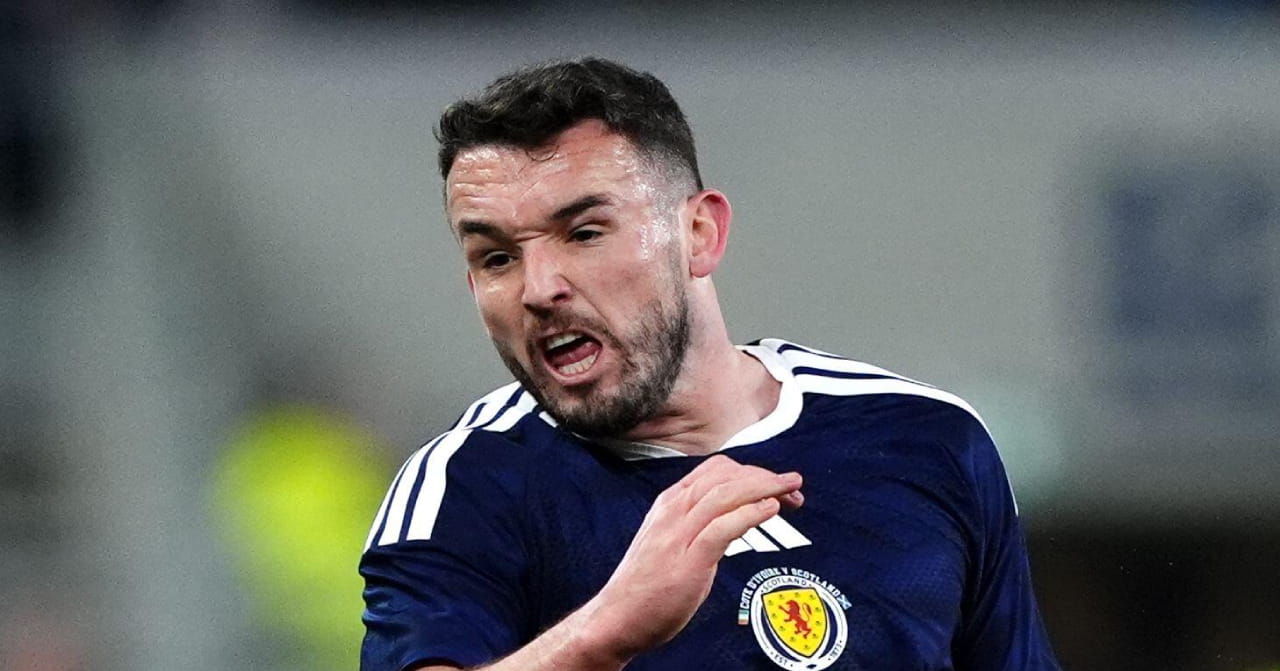
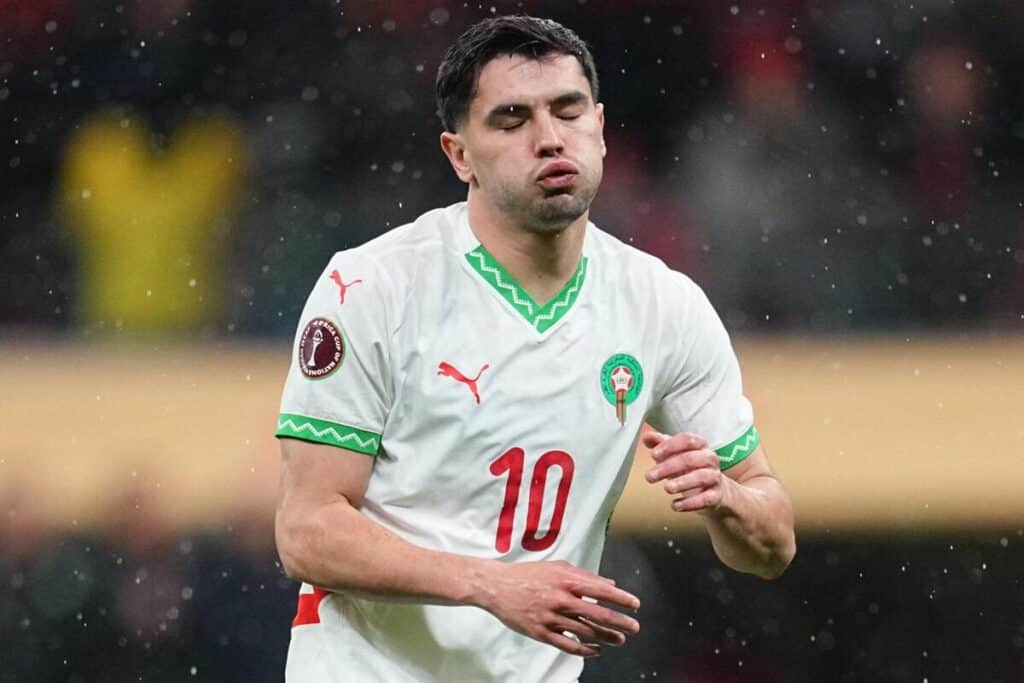
**Boston, MA –** The roar of the crowd had barely settled, the pre-match anthems still echoing in the crisp Boston air, when Ismael Saibari unleashed a bolt of pure lightning. Just **71 seconds** into their World Cup 2026 clash, the dynamic Moroccan midfielder etched his name into the annals, slamming home a sensational strike that not only broke the deadlock but also shattered Scotland’s impenetrable defensive record at this tournament. Morocco had become the first team to breach the Tartan Army’s resolve, and they did it with audacious speed and clinical precision.
The PSV forward, widely touted for a blockbuster move to Bayern Munich, showcased exactly why Europe’s elite are clamoring for his signature. Receiving a sublime, lofted pass from the mercurial Brahim Diaz – a player whose own switch from Spain to the Atlas Lions has been a masterstroke – Saibari found himself in a tight spot inside the box. But instead of faltering, he unleashed a fierce, unstoppable shot that left Angus Gunn with no chance. This wasn’t a fluke; it was the mark of a player in scintillating form, building on his earlier 21st-minute goal in Morocco’s hard-fought 1-1 draw against Brazil.
Former Scotland striker Ally McCoist, providing commentary for ITV, couldn’t help but marvel, despite the blow to his national side. “He looks a class player,” McCoist exclaimed, his voice tinged with both admiration and a hint of dread. “The finish against Brazil was deft, a touch of pure finesse. But that? That was sheer power. The finish is absolutely ridiculous.” High praise indeed for a strike that immediately set the tone for what promised to be a pulsating encounter.
Scotland’s Early Setback: A Tactical Misstep
While Saibari’s brilliance was undeniable, the early goal also highlighted a critical defensive lapse from Scotland. McCoist didn’t shy away from pinpointing the culprit, lamenting defender Grant Hanley’s misjudgment of the offside trap. “Just a poor decision from the centre-back,” McCoist rued. “He goes to step out, and he goes at the wrong time, leaving [Saibari] onside.” It was a moment of collective indecision that proved costly, gifting Morocco an invaluable early advantage and forcing Scotland to chase the game from the outset.
For Steve Clarke’s men, this match carried immense weight. A victory would have guaranteed them a coveted spot in the knockout stages, building on their gritty 1-0 win over Haiti on Matchday One. The dream of making history – of progressing beyond the group stage at a major tournament for the very first time – hung heavy in the Boston air. McCoist, ever the pragmatist, predicted a measured approach despite the early goal: “I wouldn’t have thought they will open up too early. They’ll keep the same approach. They’ve just got to regroup, take shape, get some possession of the ball and play their way into the game.” The challenge was clear: steady the ship, regain composure, and find a way back into a game that had started in the most disastrous fashion.
Tactical Lineups: Scotland’s Forced Changes, Morocco’s Stability
Scotland manager Steve Clarke was forced into personnel adjustments, with defender Scott McKenna sidelined by a calf injury. In came Kieran Tierney, Nathan Patterson, and Ryan Christie, replacing Aaron Hickey, Ben Gannon-Doak, and Lawrence Shankland. Tierney’s return, in particular, brought a wealth of experience and defensive solidity, while Patterson offered dynamism on the flank. These changes reflected Clarke’s attempt to balance defensive integrity with attacking impetus against a technically gifted Moroccan side.
**Scotland starting XI:** Angus Gunn, Andy Robertson, Grant Hanley, Kieran Tierney, Jack Hendry, Nathan Patterson, Scott McTominay, John McGinn, Ryan Christie, Lewis Ferguson, Che Adams
**Scotland substitutes:** Liam Kelly, Craig Gordon, Aaron Hickey, John Souttar, Dominic Hyam, Anthony Ralston, Scott McKenna, Tyler Fletcher, Kenny McLean, Lyndon Dykes, Ross Stewart, Ben Gannon-Doak, George Hirst, Lawrence Shankland, Findlay Curtis
Morocco’s Unchanged XI: A Testament to Confidence
In stark contrast, Morocco coach Walid Regragui opted for an unchanged lineup, a clear sign of confidence in the squad that had battled Brazil to a draw. Their stability, particularly in midfield and attack, promised continuity and a cohesive tactical approach, aiming to exploit Scotland’s defensive vulnerabilities and control the tempo of the game.
**Morocco starting XI:** Yassine Bounou, Achraf Hakimi, Noussair Mazraoui, Issa Diop, Chadi Riad, Ayyoub Bouaddi, Azzedine Ounahi, Ismael Saibari, Bilal El Khannouss, Neil El Aynaoui, Brahim Diaz
**Morocco substitutes:** Munir El Kajoui, Ahmed Reda Tagnaouti, Marwane Saadane, Zakaria El Ouahdi, Youssef Belammari, Redouane Halhal, Anass Salah Eddine, Sofyan Amrabat, Chemseddine Talbi, Samir El Moukabit, Gessime Yassine, Soufiane Rahimi, Amine Sbai, Ayoub El Kaabi, Ayoube Amaimouni
Global Spectacle: Where the Action Unfolded
The electrifying encounter kicked off on Friday at 23:00 BST (18:00 ET / 15:00 PT), captivating audiences across the globe. In the UK, football fanatics tuned into ITV1 for live coverage, with seamless streaming options available via ITV’s website and the ITVX app, ensuring that no fan missed a single moment of the high-stakes drama unfolding in Boston.
Game Highlights
The early shock of Saibari’s goal sent tremors through the Scottish ranks, but the Tartan Army, spurred on by their fervent supporters, refused to buckle. For the next fifteen minutes, Scotland pressed hard, their midfield general John McGinn driving them forward with relentless energy. A fierce long-range effort from Scott McTominay in the 12th minute forced a spectacular diving save from Moroccan keeper Yassine Bounou, a moment that momentarily reignited Scottish hopes.
Morocco, however, showed their tactical maturity. They absorbed the pressure, relying on the exceptional defensive work of Achraf Hakimi and Noussair Mazraoui to thwart Scottish attacks down the flanks. Their midfield, marshaled by the composed Ayyoub Bouaddi and Azzedine Ounahi, began to assert control, dictating the pace and denying Scotland easy possession. Just before halftime, Brahim Diaz, a constant thorn in Scotland’s side, unleashed a curling shot that grazed the crossbar, a stark reminder of Morocco’s potent counter-attacking threat.
The second half saw Scotland push even harder, making brave substitutions to add more attacking firepower. Che Adams found himself in promising positions but was often crowded out by Morocco’s disciplined backline. The decisive blow came in the 78th minute when Bilal El Khannouss, after a dazzling solo run down the left, delivered a pinpoint cross into the box. Ayoub El Kaabi, introduced from the bench, rose highest to power home a header, doubling Morocco’s lead and effectively sealing Scotland’s fate with a dominant 2-0 victory. The Atlas Lions celebrated a well-deserved win, leaving Scotland to reflect on what might have been.
Post-Match Analysis: The Weight of History and Performance
The statistics paint a vivid picture of the challenges and triumphs for both nations. Morocco’s 2-0 victory not only replicated but intensified their historical dominance over Scotland, recalling their emphatic 3-0 win in the 1998 finals. This psychological edge, combined with their current form, makes them a formidable opponent. They are now unbeaten in their last six World Cup group matches against European opposition, a testament to their tactical discipline and adaptability against different styles of play. Their defensive solidity, exemplified by Achraf Hakimi’s exceptional work rate (leading the 2022 World Cup in tackles and ground duels won), provides a robust foundation for their flair players. The blend of talent, including French U21 captain Ayyoub Bouaddi’s switch and Brahim Diaz’s Spanish roots, truly showcases a rising footballing nation.
For Scotland, the narrative is one of persistent struggle at major tournaments. Despite winning eight of their last 11 competitive matches and five of their last six prior to this game, the hurdle of the group stage remains insurmountable. John McGinn’s remarkable record of 21 goals under Steve Clarke highlights his individual brilliance, but it hasn’t been enough to push the team beyond the familiar opening round exit in their 12 previous attempts. Clarke, leading Scotland in an unprecedented third major tournament, now faces the unenviable task of lifting a squad that once again fell short of breaking new ground. The Tartan Army’s dream of securing consecutive wins at a major tournament for the first time will have to wait, leaving fans with a bitter taste of ‘what if’.
Prediction: Paths Diverge
Following this convincing 2-0 victory, **Morocco** have firmly established themselves as serious contenders to progress deep into the knockout stages. Their blend of defensive resilience, midfield control, and clinical attacking prowess, spearheaded by the likes of Saibari and Diaz, makes them a dangerous proposition for any opponent. They will likely top their group, carrying significant momentum into the next round, where their tactical discipline and individual brilliance could see them spring further surprises.
For **Scotland**, this defeat is a crushing blow. While their performance against Haiti showed promise, the inability to withstand Morocco’s early surge and find an equalizer demonstrates a persistent vulnerability at the highest level. Their hopes of advancing are now hanging by a thread, contingent on results elsewhere and a vastly improved performance in their final group game. Unfortunately, based on the tactical gaps exposed and the pressure on their squad, it’s highly probable that Scotland will once again fail to surpass the group stage, marking another chapter in their cycle of major tournament disappointment.