
**Key Takeaways**
1. **Regulatory Validation & Precedent:** The OCC’s preliminary conditional approval of World Liberty Trust Company marks a significant step towards federal regulatory acceptance for crypto-native financial institutions, potentially setting a precedent for other digital asset firms seeking national charters and legitimizing stablecoin operations under traditional banking oversight.
2. **Stablecoin Market Evolution:** The planned launch of USD1, backed by a federally supervised national trust bank, introduces a new, highly regulated contender into the competitive stablecoin landscape. This could drive a flight to quality, elevating standards for transparency and reserve management across the industry, and bolstering the U.S. dollar’s role in the digital economy.
3. **Political & Market Scrutiny:** While the OCC emphasized standard review processes, the Trump family’s affiliation with World Liberty Financial introduces a unique political dimension. This will likely subject USD1 and the trust bank to intensified public and regulatory scrutiny, impacting market perception and potentially shaping future policy discussions around digital assets and political influence.
***
The Office of the Comptroller of the Currency (OCC) has delivered a pivotal decision in the evolving landscape of digital finance, granting preliminary conditional approval for a national trust bank charter to World Liberty Trust Company, National Association. This entity is tied to World Liberty Financial, a crypto venture with notable affiliations to former President Donald Trump’s family. The move, outlined in a letter posted on the OCC’s website, signals a critical juncture for both the nascent crypto industry and traditional banking oversight, offering a glimpse into how federal regulators are adapting to the proliferation of digital assets.
ProCap Financial Chairman and CEO Anthony Pompliano joins ‘Varney & Co.’ to discuss bitcoin’s long-term growth potential, government money printing and his new AI financial platform, Silvia.
The preliminary approval is far more than a bureaucratic formality; it represents a significant regulatory milestone for a crypto-native institution seeking to operate within the established framework of the U.S. financial system. World Liberty Trust Company, based in Bay Harbor Islands, Florida, has articulated clear ambitions: to issue and redeem its USD1 stablecoin, manage its backing reserves, and provide a suite of digital asset custody and related services tailored for institutional clientele. This strategy positions the firm to bridge the gap between traditional finance and the burgeoning digital economy, offering regulated pathways for engagement.
The significance of a national trust bank charter cannot be overstated. For a crypto venture, it confers a level of legitimacy and regulatory clarity that has often been elusive in the digital asset space. Operating under OCC supervision, the World Liberty Trust Company would be subject to the same stringent examination standards that have governed national banks for generations. This institutional robustness is precisely what institutions and risk-averse investors have demanded before committing more capital to the digital asset market.
Zach Witkoff, President and Chairman of World Liberty Trust Company, and son of Trump’s special envoy, Steve Witkoff, underscored this point in a statement. He hailed the decision as a “milestone” and emphasized the commitment to “continuous scrutiny from federal regulators for many years to come.” This willingness to embrace rigorous oversight is a key differentiator in a market often criticized for its regulatory ambiguity. Witkoff further articulated the firm’s strategic vision via an X post: “Our ambition is clear: to build the most trusted and widely used digital dollar in the world while strengthening the role of the U.S. dollar across the global economy.” This aligns with broader policy objectives to ensure the U.S. dollar maintains its primacy in a digital future.
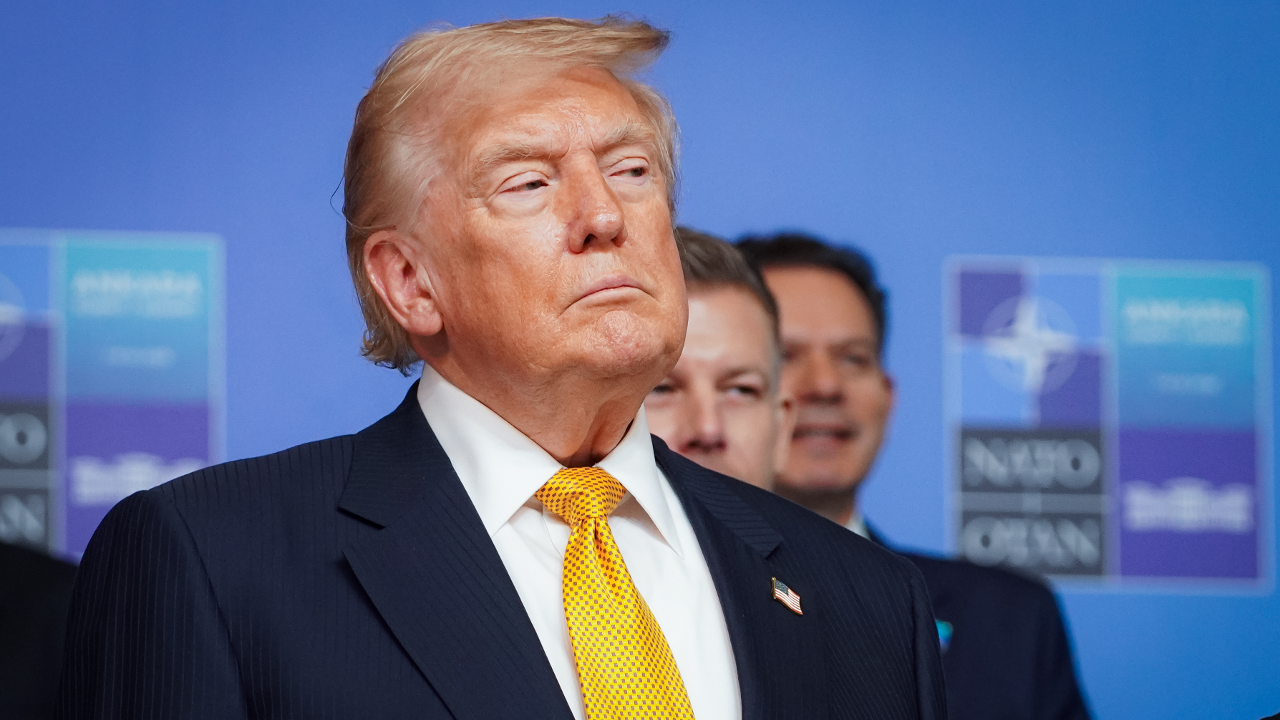
President Donald Trump’s family is affiliated with World Liberty Financial, which received preliminary conditional approval from the OCC for a national trust bank.(Ahmet Serdar Eser/Anadolu via Getty Images / Getty Images)
The proposed USD1 stablecoin enters a highly competitive market currently dominated by established players like Tether’s USDT and Circle’s USDC. However, USD1 aims to carve out its niche by emphasizing its federal regulatory backing and transparency under OCC supervision. This could appeal to institutional investors and corporate treasuries that prioritize regulatory compliance and minimize counterparty risk. The market’s response to a federally supervised stablecoin could set new benchmarks for trust and operational integrity, potentially driving a “flight to quality” among stablecoin users.
Despite the preliminary approval, the World Liberty Trust Company is not yet operational. It must satisfy a series of rigorous requirements before receiving final approval from the OCC and commencing operations. This phased approach is standard for de novo bank applications and ensures all regulatory, operational, and financial safeguards are in place. The process is a testament to the meticulous nature of bank chartering, designed to protect the financial system and consumers.
A significant aspect of the OCC’s decision-making process involved addressing numerous objections raised by public commenters. These concerns spanned potential conflicts of interest stemming from the Trump family’s involvement, foreign investment implications, specific stablecoin regulatory frameworks, the absence of FDIC insurance (which is typical for trust banks focused on institutional custody rather than retail deposits), and allegations of regulatory favoritism. World Liberty Financial’s website transparently states that “an entity affiliated with Donald J. Trump and certain of his family members” holds a 38% stake.
The OCC’s response to these objections was firm and procedural. It rejected them as grounds for denial, emphasizing that “Career OCC staff reviewed the application for consistency with the statutory, regulatory, and policy requirements and factors for approval of a de novo application.” This assertion is crucial for maintaining the integrity of the regulatory process, signaling that the decision was based on merit and adherence to established banking laws, rather than political influence. Such a stance is vital for fostering market confidence and ensuring a level playing field for all applicants.
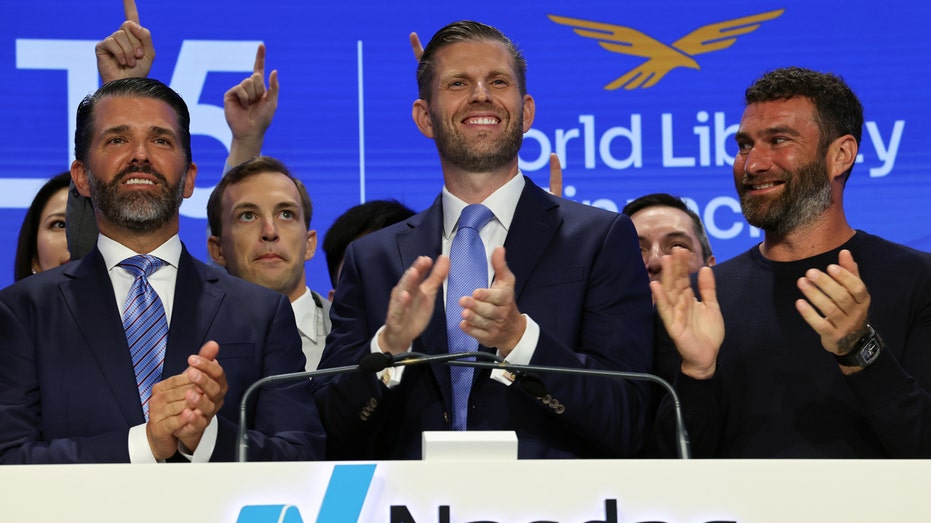
Eric Trump (center), the newly appointed ALT5 Board director of World Liberty Financial, is joined by his brother and ALT5 Board Observer Donald Trump Jr. (left); Zach Witkoff (center left), co-founder and CEO of World Liberty Financial; and Zak Folk(Spencer Platt/Getty Images)
An OCC official, speaking to FOX Business, reiterated the agency’s commitment to supporting de novo banks, highlighting their importance to a healthy financial ecosystem. The official noted that a robust pipeline of new banks fosters competition, drives innovation, and expands consumer choice, ultimately contributing to a diverse and resilient banking system that can adapt to a modern economy. This perspective is particularly relevant for the digital asset space, where new entrants are often the catalysts for technological advancement and service diversification.
The competitive landscape for stablecoins and digital asset custody is intensifying globally. With traditional financial giants like BlackRock exploring tokenized assets and central banks investigating digital currencies, the regulatory clarity offered by a national trust charter becomes a significant competitive advantage. World Liberty Trust Company’s focus on institutional clients, coupled with federal oversight, could attract asset managers, hedge funds, and corporate entities that have been hesitant to engage with less regulated crypto service providers.
The political dimension, however, remains an underlying narrative. While the OCC’s review was purportedly apolitical, the Trump family’s affiliation will inevitably draw heightened scrutiny from political opponents, media, and even segments of the market. This dual lens – regulatory approval juxtaposed with political connections – adds a unique layer of complexity to World Liberty Financial’s market entry, potentially influencing public perception and investor sentiment in ways that standard de novo banks typically do not encounter.

World Liberty Trust President and Chairman Zach Witkoff called the OCC’s preliminary approval of the proposed national trust bank a “milestone.”(Zak Bennett/Bloomberg via Getty Images / Getty Images)
Ultimately, the OCC’s preliminary approval for World Liberty Trust Company represents a critical waypoint in the ongoing integration of digital assets into the mainstream financial system. It demonstrates that federal regulators are actively engaging with and providing pathways for compliant innovation, even as they navigate complex challenges related to new technologies, market stability, and political optics.
CLICK HERE TO DOWNLOAD THE FOX NEWS APP
Reuters contributed to this report.
***
**Market Impact**
The OCC’s preliminary approval of World Liberty Trust Company carries multifaceted implications for the financial markets and the digital asset ecosystem. Firstly, it establishes a significant regulatory precedent, signaling an increasing comfort level among federal regulators with crypto-native institutions operating under traditional banking charters. This could pave the way for a wave of similar applications, accelerating the institutional adoption of digital assets by providing regulated on-ramps and custody solutions. Secondly, the emergence of USD1 as a federally supervised stablecoin introduces a new dynamic into the highly concentrated stablecoin market. This heightened regulatory backing could drive a “flight to quality,” prompting investors to favor stablecoins with robust federal oversight, thereby potentially increasing competition and pushing existing stablecoin issuers towards greater transparency and regulatory alignment to maintain market share. Lastly, while the OCC emphasized a standard, apolitical review process, the Trump family’s association ensures that this venture will operate under intense public and political scrutiny. This unique confluence of innovation, regulation, and political influence will likely make World Liberty Trust Company a bellwether for how future digital asset ventures navigate the complex interplay between Washington and Wall Street, potentially impacting investor confidence and shaping regulatory discourse for years to come.