
UK Defence Secretary Signals Major Investment in Robotic Ground Platforms
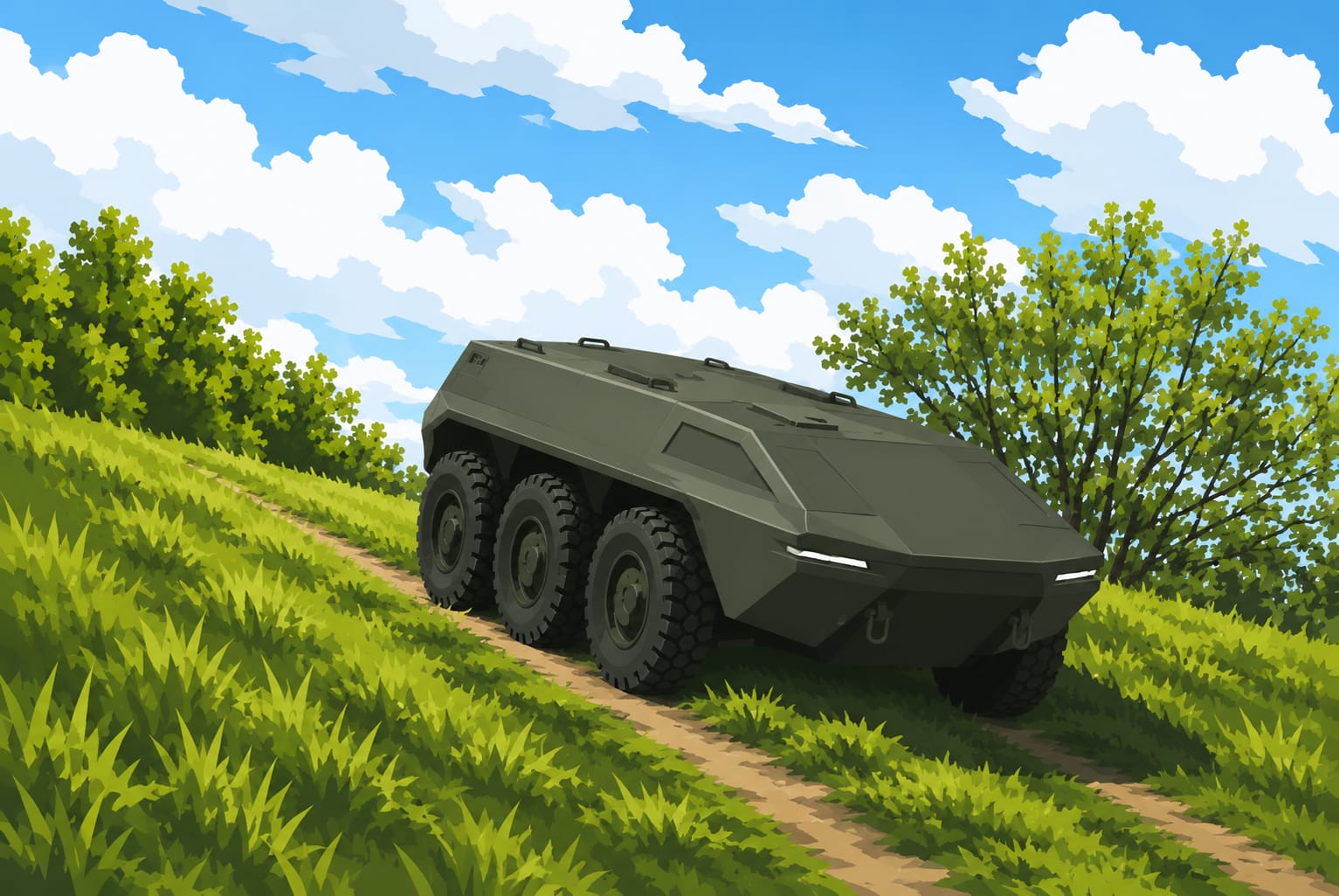
LONDON, UK – June 23– The United Kingdom’s newly appointed Defence Secretary, Jarvis, has indicated a significant forthcoming investment in robotic ground platforms for the British Army. In his first major address since taking office twelve days prior, Jarvis told the RUSI Land Warfare Conference on June 23 that the upcoming Defence Investment Plan (DIP) would allocate substantial resources to the Army’s modernization ambitions, specifically earmarking funds for uncrewed ground vehicles (UGVs).
“The DIP will make real those ambitions, and that includes investing in the uncrewed ground vehicles the Army requires to build the next generation of land forces,” Jarvis stated, signaling a clear strategic direction for the future of the UK’s land capabilities. This commitment represents one of the most explicit public declarations to date that the British Army intends to establish uncrewed ground systems as a formal, recognized investment line, moving beyond a series of experimental initiatives.
While robotic platforms have featured in recent Army activities, including trials conducted under the Robotic Platoon Vehicle programme and ongoing concept development within the Future Soldier framework, Jarvis’s remarks suggest a decisive shift. These efforts are now set to transition from mere experimentation into formal, funded programme investment, indicating a maturation of the Army’s approach to integrating advanced autonomous technologies into its core structure.
Jarvis attributed much of the impetus behind the current modernization drive to General Sir Roly Walker, the Chief of the General Staff. “The land forces which prevail tomorrow will be those who combine high-end platforms with mass, agility and considerable expertise,” Jarvis observed. He further lauded General Walker, stating, “He has done more to modernize the British Army than any other Chief of the General Staff in living memory. You heard his vision earlier. The DIP will make real those ambitions.”
General Walker’s modernization agenda has heavily emphasized what the Army refers to as a ‘recce-strike complex.’ This concept involves the integrated deployment of uncrewed aerial, ground, and undersea systems alongside longer-range artillery, electronic warfare capabilities, and precision fires. The recce-strike framework is deeply informed by observed military practices in Ukraine and lessons gleaned from broader trials conducted across various NATO armies. This integrated approach has become a foundational intellectual pillar for much of the Army’s recent work on equipment procurement and doctrine development, aiming to enhance the military’s ability to locate, identify, and engage targets with greater speed and accuracy.
The Defence Secretary framed the investment in uncrewed ground vehicles within a broader discussion of the critical lessons emerging from the ongoing conflict in Ukraine. “It would be reckless to ignore the lessons of Ukraine,” he asserted. “Artificial intelligence, autonomy and uncrewed systems are no longer capabilities of the future. They will receive investment that reflects their strategic importance.” Jarvis highlighted a significant acceleration in the pace of innovation within the defence sector, a shift he noted was unprecedented compared to his earlier military service, with development cycles now often measured in months rather than years.
However, Jarvis, a former officer in the Parachute Regiment with service experience in Afghanistan, Iraq, Northern Ireland, Kosovo, and Sierra Leone, also cautioned against an excessive reliance on uncrewed platforms. “There are some who hold the view that we should trade everything in the locker for drones,” he acknowledged. “I understand the temptation, but there are important distinctions to make. For as long as we remain a member of NATO, we won’t fight alone. And for as long as we maintain our independent nuclear deterrent, we will always command our own destiny.” He further underscored that even in Ukraine, conflict continues to involve traditional ground combat, with trenches, street-by-street fighting, and the indispensable role of artillery and deep precision strike remaining central to military operations.
The commitment to uncrewed ground vehicles was one of several capability indicators Jarvis provided during his address. He enumerated recent and prospective tasks that the armed forces have been required to undertake, including protecting seabed infrastructure in the High North, securing airspace in the Middle East, preparing for the regeneration of Ukraine’s forces, and ensuring readiness to reopen the Strait of Hormuz. In light of these diverse challenges, Jarvis articulated the necessity for Britain to possess a flexible, hybrid, and integrated force capable of both deterring aggression and fighting effectively across every domain of warfare.
Specific details regarding the Army’s robotic ground vehicle plans, such as platform selection, procurement numbers, precise timelines, and the units designated to field them, have yet to be publicly disclosed. These specifics will ultimately depend on the contents of the forthcoming Defence Investment Plan. Jarvis emphasized that the DIP remains his immediate priority and that he is actively working to finalize and publish the document, having assumed the defence brief just twelve days prior following the departure of his predecessor, John Healey.
Why This Matters
The Defence Secretary’s announcement marks a pivotal moment for the British Armed Forces, signaling a firm commitment to integrate advanced robotic and autonomous systems into its core combat capabilities. This shift carries significant implications across several dimensions:
Strategic Modernization:The formal investment in uncrewed ground vehicles (UGVs) moves the British Army beyond experimental phases into a tangible, long-term modernization strategy. This decision reflects a recognition that future land warfare will increasingly rely on autonomous systems to enhance reconnaissance, lethality, and operational reach, while potentially reducing direct human exposure to high-risk environments. It aligns the UK with a growing trend among advanced militaries worldwide to leverage AI and robotics for a decisive battlefield advantage.
Lessons from Ukraine:The explicit reference to the war in Ukraine underscores the urgency and strategic rationale behind this investment. The conflict has demonstrated the transformative power of uncrewed systems, particularly drones, in areas like intelligence gathering, target identification, and precision strike. By committing to UGVs, the UK aims to absorb these lessons, adapting its force structure and doctrine to meet contemporary and future threats more effectively, leveraging technologies that have proven their worth in real-world combat scenarios.
Defence Industry and Innovation:This commitment will likely stimulate significant investment and innovation within the UK’s defence technology sector. It creates a clear demand signal for companies specializing in robotics, artificial intelligence, and autonomous systems, potentially fostering economic growth and job creation in high-tech industries. The accelerated development cycles mentioned by Jarvis suggest a dynamic environment where innovation is prioritized, pushing the boundaries of defence capabilities.
NATO Interoperability:While emphasizing the UK’s independent nuclear deterrent, Jarvis also highlighted the importance of NATO membership. The development of advanced uncrewed systems will require careful consideration of interoperability with allied forces. As NATO members increasingly invest in similar technologies, the UK’s robust UGV program could strengthen its contribution to collective defence, ensuring seamless integration and combined operational effectiveness within the alliance.
Ethical and Operational Considerations:The caution against an “over-correction” towards uncrewed platforms acknowledges the enduring complexities of warfare, particularly the continued necessity of human soldiers for holding ground, complex decision-making, and ethical considerations. It highlights a nuanced approach, seeking to blend technological superiority with traditional combat capabilities and the irreplaceable human element. This balance is crucial for maintaining both tactical effectiveness and adherence to international humanitarian law in the deployment of autonomous systems.
Global Security Posture:This investment forms part of a broader strategy to maintain a flexible, hybrid, and integrated force capable of addressing a wide spectrum of global challenges, from protecting critical infrastructure in the High North to ensuring maritime security in vital shipping lanes. By enhancing its capabilities in uncrewed ground systems, the UK reinforces its position as a capable and technologically advanced military power, ready to deter aggression and contribute to international stability across multiple domains.