

England Stalls in Boston: Kane’s Blunder Highlights Creative Crisis Against Resilient Ghana
BOSTON – The air was thick with expectation, the stage set for England to solidify their dominance, but what unfolded tonight in Boston was a stark reminder of football’s cruel unpredictiveness. Thomas Tuchel, usually a picture of tactical composure, cut a frustrated figure on the touchline as England laboured to a goalless draw with Ghana, a result that felt more like a defeat given the overwhelming possession statistics and a golden late opportunity squandered by none other than Harry Kane.
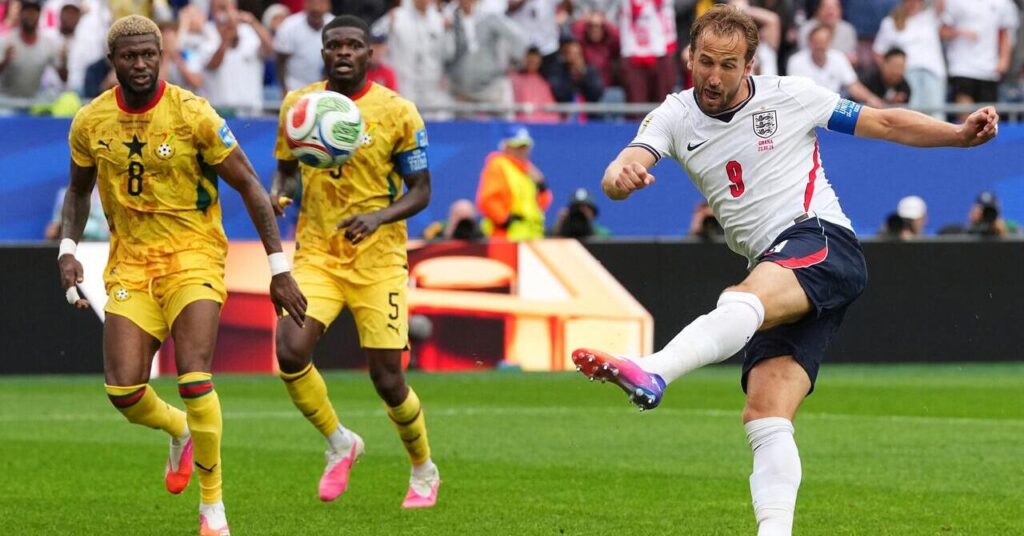
With just three minutes remaining on the clock, the Bayern Munich talisman, England’s record goalscorer and a man whose very name is synonymous with clinical finishing, fired woefully over the bar. The chance came after Nico O’Reilly’s header had crashed against the woodwork, a collective gasp echoing around the stadium as the rebound fell perfectly to Kane. It was the moment everyone craved, the decisive touch that would unlock a stubborn Ghanaian defence, but it sailed into the New England night, leaving a bitter taste in the mouth of every Three Lions supporter.
This solitary, agonizing miss encapsulated a miserable evening for a host of England’s attacking players. Despite commanding an astonishing 78.8% possession – a figure that screams dominance on paper – the Three Lions struggled to unpick Ghana’s meticulously constructed defensive lock. Benjamin Asare, the Ghanaian goalkeeper, remained largely untroubled for vast swathes of the match, a damning indictment of England’s creative paralysis in the final third. The ball was moved from side to side, probing for openings that simply never materialized with conviction.
Tuchel didn’t mince words post-match, though he tried to find positives amidst the gloom: “Normally, a clear goal for us. It’s a big chance and then another chance. It would’ve been deserved. We knew it would be difficult. They went even more defensive than in the first match; they defended in a 4-5-1. We found our intensity the longer the half went on but we couldn’t get the reward.” His analysis pointed directly to the strategic challenge posed by Ghana’s deep block, but also subtly underscored England’s inability to adapt their attacking patterns. The observation that “we found our intensity the longer the half went on” might suggest a slow start or a struggle to impose themselves early against a disciplined opponent, ceding the initiative to Ghana’s containment strategy.
Kane, ever the professional, admitted his disappointment on BBC Radio 5 Live: “I’m backing myself to score [that late chance] more often than not. One of those but I’ve lived the striker life long enough to know they’re not always going to go in. I back myself nine times out of 10 but it just didn’t fall my way today.” While a fair reflection from a striker who understands the ebbs and flows of goalscoring fortune, the context of the match amplified the miss. In a game desperate for a breakthrough, Kane’s failure felt magnified, placing a spotlight on England’s over-reliance on individual moments of brilliance rather than cohesive, intricate attacking patterns to dismantle a resolute defence.
Rice: Positivity Amidst the Creative Void
Despite the frustrating stalemate, England still clings to the top spot in Group L, their path to the knockout stages almost certainly secured with Saturday’s clash against Panama still to come. Declan Rice, typically the engine room of England’s midfield, tried to inject a dose of pragmatism and optimism into the post-match discussions, but even his words hinted at deeper concerns.
“It is always difficult when you play against 11 behind the ball as deep as they were, but you have to find solutions. In the last 10 minutes we were unlucky not to score,” the Arsenal man articulated. Rice himself had England’s two most promising opportunities in a largely forgettable first half, both from outside the box, highlighting the team’s struggles to penetrate Ghana’s compact lines. His calls for “finding solutions” against deep blocks will resonate with fans and critics alike, who watched England recycle possession without genuine incision for much of the 90 minutes. The midfield, often so dynamic and forward-thinking, found itself bogged down, unable to unleash the creative talents ahead of them with meaningful through balls or incisive passes.
“We still have a great chance to top the group against Panama so positivity all round. They were very compact, tight spaces to play through, but on the other hand we can do more with the ball.” Rice’s honesty about doing “more with the ball” points to an internal recognition of the lack of urgency, directness, and imaginative play that plagued England. For all their technical quality and individual brilliance, the final pass, the decisive run, the unexpected shot, or the moment of individual trickery – these crucial elements were conspicuously absent when most needed.

Queiroz’s Tactical Masterclass: Ghana’s Resilient Reward
While England grappled with frustration, Ghana celebrated a hard-earned point, a testament to manager Carlos Queiroz’s tactical genius. The Black Stars arrived in Boston with a clear objective: frustrate, defend, and snatch a draw. Their 4-5-1 formation was executed with an almost robotic precision, every player understanding their role in suffocating England’s attacking ambitions. Midfielders tracked back relentlessly, full-backs maintained unwavering discipline, and the two central defenders formed an impenetrable barrier, marshaled expertly by their experienced coach.
Ghana now boast four points from two games, a remarkable start that positions them strongly to join England in the knockout stages. Their resilience, tactical nous, and sheer collective effort were arguably the story of the night, overshadowing England’s star power. Rice, acknowledging their opponents’ prowess, added: “You have to give credit to Ghana. It’s tough and they are good players so it was never going to be an easy game. We have one more game to top the group so we have to be positive.” Queiroz’s side didn’t just defend; they defended with an unyielding intent, making it incredibly difficult for England to find pockets of space or exploit any perceived weaknesses.
“Loads of top nations draw the first game so there is no need to be negative or downbeat. We will stay positive.” Rice’s words serve as a necessary reminder for a nation prone to panic after any perceived setback. Yet, the underlying issues of creativity and clinical finishing against a well-drilled opponent remain pertinent questions for Tuchel and his coaching staff, especially as the tournament progresses and they face more sophisticated defensive setups.
Game Highlights: A Night of Frustration and Fortitude
- Early Stalemate (1-20 mins):Ghana immediately settled into a deep, compact 4-5-1 formation, effectively nullifying England’s initial attempts to build rhythm and penetration in midfield.
- Possession without Penetration (20-45 mins):England dominated the ball throughout the first half, frequently reaching the final third but lacking the decisive pass, incisive run, or imaginative play required to break down Ghana’s organized lines.
- Rice’s Efforts (25′, 38′):Declan Rice unleashed two powerful long-range efforts, both requiring modest but necessary saves from Ghana’s goalkeeper Benjamin Asare, marking England’s only notable attempts on target in the first 45 minutes.
- Ghana’s Defensive Discipline (All Match):The Black Stars showcased exceptional organization and communication, closing down passing lanes relentlessly and forcing England wide, limiting central access.
- Second Half Pressure Builds (70-85 mins):England increased the tempo and commitment in the final 20 minutes, pushing more players forward and introducing attacking substitutes in a desperate search for a winner.
- O’Reilly Hits the Bar (87′):Nico O’Reilly rose highest in the box to meet a powerful cross, his header rattling the crossbar with fierce intent, coming agonizingly close to a breakthrough.
- Kane’s Agonizing Miss (87′):Moments after O’Reilly’s header, the rebound fell perfectly to Harry Kane inside the box, but the normally reliable striker uncharacteristically blazed his shot over the bar from close range, sealing England’s goalless night.
- Asare’s Clean Sheet (Full Time):Ghana goalkeeper Benjamin Asare, while not overly tested by spectacular saves, commanded his box well and marshaled his defense effectively to secure a valuable clean sheet, a testament to his team’s collective effort.
Looking Ahead: Panama and the Path to Redemption
England now faces Panama in their final Group L fixture, a match that, on paper, should offer a more straightforward challenge for Tuchel’s men. While the frustrating draw against Ghana has undeniably raised questions about England’s attacking potency against a deep block, their position at the top of the group remains strong. Qualification for the knockout stages is all but assured, but topping the group will be crucial for securing a potentially easier draw in the next round and building momentum.
Tuchel will undoubtedly be demanding a sharper, more incisive performance from his attacking unit. The Panama game provides an ideal opportunity to experiment with different attacking combinations, perhaps bringing in fresh legs or altering the system to better break down a potentially similar defensive setup. The focus must shift from mere possession to creating genuine, high-percentage scoring chances, demonstrating the tactical flexibility and cutting edge expected of a top international side.
Prediction:England, stung by the Ghana stalemate and under pressure to deliver a convincing performance, will come out with renewed intent against Panama. While Panama might also opt for a defensive approach, England’s superior quality and the urgent need for a confidence-boosting performance will ultimately prevail. Expect a more clinical display and several goals as England seeks to put the Ghana frustrations behind them.England to win 3-0.This victory, combined with a potential rotation of key players, will allow them to top Group L and head into the knockout stages with a renewed sense of purpose, albeit with lingering questions about their ability to unlock truly elite, deep-lying defences in the later stages of the tournament.