
Russian Aircraft Intercepted Near UK Carrier in Norwegian Sea
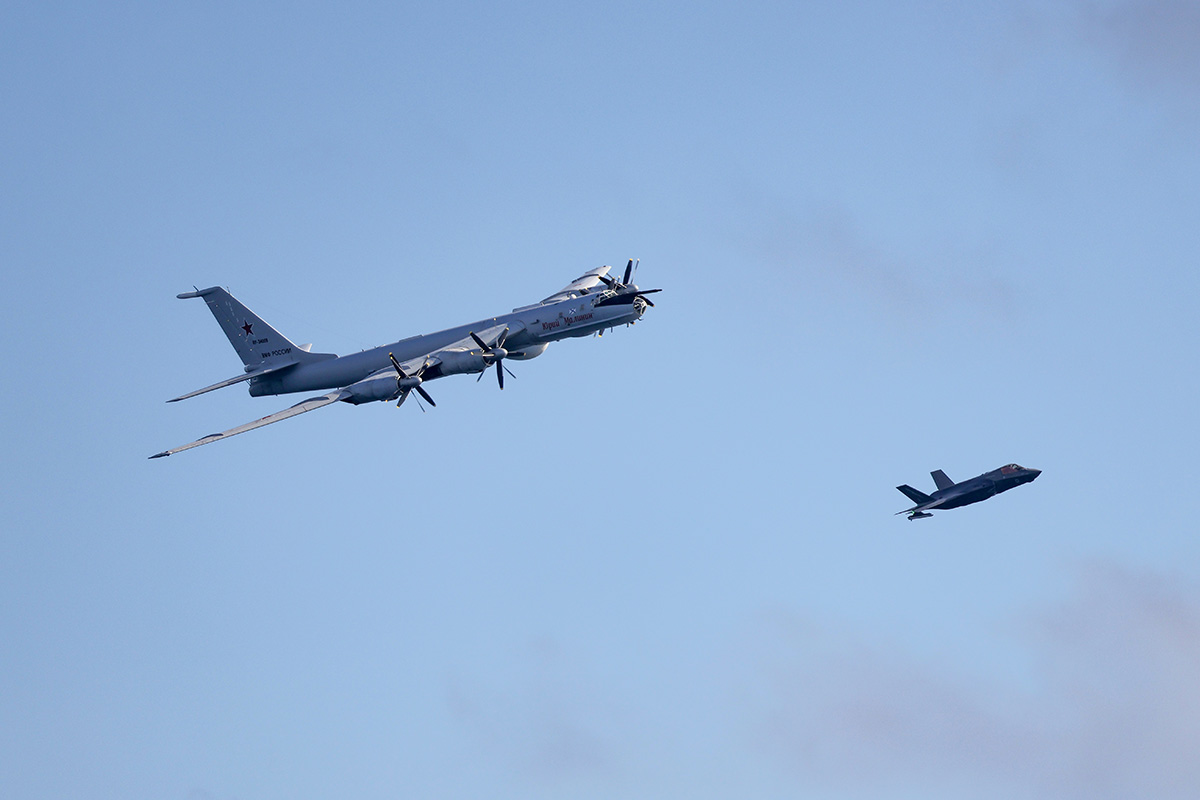
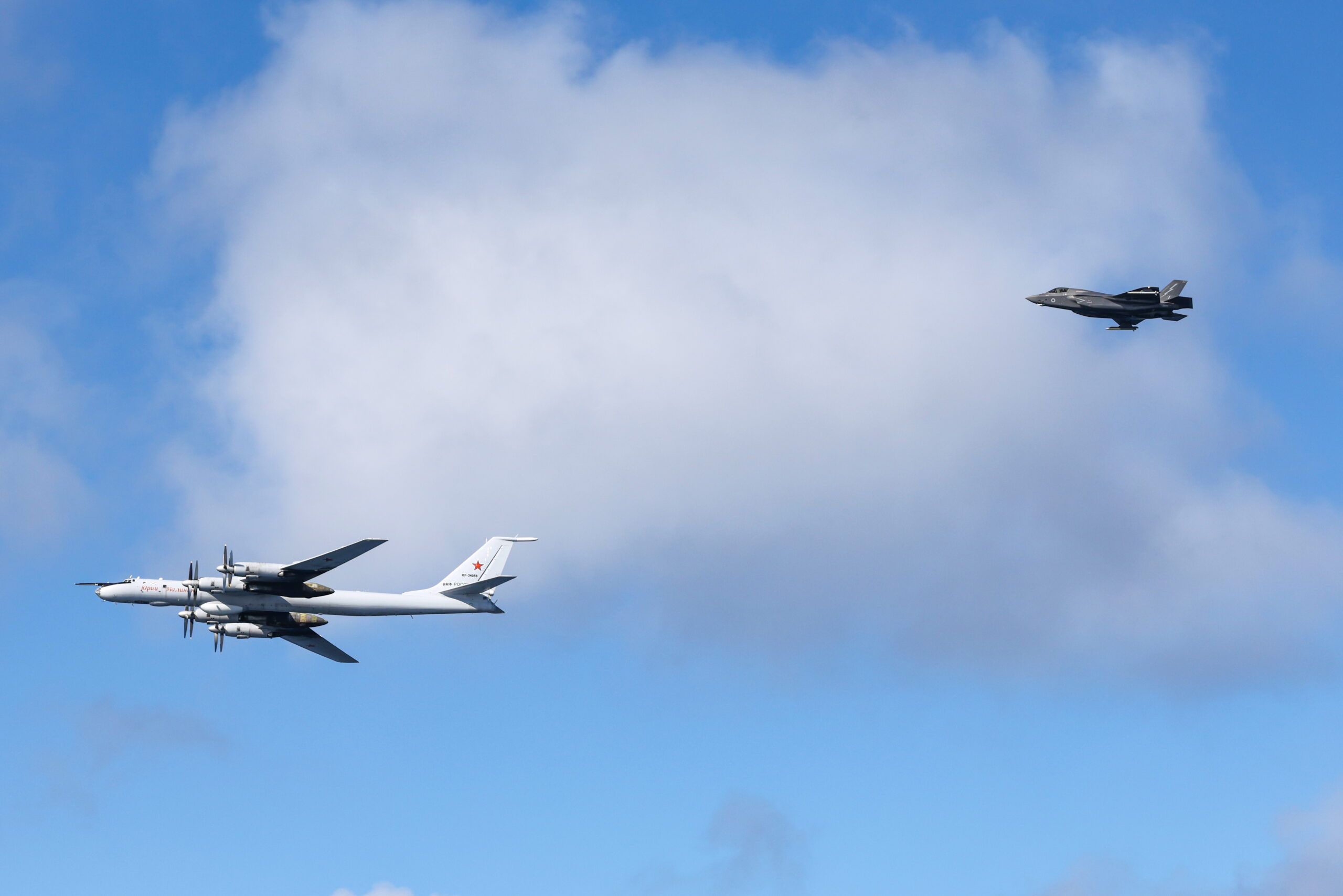
A Russian Tu-142 “Bear F” maritime patrol aircraft conducted a low-altitude pass near the British aircraft carrier HMS Prince of Wales in the Norwegian Sea on July 2, according to the UK Ministry of Defence. The incident, which involved the deployment of sonobuoys in close proximity to the carrier, led to the Russian aircraft being intercepted and escorted away by two UK F-35B fighter jets.
The encounter occurred on the afternoon of July 2, in international waters northwest of Norway, while the UK Carrier Strike Group (CSG) was engaged in routine flying operations. The Ministry of Defence reported that the Russian aircraft did not respond to attempts by UK forces to establish communication on international frequencies, which aimed to ascertain its intentions and highlight potential safety risks associated with approaching an active carrier during flight operations. Pilots from the 809 Naval Air Squadron, operating F-35Bs from HMS Prince of Wales, subsequently intercepted and shadowed the Tu-142 until it departed the area.
A Ministry of Defence spokesperson described the Russian activity as “unsafe and unprofessional.” The spokesperson stated, “While operating in the Norwegian Sea on Operation FIRECREST, the UK’s Carrier Strike Group was repeatedly approached by a Russian ‘Bear-F’ maritime patrol aircraft. The Bear-F passed at low altitude and unnecessarily close to HMS Prince of Wales and dropped a large number of sonobuoys in close proximity to the carrier. This activity was unsafe and unprofessional. The Russian aircraft was intercepted and escorted by two UK F-35 jets from HMS Prince of Wales until it left the area.”
Sonobuoys are small, expendable sonar systems designed to be dropped from aircraft into the sea. They function as temporary underwater listening posts, transmitting acoustic data back to the launching aircraft to detect and track submarines. The deployment of a significant number of these devices near a carrier group is consistent with an effort to locate and potentially track any submarines operating in support of the naval formation.
The Tu-142 “Bear F” is a long-range maritime reconnaissance and anti-submarine warfare (ASW) variant of the Tu-95 “Bear” bomber. This four-engined turboprop aircraft is a mainstay of the Russian Navy, frequently operating from its Northern Fleet bases on the Kola Peninsula. Russian Tu-142 crews have a long history of shadowing NATO naval groups in the North Atlantic, making the interception of this aircraft type a familiar task for British fighter pilots. However, on this occasion, the intercepting jets were launched directly from the deck of the carrier being observed, rather than from land-based airfields, underscoring the immediate defensive capabilities of the CSG.
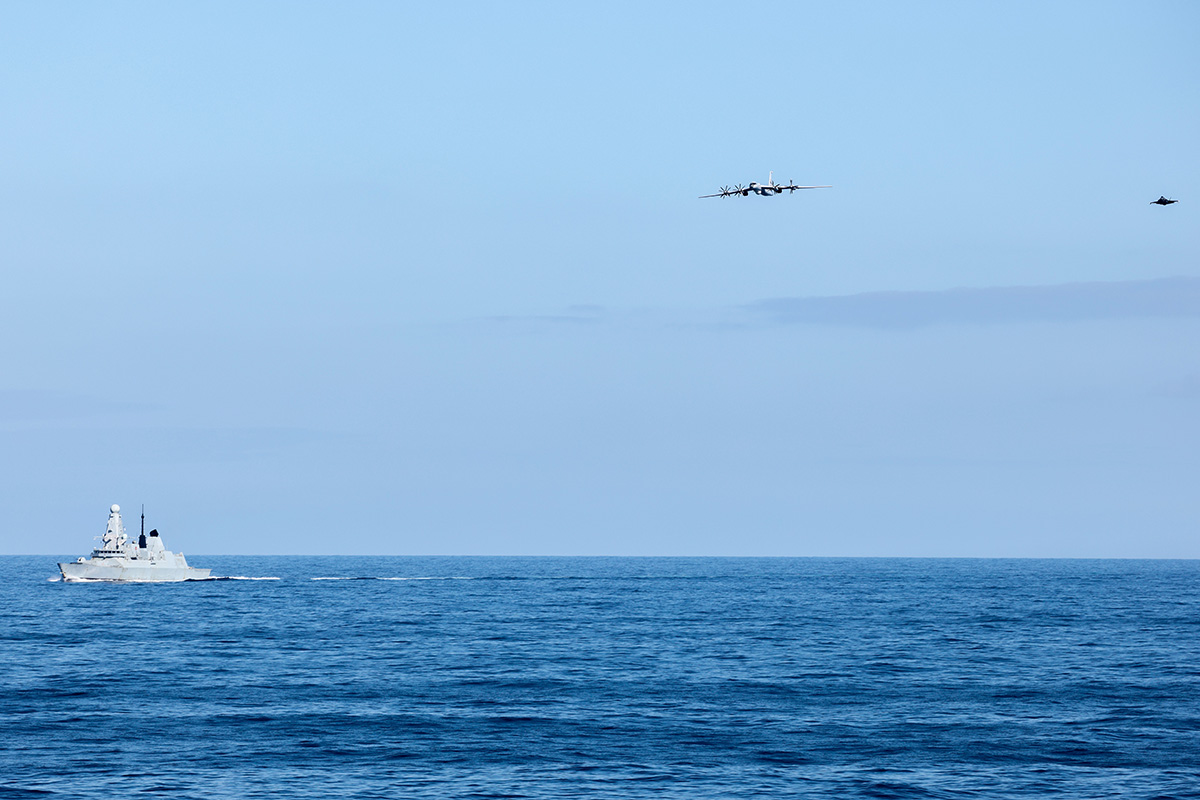
The UK Carrier Strike Group is currently deployed under NATO command in the High North as part of the alliance’s “Arctic Sentry” framework. Its headquarters are embarked aboard HMS Prince of Wales for “Operation Firecrest,” a deployment announced by the Prime Minister at the Munich Security Conference in February. This deployment was initiated in response to what the government describes as increased Russian naval activity, citing a 30 percent rise in Russian vessels in UK waters over the past two years.
The CSG is a formidable naval asset, comprising the aircraft carrier HMS Prince of Wales, the Type 45 destroyer HMS Duncan, a complement of F-35B Lightning II jets, Merlin and Wildcat helicopters, and supported by the Royal Fleet Auxiliary tanker RFA Tidespring. The deployment involves more than 1,500 British military personnel. Notably, the F-35 jets from HMS Prince of Wales have conducted air defense patrols over Iceland and the wider High North, marking the first time NATO air defense operations have been carried out from a European aircraft carrier.
While the group possesses significant air and surface capabilities, its primary anti-submarine warfare (ASW) capability relies mainly on the embarked Merlin helicopters. The Royal Navy was unable to assign a dedicated frigate to the deployment for ASW duties. The Ministry of Defence frames this deployment as part of the UK’s broader commitment to NATO, which also includes British jets patrolling skies over Romania, a battlegroup equipped with advanced drones in Estonia, and the Allied Rapid Reaction Corps (ARRC) maintained at high readiness within the UK.
This intercept occurred concurrently with another significant development: the UK taking command for the first time of the special forces element of NATO’s Allied Reaction Force. This unit is described by the department as the spearhead of the alliance’s rapid deployment forces, capable of deploying globally within days.
Defence Secretary Dan Jarvis, who spoke to Politico aboard the carrier, was also questioned regarding reports of a superyacht linked to Russian President Vladimir Putin, which was reportedly moving along the Norwegian coast en route back to Russia last week. Mr. Jarvis declined to confirm whether the strike group was actively tracking the vessel, stating simply, “We know where it is.” The Defence Secretary, a former Army officer, added that the vessel’s movement was another “combat indicator,” suggesting, in his view, that the Russian president is under increasing pressure.
Why This Matters
This incident in the Norwegian Sea underscores the ongoing and heightened geopolitical tensions between Russia and NATO, particularly in strategically vital regions like the Arctic and High North. The close approach of a Russian maritime patrol aircraft to a NATO carrier strike group, combined with the deployment of sonobuoys and a lack of communication, represents more than a routine encounter; it is a clear demonstration of assertive behavior and a probing of NATO’s defenses and readiness.
Firstly, the event highlights the critical importance of maritime domain awareness and anti-submarine warfare capabilities. The Russian Tu-142’s mission, explicitly aimed at detecting and tracking submarines, suggests a sustained interest in understanding NATO naval movements and capabilities. The UK’s Carrier Strike Group, while powerful, faces a constant challenge in maintaining ASW vigilance, particularly given the absence of a dedicated frigate for this deployment, relying heavily on its helicopter assets.
Secondly, the rapid interception by F-35B jets launched directly from HMS Prince of Wales showcases NATO’s immediate response capabilities and the integrated deterrence offered by modern carrier strike groups. It sends a clear message about the alliance’s ability to protect its assets and maintain freedom of navigation in international waters, even when confronted with aggressive maneuvers. This is particularly significant as it marks the first time a European carrier has conducted NATO air defense operations in the High North, demonstrating evolving operational readiness.
Thirdly, the incident contributes to a pattern of increased Russian military activity near NATO borders, as noted by the UK Ministry of Defence. Such actions carry inherent risks of miscalculation or unintended escalation, especially when international communication protocols are ignored. They necessitate constant vigilance and robust defensive postures from NATO members, impacting defense spending, strategic planning, and the training of personnel.
Finally, the broader context of the UK’s leadership in NATO’s Allied Reaction Force special forces and the Defence Secretary’s comments regarding a superyacht linked to President Putin, underscore a period of profound instability and heightened pressure on the Russian leadership. These individual events, while distinct, collectively paint a picture of a challenging and unpredictable security environment in Europe, where the boundaries of professional conduct are continually tested, and geopolitical stakes remain exceptionally high.