
Unlock the Editor’s Digest for free
Roula Khalaf, Editor of the FT, selects her favourite stories in this weekly newsletter.
**Key Takeaways**
1. **Defensive M&A Strategy:** Monte dei Paschi di Siena (MPS), facing a hostile bid from Intesa Sanpaolo, is exploring a strategic acquisition of Banco BPM as a defensive maneuver, highlighting the intense consolidation pressure within Italy’s fragmented banking sector.
2. **Crédit Agricole’s Kingmaker Role:** French banking giant Crédit Agricole, a significant shareholder in Banco BPM, holds a pivotal position in any potential MPS-BPM tie-up, with its expressed skepticism on value creation posing a substantial hurdle to the proposed merger.
3. **Complex Regulatory & Governance Landscape:** The situation is complicated by Italy’s “passivity rule” — triggered by Intesa’s offer — which mandates shareholder approval for any competing bid, coupled with internal board divisions at MPS and the broader challenges of executing M&A in a tightly regulated and politically sensitive environment.
—
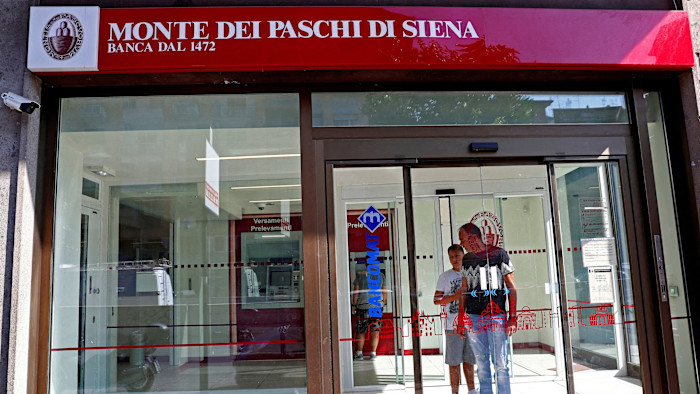
The Italian banking landscape, long characterized by fragmentation, legacy non-performing loans (NPLs), and the persistent push for consolidation from European regulators, is once again a hotbed of M&A activity. At the heart of the latest drama is Monte dei Paschi di Siena (MPS), the world’s oldest bank, which finds itself navigating a precarious path between a hostile takeover bid and a complex defensive strategy.
MPS is actively exploring alternative options to fend off a substantial hostile takeover offer from Italy’s banking behemoth, Intesa Sanpaolo. This high-stakes maneuvering includes the potential acquisition of Banco BPM, a move that gained urgency after preliminary discussions over a “merger of equals” between the two smaller lenders abruptly collapsed last Friday. The unfolding saga underscores the deep-seated structural issues within Italian banking and the intense pressures for scale and efficiency.
According to sources close to the matter, Luigi Lovaglio, the chief executive of MPS, is intensely examining an acquisition of Banco BPM—a strategic move he has long advocated. Lovaglio’s vision for MPS involves bolstering its scale and market position, a critical step for a bank that has required multiple state bailouts and remains partially state-owned. Such a deal would be transformative, potentially creating a significant third force in Italian retail banking, capable of better competing with the market leaders like Intesa Sanpaolo and UniCredit.
Lovaglio’s strategic focus is reportedly turning towards Banco BPM’s largest shareholder, Crédit Agricole. The French banking giant holds a near-30 percent stake in Banco BPM, making it an indispensable partner in any potential transaction. While no direct contact had reportedly been made over the past weekend, the necessity of Crédit Agricole’s engagement is paramount. Without the French bank’s explicit support or at least a willingness to negotiate, any takeover attempt would face insurmountable obstacles.
Crédit Agricole’s stance became clearer last Friday when its chief executive, Olivier Gavalda, offered a cautious, even skeptical, assessment. Gavalda stated that while Crédit Agricole would “analyse any solid project with respect to its strategic interest, execution risk and capacity to create value over the long term for all of Banco BPM’s shareholders,” he then added a significant caveat: “at this stage, it is very difficult to see how a combination between MPS and Banco BPM can be value accretive for Banco BPM shareholders.” This statement, widely interpreted as a considerable dampener, played a crucial role in Banco BPM’s decision to abandon its preliminary discussions with MPS. It highlights the market’s focus on tangible value creation, not just defensive maneuvers, and Crédit Agricole’s strong bargaining position.
Should MPS succeed in engaging Crédit Agricole, the potential acquisition of Banco BPM could be structured as an agreed share-based merger. Under this model, MPS and Banco BPM would negotiate an exchange ratio, and Crédit Agricole would roll its substantial stake into the enlarged group. This structure could significantly reduce the immediate cash requirements for MPS, making the transaction more feasible from a liquidity perspective. However, the success of such a complex share-swap would hinge on intricate agreements regarding governance, board representation, future commercial partnerships, and the eventual stake Crédit Agricole would hold in the merged entity. These are not minor details; they represent potential flashpoints in any M&A negotiation, particularly when multiple strategic interests are at play.
Despite its historical challenges, MPS has asserted its financial capacity. In February, the bank announced it possessed sufficient excess capital to pursue strategic acquisitions. This assertion, coupled with its impending first-half results report this week, will be closely scrutinized by the market for clarity on its financial strength and strategic runway.
The current whirlwind began nearly two months ago when Banco BPM initiated talks with MPS, proposing a “merger of equals.” However, this nascent discussion was swiftly overshadowed when Intesa Sanpaolo launched its audacious €30.6bn bid for MPS, effectively gazumping Banco BPM’s overtures and setting the stage for the current defensive strategies. The subsequent move by Crédit Agricole to raise its stake in Banco BPM to 29.3 percent further intensified the strategic chess match, solidifying its kingmaker role. Gavalda’s public comments, alongside his deputy’s insistence on Crédit Agricole’s necessity as a party to any deal, ultimately led to the breakdown of talks between BPM and MPS.
In the wake of these developments, MPS issued a statement affirming its commitment to “implementing its growth plan and existing strategic initiatives,” emphasizing its continued assessment of “all strategic options in the interests of all stakeholders.” This signals a broad mandate for Lovaglio to explore all avenues to secure MPS’s future. Meanwhile, Crédit Agricole has concurrently signaled a potential openness to a tie-up between Banco BPM and Crédit Agricole Italia, indicating its own clear strategic vision for expanding its footprint in the Italian market.
Lovaglio’s ambitious strategy faces considerable internal headwinds. Reports indicate deep divisions within MPS’s board, with four directors reportedly criticizing his approach to dealmaking in a recent letter. Adding to the internal dissent, Francesco Gaetano Caltagirone, a prominent shareholder, has openly voiced his opposition to a tie-up with Banco BPM in recent interviews with Italian media. Such internal resistance, particularly from major shareholders, can significantly derail strategic initiatives and adds another layer of complexity to an already challenging M&A environment.
Further complicating any competing transaction is Italy’s “passivity rule.” Because Intesa Sanpaolo’s offer is currently pending, MPS is subject to this regulatory constraint, which mandates that any competing transaction must receive approval from shareholders at an extraordinary meeting before the chief executive can proceed. This rule is designed to protect shareholder interests in the face of a takeover bid, but it also introduces a significant procedural hurdle and potential timeline delays for any defensive maneuver.
### Market Impact
The unfolding saga surrounding Monte dei Paschi di Siena, Banco BPM, and the strategic involvement of Intesa Sanpaolo and Crédit Agricole carries significant implications for the broader European, and particularly Italian, financial markets. Share prices of the involved banks – MPS, Banco BPM, and Intesa Sanpaolo – are highly sensitive to each development, reflecting market sentiment regarding the likelihood and terms of potential deals. A successful defensive acquisition by MPS could see its valuation re-rated based on enhanced scale and synergy potential, while failure could leave it vulnerable and potentially depress its stock. Conversely, a prolonged stalemate or the eventual success of Intesa’s bid would impact the competitive landscape and M&A valuations across the sector. Beyond individual stock movements, this scenario illuminates the ongoing pressure from the European Central Bank (ECB) and national regulators for consolidation to create stronger, more resilient banking entities, thereby influencing the investment thesis for other mid-tier Italian banks. The episode also highlights the growing influence of cross-border players like Crédit Agricole, whose strategic maneuvers can dictate the fate of significant domestic institutions, shaping the future competitive dynamics and capital flows within the eurozone’s third-largest economy.