

Recent Pentagon reports indicate that a critical air-to-air missile used by both the U.S. Air Force and Navy is not meeting a key readiness standard, while at the same time, both services are significantly increasing their inventory of vital air-to-ground and anti-ship missiles.
The details of these developments are outlined in the Modernized Selected Acquisition Reports (SARs) for the AIM-9 Sidewinder and the Joint Air-to-Surface Standoff Missile (JASSM), which were approved for public release in July. These reports offer a comprehensive overview of the progress and existing shortfalls, providing insight into the operational health and future trajectory of these essential munitions.
Specifically, the reports reveal that the AIM-9X Sidewinder Block II, a short-range, infrared-guided, supersonic air-to-air missile, is experiencing operational availability issues. Operational availability is a crucial metric, defined by the Warfighting Acquisition University as the expected likelihood of a piece of equipment or weapon system functioning correctly when required. The Air Force’s operational availability for the latest Sidewinder variant stands at 58 percent, while the Navy’s is 78 percent. Both figures fall short of the mandated 86 percent requirement.
This shortfall has direct implications for military readiness, particularly impacting squadron training. It has led to a reduced availability of Captive Air Training Missiles (CATMs). These specialized training rounds are equipped with live seekers and guidance units, allowing fighter pilots to practice target acquisition, track targets at high off-boresight angles, and simulate missile engagements during routine training sorties without expending live munitions. When an insufficient number of these training pods are operational, aircrews lack the necessary realistic training scenarios to maintain proficiency in air-to-air combat tactics.
The Air Force and Navy collectively plan to procure more than 11,000 AIM-9X Block II missiles to bolster their inventories.
However, the reports also highlight persistent reliability challenges linked to the integration of a new circuit processor into the most recent configuration, the AIM-9X-4. These integration problems have “impacted missile reliability and halted testing” for this advanced variant.
As a direct consequence of these issues, a planned software update, Operational Flight Software 10.4, which was designed to facilitate the integration of advanced guidance control unit and inertial measurement unit hardware upgrades, will not be deployed. Addressing these underlying problems will require a subsequent software update, which the report authors note is not expected to be ready until September 2027.
RTX, the manufacturer of the AIM-9X, declined to provide a comment regarding the contents of the report when contacted.
JASSM and LRASM Expansion Efforts
In contrast to the challenges faced with the air-to-air missile, both the Air Force and Navy are actively working to expand their acquisition and production plans for the Joint Air-to-Surface Standoff Missile (JASSM) and its derivative, the Long-Range Anti-Ship Missile (LRASM).
The JASSM, another munition shared by both services, is considered a cornerstone weapon system, with several variants currently in service and actively in production.
The AGM-158A JASSM is a 14-foot-long cruise missile capable of striking targets beyond 200 miles, and it has been a staple of U.S. air operations since 2001. Its versatility allows it to be carried by a wide array of aircraft, including the B-1B Lancer, B-2A Spirit, B-52H Stratofortress, various F-15 and F-16 variants, and the C-130 Hercules. Future integration is planned for the F-35A Lightning II and the B-21 Raider stealth bomber.
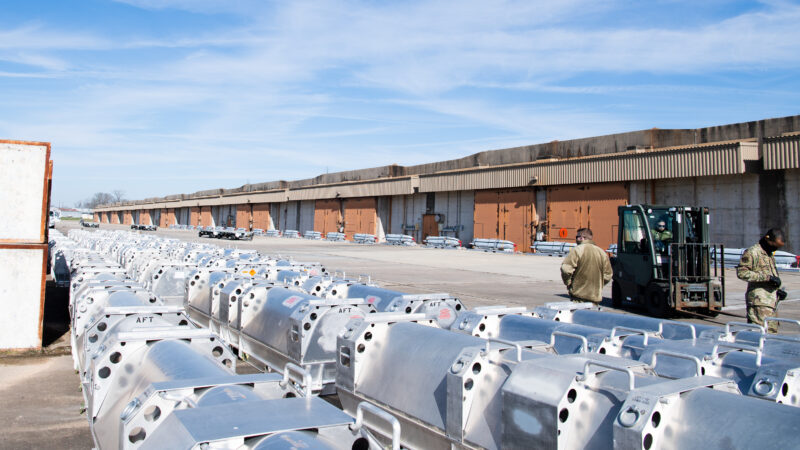
An even longer-range variant, the AGM-158B JASSM-Extended Range (JASSM-ER), boasts a range of more than twice that of the baseline JASSM, with public reports indicating capabilities exceeding 500 miles.
The AGM-158C LRASM, while having a range comparable to the original JASSM, is specifically engineered with advanced radio-frequency seekers designed to detect and engage large, moving maritime targets such as enemy warships.
According to the recently released selected acquisition report, the joint program office responsible for these missiles had delivered a cumulative total of 5,348 JASSM variants to the Pentagon by April of this year.
Current production capacity for JASSMs stands at approximately 600 missiles per year. However, there are immediate plans to increase this to 860 missiles annually in the near term.
Looking further ahead, mid-term projections aim for an annual production rate of 1,280 missiles by fiscal year 2030, further escalating to 1,880 missiles per year by fiscal year 2032. This information was provided by a spokesperson from Eglin Air Force Base in Florida in an email to Air & Space Forces Magazine.
A separate March contract modification, valued at $52 million, is set to boost LRASM production. This will increase the missile’s annual output from 240 units to 320 units, commencing in fiscal year 2029, as detailed in the report.
In related news, Lockheed Martin unveiled a new JASSM option, the AGM-158 FLEX, at the Air & Space Forces Association’s Air, Space, & Cyber conference earlier this month.
The company positions FLEX as a modular munition designed with swappable nose and launch options, intended to offer a diverse range of strike capabilities within the established JASSM form factor.
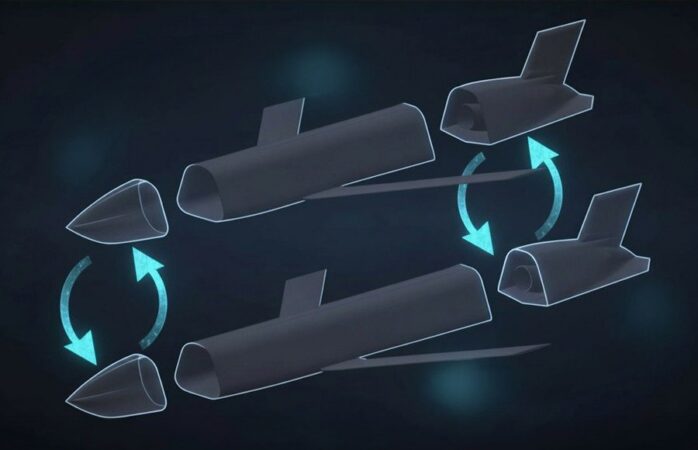
A Lockheed Martin spokesperson elaborated via email, stating, “The AGM-158 FLEX airframe concept was driven by a strategic need to keep pace with rapidly evolving threats, insert emerging technologies quickly, manage obsolescence, and provide, at scale, a cost-effective missile family that can be repurposed for a wide range of missions while delivering timely, relevant capability to the warfighter.”
The planned increase in the JASSM stockpile will be accommodated by expanding existing factory space rather than constructing entirely new facilities, as confirmed by the Eglin spokesperson.
Why This Matters
The information contained in these Pentagon reports carries significant implications for U.S. national security and global power projection. The identified shortfall in operational availability for the AIM-9X Sidewinder directly impacts the readiness and combat proficiency of U.S. Air Force and Navy fighter pilots. A lack of sufficient training missiles means aircrews cannot consistently practice critical air-to-air combat maneuvers and target acquisition skills with realistic equipment, potentially degrading their effectiveness in future aerial engagements. Furthermore, the protracted timeline for resolving the AIM-9X-4’s technical and software issues, extending to 2027, suggests a persistent challenge in integrating advanced technologies into existing weapon systems.
Conversely, the aggressive ramp-up in production for the JASSM and LRASM family of missiles signals a strategic prioritization of long-range precision strike and anti-ship capabilities. These munitions are vital for maintaining U.S. military advantage in contested environments, particularly in regions like the Indo-Pacific, where the ability to strike distant land targets and neutralize naval threats is crucial. The investment in expanding production capacity and developing modular variants like JASSM FLEX underscores a commitment to adapting to evolving threats and ensuring a robust inventory of advanced standoff weapons. These developments collectively highlight the dynamic challenges in defense procurement, balancing the need for cutting-edge technology with operational reliability and large-scale production, all of which are critical factors influencing the nation’s defense posture and its ability to deter or respond to global crises.
The United States Air Force is actively working to significantly increase its production of critical long-range precision-guided munitions, including the Joint Air-to-Surface Standoff Missile (JASSM) and the Long Range Anti-Ship Missile (LRASM). This ambitious ramp-up, driven by evolving global security demands and the need to replenish stockpiles, faces a variety of technical, supply chain, and integration challenges despite substantial investment from both the military and prime contractor Lockheed Martin.
Both the JASSM and LRASM are considered cornerstone capabilities for modern air warfare, providing stand-off strike options against sophisticated targets. The Air Force’s latest Selected Acquisition Report indicates a clear objective to boost annual production of the JASSM family of missiles to 1,000 units by fiscal year 2026, a substantial increase from the 450 units procured in fiscal year 2024. The JASSM-ER (Extended Range) variant, in particular, is slated to see its procurement more than double from 360 missiles in FY24 to 720 in FY25, with a target of 850 in FY26. Similarly, LRASM production is projected to rise from 78 missiles in FY24 to 100 in FY25 and 150 in FY26.
The urgency to scale production extends beyond these long-range missiles, highlighting broader pressures on the defense industrial base. Similar challenges have been observed with shorter-range munitions, such as the AIM-9X Sidewinder. A recent report revealed that the AIM-9X program experienced production delays due to issues with key components including fuses, warheads, and rocket motors. These issues underscore a wider fragility within the supply chain for complex munitions, affecting the ability to meet heightened demand across various weapon systems.
Lockheed Martin, the primary manufacturer for JASSM and LRASM, has announced a significant investment strategy to address the increased demand. The company plans to allocate between $8 billion and $9 billion through 2030 specifically to enhance its munitions production capacity. This investment is being directed towards expanding and modernizing more than 20 facilities across several U.S. states, including Arkansas, Alabama, Florida, Massachusetts, and Texas. Scott Swofford, a spokesperson for Lockheed Martin, confirmed these efforts, stating, “We are expanding production and building and modernizing more than 20 facilities… This includes upgrading existing facilities and incorporating advanced manufacturing techniques, production lines, tooling, and plant layouts to meet urgent production demand.”
Software, Coatings, and Propulsion Systems
Beyond facility and supply chain expansion, specific technical hurdles have emerged during the production and integration phases of these advanced missiles. The JASSM, for instance, encountered software integration problems related to its 54.0.02 flight software update. However, an Eglin Air Force Base spokesperson clarified that the software had received fielding approval since the data for the Selected Acquisition Report was compiled in April, and consequently, “there are no impacts to combat readiness.”
Further software-related initiatives include the Air Force’s push to accelerate the integration of the Universal Armament Interface (UAI), a standardized software architecture designed to streamline the interface between aircraft mission systems and various weapons. While crucial for future interoperability and efficiency, the report noted that this acceleration has introduced “added software risk.” Despite this, the Eglin spokesperson assured that the UAI program has “made no changes to the delivery schedule” for the JASSMs. The spokesperson added, “Integration activities remain on track to deliver planned capabilities as scheduled. Software risk is being actively managed through early software-in-the-loop integration, resource prioritization, and agile contract actions.”
Separately, an inspection of 1,356 JASSMs identified 49 missiles requiring depot-level maintenance and overhaul. The predominant cause for these maintenance needs was defects in the missiles’ stealth coating. This issue, according to the report, is not expected to be fully resolved until 2029. The coating defects are linked to a recent transition by Lockheed Martin from a flat gray paint scheme to a semi-gloss black coating. This change, initiated in 2021 as part of the Lot 19 contract award for the AGM-158B-2 variant, was implemented to enhance the missile’s radar and visual signatures, particularly during the longer flight times characteristic of the new, extended-range variants. The new coating is designed to absorb and deflect electromagnetic energy more effectively. The Eglin spokesperson indicated that both the program office and Lockheed Martin are “exploring contracting actions to increase repair capacity and return serviceable missiles to the field more efficiently.”
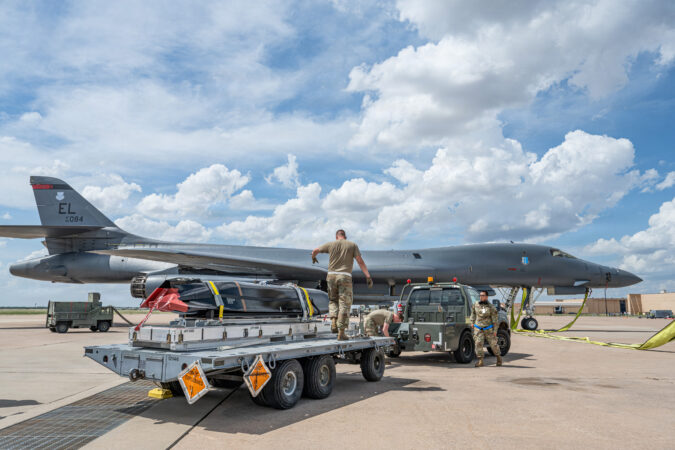
In a significant move to bolster supply chain resilience for propulsion systems, the Air Force has allocated $200 million in fiscal year 2025 to procure and mature a second-source engine for both the LRASM and JASSM-ERs. This investment aims to diversify the manufacturing base for a critical component. An Eglin spokesperson emphasized the strategic rationale behind this initiative: “Investing in a second engine source for the AGM-158 is essential to securing our supply chain and ramping up production of critical long-range strike weapons. By establishing a second production line, we eliminate manufacturing bottlenecks, drive competition, and secure deliveries of JASSM and LRASM to the warfighter.”
Why This Matters
The challenges and initiatives surrounding the production of the JASSM and LRASM missiles are of profound significance for U.S. national security and global stability. These long-range precision-guided munitions represent a critical component of the Air Force’s strike capabilities, enabling operations against highly defended targets from a safe distance. In an era marked by heightened geopolitical tensions, particularly with peer and near-peer adversaries, a robust and reliable supply of these weapons is paramount for maintaining deterrence and projecting power effectively.
The drive to increase production reflects a strategic imperative to replenish stockpiles that have been drawn down, notably through aid to allies such as Ukraine, and to prepare for potential future conflicts. Delays in production or issues with missile readiness, even if individually resolved, can collectively impact the overall combat readiness of the U.S. military. Ensuring that the Air Force has a sufficient inventory of modern, fully operational missiles is vital for its ability to execute missions and respond to emerging threats across various operational theaters, from Europe to the Indo-Pacific.
Furthermore, these developments highlight the complexities and vulnerabilities within the defense industrial base. The identified issues—ranging from component supply chain bottlenecks for AIM-9X, to software integration risks, to quality control for stealth coatings, and the strategic need for a second engine source—underscore the intricate ecosystem required to produce advanced weaponry. The multi-billion-dollar investment by Lockheed Martin and the Air Force’s targeted funding demonstrate a recognition of these challenges and a concerted effort to build a more resilient and responsive industrial capacity. The long timelines for resolving some issues, such as the stealth coating defects extending to 2029, illustrate the enduring nature of these industrial and technological hurdles.
The emphasis on accelerating software integration and standardizing interfaces through initiatives like UAI is also crucial for future adaptability. Modern warfare increasingly relies on networked systems and rapid technological upgrades. While introducing “added software risk,” these efforts are essential for ensuring that new weapons can be seamlessly integrated with existing and future aircraft platforms, maximizing their operational utility and minimizing downtime. Ultimately, the successful navigation of these production challenges will determine the pace at which the U.S. military can modernize its arsenal and maintain a decisive technological and numerical edge in a rapidly evolving global security landscape.