
United Kingdom Develops ‘Orbital Warfare’ Capabilities Amid Growing Space Conflict Concerns
The United Kingdom is actively developing capabilities for what it explicitly terms “orbital warfare,” encompassing systems designed to disrupt, degrade, and deny hostile activity in space. This strategic pivot signals the Armed Forces’ preparation for potential conflicts extending beyond Earth’s atmosphere.
Air Chief Marshal Sir Harv Smyth, the Chief of the Air Staff and professional head of the Royal Air Force, outlined this evolving strategy at the UK Space Power Conference in London. He underscored the urgency of these developments, warning that potential adversaries are not delaying their own preparations while Britain finalizes its capabilities.
The conference, organized by UK Space Command in partnership with the Freeman Air & Space Institute, served as a platform for senior figures from Defence, government, the UK Space Agency, and allied military organizations to discuss the future of space power.
During his address, Air Chief Marshal Smyth emphasized the critical and growing importance of space for the nation’s defence, security, economic prosperity, and daily life. He reiterated the necessity for the UK to accelerate the delivery of its space capabilities and operational effects.
A significant highlight of Smyth’s speech was the direct confirmation of the development of systems specifically intended for operations against adversarial actions in orbit. He stated that UK Defence is now creating capabilities for orbital warfare to fulfill the nation’s requirement for control in space.
Smyth defined “orbital warfare” as “actions and effects conducted within space to achieve military objectives.” These capabilities will operate alongside existing electronic warfare measures, systems designed to counter anti-satellite weapons, and various other supporting operations. The objective, he explained, is to deter threats, safeguard critical space infrastructure, and limit an adversary’s freedom to operate against the UK and its allies.
This articulation marks a notable shift in the UK’s approach to space. Historically, space has been primarily viewed as a supporting domain for essential functions like communications, navigation, and surveillance. The new emphasis indicates a strategic move towards preparing to directly contest this domain if circumstances demand it.
The overarching goal, according to Smyth, is to ensure freedom of action for Britain and NATO in space, while simultaneously denying the same advantage to potential adversaries. He stressed a “whole-of-government approach” to safeguard allied space interests, secure the UK’s operational freedom in space, and deny that freedom to adversaries.
This ambitious effort is supported by substantial financial commitments. Smyth detailed planned investments, including £2.3 billion allocated for satellite communications between now and 2030. An additional £880 million is earmarked for space-based intelligence, surveillance, and reconnaissance (ISR) and space control activities. Furthermore, £440 million is dedicated to developing novel space technologies.
Maintaining the integrity of military communications architecture remains a priority, with the Skynet satellite system central to this. Smyth described Skynet as the backbone of Britain’s sovereign global communications capability. To enhance its longevity, an additional £50 million has been allocated to extend the operational life of the existing Skynet 5 satellites. The next iteration, Skynet 6A, is scheduled for launch next year, and it will be complemented by allied and commercial satellite communication systems to ensure additional capacity and resilience.
Beyond communication, Britain is significantly enhancing its ability to detect and understand activity in orbit, a discipline known as Space Situational Awareness (SSA). Air Chief Marshal Smyth highlighted key assets in this area, including the long-standing RAF Fylingdales radar station. He also mentioned the planned Deep Space Advanced Radar Capability, a collaborative project with Australia and the United States, which will provide advanced tracking abilities. These assets feed into a growing network of optical and commercial sensors that supply data to the National Space Operations Centre (NSOC).
Further improving SSA, Smyth announced that the Borealis command, control, and data-processing system has achieved initial operating capability six months ahead of schedule. This £65 million, five-year program provides commanders with a significantly enhanced and clearer picture of activity in space. The UK is also exploring cutting-edge sensor technologies, such as neuromorphic systems, designed to search vast areas of space for unexpected activity around satellites while requiring substantially less power and communications bandwidth.
These surveillance systems are not intended to operate in isolation but rather to support the broader military effort. Smyth characterized space as the “connective tissue” of the integrated force, linking vital communications, surveillance, and targeting systems across land, sea, and air domains. Space-based intelligence is also crucial to the Digital Targeting Web, a £1.8 billion program aimed at connecting sensors, commanders, and weapons to drastically reduce the time between target detection and engagement.
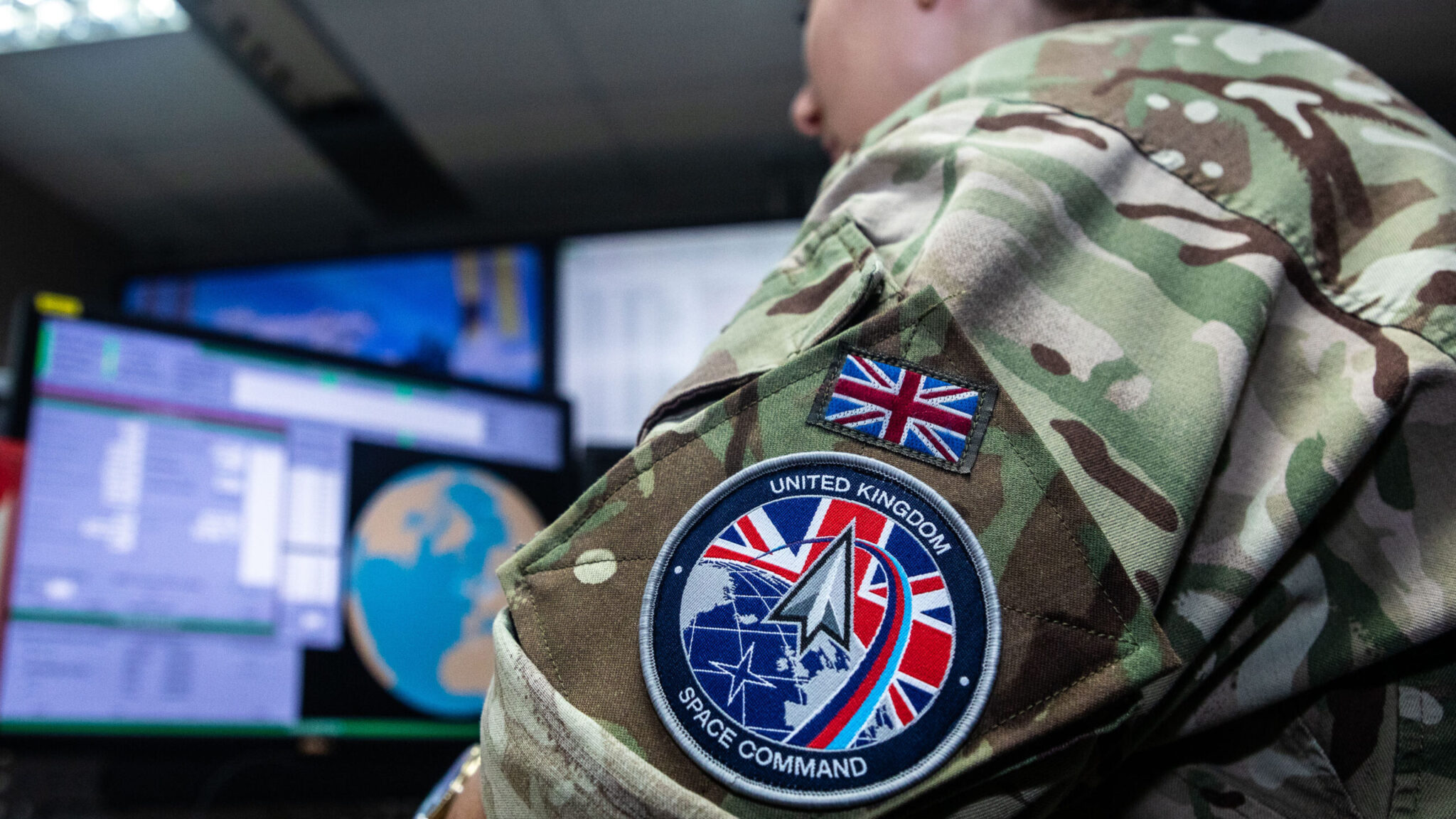
Parallel to technological advancements, Defence is expanding the military organization responsible for operating these new capabilities. Currently, No. 1 Space Operations Squadron supports activities through the National Space Operations Centre, while No. 2 Space Warning Squadron conducts operations associated with RAF Fylingdales. A new unit, No. 3 Space Effects Squadron, is being established to provide personnel specifically trained for offensive and defensive space operations. Smyth stated that this squadron will “disrupt, degrade, and deny hostile activity to defend UK space interests and gain operational advantage for the integrated force.” Plans are also underway for additional numbered squadrons focusing on areas such as tactics and training, the deep-space radar program, and space defence, all integrated within a wider air, space, and missile defence structure.
Air Chief Marshal Smyth was careful to frame this build-up as a deterrent measure rather than an intention to initiate conflict. He explicitly stated, “No one wants a war in space. We are positioning to deter this. The UK will always operate responsibly in ways that promote stability and avoid escalation.” However, he also made it clear that UK Defence is preparing for the contingency where deterrence might fail. He concluded that Britain must be able to “monitor space, make effective decisions, deter our adversaries, and, if necessary, prevail in this vital yet increasingly contested domain.”
Why This Matters
The United Kingdom’s explicit development of “orbital warfare” capabilities marks a significant and timely evolution in its defence strategy, reflecting a global trend where space is increasingly recognized as a critical and contested domain. This shift has profound implications for national security, international relations, economic stability, and the future of conflict.
Firstly, the announcement underscores the growing militarization of space. For decades, space was largely considered a peaceful frontier, but major global powers, including the United States, China, and Russia, have been investing heavily in space-based military assets and anti-satellite (ASAT) technologies. The UK’s move places it firmly among nations preparing to defend and potentially project power in orbit, signaling a new era of strategic competition and potential conflict that extends beyond terrestrial boundaries. This directly impacts the global strategic balance and could influence the development of international norms and arms control treaties for space.
Secondly, protecting critical space infrastructure is paramount for modern society. Our daily lives are deeply intertwined with space assets. Global Positioning System (GPS) satellites provide essential navigation and precise timing, critical for everything from financial transactions and communication networks to power grids and logistics. Satellite communications enable global connectivity, military operations, and remote essential services. Weather forecasting, climate monitoring, and disaster response all rely heavily on satellites. The ability to disrupt or degrade hostile activity in space is therefore not just about military advantage, but about safeguarding the fundamental services that underpin national economies and public welfare. Any significant disruption to these assets could have catastrophic economic and societal consequences.
Thirdly, the substantial financial investment in satellite communications, intelligence, surveillance, reconnaissance (ISR), and novel space technology highlights a commitment to maintaining sovereign capabilities. While the UK values alliances and commercial partnerships, this investment ensures a degree of independence in a domain vital for defence and prosperity. It will also drive innovation within the UK’s space industry, potentially creating high-skilled jobs and fostering technological advancements that could have civilian applications, further strengthening the nation’s economic and scientific base.
Finally, the framing of these capabilities around deterrence is crucial. Air Chief Marshal Smyth emphasized that the UK does not seek conflict in space but aims to prevent it by demonstrating readiness. However, the development of offensive capabilities, even if framed as defensive deterrence, inherently carries the risk of escalation in a highly sensitive environment. The deployment of “disrupt, degrade, and deny” capabilities requires careful international diplomacy and transparent communication to prevent miscalculation and maintain stability. The UK’s commitment to “operate responsibly” will be closely watched by the international community as nations navigate the complex challenges of maintaining peace and security in the ever-expanding domain of space.