
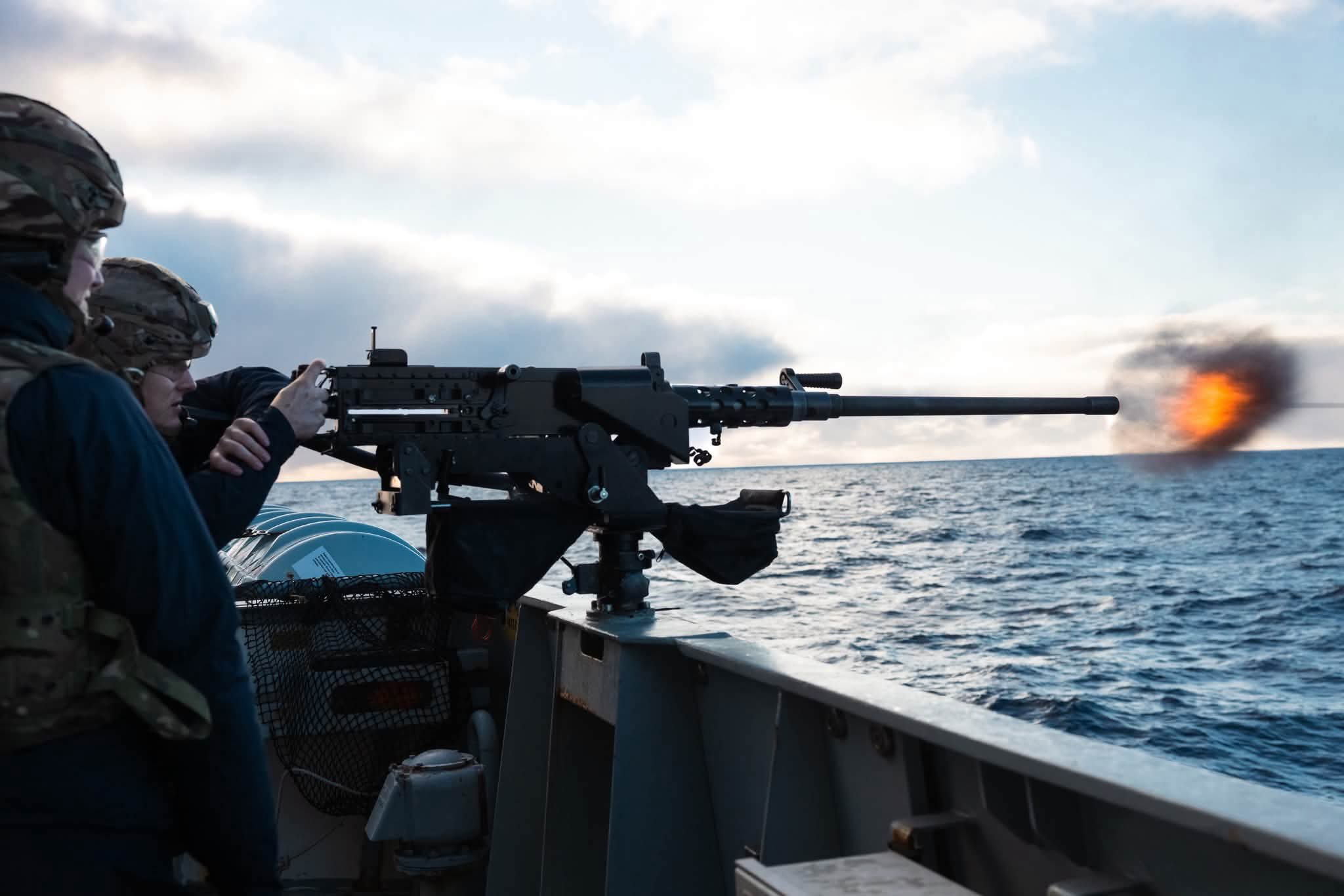
HMS Medway, a Royal Navy offshore patrol vessel, recently concluded Operation Southern Vigilance, a four-day exercise conducted in the waters surrounding the Falkland Islands from July 26 to 29. The patrol involved a series of drills, including live firing of mounted machine guns and a comprehensive man-overboard exercise, which was performed in coordination with an RAF A400M Atlas transport aircraft. These activities, described by military command as crucial for maintaining operational readiness, underscore the United Kingdom’s ongoing defense posture in the South Atlantic.
British Forces South Atlantic Islands (BFSAI) stated that the deployment served to reaffirm the UK’s steadfast commitment to the Falkland Islands. By maintaining a visible and capable military presence, the UK aims to deter potential adversaries and ensure the security of the territory. This commitment has been a cornerstone of British foreign policy since the 1982 conflict, which erupted after Argentina invaded the islands.
A key aspect of the UK’s presence is the protection of the Falkland Islands Conservation Zone. Established in 1990, this zone extends 150 nautical miles from the archipelago’s center and is vital for managing fish stocks, particularly squid. The fishing industry, heavily reliant on these stocks, forms a significant portion of the islands’ economy. The Falkland Islands Government is responsible for licensing and enforcement within this zone, a task supported by the Royal Navy’s deterrent presence. Routine inspection work is carried out by the civilian fisheries patrol vessel Lilibet, with the Royal Navy providing the broader security framework necessary to uphold these regulations against unauthorized fishing activities.
HMS Medway, commissioned in 2019, is a River-class offshore patrol vessel. It assumed the role of the South Atlantic Patrol Task (SAPT) vessel, succeeding HMS Forth, which in turn replaced HMS Clyde. These vessels are designed for extended independent operations in remote maritime environments. Displacing approximately 2,000 tonnes, HMS Medway is equipped with a 30mm main gun, several machine guns, and a flight deck capable of accommodating a Merlin helicopter. Its design prioritizes endurance and versatility, enabling it to conduct long patrols across vast stretches of ocean, essential for monitoring and securing the region.
HMS Medway represents the sole Royal Navy vessel permanently assigned to the South Atlantic. However, the broader British Forces South Atlantic Islands contingent stationed at RAF Mount Pleasant on East Falkland provides a multi-faceted defense capability. This includes Typhoon fighter jets, A400M transport aircraft, and Voyager air-to-air refueling aircraft, which ensure air superiority and logistical support. On the ground, an infantry company provides land defense, complemented by the advanced Sky Sabre air defense system, which succeeded the Rapier system, offering enhanced protection against aerial threats. A critical radar station on Mount Byron further contributes to comprehensive surveillance of the surrounding air and sea space.
The sovereignty of the Falkland Islands remains a contentious issue between the United Kingdom and Argentina. Argentina continues to assert its claim over the islands, which it refers to as the Malvinas, and annually brings the matter before the United Nations Special Committee on Decolonisation. This consistent diplomatic pressure highlights the enduring nature of the dispute. The United Kingdom’s position, however, is firmly based on the principle of self-determination, as evidenced by a 2013 referendum. In this vote, the islanders overwhelmingly chose to remain a British Overseas Territory, with 1,513 votes in favor and only three against.

Photography from the patrol was taken by Corporal Braithwaite.
Why This Matters
The recent patrol by HMS Medway in the South Atlantic highlights several critical geopolitical and economic issues. First and foremost, it underscores the United Kingdom’s unwavering commitment to its overseas territories and the principle of self-determination for their inhabitants. The robust military presence in the Falkland Islands, encompassing naval, air, and ground assets, serves as a clear demonstration of the UK’s resolve to defend its sovereign interests and deter potential aggression, particularly in the context of Argentina’s persistent sovereignty claims.
Economically, the protection of the Falkland Islands Conservation Zone is paramount. The fishing industry, especially squid harvesting, is the backbone of the islands’ economy, providing livelihoods and contributing significantly to the local government’s revenue. Any disruption or unauthorized exploitation of these vital marine resources could have devastating consequences for the islanders. The Royal Navy’s role in maintaining maritime security is therefore not just about defense, but also about safeguarding economic stability and prosperity for a self-governing community.
Furthermore, these exercises demonstrate the UK’s capacity for power projection and its ability to maintain operational readiness in remote and challenging environments. The coordination between naval vessels and air assets, such as the RAF A400M Atlas, signifies a sophisticated joint-force capability. This proficiency is crucial for rapid response in various scenarios, from search and rescue operations to deterring illicit activities like illegal fishing or protecting strategic interests. The presence of advanced air defense systems and surveillance infrastructure also positions the Falklands as a strategic outpost, capable of monitoring a vast sector of the South Atlantic.
Finally, the ongoing dispute with Argentina, regularly raised at international forums like the UN Decolonisation Committee, emphasizes the broader implications for international law and diplomatic relations. The UK’s reliance on the 2013 referendum results reinforces the right of self-determination, a principle often invoked in post-colonial contexts. This situation serves as a recurring reminder of the complexities of historical claims versus contemporary democratic choices, making the UK’s military and diplomatic posture in the Falklands a matter of sustained international interest and strategic importance.