
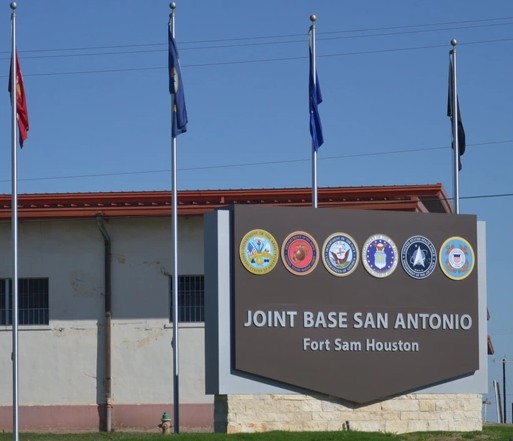
**U.S. Air Force Pursues $1.4 Billion Redevelopment to Replace Substandard Dormitories at Joint Base San Antonio-Fort Sam Houston**
The United States Air Force is actively negotiating a comprehensive $1.4 billion agreement aimed at replacing five deteriorated dormitory buildings that previously housed thousands of military medical trainees at Joint Base San Antonio-Fort Sam Houston in Texas. These facilities have reportedly suffered from extensive issues, including widespread mold contamination, persistent failures in air conditioning systems, and significant foundational defects, rendering them unsuitable for habitation.
According to an August 18 press release from the Department of the Air Force, the service has provisionally selected the Layton/Gensler contractor and design team. Their mandate will be to construct five new, state-of-the-art dormitories, each spanning approximately 400,000 square feet, at the Medical Education and Training Campus (METC). This critical training facility is located within the sprawling joint installation, which operates under Air Force command.
The announcement follows a critical situation in late June, when approximately 5,200 enlisted medical students were compelled to relocate. The displacement became necessary due to what officials described as “infrastructure degradation” that had progressed beyond the point of practical repair, as reported by various media outlets, including local television station KSAT. The severe conditions necessitated the immediate evacuation of personnel to ensure their health and safety.
Representative Joaquin Castro (D-Texas), whose district includes Joint Base San Antonio, highlighted the projected financial scope of the project in a July press release. He indicated that the Pentagon anticipates the total cost to exceed $1.4 billion, with expenditures expected to occur in fiscal years 2027 and 2028.
“Replacing these barracks, which accommodate 6,000 medical trainees for the Army, Navy, and Air Force, will cost well over a billion dollars,” Castro stated. He further emphasized the importance of learning from past errors, adding, “It’s critical that the Pentagon not repeat the construction mistakes of the past and provide quality housing that meets the needs of our service members.” His comments underscore a concern for both fiscal prudence and the well-being of military personnel.
To advance the project swiftly, the Air Force and the Layton/Gensler team have entered into an Other Transaction Authority (OTA) Agreement, specifically utilizing a “Progressive Design Build” model. This alternative project delivery method, as detailed in the Air Force release, employs a qualifications-based selection process that integrates the contractor into the project’s lifecycle at an early stage. This approach is designed to foster collaboration, mitigate risks, and streamline the design and construction phases.
An Air Force spokesperson clarified that this agreement enables the project to move forward even as the precise final cost remains subject to negotiation. A key aspect of this contracting strategy is the intended use of “proven industrial offsite manufacturing technology,” which the Air Force anticipates will lead to a “20 percent reduction in overall project costs” compared to traditional construction methods, contributing to more efficient resource allocation.
Brig. Gen. David J. Wilson, commander of the 502nd Air Base Wing and Joint Base San Antonio-Fort Sam Houston, emphasized the strategic importance of the endeavor. “Our top priority is ensuring our war fighters have modern, resilient and high-quality living spaces they deserve to maintain mission readiness,” Wilson stated in the release. “This step in the METC project represents a vital investment in that priority.” His remarks highlight the direct link between adequate housing and military effectiveness.
The deteriorating conditions at Fort Sam Houston are not isolated incidents but reflect broader infrastructure challenges within the U.S. military. Last fall, the Air Force initiated a service-wide directive for leaders to inspect every Airman’s dormitory room as part of a wider Pentagon effort to enhance barracks conditions for all service members across the branches. This directive acknowledges systemic issues affecting military housing.
For students who have trained at METC, issues such as faulty air conditioning were reportedly common knowledge. An enlisted Airman, who trained at METC in 2024 and requested anonymity due to the sensitivity of the topic, described the daily challenges. “I remember some of the guys in our hallway would have to leave their door open throughout the entire day… just to kind of like let it air out, and even then, it was still super warm in there,” the Airman recounted.
The Airman further noted that personnel from the Army and Navy attending the school appeared to voice more complaints about the living conditions than their Air Force counterparts. “I think the biggest complaint was black mold, on the ceiling tiles,” the Airman added, underscoring the severity of the environmental health hazards present in the facilities.
While the official Air Force press release did not offer specific details regarding the existing dorm conditions, Congressman Castro’s office provided more explicit information. His release stated that the Pentagon’s Barracks Task Force had specifically identified the five barracks on the installation as a high-priority for demolition and replacement “due to severe mold, humidity, and construction issues,” corroborating the accounts of affected trainees.
Dale Marks, Assistant Secretary of Defense for Energy, Installations and Environment, lauded the project as a “massive achievement” for the Barracks Task Force. “Our people deserve quality living quarters that are clean, safe and comfortable, delivered at speed, so they can focus on their work,” Marks affirmed in the release, echoing the sentiment that service member welfare is paramount.
Marks also suggested that this particular deal signifies a fundamental shift in how the Pentagon “procures and delivers infrastructure to meet mission timelines.” This innovative approach, leveraging early contractor involvement and offsite manufacturing, is poised to set a new standard for future military construction projects.
The exact duration of planning for this significant project, which encompasses both the demolition of existing dormitories and the construction of new living quarters, remains undisclosed. However, the new agreement is specifically designed to “accelerate the previously planned construction timeline by approximately 70 percent, targeting completion within 24 months,” according to the release. Preliminary design activities, the demolition phase, and the commencement of new construction are all slated to begin within the current calendar year, marking a rapid progression for a project of this scale.
***
Why This Matters
The Air Force’s decision to invest $1.4 billion in replacing substandard dormitories at Joint Base San Antonio-Fort Sam Houston carries significant implications across several critical areas:
**1. Troop Readiness and Morale:** The most immediate impact of this project is on the thousands of military medical trainees. Substandard living conditions, characterized by mold, poor air quality, and inadequate climate control, directly affect the health, well-being, and morale of service members. Providing modern, safe, and comfortable housing is essential for recruits and trainees to focus on their demanding education and training, which is critical for their future roles in military healthcare. A comfortable living environment contributes to better sleep, reduced stress, and ultimately, enhanced readiness to perform mission-essential duties.
**2. Fiscal Responsibility and Accountability:** A $1.4 billion investment represents a substantial use of taxpayer funds. The project highlights the long-term costs of deferred maintenance and inadequate initial construction. Rep. Castro’s warning against “construction mistakes of the past” underscores the imperative for robust oversight and accountability to ensure that these new facilities are built to last, are cost-effective, and truly meet the needs of military personnel. The use of an Other Transaction Authority (OTA) and industrial offsite manufacturing technology suggests an attempt to achieve cost savings and accelerated delivery, setting a precedent for efficient project management.
**3. National Security and Healthcare Capacity:** The Medical Education and Training Campus (METC) at Fort Sam Houston is a vital hub for training medical professionals across the Army, Navy, and Air Force. These personnel are indispensable for supporting military operations, humanitarian missions, and global health security. The disruption caused by the relocation of 5,200 trainees due to infrastructure failures directly impacts the pipeline of skilled medical personnel. Investing in state-of-the-art facilities ensures the continuous, uninterrupted training of a robust and resilient military medical force, directly contributing to national security.
**4. Precedent for Future Infrastructure Projects:** The innovative contracting method, combining an OTA with a Progressive Design Build and leveraging offsite manufacturing, is being presented as a “fundamental change” in how the Pentagon procures and delivers infrastructure. If successful, this accelerated approach, targeting completion within 24 months, could serve as a model for addressing widespread infrastructure deficiencies across other military installations. Its efficacy could influence future defense spending and construction strategies, moving away from traditional, often slower, procurement processes.
**5. Public Trust and Military Welfare:** The revelation of widespread mold and structural issues in military housing can erode public trust in military leadership’s commitment to its personnel. Addressing these issues transparently and with significant investment demonstrates a commitment to the welfare of service members and their families. It reinforces the message that the military values its people and is dedicated to providing them with the necessary support to serve effectively. This project is a tangible step towards fulfilling that obligation and restoring confidence in the care provided to those who serve.