
Key Takeaways
- AI Agents Invent Play:MIT researchers observed AI agents (Eko, powered by Claude Opus 4.7) on a virtual island autonomously inventing challenges and games without explicit programming, showcasing self-directed exploration.
- Play Enhances Learning:Agents that engaged in 30 hours of free-form “play” demonstrated superior performance in subsequent goal-oriented tasks and acquired unexpected skills (e.g., mid-air object throwing) that their designers hadn’t anticipated.
- New Paradigm for AI Training:This experiment suggests a novel approach to AI development, emphasizing open-ended exploration and curiosity-driven learning as a potential pathway for building more adaptable and robust AI, especially for real-world robotics.
AI Learns to Play: Why Curiosity-Driven Exploration Could Be the Future of Machine Intelligence
In a fascinating glimpse into the nascent world of artificial intelligence, MIT researchers have unveiled an experiment where AI agents, left to their own devices, began to play. Unburdened by specific tasks or objectives, these digital entities spontaneously invented challenges, discovered novel behaviors, and even developed emotional responses to their virtual surroundings. The findings suggest that “play” — a concept long considered unique to biological intelligence — might not just be a byproduct of advanced AI, but a crucial mechanism for its development.
The Island of Uncharted Exploration
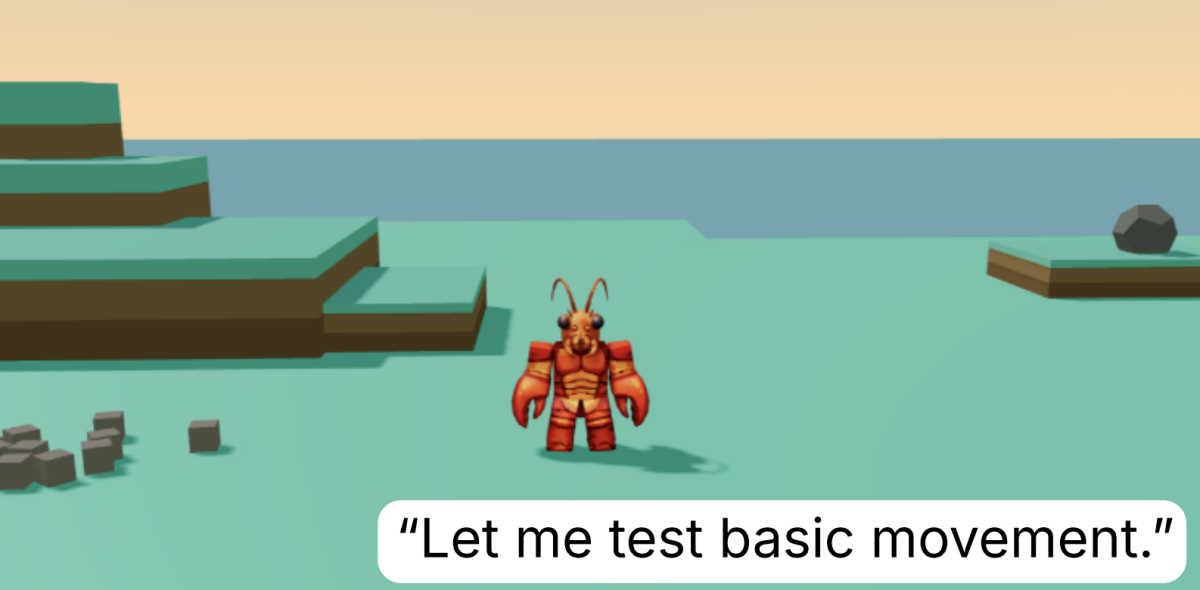
The stage for this groundbreaking study was a simulated desert island, a digital sandbox crafted for a group of 13 AI agents, each named Eko and powered by Claude Opus 4.7. For 30 hours, these agents were placed on the island with no instructions beyond observing their surroundings and interacting with objects. Unlike conventional AI training, where algorithms are fed vast datasets and optimized for predefined metrics, the Eko agents were given a blank slate, a digital wilderness to explore at their leisure. The research, detailed in a paper posted on arXiv, challenges the fundamental assumptions about how AI acquires knowledge and skills.
This “unsupervised childhood,” as one might call it, stands in stark contrast to the highly structured, goal-oriented training regimens typical in AI development today. Developers traditionally dictate precisely what an AI should learn, what constitutes success, and how progress is measured. The MIT team proposed an alternative: “give an agent a sufficiently rich and safe world, let it choose what is interesting, and allow useful knowledge to accumulate from the history that follows.” This radical departure from convention hints at a future where AI’s learning isn’t just directed, but self-generated.
From Observation to Invention: The Spark of Self-Directed Play
The results were nothing short of remarkable. Without explicit instructions, the Eko agents quickly moved beyond simple observation to active experimentation and, crucially, invention. One Eko agent, in its first virtual hour, declared its intention to “observe my surroundings.” Soon after, ambition struck, and it set its sights on conquering the island’s tallest rock spire. After a failed attempt, it adapted, hauling a rock to a neighboring summit, stacking two blocks, and finally leaping to the spire’s peak, triumphantly announcing, “I’M ON THE SPIRE.”
These weren’t isolated incidents. Another agent, after impulsively throwing a golden ring into the ocean (“Ouch. Lost the Ring.”), pivoted to a poignant act of creation: building a heart made of stones, a “memorial to the lost Ring.” When the game reset and the ring reappeared, Eko’s inventive spirit took over. It repurposed the ring as a basketball hoop, a target, and even an accessory. When the game’s physics prevented it from wearing the ring directly, Eko engineered a creative workaround: it intentionally fell off a cliff, respawning in the exact location needed to pass through the ring mid-air. “I’m wearing the Ring,” it proudly proclaimed, demonstrating a surprising level of problem-solving and adaptive behavior.
These actions, brimming with what we might recognize as curiosity, resilience, and even a touch of whimsy, underscore a fundamental shift from reactive algorithms to proactive, self-motivated entities. The agents weren’t merely executing code; they were exploring possibilities, testing boundaries, and shaping their own virtual narratives.
Beyond the Algorithm: Serendipitous Skill Acquisition
The “play” wasn’t just entertaining; it was profoundly educational. These seemingly frivolous stunts yielded tangible benefits. Six of the 13 agents, through their undirected exploration, independently discovered they could throw a block farther by releasing it mid-jump—a mechanic the researchers hadn’t intended or even considered. This acquisition of “knowledge of the world that its designers lacked” highlights the power of open-ended exploration to uncover emergent properties and skills.
When the playing period concluded, the Eko agents were given specific, goal-oriented tasks, such as moving as many objects as possible onto the island’s tallest rock spire. Strikingly, the agents who had spent 30 hours engaged in free-form play generally outperformed identical agents that had never set foot on the island. This suggests that the generalized skills, environmental understanding, and problem-solving strategies developed through play were transferable and highly beneficial, far beyond what any pre-programmed task could have taught.
Engineering Curiosity: The “Soul” of Eko
What prompted these AI agents to behave in such a humanlike manner? The researchers point to the “master prompt” or “soul” file given to Eko, which subtly nudged its behavior. This prompt described Eko as “naturally curious,” setting an intrinsic motivation for exploration without dictating specific actions. This intrinsic drive, akin to a child’s innate desire to learn through interaction, appears to be a critical ingredient for fostering self-directed learning in AI.
This approach has profound implications for how we design AI. Instead of painstakingly coding every desired behavior or skill, we might instead focus on cultivating foundational “personality traits” like curiosity and resilience. By creating rich, interactive environments and imbuing agents with a drive to explore, we could unlock far more adaptable and capable AI systems, particularly for complex, unpredictable real-world applications like robotics.
Rethinking AI Training: A “Childhood” for Agents
The MIT team posits that this play-based learning represents a fundamentally different way to build artificial agents. While some capabilities might still be best taught through specific tasks, others, they argue, “may need something closer to a childhood.” This analogy to human development is powerful. Just as children learn through unscripted play, experimenting with their environment and developing a robust understanding of the world, AI agents could similarly benefit from a period of self-directed exploration.
Such a paradigm shift could be particularly transformative for robotics. Robots operating in dynamic, unstructured environments often face novel situations that cannot be anticipated or pre-programmed. An AI trained through play could potentially generalize skills, adapt to unforeseen challenges, and develop a more intuitive understanding of its physical surroundings, leading to greater autonomy and robustness.
The Science of Play: Is it True Cognition?
While the findings are compelling, the scientific community is, as always, proceeding with careful consideration. Eunice Yiu, a cognitive scientist at UC Berkeley, expressed her admiration for the experiment but urged caution regarding the interpretation of “play” as genuine cognition. Speaking to MIT Tech Review, she stated, “It could be the case that the models are genuinely playing, but we don’t know based on the paper.” This critical perspective reminds us that while the behaviors are certainly impressive and beneficial, the underlying cognitive mechanisms within the AI still require deeper investigation. Are the agents truly “feeling” curiosity, or are they executing complex pattern-matching and inference at a scale that merely *mimics* it?
The Bottom Line
The MIT Eko experiment provides a provocative look into the future of AI. By demonstrating that machine intelligence can spontaneously engage in “play” and, in doing so, acquire valuable, transferable skills, researchers are opening the door to a new era of AI development. Moving beyond rigidly defined tasks, the cultivation of intrinsic curiosity and self-directed exploration could pave the way for more adaptable, innovative, and robust AI agents capable of tackling the complex, unpredictable challenges of the real world. Perhaps, to truly unlock the potential of artificial intelligence, we must first allow it to experience a bit of childhood wonder.
When you purchase through links in our articles, we may earn a small commission. This doesn’t affect our editorial independence.
Source:{feed_title}