
In August 2023, a significant turn in federal legal appointments began with a call to three St. Louis-based lawyers. This interaction ultimately propelled them into some of the most influential legal positions within the United States government.
At the time of this contact, former President Donald J. Trump faced considerable scrutiny within legal circles, particularly following the events of January 6, 2021, and the subsequent prosecutions. Several attorneys who had represented Mr. Trump experienced professional repercussions, including disbarment proceedings, for their conduct during those periods. This context created a challenging environment for lawyers considering representation for the former president.
However, Will Scharf, D. John Sauer, and Michael Talent—all graduates of esteemed law schools and practicing together in St. Louis—responded to the call. Following their pitch to Mr. Trump’s campaign, they were subsequently retained. Their legal representation culminated in a landmark victory before the Supreme Court of the United States, securing a ruling that granted Mr. Trump broad immunity from criminal prosecution for actions taken while in office.
As a direct result of their successful advocacy, all three men are now poised to occupy prominent roles within the federal government, signaling a significant shift in the administration’s legal architecture.
D. John Sauer has been appointed as the Solicitor General, a pivotal role that involves representing the United States government, and by extension, the President, before the Supreme Court. Michael Talent serves as one of Mr. Sauer’s top deputies in this critical office. Meanwhile, Will Scharf, aged 40, known for his distinctive personal style that includes keeping cowboy boots in his truck, drinking black coffee at any hour, and having appeared in a television advertisement firing a grenade launcher, is slated to become the White House Counsel next month. In this capacity, he will be the chief in-house legal advisor to the President of the United States.
The position of White House Counsel is inherently complex, and it has historically proven to be a particularly demanding assignment during Mr. Trump’s tenures. Presidents are known to have specific policy goals and legal interpretations, and Mr. Trump has been described as a leader who selectively processes legal advice, often prioritizing counsel that aligns with his objectives. This dynamic raises questions about the extent to which Mr. Scharf will seek to moderate or guide the President away from legally contentious or constitutionally aggressive policy impulses.
Mr. Scharf’s past record offers some insight into his approach. During a previous period in Mr. Trump’s administration, serving as the White House staff secretary, Mr. Scharf demonstrated a willingness to challenge legal advice from other administration members that he believed deviated from constitutional principles. Notably, he authored two confidential memos opposing proposals advanced by Stephen Miller, a powerful Trump aide. These memos specifically addressed ideas to suspend due process rights for undocumented immigrants and to consider invoking the Insurrection Act to deploy military personnel on U.S. streets amidst growing protests against deportation actions. This historical precedent suggests a capacity for independent legal analysis and constitutional fidelity.
Despite these instances of internal dissent, Mr. Scharf has also maintained a visible presence alongside Mr. Trump during the rollout of some of the most politically divisive elements of his agenda, many of which subsequently faced legal challenges and were blocked by the courts. Mr. Scharf declined a request for an interview regarding his new appointment. However, individuals close to him, including friends and colleagues, indicate that he does not perceive his primary role as acting as a check on the President’s ambitions.
Mike Fragoso, a college friend of Mr. Scharf’s and a former counsel to Senator Mitch McConnell (Republican of Kentucky), articulated this perspective: “His view is that his job is not to tell the president all the things he can’t do, but how he can do things. And I think a guy like Will’s attitude is: He works for the president. He doesn’t work for Will Sharf. And because he has that attitude, I think he is in a position to give the best, honest advice from the president’s perspective.” This viewpoint suggests an operational and facilitative approach to legal counsel, focused on enabling the executive agenda within legal parameters.
During Mr. Trump’s first term, and continuing into a potential second, Mr. Scharf also served as the chair of the National Capital Planning Commission (NCPC). In this capacity, he oversaw the expedited approval of several prominent presidential initiatives, including a proposed $400 million ballroom on the White House grounds. Critics of his tenure on the commission, however, viewed Mr. Scharf’s actions as largely acquiescent to the President’s directives.
Jon Golinger, representing the progressive organization Public Citizen, which has expressed concerns regarding the scale of presidential construction projects in Washington D.C., commented on his role: “I think it’s unquestionable that the way he served on the National Capital Planning Commission was as a rubber stamp from Day 1.” Mr. Scharf resigned from his position on the planning commission recently, on Tuesday, ahead of his new appointment.
The historical precedent for the White House Counsel role under Mr. Trump includes instances of significant internal disagreement. Donald F. McGahn II, who served as White House Counsel during Mr. Trump’s first term, notably clashed with the President over the Russia inquiry. Mr. McGahn reportedly refused to carry out certain directives, such as ordering the dismissal of Robert S. Mueller III, the special counsel. Similarly, Pat A. Cipollone, Mr. McGahn’s successor, and his deputy, Patrick F. Philbin, reportedly pushed back against Mr. Trump’s efforts to challenge the results of the 2020 election. Mr. Cipollone, in particular, issued warnings that pursuing certain plans related to the events of January 6, 2021, could expose individuals to severe legal jeopardy.
In contrast, the outgoing White House Counsel, David Warrington, who is also leaving government service at the end of the month and was a member of Mr. Trump’s private legal team, has not publicly reported any similar clashes with the President. Instead, reports indicate that Mr. Warrington worked to facilitate some of the administration’s more aggressive policy actions, which included the invocation of emergency powers, the deployment of troops to cities, and investigations into perceived political adversaries of Mr. Trump.
John T. Lamping, a friend of Mr. Scharf’s from Missouri who collaborated with him on Republican campaigns, reiterated Mr. Scharf’s operational philosophy. He described Mr. Scharf’s view of his role as unequivocally serving the agenda of his principal.
“He considers whoever he’s working for, in any capacity, that that guy’s the boss, and his job is to serve that person to his greatest capacity,” Mr. Lamping stated, recalling Mr. Scharf’s frequent references to the Missouri governor as “the boss.”
Mr. Lamping further illustrated this with an anecdote: “‘He’s calling. The boss is calling. Got to go,’” he quoted Mr. Scharf as saying, adding, “That’s kind of his approach to things. It doesn’t surprise me he’s done so very well in his role.” This suggests a strong sense of loyalty and a focus on executive implementation.
While Mr. Scharf is associated with a distinctive Missourian persona, complete with cowboy boots, his origins trace back to a privileged upbringing in Manhattan. He comes from a wealthy family and pursued his higher education at Ivy League institutions.
According to reports from The Daily Princetonian, his parents, Fiona and Michael Scharf, were significant early donors to the Center for Jewish Life and the Scharf Family Chabad House at Princeton University, where Will Scharf completed his undergraduate degree, majoring in history.
During his time on campus, Mr. Scharf established a reputation as a conservative advocate known for both his thoughtful academic work and a flair for the dramatic in his activism.
Paul Miles, who served as Mr. Scharf’s thesis adviser and is an Army veteran, recalled his student with admiration: “My impression of him, almost immediately, was that he was very disciplined and he was highly motivated.” Mr. Miles further characterized Mr. Scharf as “one of my best Princeton students majoring in history,” underscoring his academic capabilities and dedication.
Why This Matters
The appointments of Will Scharf as White House Counsel, D. John Sauer as Solicitor General, and Michael Talent as a Deputy Solicitor General hold substantial implications for the functioning of the United States government and the balance of power. Their collective ascent to these top legal roles stems directly from their successful advocacy in a Supreme Court case that granted a former president broad immunity from criminal prosecution for official acts. This ruling itself is a landmark decision with far-reaching consequences for presidential accountability and the scope of executive authority.
The selection of a White House Counsel is particularly critical. This individual serves as the President’s chief legal advisor, navigating complex constitutional, ethical, and policy issues. The approach taken by the White House Counsel—whether to act as an independent constitutional guardian, a pragmatic enabler of the executive agenda, or a combination thereof—can significantly shape presidential actions and the administration’s adherence to the rule of law. Past White House Counsels under Donald Trump demonstrated a spectrum of approaches, from direct confrontation over constitutional concerns to facilitating aggressive executive actions. Mr. Scharf’s stated philosophy, as described by his associates, emphasizes finding ways to implement the President’s objectives rather than focusing on limitations, which could signal a more facilitative legal environment for executive initiatives.
Furthermore, the Solicitor General’s office is responsible for representing the federal government before the Supreme Court, profoundly influencing the nation’s legal landscape. The appointment of D. John Sauer, given his recent history of successfully arguing for expansive presidential immunity, suggests a likely trajectory for how the government will interpret and defend executive power in future legal battles. The composition of these top legal offices, therefore, reflects a particular legal philosophy that could impact civil liberties, regulatory enforcement, and the relationship between the executive branch and other government bodies.
The background and previous actions of these appointees, including Mr. Scharf’s past internal challenges to certain proposals and his subsequent role on the National Capital Planning Commission, offer clues to their likely operational style. For citizens, policymakers, and legal observers, understanding these appointments is vital for anticipating future legal strategies, assessing the potential for checks and balances within the executive branch, and gauging the overall direction of governance, especially in an administration known for pushing legal and constitutional boundaries.
Profile: Will Scharf’s Journey from Campus Activism to Senior Government Roles
Will Scharf, an individual whose career spans from fervent campus activism to influential positions within the U.S. federal government, has cultivated a professional path characterized by consistent conservative advocacy and deep engagement with legal and political institutions. This report provides an objective overview of key milestones in his educational background, legal career, and governmental service, highlighting the experiences that have contributed to his trajectory.
Early Activism and Collegiate Years at Princeton
During his undergraduate studies at Princeton University, Mr. Scharf was a prominent figure in campus political discourse and conservative organizations. He held the role of press secretary for the College Republicans, a student group dedicated to promoting Republican principles. His engagement in campus politics included an unsuccessful campaign for student body president, during which he positioned himself as an outsider challenging established norms. In an interview with The Daily Princetonian, Mr. Scharf articulated his platform as representing “the average angry student on campus, the student who is not happy with the way things are on campus.”
His presidential campaign garnered attention for its distinctive approach, including “a 12-hour speaking marathon in which he challenged administrative policies ranging from grade deflation to the fire code.” This extensive public address occurred in the winter months, according to contemporary news accounts. Beyond his campaign activities, Mr. Scharf was a columnist for The Princeton Tory, the university’s conservative magazine. In his writings, he frequently expressed disapproval of what he perceived as the undue influence of centrist viewpoints within the Republican Party.
A notable instance of his conservative critique emerged in 2008, following Senator John McCain’s selection as the Republican presidential nominee. Writing in The Tory, Mr. Scharf voiced strong dissatisfaction, stating, “From free speech issues to immigration to judicial appointments to tax cuts, John McCain has snubbed the Republican Party time after time after time.”
Legal Incident and Subsequent Education
While enrolled at Princeton, Mr. Scharf was involved in a legal incident. In 2008, during his final year, he faced charges related to serving alcohol to minors and maintaining a nuisance at an off-campus club. All charges were subsequently dismissed. Following this outcome, his legal counsel reportedly threatened to file a lawsuit against the police department, alleging “false arrest, malicious prosecution and federal civil rights claims,” as documented by The Daily Princetonian.
After completing his studies at Princeton, Mr. Scharf matriculated at Harvard Law School. There, he rose to become president of the university’s chapter of the Federalist Society, a nationally recognized conservative and libertarian legal organization that advocates for a textualist and originalist interpretation of the U.S. Constitution. Friends from his law school days described Mr. Scharf as an individual possessing intense interests in law, history, and research, noting his inclination for prolonged, often overnight, intellectual explorations into specialized or “esoteric” subjects. LeElle Slifer, a partner at the law firm King & Spalding and a friend of Mr. Scharf’s from law school, recounted, “He knows a ton about the most esoteric things. He knows a lot about the history of the Bank of New York. If you ever get him talking about that, Will can tell you all about it.”
The connections fostered through the Federalist Society proved beneficial for Mr. Scharf’s career. Years later, organizations associated with Leonard Leo, a highly influential figure within the conservative legal movement and a key architect of the Federalist Society’s impact, provided financial support for Mr. Scharf’s campaign for Attorney General in Missouri.
Career in Missouri and Transition to Washington D.C.
In 2011, Mr. Scharf relocated to Missouri, where he began his legal career as a law clerk for Raymond Gruender, a federal judge on the U.S. Court of Appeals for the Eighth Circuit, appointed by President George W. Bush. Following this, he served as a policy chief for then-Governor Eric Greitens, a Republican who resigned from office in 2018 amid scandal. After his tenure with Governor Greitens, Mr. Scharf worked as a federal prosecutor, with a focus on prosecuting violent crime cases.
Subsequent to Governor Greitens’ resignation, Mr. Scharf moved to Washington, D.C. He played a role in the judicial confirmation processes for Supreme Court Justices Brett M. Kavanaugh and Amy Coney Barrett. During this period, he worked with the Judicial Crisis Network, a conservative advocacy group that actively supports the appointment of conservative judges, and also within the Justice Department’s Office of Legal Policy, which assists in the development and implementation of judicial policy and strategy.
Mr. Scharf later returned to Missouri to campaign for the position of Attorney General, a bid that was ultimately unsuccessful. His campaign included a notable political advertisement that depicted him firing a grenade launcher into boxes labeled as containing criminal files against Mr. Trump, a visual demonstration of his political allegiance and commitment to defending the former president.
Role in the Trump Administration and Policy Influence
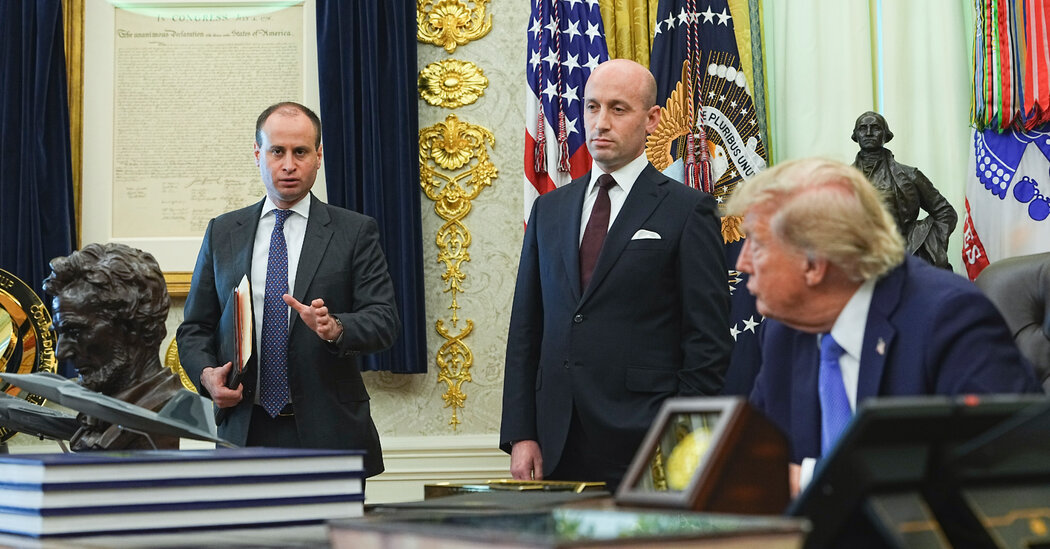
Upon joining the Trump administration, Mr. Scharf gained public visibility as the individual who presented Mr. Trump’s executive orders during made-for-television signing ceremonies in the Oval Office, placing him directly alongside the president during significant policy announcements. In parallel, he was appointed chairman of the National Capital Planning Commission (NCPC), a federal agency responsible for planning and overseeing federal development within the National Capital Region.
In his capacity as NCPC chair, Mr. Scharf has been noted for facilitating the expedited approval of projects favored by the president. A specific instance involved the approval process for a ballroom project, during which Mr. Scharf engaged in a public disagreement with Mr. Golinger, a fellow commission member. Mr. Golinger questioned Mr. Scharf’s qualifications to serve on the board. In response, Mr. Scharf enumerated his professional credentials, concluding by stating, “To say that I lack the credentials to serve on this commission is frankly insulting.”
Despite this public exchange, Mr. Golinger expressed a continued hope for Mr. Scharf’s independent judgment in his decision-making. Mr. Golinger remarked, “Certainly on the ballroom, I saw no independence, but I don’t know whether behind closed doors he might have a stiffer spine. But certainly, the hope of the country is that when things are on the line, if the law and the Constitution require something, that we certainly all hope he’ll side with the law and the Constitution over Donald Trump.”
Why This Matters
The career trajectory of individuals like Will Scharf offers significant insight into the evolving dynamics of American politics and governance. His background, characterized by fervent conservative activism from his collegiate years, deep immersion in influential conservative legal circles like the Federalist Society, and direct involvement in high-stakes political campaigns and presidential administrations, reflects a broader trend of ideologically aligned figures ascending to positions of power.
Mr. Scharf’s progression from a campus critic of centrist Republicanism to a key figure within the Trump administration underscores the increasing polarization within the Republican Party and the broader national political arena. His public alignment with former President Trump, evident in his campaign rhetoric and his visible role in presenting executive orders, highlights the emphasis placed on loyalty and ideological purity within certain political factions.
Furthermore, his leadership of the National Capital Planning Commission and the reported swift approval of presidential projects under his tenure raise important questions regarding the balance between administrative efficiency, adherence to established planning processes, and the potential for political influence on governmental bodies. This dynamic is particularly relevant in the context of federal appointments, where the independence and objectivity of commission chairs are paramount for maintaining public trust and ensuring equitable development practices, especially for projects with national significance.
Finally, the sentiment expressed by a fellow commissioner, Mr. Golinger, that Mr. Scharf would “side with the law and the Constitution over Donald Trump” when “things are on the line,” encapsulates a central tension in modern American governance. It points to public and institutional anxieties regarding the potential for political allegiance to overshadow constitutional principles, particularly for individuals in positions of significant legal and administrative authority. Understanding Mr. Scharf’s journey thus provides a valuable case study for examining the pathways to influence for a new generation of conservative leaders and the implications of their decision-making in critical governmental roles for the rule of law and democratic institutions.