
UK Naval Chief Warns Allies ‘Struggling’ to Counter Russian Undersea Threat to Critical Infrastructure
In an unusually candid assessment, the First Sea Lord, General Sir Gwyn Jenkins, has stated that Britain and its allies are finding it difficult to contain advanced Russian submarine capabilities and a sophisticated “research programme” directly targeting critical underwater infrastructure. The remarks were made during an interview for the Council on Geostrategy’s Defence Talks podcast, marking a departure from typical public statements by the service.
General Jenkins, the first Royal Marine to lead the Royal Navy, highlighted a significant increase in Russia’s undersea prowess. When asked about the most pressing threats in his operational environment, he asserted, “We are, if we’re really honest, as allies, we are struggling to contain very capable submarines, a very advanced so-called research programme, which is directly aimed at our critical underwater infrastructure.”
He was equally unambiguous regarding the organisation behind this programme, which Moscow officially presents as a deep-sea research directorate. General Jenkins dismissed this portrayal, stating, “Let’s not kid ourselves. It’s not a research agency. It is an independently funded arm of the Russian state, whose sole purpose is to pursue the destruction of critical underwater infrastructure, in particular in the event of a transition towards war, or just as an economic leverage for the Russian state.” This assessment underscores a perceived strategic intent behind Russia’s deep-sea activities, moving beyond scientific exploration to potential hostile actions.
The context for these concerns is Britain’s profound reliance on its underwater infrastructure. The nation is heavily dependent on the sea for virtually all its data transmission, international trade, and a significant portion of its energy supply. A vast network of cables, pipelines, and interconnectors extends from the British coast in every direction. The First Sea Lord acknowledged the immense challenge of effectively guarding all these vital arteries simultaneously, given their sheer number and geographical spread.
The specific entity identified by General Jenkins is the Main Directorate of Deep Sea Research, known by its Russian initials GUGI. This directorate operates a specialized fleet that includes deep-diving submarines and support vessels. Among these are the mother ship Belgorod and the survey vessel Yantar. British ministers have previously described the Yantar as designed to threaten underwater infrastructure, and the Ministry of Defence confirmed it was tracking the vessel in November 2025. GUGI operates with a unique administrative structure, reporting separately from the conventional Russian Navy, which aligns with General Jenkins’ description of it as an “independently funded arm of the state.”
In response to this escalating threat, Britain is developing a comprehensive strategy named “Atlantic Bastion.” This initiative represents a layered approach designed to monitor the maritime approaches to the UK and protect both its critical undersea infrastructure and the patrol areas used by British nuclear submarines. A key component of Atlantic Bastion is “Atlantic Net,” a sophisticated surveillance element comprising a network of autonomous sensors connected by secure data links. General Jenkins indicated that the Royal Navy has already selected a preferred consortium for Atlantic Net and anticipates awarding a contract later this year, with the first sensors expected to be deployed in the water by the end of the year.
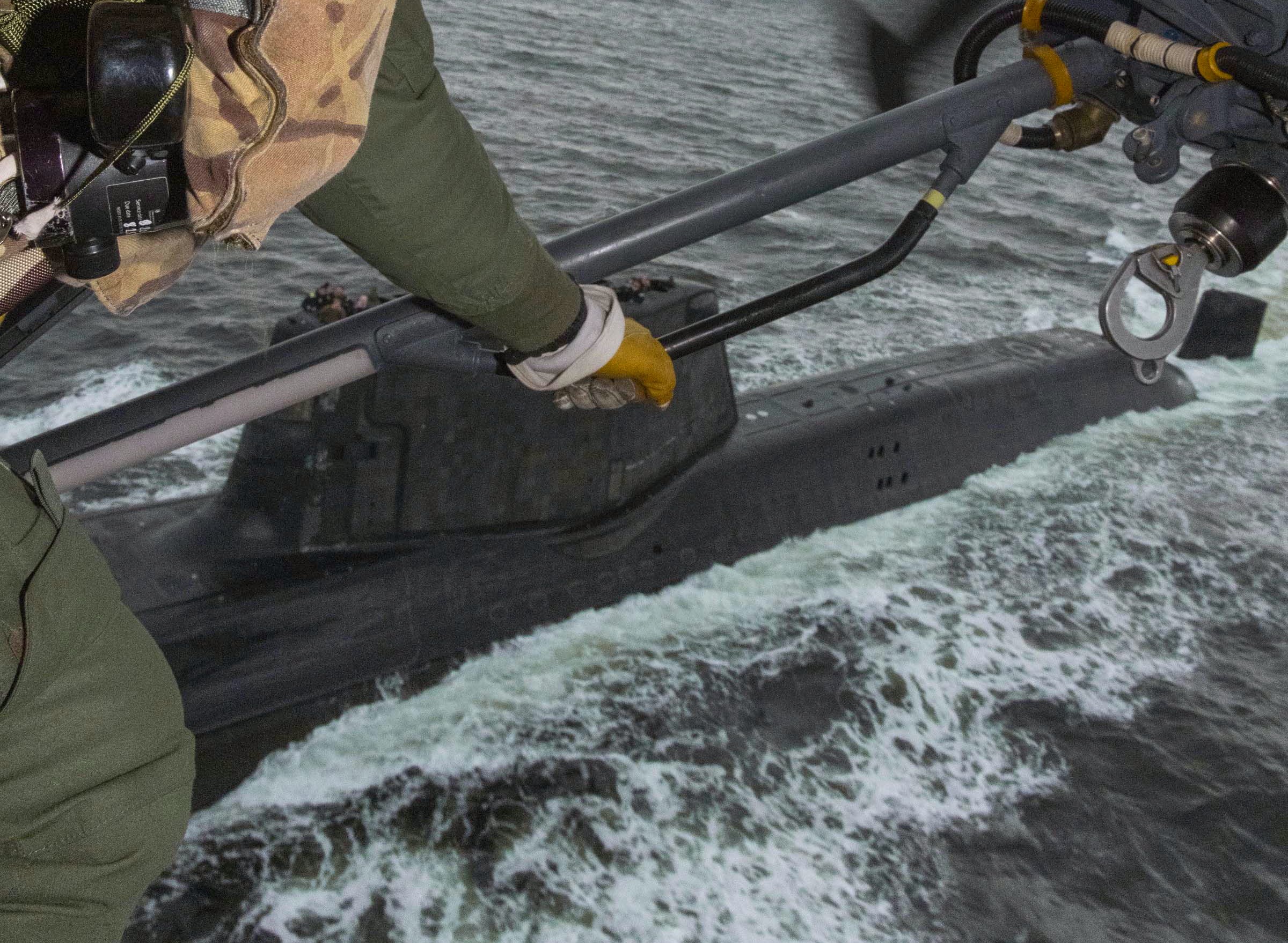
Britain’s existing anti-submarine warfare (ASW) capabilities form a crucial part of its defense against these undersea threats. The Royal Navy’s ASW force currently includes the highly capable Astute-class attack submarines, Type 23 frigates (which are in the process of being replaced by the advanced Type 26 frigates), and the P-8A Poseidon maritime patrol aircraft fleet based at RAF Lossiemouth. These assets are tasked with a broad range of responsibilities, including safeguarding the UK’s nuclear deterrent, protecting the carrier strike group, and contributing to wider North Atlantic security operations.
The interview with General Sir Gwyn Jenkins covered a wider array of topics beyond the immediate threat to undersea infrastructure, including reforms in officer selection and training, strategies for fostering innovation within the Navy, and the broader “Atlantic programme” encompassing Bastion, Strike, and Shield. He also discussed the critical relationship with industry for the “hybrid fleet” concept and offered his perspective on the evolving strategic landscape since the end of the Cold War. The full conversation, available on platforms like YouTube, Spotify, and Apple Podcasts, offers extensive insights into the future direction of the Royal Navy.
Why This Matters
The First Sea Lord’s stark warning about Russia’s undersea capabilities and its direct targeting of critical underwater infrastructure (CUI) carries significant implications for international security, economic stability, and the future of naval warfare. This assessment underscores several key areas of concern:
Escalating Geopolitical Tensions and Hybrid Warfare:General Jenkins’ comments highlight a deepening layer of geopolitical tension between Russia and NATO allies, particularly the UK. The deliberate targeting of CUI, even in peacetime, represents a form of hybrid warfare or “grey zone” aggression. This strategy aims to exert pressure and undermine adversaries without crossing the threshold into conventional armed conflict. Russia’s activities suggest a long-term strategic objective to develop capabilities that could disrupt vital global networks, adding a new dimension to military and economic coercion.
Vulnerability of Global Economy and Communications:The world relies heavily on undersea cables and pipelines for internet connectivity, energy transmission, and international trade. Disruption or destruction of these assets could have catastrophic economic consequences, causing widespread communication blackouts, energy shortages, and interruptions to global supply chains. For an island nation like the UK, which depends on the sea for virtually all its data, trade, and energy, such vulnerabilities pose an existential threat to national resilience and prosperity.
The Challenge to Allied Security and Defense:General Jenkins’ admission that allies are “struggling to contain” Russian capabilities signals a collective challenge for NATO and its partners. This suggests a potential gap in defensive capabilities or coordination against a sophisticated and evolving threat. It necessitates increased investment in anti-submarine warfare (ASW), enhanced intelligence sharing, and closer operational collaboration among allied navies to effectively monitor and protect vast stretches of underwater infrastructure.
A New Technological Race in Undersea Warfare:Russia’s “advanced research programme” and specialized deep-diving vessels like Belgorod and Yantar indicate a significant investment in cutting-edge undersea technology. This development triggers a new technological arms race, compelling countries like the UK to invest heavily in advanced surveillance systems, such as “Atlantic Net,” as well as next-generation ASW platforms and countermeasures. Maintaining a technological edge in the undersea domain is crucial for deterrence and defense.
Implications for Deterrence and Escalation:The explicit mention of targeting CUI “in the event of a transition towards war” or “as an economic leverage” directly links Russia’s undersea activities to potential conflict scenarios. This raises questions about escalation thresholds and the nature of future conflicts. The ability to cripple an adversary’s economy or communications infrastructure without direct military engagement on land or air adds a complex layer to strategic planning and deterrence doctrines.
Redefining National Security Priorities:The scale of the threat necessitates a re-evaluation of national security priorities and resource allocation. Protecting critical underwater infrastructure demands not only naval assets but also robust intelligence, cybersecurity measures, and diplomatic efforts to de-escalate tensions. The “Atlantic Bastion” programme represents a strategic shift towards a more comprehensive and layered defense of the undersea domain, acknowledging its vital role in modern national security.