
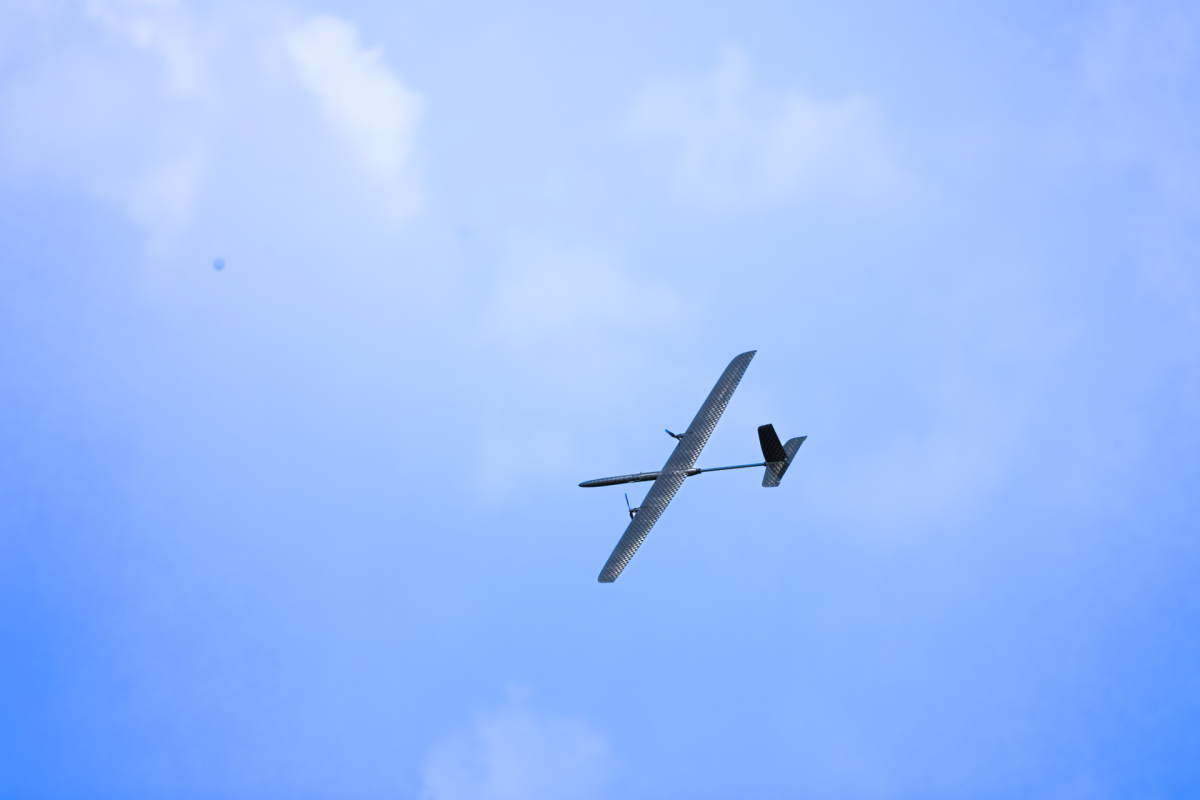
Prominent solo investor Lachy Groom has backed a Bengaluru startup attempting an ambitious feat: keeping an aircraft in the sky for more than a year by harvesting energy from ocean winds.
Key Takeaways
- Perpetual Flight Vision:Bengaluru-based Alteon aims to develop autonomous aircraft capable of staying airborne for over a year by harnessing energy from ocean winds using a technique inspired by albatrosses called dynamic soaring.
- Significant Early Backing:Founded by 20-year-old Samay Sanghvi, Alteon secured $2.5 million in a pre-seed round led by prominent investor Lachy Groom, with participation from Together Fund, highlighting strong investor confidence in a highly ambitious project.
- Promising Progress, Formidable Challenges:While early tests show promising autonomous flight capabilities near the ocean surface, the core challenge of consistently extracting enough energy from real-world wind conditions to sustain perpetual flight remains to be fully demonstrated.
Alteon Takes Flight: A Bengaluru Startup’s Audacious Bet on Perpetual Sky Power
Imagine an aircraft that never needs to land for refueling, capable of patrolling the skies for a year or more, powered solely by the invisible currents of the wind. This isn’t science fiction; it’s the audacious vision driving Alteon, a fledgling Bengaluru-based startup that just secured $2.5 million in a pre-seed funding round led by solo investor Lachy Groom, with additional backing from Together Fund.
At the heart of Alteon’s mission is 20-year-old founder Samay Sanghvi, who is leading a charge to revolutionize aviation by breaking free from conventional fuel and battery limitations. His team is developing autonomous aircraft inspired by dynamic soaring – a natural phenomenon mastered by albatrosses – to continuously harvest energy from wind shear above the ocean. This innovative approach seeks to unlock unprecedented endurance for aerial vehicles, promising “millions of things” once year-long flight becomes a reality.
The Albatross’s Secret: Unpacking Dynamic Soaring
The concept of dynamic soaring isn’t new; it’s a testament to nature’s engineering prowess. Albatrosses, renowned for their incredible migratory journeys, exploit differences in wind speed at various altitudes to gain energy without flapping their wings. By repeatedly moving between layers of air traveling at different speeds – typically diving downwind into slower air and climbing upwind into faster air – they can maintain flight with minimal effort, sometimes for thousands of miles.
Alteon aims to replicate this elegant natural mechanism with its small, fixed-wing autonomous aircraft. Unlike traditional drones or airplanes that carry all their energy onboard in the form of fuel or heavy batteries, Alteon’s designs are conceptualized to be energy-positive. This means they would continuously replenish their energy reserves by interacting with the environment, rather than depleting them. The implications of such a breakthrough are vast, ranging from environmental monitoring and disaster response to global communications and, as Alteon plans initially, enhanced maritime surveillance.
“Once you build airplanes that can stay in the air for more than a year, there are millions of things you can do with them,” Sanghvi told TechCrunch, hinting at the expansive potential of truly perpetual flight. For its initial application, Alteon envisions providing governments with real-time, persistent visibility into activity within their territorial waters and beyond, a capability currently limited by the endurance of existing manned and unmanned aerial systems.
Engineering the Perpetual Flight Machine
The proposed aircraft will feature a wingspan of approximately three meters, designed to operate close to the ocean’s surface. The core maneuver involves the aircraft flying low, then climbing and turning through faster-moving air to gain energy, repeating this cycle endlessly. Eventually, the plan is to use the aircraft’s propellers not just for propulsion but also as turbines, converting harvested wind energy into electricity to recharge onboard batteries, ensuring continuous operation even when dynamic soaring conditions are less ideal.
While the vision is compelling, the technical hurdles are considerable. Alteon acknowledges that it has not yet demonstrated sustained flight solely through dynamic soaring. However, the startup has made promising strides in its autonomous flight system. A recent test over the Bay of Bengal saw an Alteon aircraft autonomously complete seven O-shaped cycles, flying at speeds exceeding 62 miles per hour while maintaining an astonishingly low altitude – within one meter of the water’s surface. This successful demonstration of precise, low-altitude autonomous control is a critical step towards realizing their broader objective.
The immediate next major milestone for Alteon is achieving what Sanghvi terms “energy-neutral dynamic soaring.” This would involve the aircraft flying continuously with its propulsion system switched off, proving its ability to extract sufficient energy from the wind to remain aloft indefinitely. It’s a challenging interim goal that, if met, would validate the fundamental premise of their technology.
Expert Voices: Weighing the Promise and Peril
The ambitious nature of Alteon’s project has naturally drawn attention from experts in the field. Dr. Gabriel Bousquet, a Silicon Valley-based aerospace and robotics engineer who delved into dynamic soaring during his PhD at MIT, offered a cautious but optimistic assessment. He called Alteon’s low-altitude flight over water a “promising first result,” acknowledging the complexity of the feat. However, Dr. Bousquet emphasized that the more formidable challenge lies in reliably proving the aircraft can extract enough energy from the unpredictable, real-world conditions of ocean winds to sustain flight for extended periods.
Flying so close to the ocean’s surface to harvest wind energy presents unique difficulties. As Dr. Bousquet elaborated, the aircraft must contend with a dynamic and often hostile environment, including turbulence, waves, sea spray, rain, and constantly changing light conditions. Furthermore, the autonomous system must continuously sense and react to the moving ocean surface – a task requiring incredibly sophisticated sensors and control algorithms to ensure safety and stability. The margin for error at such low altitudes is minimal, making every flight a high-stakes endeavor.
Dr. Bharath Swaminathan, who earned his PhD from IIT Madras studying the stability of dynamic soaring, echoed the sentiment that the underlying physics is well established, praising Alteon’s effort as “commendable.” He highlighted that simply keeping an aircraft airborne for several days using dynamic soaring would itself constitute “a very big step, and a big achievement.” This perspective underscores that even partial success in Alteon’s long-term goal would represent a significant leap forward in aviation technology.
However, Dr. Swaminathan also pointed out a crucial practical challenge: while large-scale wind conditions might be predictable, local wind shear and turbulence can vary substantially over short distances. This variability complicates an aircraft’s ability to continuously extract energy from the wind efficiently. Some of these intricate challenges, he suggested, may only become apparent and solvable through extensive real-world flight testing, moving beyond controlled environments to the vast, unpredictable expanse of the open ocean.
The Founder’s Journey and Alteon’s Momentum
Lachy Groom, the lead investor, acknowledged the significant technical risks inherent in such an ambitious undertaking. “Ambitious problems are always going to come with risks,” he told TechCrunch. His decision to invest ultimately “came down to believing Samay and the Alteon team are the ones to figure them out,” underscoring a strong vote of confidence in the young founder and his cohort.
Sanghvi’s journey to founding Alteon is itself a testament to his drive. He began working on the concepts that would become Alteon straight out of high school in 2023, teaching himself to build aircraft by constructing – and frequently crashing – radio-controlled models before moving onto early prototypes. He formally founded Alteon in 2025, quickly attracting early backing from prominent accelerators like Emergent Ventures and 1517.
Today, Alteon boasts a team of 20 dedicated individuals based in Bengaluru, operating from a substantial 10,000-square-foot facility. This rapid expansion and infrastructure development signify the company’s serious commitment to its mission. The startup maintains an aggressive testing schedule, building four to five aircraft per week and having conducted more than 200 test flights in the past 30 days alone. This relentless iteration and real-world testing approach are vital for refining their designs and overcoming the complex engineering challenges ahead.
The Bottom Line
Alteon’s quest for perpetual flight is a bold, high-stakes endeavor marrying biomimicry with cutting-edge aerospace engineering. While the dream of year-long airborne autonomy remains distant, the foundational physics is sound, and early test results are encouraging. The substantial backing from investors like Lachy Groom, coupled with the relentless drive of Samay Sanghvi and his team, positions Alteon as a fascinating startup to watch. The road ahead is undoubtedly fraught with technical complexities, but if Alteon can indeed unlock the secrets of continuous wind-powered flight, it promises to usher in a new era of aerial capabilities, transforming everything from global surveillance to disaster relief and beyond.
When you purchase through links in our articles, we may earn a small commission. This doesn’t affect our editorial independence.
{content}
Source:{feed_title}