
General Petraeus Calls for Revolutionary New Concept of Warfare for US Military in AI Era
General David Petraeus, former commander of US and coalition forces in Iraq and Afghanistan and former CIA Director, has issued a stark warning regarding the United States’ preparedness for a new era of warfare driven by advancements in artificial intelligence (AI), autonomous systems, and other emerging technologies. Speaking in a recent address on September 1st at the House of Lords, General Petraeus asserted that the US has not yet developed the fundamental new concept of warfare required to effectively harness these innovations, necessitating extensive changes across American force structures, training, procurement, and military institutions.
In his address, Petraeus emphasized that while technological superiority remains crucial, it alone will not guarantee a lasting military advantage. He acknowledged the American innovation sector as “the most dynamic in the world,” noting the extraordinary speed of advances in AI, software, autonomous systems, and advanced manufacturing. However, he critically pointed out that US defense institutions are failing to adapt rapidly enough to integrate and exploit these rapidly developing technologies.
“The United States confronts a somewhat different challenge,” Petraeus stated. “Our innovation ecosystem remains the most dynamic in the world. Advances in artificial intelligence, software, autonomous systems, advanced manufacturing, and other emerging technologies continue at extraordinary speed.” He further clarified his assessment: “Our challenge is therefore not principally one of technological innovation. It is one of transforming our military institutions rapidly enough to exploit that innovation.”
Petraeus informed the peers that while the United States is indeed investing heavily in emerging military capabilities, these investments, though necessary, are “not nearly sufficient.” He argued that merely acquiring increasingly advanced equipment without corresponding and profound changes to military organizations, doctrine, and operational concepts would ultimately fall short. He underscored the absence of a foundational shift: “No nation will secure enduring strategic advantage simply by purchasing better technology. And the United States has not yet developed the revolutionary new concept of warfare this moment requires, much less begun the vast resulting changes in force structure, organization, training, leader education, procurement, and personnel.”
To illustrate the magnitude of the required transformation, General Petraeus drew a comparison with reforms undertaken by the US military during the wars in Iraq and Afghanistan. He recalled the period around 2006, when the Army and Marine Corps developed new counterinsurgency doctrine, reorganized forces, altered training methodologies and professional military education, accelerated acquisition processes, adjusted personnel policies, and introduced systems for rapidly capturing and distributing operational lessons learned. While significant, he characterized those reforms as “modest” in comparison to the present imperative.
“Those reforms were significant. But they were modest compared with what is required now,” Petraeus cautioned. “The challenge before us is of an altogether different order—and greater urgency. It calls for swift and revolutionary institutional transformation.” He articulated that every major defense institution must be re-evaluated through the lens of this nascent concept of warfare.
Petraeus identified several key areas that demand simultaneous and coordinated evolution. These include how forces are organized, how leaders are educated, the methods used for formation training, procurement processes, engagement strategies with industry, the cultivation and recruitment of technological expertise, and the systems for capturing and exploiting operational lessons. He stressed, “How we organize forces, educate leaders, train formations, procure capabilities, engage industry, cultivate technological talent, and capture and exploit operational lessons will all have to evolve together.”
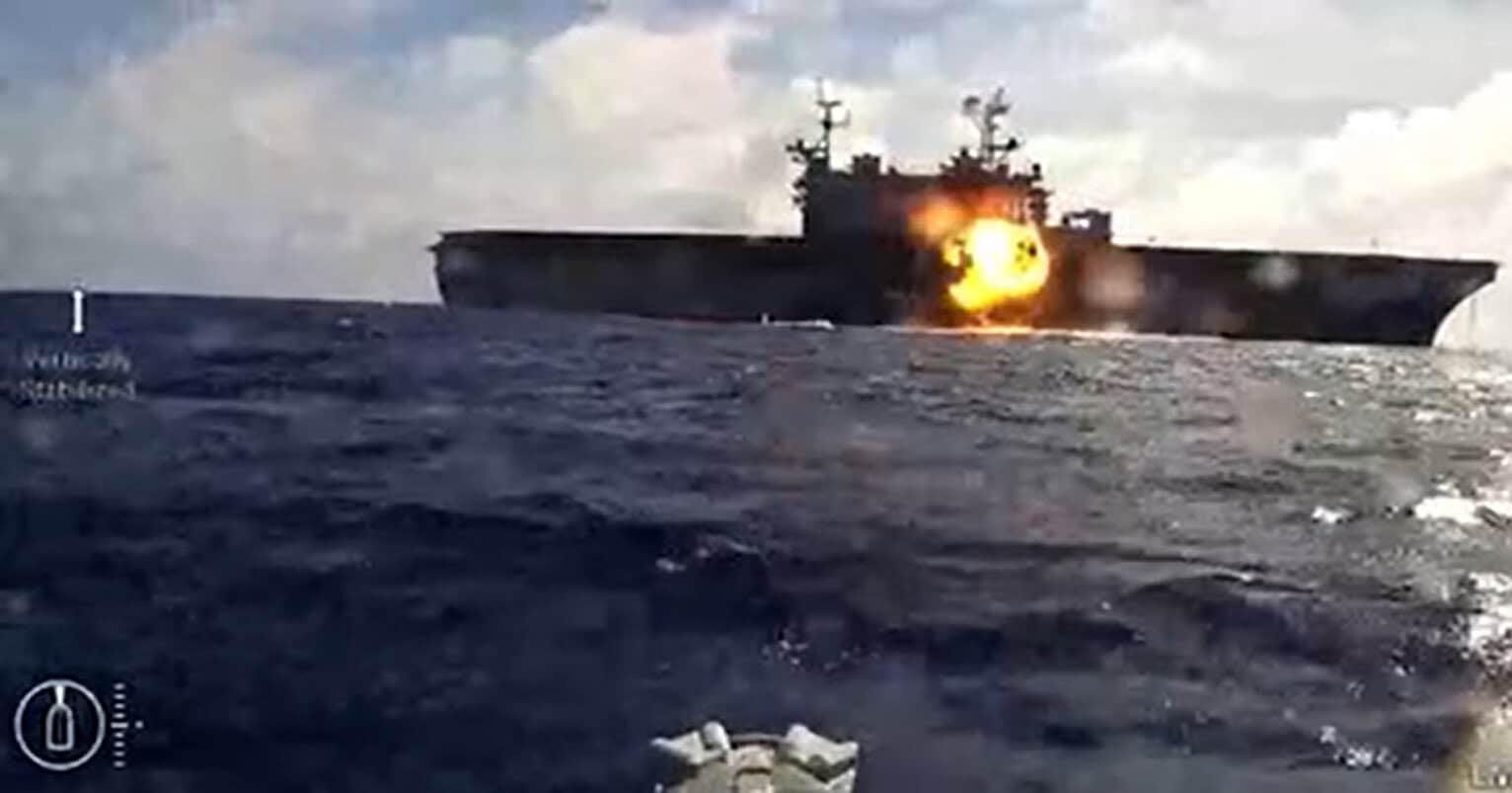
Part of this transformative process, he explained, involves critically reconsidering established force structures and equipment whose traditional roles are being fundamentally altered by advancements in surveillance technologies, precision strike capabilities, and unmanned systems. General Petraeus acknowledged the inherent difficulties, noting that political leaders would need to challenge long-established assumptions, while military leaders would be compelled to rethink organizational structures and force designs that have served successfully for generations. Furthermore, acquisition systems must operate at the unprecedented pace of technological change, and broader national elements such as industrial capacity, innovation, education, and national resilience must all be integrated as core components of national security.
“None of this will be easy,” Petraeus stated. “Political leaders will have to challenge long-established assumptions; military leaders will have to rethink organizations and force structures that have served successfully for generations; acquisition systems will have to operate at the pace of technological change; and industrial capacity, innovation, education, and national resilience will all have to be treated as elements of national security.”
He also issued a pragmatic warning about potential resistance to such sweeping changes. Petraeus anticipated that “powerful institutional, industrial, and legislative constituencies will resist changes that threaten established structures, priorities, and interests.” He concluded by reiterating that the foundational starting point should not simply be another cycle of equipment procurement, despite its importance. Instead, “Our first priority, therefore, should not simply be to acquire new technologies, critically important though that is. Our first priority should be to develop an entirely new concept of warfare. Only then can we identify the institutional changes required to execute it successfully.”
Why This Matters
General David Petraeus’s urgent call for a “revolutionary new concept of warfare” is not merely an academic exercise but addresses a critical juncture for global security and the United States’ strategic standing. The implications of his warning resonate across several vital domains:
Global Security Landscape:The stability of the international order hinges significantly on the military capabilities and doctrines of major powers. If the US military fails to adapt its fundamental approach to warfare in an era dominated by AI and autonomous systems, it risks a significant erosion of its deterrent capability. This could embolden potential adversaries, leading to increased geopolitical instability and the potential for new forms of conflict that the US is ill-prepared to confront.
Strategic Competition:Peer competitors, particularly China and Russia, are heavily investing in AI and autonomous technologies for military applications. China, in particular, has articulated an ambition to become a global leader in AI by 2030, with clear implications for its military modernization. Petraeus’s argument highlights that simply acquiring superior technology will not guarantee an advantage if the organizational structures, training, and operational concepts are not concurrently transformed. A failure to develop a coherent new concept of warfare could see the US fall behind in this crucial strategic race, jeopardizing its ability to protect its interests and allies globally.
Economic and Industrial Impact:The proposed institutional transformation would necessitate a monumental shift in defense spending, procurement practices, and industrial capacity. It implies a re-evaluation of existing defense programs, potentially leading to the downscaling or cancellation of traditional platforms that are becoming obsolete in the face of new technologies. This would have significant economic ramifications for the defense industrial base, employment in related sectors, and the allocation of vast sums of taxpayer money. It also calls for greater integration between the cutting-edge commercial technology sector and the defense establishment, demanding new models of collaboration and talent acquisition.
Future of Warfare:This discussion fundamentally shapes how future conflicts will be conceived, prepared for, and executed. It suggests a future battlefield where AI-powered decision-making, swarms of autonomous drones, and hyper-precision strikes redefine tactical and strategic advantage. Understanding and embracing these changes, as Petraeus advocates, is crucial for preventing future conflicts through credible deterrence or ensuring victory should they occur. The absence of a guiding “concept of warfare” could lead to piecemeal technological adoption without a cohesive strategy, rendering expensive new systems less effective.
Alliances and Partnerships:The US military’s doctrine and capabilities directly influence its allies. For effective coalition warfare, allies must operate with compatible concepts of operation and interoperable technologies. If the US embarks on a revolutionary transformation, its allies will need to understand and potentially mirror these changes to maintain seamless cooperation and shared defense capabilities, creating a ripple effect across numerous international partnerships.