
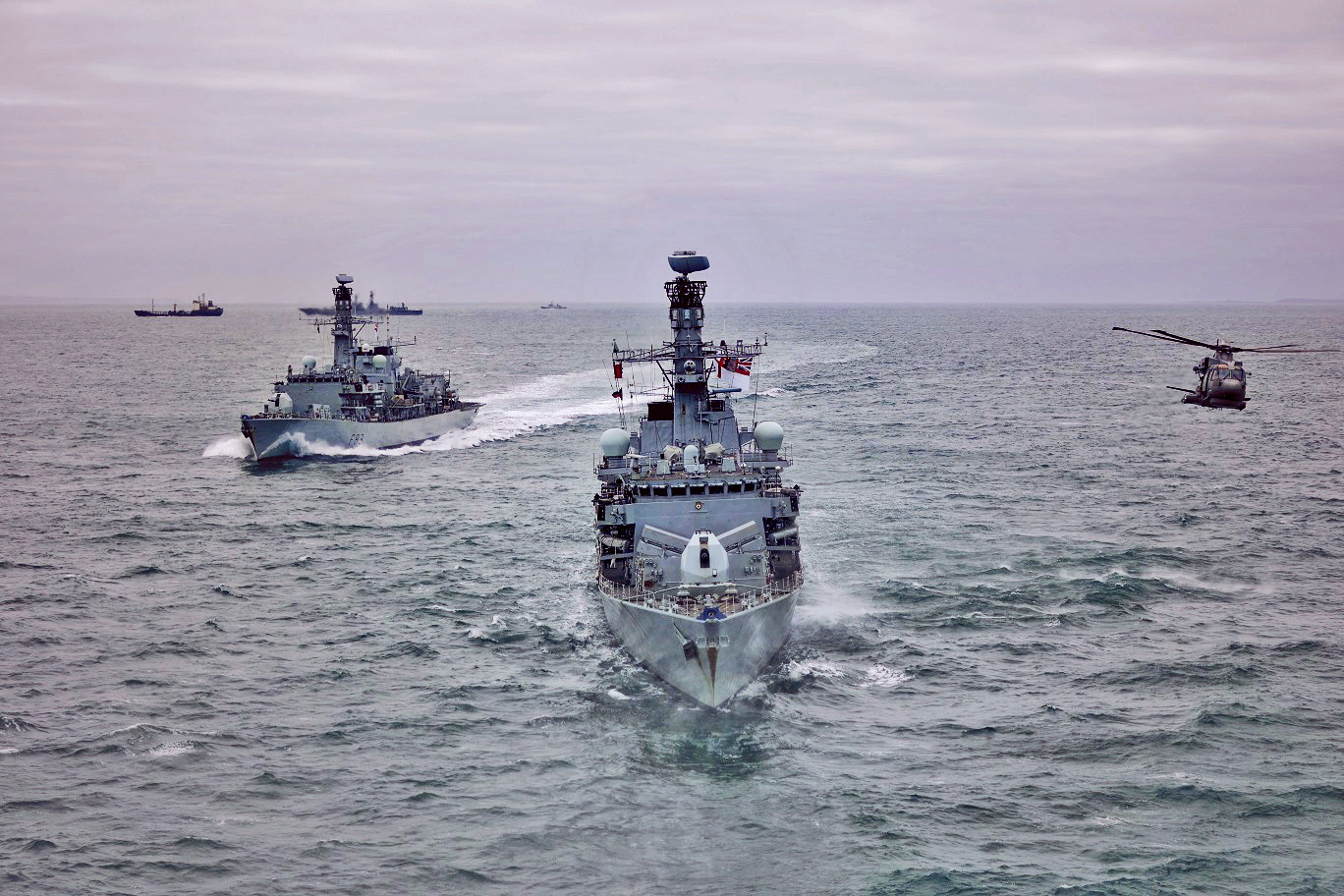
UK Ministry of Defence Secures Critical Navigation Radar Replacements for Type 23 Frigates
The United Kingdom’s Ministry of Defence (MOD) has finalized a contract valued at £2.33 million for the procurement and ongoing support of replacement navigation radars for the Royal Navy’s Type 23 frigates. This critical acquisition addresses an urgent operational requirement identified by the MOD, which previously warned that the existing radar systems were unsupported and that their failure could impede a vessel’s ability to sail, thereby compromising naval operations.
The contract notice, publicly released on August 30, details the agreement for new Second Naval Navigation Radar (SNNR) equipment and comprehensive in-service support. The formal agreement was signed on July 30 and is structured to run until July 2031, with provisions for optional extensions that could see it continue until July 2033.
The procurement was managed by Defence Equipment and Support (DE&S), the MOD’s bespoke procurement arm. Notably, the contract was awarded directly, bypassing the standard competitive tendering process. The MOD justified this direct award by citing specific technical reasons, the pressing urgency of the requirement, and the paramount need to sustain the operational capability, readiness, and safety of the Armed Forces. This approach is typically reserved for circumstances where a competitive process would jeopardize critical national defence interests or when only one supplier can meet highly specific technical demands.
In its official justification for the direct award, the MOD stated: “The MRUP [Maritime Radar Update Programme] team are in an unusual and unplanned position whereby the current SNNR used on Royal Navy Type 23 Frigates is unsupported; as SNNR is a critical system this presents a significant risk to Navigational Safety for the T23 vessels and a risk to the operational capability of these Royal Navy vessels.” This highlights the inherent dangers of relying on obsolete and unmaintainable equipment for fundamental ship operations.
The statement further elaborated on the severity of the situation: “The failure of a Navigation Radar will result in a high-level Operational Defect (OPDEF) and could prevent the ship sailing. With this in mind timescales to procure a replacement radar are of the upmost importance.” An OPDEF designation signifies a critical equipment malfunction that severely impacts a vessel’s operational capacity, often rendering it unable to deploy or conduct its assigned missions, directly affecting national security and international commitments.
This urgent requirement forms a core component of the broader Maritime Radar Update Programme. The primary objective is to replace the existing Second Naval Navigation Radar systems while simultaneously minimizing the need for extensive modifications to the frigates themselves. According to the procurement notice, the MOD specifically sought replacement equipment that possessed identical properties to the current radar. This stringent technical requirement was designed to ensure that the existing shipboard infrastructure, including cabling, mounts, and integration points, could be seamlessly reused.
The department articulated this strategy: “Due to the necessity to replace the radar at the earliest opportunity, the Authority will seek to limit any change on the platform. The Authority’s requirement is therefore for a radar which has identical properties to the current radar so as to enable the existing infrastructure on the platform to be used.”
This approach offers several strategic advantages. It is intended to circumvent the time-consuming and costly processes of undertaking new design work, modeling system interactions, and securing new certifications. By minimizing the scope of platform alterations, the MOD aims to keep the duration of the radar update work to an absolute minimum, thereby limiting the impact on each frigate’s operational readiness. This efficient strategy permits the updates to be carried out even while a vessel remains largely operational, avoiding prolonged periods of downtime that would strain the Royal Navy’s available fleet.
Following a thorough assessment, the MOD concluded that the Hensoldt S Band Turning Unit and Antenna was the sole system capable of meeting these precise and urgent technical requirements. Hensoldt UK Limited is named in the direct-award justification as the company with which the MOD intended to place the contract, while Kelvin Hughes Limited is listed as the supplier in the contract notice, reflecting the corporate relationship between the entities.
The agreement also encompasses a series of optional provisions for additional work, signaling a forward-looking approach to fleet modernization. These options include the potential installation of Multi-Display Multi-Function Displays (MDMFDs) on more Type 23 frigates, the production of essential technical publications, the provision of supplementary operator and maintainer training, and the execution of comprehensive security testing to ensure robust system integrity.
Further options outline the potential replacement of existing RT1084 equipment with advanced Hensoldt UK equipment featuring the SharpEye system. These modifications could stem from recommendations identified through an earlier concept design study, or combinations of various proposed changes. One specific option highlights the possibility of replacing existing RT1084 equipment with a new Hensoldt UK Multi-Display Multi-Function Display and the sophisticated Mk11 S-Band SharpEye radar, indicating a phased upgrade path for enhanced capabilities.
The initial five-year contract can be further extended through two separate one-year options. Earlier voluntary transparency materials associated with this procurement had estimated that the wider requirement, if all options were exercised, could be valued at up to £3.5 million. To ensure accountability and operational effectiveness, the contract incorporates quarterly performance measures. These metrics cover critical aspects such as helpdesk responsiveness, equipment availability, timely delivery of reports and contractual documents, and efficient responses to technical assistance forms and requests for quotation, underscoring a commitment to sustained performance and support.
Why This Matters
The Ministry of Defence’s swift action to replace unsupported navigation radars on its Type 23 frigates is a critical development with far-reaching implications for the Royal Navy’s operational capabilities, national security, and the broader defense industry. This procurement highlights the continuous challenges faced by naval forces in maintaining an aging but essential fleet amidst evolving technological landscapes and geopolitical demands.
Firstly, **Operational Readiness and Safety** are paramount. Navigation radars are not merely convenience tools; they are fundamental to safe and effective maritime operations. Their failure can lead to severe consequences, from grounding and collisions to an inability to navigate in adverse weather or complex maritime environments. An “Operational Defect (OPDEF)” status means a ship is effectively non-deployable, directly impacting the Royal Navy’s capacity to conduct missions such as anti-submarine warfare, maritime security patrols, or humanitarian aid. Ensuring these systems are supported and functional directly translates to the safety of naval personnel and the vessels themselves, as well as the UK’s ability to project power and uphold its international commitments.
Secondly, this contract underscores the **Importance of Fleet Modernization and Sustainment**. The Type 23 frigates, while highly capable, are an aging class. Introduced into service from the late 1980s, they are nearing the end of their operational lives, with replacements like the Type 26 Global Combat Ship and the Type 31 Inspiration-class frigates slowly entering service. Until the new classes are fully operational and integrated, the Type 23s remain the backbone of the Royal Navy’s surface fleet. Investing in critical systems like navigation radars is vital to extending their effective service life and maintaining their relevance in a rapidly changing threat environment. This contract is a clear signal that the MOD is committed to keeping its current assets fully functional and capable until their planned replacements are ready.
Thirdly, the **Direct Award Process** merits attention. While typically competitive tendering is preferred for transparency and value for money, the MOD’s justification of “technical reasons, urgency and the need to maintain the operational capability, readiness and safety” illustrates scenarios where expediency takes precedence. In critical defence procurements, the ability to quickly integrate a proven, compatible solution can outweigh the benefits of a lengthy competition, especially when a system’s failure poses an immediate threat to naval operations. This decision highlights the fine balance between robust procurement processes and urgent operational requirements.
Finally, this contract has implications for the **UK Defence Industrial Base**. The involvement of Hensoldt UK (and Kelvin Hughes, a Hensoldt company) in supplying these crucial systems reinforces the role of domestic and allied defence contractors in supporting national security capabilities. It ensures that specialized expertise and maintenance support are readily available, contributing to the resilience of the UK’s defence supply chain and potentially fostering further technological development within the sector.
In conclusion, the £2.33 million contract, while modest in the context of overall defence spending, is a pivotal investment in the Royal Navy’s immediate operational effectiveness and long-term fleet sustainment. It addresses a critical vulnerability, ensuring that the Type 23 frigates can continue to perform their vital roles safely and effectively, thereby safeguarding national interests and contributing to global maritime security.