
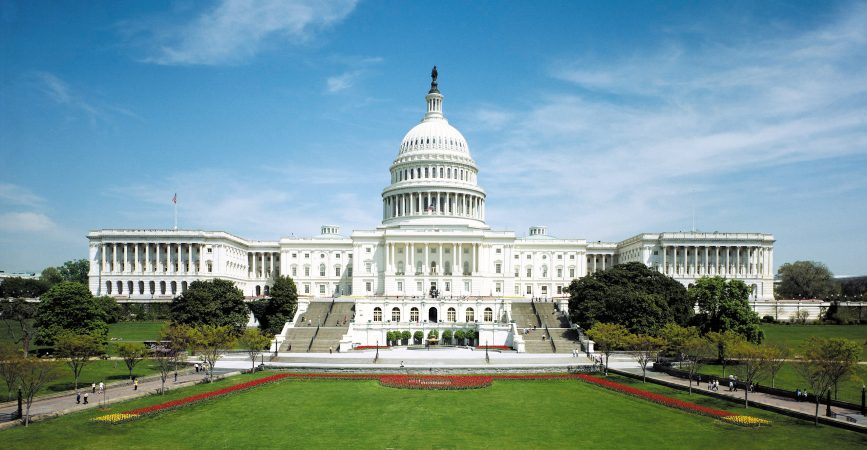
As the federal government approached the start of its new fiscal year, Congress successfully passed a continuing resolution (CR) on September 1, designed to extend current spending levels through December 11. This legislative action effectively postpones a decision on the Pentagon’s comprehensive request for $1.5 trillion in spending authority for fiscal year 2027 (FY27).
The passage of this temporary funding measure followed a period where the House of Representatives and the Senate had approved their own versions of continuing resolutions, each with differing end dates. Ultimately, the House concurred with the Senate’s timeline in a bipartisan vote of 370-48 on September 1. The bill is now awaiting President Donald Trump’s signature, which is widely anticipated.
A continuing resolution serves as a temporary appropriations act, allowing federal agencies, including the Department of Defense (DoD), to continue operating at funding levels established in the previous fiscal year’s budget. In this instance, the CR maintains the spending parameters of fiscal year 2026 (FY26) as the government transitions into FY27 on October 1. This mechanism is typically employed when Congress cannot agree on full-year appropriations bills before the fiscal year begins.
Military and civilian leaders consistently highlight the operational challenges posed by continuing resolutions. These measures often prohibit the initiation of new programs, delay crucial contracts, and hinder scheduled training events, disrupting long-term planning and modernization efforts. Despite these known drawbacks, CRs have become a routine feature of federal budgeting. Years in which the military receives its full annual budget on time are increasingly rare. According to data from the Government Accountability Office (GAO), the Department of Defense will commence the upcoming fiscal year with a temporary spending measure for the 38th time in the last 50 years.
The implications of this year’s CR are potentially more significant than in previous cycles, primarily due to the substantial increase in funding the Pentagon is seeking. For FY27, the Department of Defense requested an unprecedented $1.5 trillion. However, by extending the baseline FY26 budget, the DoD will initially operate with approximately $838.5 billion, representing a 44 percent reduction from its requested amount. This considerable gap creates immediate budgetary constraints across various defense initiatives.
Certain critical defense programs face particularly acute challenges under the CR, largely because their recent funding was secured through the reconciliation process, rather than standard appropriations. The “Golden Dome for America” missile defense shield, for example, received the majority of its funding in the FY25 “One Big Beautiful Bill Act,” which was passed last summer by a Republican-only majority using reconciliation. This process allows specific budgetary legislation to pass with a simple majority vote in the Senate, bypassing the filibuster, and is typically used for spending, revenue, and debt limit legislation. Golden Dome Director Gen. Michael Guetlein expressed concern last month, stating that “a CR doesn’t help me under Golden Dome because I don’t have a topline to fall back to” from the previous fiscal year’s standard appropriations.
The Air Force’s F-15EX fighter jet program encounters a similar predicament. Its fiscal year 2026 procurement was almost entirely funded through the same reconciliation process. Consequently, under the current CR, the program will begin FY27 with a topline of just $115 million. This figure is less than 5 percent of the $2.65 billion officials had requested for the program, severely impacting its planned acquisition schedule and operational readiness.
The prospect of Congress approving the Pentagon’s full $1.5 trillion request for FY27 appears increasingly doubtful. The White House had strategically divided its request into two distinct parts: $1.15 trillion to be processed through the conventional appropriations committees and an additional $350 billion to be sought via the reconciliation process. While House appropriators advanced a base spending measure in June that included $1.07 trillion for defense, their Senate counterparts have yet to reach a consensus on a definitive topline figure for their version of the defense bill. Furthermore, neither chamber has made substantial progress on the $350 billion reconciliation request, indicating significant legislative hurdles.
The House did approve the framework for a considerably smaller reconciliation package, allocating $60 billion for defense. However, lawmakers have clarified that these funds are intended to address supplemental needs related to replenishing departmental resources for costs associated with the ongoing Iran war, rather than contributing to the core FY27 budget. Some prominent Republicans have indicated a potential push for another reconciliation bill after the midterm elections to address the broader FY27 budget. Nevertheless, internal disagreements within the party regarding how to finance even the current proposed package raise doubts about its eventual passage.
Defense budget analysts have expressed considerable skepticism regarding the ambitious $1.5 trillion budget outlook. Byron Callan, an expert from Capital Alpha Partners, noted in a recent newsletter that the base budget for FY27 may not receive congressional approval “until spring 2027.” Such a delay, potentially six or more months into the fiscal year, would leave defense officials with critically limited time to obligate the allocated funds. The Government Accountability Office has previously highlighted that in years marked by extended CRs, “activities and programs can face bottlenecks, such as with the capacity of contracting offices to solicit and issue contracts or the ability of vendors to complete projects,” leading to inefficiencies and potential forfeiture of funds.
Why This Matters
The passage of a continuing resolution, particularly one impacting a defense budget of this magnitude, carries significant implications for national security, economic stability, and governmental functionality. Firstly, from a national security perspective, a prolonged CR and the uncertainty surrounding the FY27 defense budget can impede critical military readiness and modernization efforts. Delays in funding new programs, procuring advanced weapons systems, and conducting essential training exercises can degrade the military’s ability to respond to evolving global threats and maintain a competitive edge against potential adversaries. Programs like the Golden Dome missile defense shield and the F-15EX fighter program, which are crucial for strategic defense and air superiority, face direct setbacks, potentially creating capability gaps.
Economically, the inability to pass a full budget impacts thousands of defense contractors and their employees across the nation. Contract delays and funding uncertainties can lead to production halts, layoffs, and a reluctance by companies to invest in research and development, ultimately slowing innovation within the defense industrial base. This ripple effect extends beyond direct defense spending, affecting local economies reliant on defense industry jobs and investment. The uncertainty also complicates long-term financial planning for these businesses, hindering their ability to project future revenues and workforce needs.
Furthermore, the persistent reliance on CRs highlights a broader challenge in legislative governance. It underscores a recurring inability of Congress to fulfill one of its primary responsibilities: the timely appropriation of funds for federal operations. This pattern not only creates inefficiencies and waste but also can erode public trust in government’s capacity to manage the nation’s finances effectively. For the Department of Defense, it transforms strategic planning into an exercise in crisis management, diverting resources and attention from core missions to navigating budgetary unknowns. In an increasingly complex global environment, where geopolitical stability is fragile, a predictable and robust defense budget is not merely an administrative detail but a fundamental pillar of national strength and international leadership.