
NATO Confronts Critical Vulnerability in Commercial Shipping Reliance for Major Conflicts
A new report by the Council on Geostrategy warns that the North Atlantic Treaty Organization (NATO) can no longer rely on the assumption that commercial shipping will be readily available to transport forces and equipment during a significant conflict. The assessment highlights a confluence of factors, including a global decline in merchant fleets, a shortage of qualified seafarers, and insufficient integration between military and commercial maritime sectors, all of which leave NATO’s reinforcement strategies exposed to considerable risk.
The Council on Geostrategy’s Primer, titled “Strategic sealift and maritime resilience: Assuring access in an era of contested logistics,” authored by William Freer and Charlotte Kleberg, asserts that the largely permissive maritime logistics environment prevalent since the end of the Cold War has irrevocably changed. Freer and Kleberg point to a range of contemporary threats and disruptions, including direct attacks on shipping, the sabotage of critical infrastructure, sub-threshold activities (such as cyberattacks or hybrid warfare), significant market disruptions, and the emergence of opaque ‘shadow fleets.’ These developments, they argue, demonstrate that the vast logistics networks underpinning NATO operations can no longer be treated as inherently secure or always accessible.
The authors state emphatically:“There has long been an assumption that commercial shipping will be available as and when required. The return of contested logistics and the nature of global shipping have rendered this assumption obsolete.”This shift necessitates a fundamental re-evaluation of how NATO plans to project and sustain its forces, particularly in a high-intensity, prolonged conflict scenario.
NATO’s capacity to reinforce its frontline members hinges not merely on its dedicated military transport fleets, which are limited in scope and volume, but crucially on its ability to access and utilize commercial vessels, their crews, a network of ports, and the broader logistical infrastructure that supports them. However, across the alliance, the pool of commercially owned merchant shipping deemed “militarily useful” has been steadily contracting. This decline is mirrored by a diminishing number of qualified seafarers available to crew these vessels. In the United Kingdom, for instance, a key maritime nation, the number of identified militarily useful vessels plummeted from 841 in 2009 to just 495 in 2023, figures originally reported by the UK Defence Journal and subsequently cited by Freer and Kleberg.
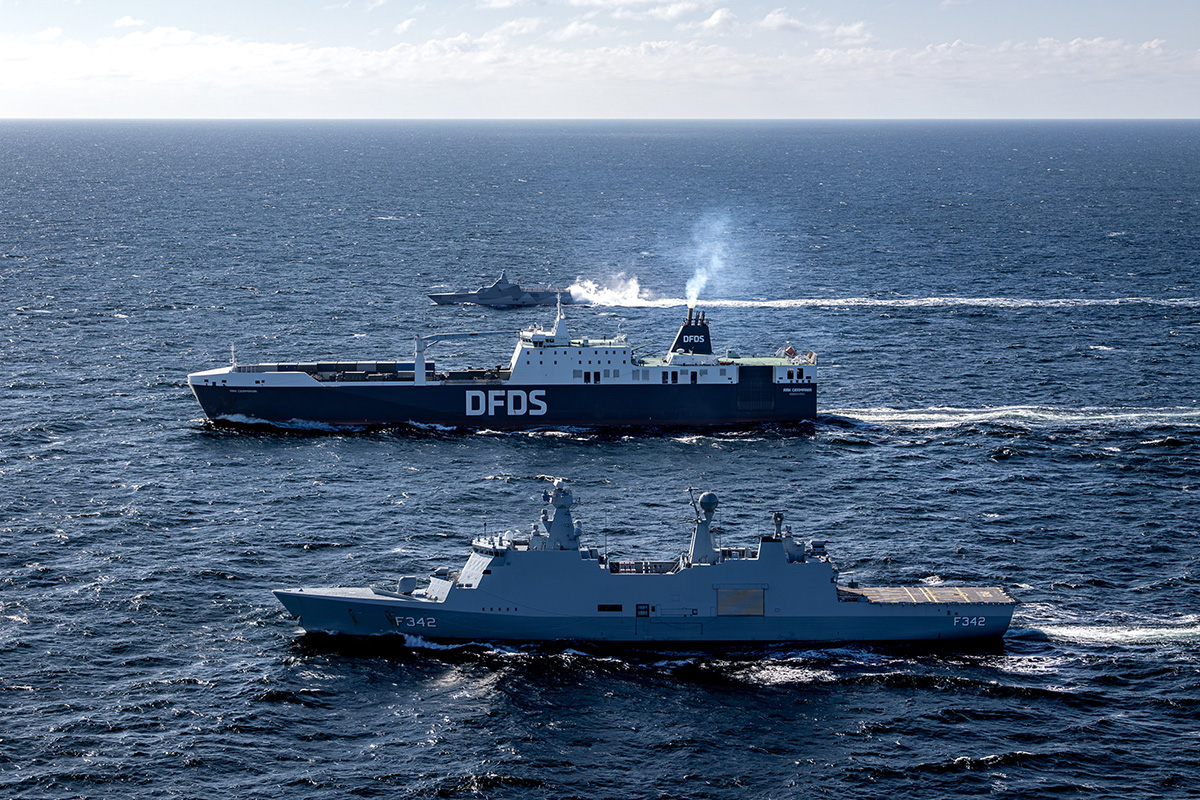
The strategic importance of sea transport remains paramount due to its unparalleled capacity for moving vast quantities of heavy equipment. The report vividly illustrates this by contrasting the capabilities of an aircraft like a C-17 Globemaster, which can typically carry a single main battle tank, with a large roll-on/roll-off (Ro-Ro) vessel. A single suitable Ro-Ro ship can transport approximately 1,000 vehicles, including multiple tanks and armored personnel carriers. The authors underscore that a single large merchant vessel could effectively carry the entire equipment of an army brigade, making secure and reliable access to commercial shipping a central and indispensable element of any credible plan to reinforce NATO forces during an extended conflict.
The Council on Geostrategy report identifies four primary challenges impeding NATO’s strategic sealift capabilities:
- Access to militarily useful shipping:The global commercial fleet is diverse, with complex ownership structures, flags of convenience, and varying operational commitments, making guaranteed access difficult.
- A declining pool of skilled seafarers:An aging workforce, competition from land-based jobs, and often challenging working conditions contribute to a global shortage of mariners, critical for operating vessels.
- Limited civil-military integration:Historically, military logistics planning has often occurred in isolation from commercial operators, leading to disconnects and inefficiencies during crises.
- Erosion of national maritime capacity:Many NATO member states have seen their national flag fleets shrink, increasing reliance on foreign-owned or foreign-crewed vessels, which can introduce geopolitical and legal complexities in a conflict.
The report further warns that commercial vessels that appear available “on paper” might not necessarily be ready for deployment when required. Such vessels could already be committed to other commercial routes, face prohibitive insurance restrictions in contested zones, lack suitably trained crews for high-risk environments, or require significant modifications to meet military specifications before entering a conflict area.
In response to these critical vulnerabilities, Freer and Kleberg advocate for a fundamental shift in NATO governments’ approach. They propose moving away from reactive, ad hoc chartering and requisitioning of vessels towards proactively negotiated agreements with commercial operators during peacetime. This proposed framework would offer shipping companies greater certainty and potentially financial incentives, in return for their commitment to make suitable vessels and their extensive logistics networks available during a crisis or conflict.
The report also strongly recommends that commercial shipping companies be directly involved in NATO’s strategic planning and military exercises, rather than being brought into military logistics arrangements only after operational plans have been fully developed. The authors highlight the French Navy’s POLARIS 25 exercise as a commendable example of such integration, where elements of the French merchant fleet participated directly in large-scale operational scenarios, fostering invaluable experience and coordination.
The authors conclude with a stark warning:“In a crisis, the alliance will not have time to build new lift networks. Instead, it should focus on building a suite of standing contracts, pre-cleared operators, and integrated exercises as part of an established and exercised maritime logistics system.”
The overarching conclusion of the report is unequivocal:“An alliance unable to reinforce its frontline members at speed, at scale, and over a prolonged period is not ready for the return of peer conflict.”This assessment underscores the urgent need for NATO to address these strategic sealift deficiencies to maintain its credibility and deterrent posture in an increasingly volatile global security landscape.
Why This Matters
This report from the Council on Geostrategy highlights a fundamental vulnerability that could severely impede NATO’s ability to respond effectively to a major conflict, particularly against a peer adversary. Strategic sealift is not merely an auxiliary function; it is the backbone of modern military operations, enabling the rapid deployment and sustained resupply of forces over vast distances. Without assured access to sufficient shipping, NATO’s capacity to reinforce its Eastern flank, support allies, or project power into a contested theater would be severely compromised. This directly impacts the alliance’s deterrent credibility, as potential adversaries might perceive a weakened capability to respond robustly and sustain a prolonged defense.
Furthermore, the issues raised – declining merchant fleets, seafarer shortages, and limited civil-military integration – reflect broader challenges within the global maritime industry and national security frameworks. The reliance on commercial shipping for military logistics intertwines economic interests with national defense, making the stability of global supply chains and the health of national merchant marines critical strategic assets. Should NATO struggle to secure commercial vessels, it could lead to significant delays in deploying troops and equipment, potentially altering the course of a conflict and increasing the human and economic cost. Addressing these concerns is therefore not just about military readiness, but also about reinforcing global stability, ensuring economic resilience, and adapting to the evolving nature of warfare where logistics and supply lines are increasingly targets in themselves.