
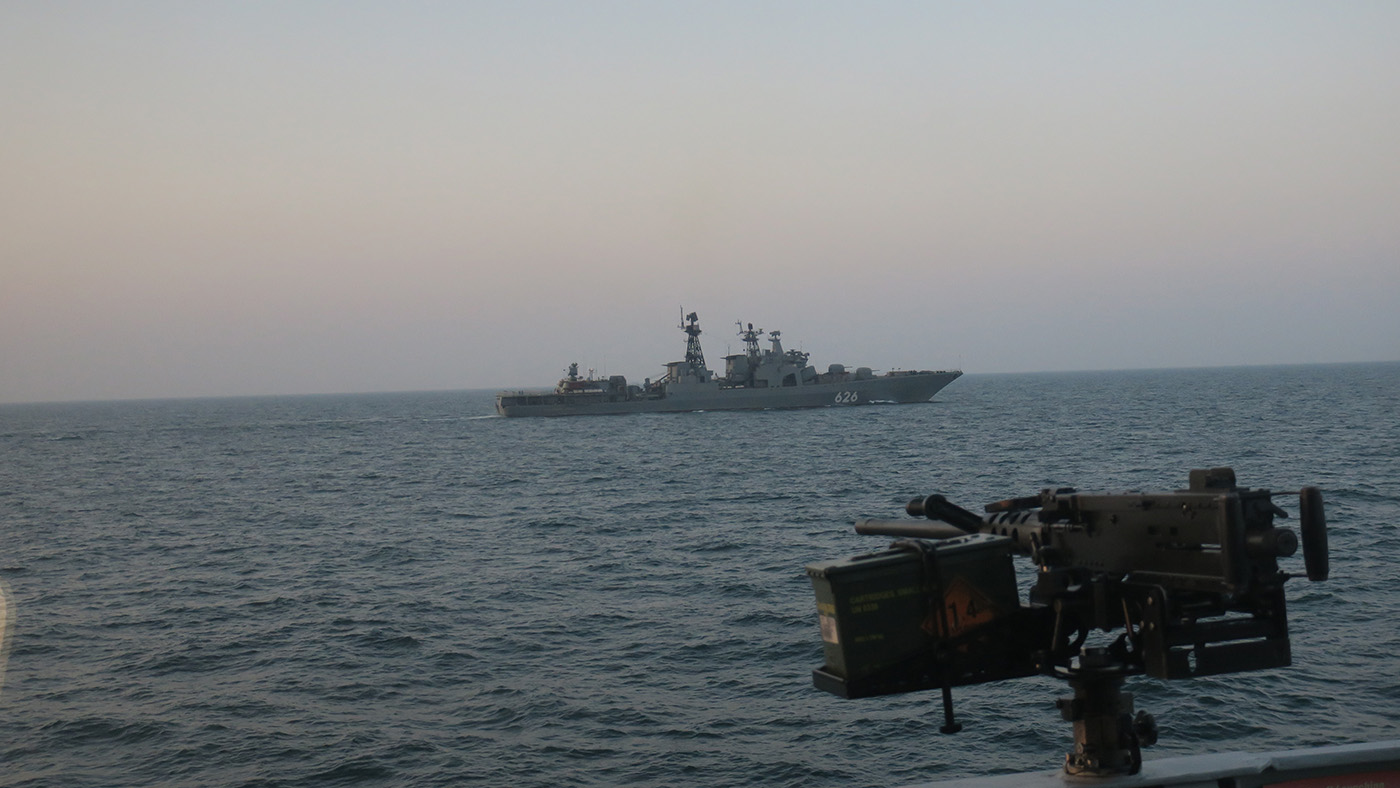
Russia’s Naval Footprint in Mediterranean Shrinks to Ten-Year Low Amid Ukraine War
Russia has not maintained a sustained naval presence in the Mediterranean Sea since June 2024, marking the first time in a decade that its fleet has effectively withdrawn from the region. This development, confirmed by a NATO official, suggests a significant strain on Russia’s naval resources, according to a prominent naval analyst.
Tom Sharpe, a former Royal Navy Commander and columnist for the *Daily Telegraph*, who previously detailed Russia’s retreat from its Syrian port of Tartus in December 2024, commented on the implications of this withdrawal. “Russia is clearly stretched thin. Their loss of the Med as a base shows this,” Sharpe stated. While acknowledging the strategic challenges faced by Moscow, he also cautioned that the remaining Russian naval assets are “dangerous and well handled,” indicating that despite reduced numbers, their operational capabilities should not be underestimated.
Sharpe expressed concern regarding the timing of this shift, linking it to the ongoing conflict in Ukraine. “As their war in Ukraine goes from bad to worse, we are entering a worrying period, just at the time when our ability to counter or deter is equally low,” he observed. He further noted skepticism about immediate improvements in Western defense capabilities, stating, “Any sense that the new Prime Minister, Chancellor or Defence Secretary was going to inject funds to help reverse this are fading by the day.” This sentiment underscores a broader concern among some analysts about the readiness of Western navies to respond to evolving threats.
NATO outnumbers Russia at sea as Mediterranean presence ends
Logistical Challenges Highlighted by Naval Analyst
Elaborating on Russia’s diminishing presence in the Mediterranean, Sharpe had previously described the situation as being in “terminal decline” following the loss of its capabilities at the Syrian port of Tartus. Historically, Tartus served as Russia’s only naval support facility outside the former Soviet Union, providing a crucial logistical hub for its Mediterranean operations. The reduction or loss of sustained access to such a facility significantly impacts a fleet’s ability to operate effectively over extended periods.
The operational difficulties faced by the Russian navy in the region have been further underscored by its reliance on unusual logistical solutions. Sharpe pointed out that Russia has recently been reduced to refuelling its vessels from a repair ship. This vessel, designed primarily as a floating workshop for maintenance and repairs, lacks the specialized equipment and safety protocols typically associated with transferring fuel between two moving hulls at sea. Such an improvised approach highlights the acute shortage of dedicated support vessels, like tankers, which are essential for maintaining a long-term naval presence far from home ports. While there has been discussion of Russia potentially utilizing ports in Libya for logistical support, Sharpe remained unconvinced of their suitability for providing the long-term, comprehensive services required for a modern naval fleet.
Meanwhile, NATO Maritime Command (MARCOM) has maintained close surveillance of Russian naval movements within the Mediterranean. MARCOM has consistently differentiated between Russian vessels merely transiting through the region—often en route to or from the Black Sea—and the permanent or sustained naval presence that Russia had previously maintained. This distinction is crucial for assessing the strategic impact of Russia’s reduced footprint.
In a statement issued recently, MARCOM emphasized its ongoing vigilance across European waters. “We. Are. Watching. From the #BalticSea to the #Mediterranean, #NATO maintains constant vigilance at sea,” the command stated. This message reinforces NATO’s commitment to monitoring all naval activity in its areas of responsibility and ensuring maritime security for its member states. The statement further clarified the role of its operational groups:
“#SNMG2 contributes to this maritime picture, monitoring Russian vessels transiting through the Med. We’re keeping a close watch across the Euro-Atlantic. From north to south, NATO’s maritime forces remain alert 24/7.” SNMG2, or Standing NATO Maritime Group 2, is one of NATO’s immediate reaction forces, comprising a multinational integrated force of warships that are continuously available to perform a wide range of tasks from participation in exercises to operational missions. Their ongoing monitoring activities provide crucial intelligence and situational awareness regarding non-NATO naval movements.
The combined observations from naval analysts and NATO officials paint a picture of a Russian navy under considerable pressure, with its operational reach and sustainment capabilities in the Mediterranean significantly diminished. This strategic shift has potentially profound implications for regional power dynamics and international security.
Why This Matters
The reported absence of a sustained Russian naval presence in the Mediterranean Sea for the first time in a decade represents a notable shift in the geopolitical landscape and has several significant implications:
- Shift in Regional Power Balance:The Mediterranean is a strategically vital waterway, serving as a crossroads for Europe, Africa, and Asia, and a crucial conduit for global trade and energy supplies. Russia’s sustained presence there, particularly since its intervention in Syria, allowed it to project power, gather intelligence, and challenge NATO’s dominance in the region. Its withdrawal creates a vacuum that NATO and its allies may fill, potentially enhancing their freedom of maneuver and influence. This could lead to a more stable security environment for NATO member states bordering the Mediterranean.
- Indicators of Russian Naval Strain:The reliance on a repair ship for refuelling and the inability to maintain a continuous presence suggest that the Russian navy is experiencing significant logistical and resource constraints. This directly correlates with the ongoing war in Ukraine, which has placed immense demands on Russia’s military, including its naval forces, for personnel, equipment, and strategic focus. It indicates that Russia’s “paper strength” may not fully reflect its operational capabilities, especially for out-of-area deployments.
- NATO’s Enhanced Deterrence and Surveillance:With Russia’s reduced footprint, NATO’s maritime forces, like SNMG2, gain increased operational space and potentially less direct competition. While NATO’s vigilance, as highlighted by MARCOM, remains constant, the absence of a permanent rival presence simplifies monitoring and allows for a greater focus on other potential threats or humanitarian operations. It also underscores the importance of NATO’s continuous investment in maritime intelligence and surveillance capabilities.
- Implications for Syria and Middle East Strategy:Russia’s naval presence in the Mediterranean was intrinsically linked to its military operations in Syria and its broader geopolitical strategy in the Middle East. A diminished naval presence could impact Russia’s ability to resupply its forces in Syria, project power to support its allies, or exert diplomatic leverage in regional conflicts. This might encourage other regional or global powers to recalibrate their engagement with Syria and the wider Levant.
- Western Defense Spending and Readiness:Naval analyst Tom Sharpe’s concerns about the UK’s ability to “counter or deter” and the lack of new funding resonate beyond Britain. This situation highlights a broader debate within Western alliances about the adequacy of defense budgets in the face of evolving and increasingly complex global threats. The perceived weakening of a rival power might paradoxically lead to calls for sustained or increased investment in defense to capitalize on the opportunity and ensure long-term strategic advantage, rather than complacency.
- Future of Russian Global Projection:This withdrawal prompts questions about Russia’s long-term aspirations for a global “blue-water” navy capable of sustained operations far from home. If its capacity to maintain a presence in key strategic regions like the Mediterranean is compromised, it could signal a more inward-looking or regionally focused naval strategy in the coming years, primarily concentrated on the Black Sea, Baltic, and Arctic regions.
In essence, Russia’s departure from the Mediterranean is not merely a tactical repositioning but potentially a strategic indicator of its current military limitations and shifting priorities, with wide-ranging implications for international security and the balance of power in a crucial global waterway.