
Unlock the White House Watch newsletter for free
Your guide to what Trump’s second term means for Washington, business and the world
**Key Takeaways:**
1. **Elevated Policy Risk & Volatility:** Stephen Miller’s appointment as White House Chief of Staff signals a clear shift towards a more ideologically rigid and confrontational administrative agenda, particularly on immigration and executive power. This introduces heightened regulatory uncertainty and could exacerbate geopolitical tensions, directly impacting market predictability and investor confidence.
2. **Sector-Specific Repercussions:** Industries reliant on international labor, global supply chains, or sensitive to trade policies face increased operational risks and potential cost pressures. Concurrently, the ongoing “Iran war” context suggests sustained or even intensified focus on defense spending, creating both opportunities and increased risk premiums across various sectors.
3. **Dampened Investor Sentiment Amid Gridlock:** Following bruising midterm losses and facing a Democratic-controlled Congress, President Trump’s choice of a staunch loyalist like Miller suggests a White House prioritizing ideological purity over legislative compromise. This dynamic is likely to fuel political gridlock, complicate fiscal policy, and foster a cautious investment climate marked by increased political unpredictability.
***
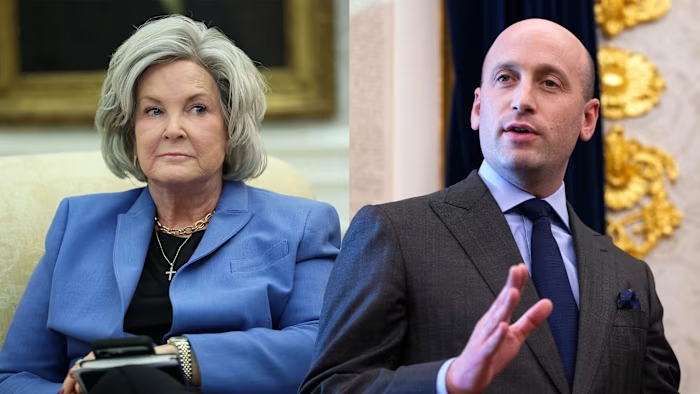
President Donald Trump’s decision to tap Stephen Miller as his next White House Chief of Staff is more than just a personnel change; it’s a powerful signal to markets and investors about the likely trajectory of his administration’s policy agenda for the remainder of his term. Effective Monday, November 9, 2026, Miller, a long-time aide and the architect of Trump’s hardline immigration policies, replaces Susie Wiles, who will transition to the Trump Political Operation.
This move, coming on the heels of significant Republican setbacks in the midterm elections and the imminent dawn of a Democratic-controlled Congress, indicates a strategic shift. Rather than seeking a more conciliatory figure to navigate a divided government, the President appears to be doubling down on the “America First” nationalist platform that defined his previous term. For financial markets, this translates into increased policy certainty in some areas, but vastly elevated uncertainty and potential volatility in others.
Miller’s elevation to the top role in managing White House operations and access to the President signals a consolidation of power around one of the administration’s most combative and controversial figures. His influence could mean an intensified focus on restrictive immigration policies, with direct implications for sectors heavily reliant on foreign labor, such as agriculture, construction, hospitality, and specific segments of the technology industry. Stricter enforcement, reduced legal immigration, and potential mass deportations could lead to labor shortages, increased wage pressures, and supply chain disruptions, ultimately impacting corporate profitability and GDP growth. Investors in these sectors will need to re-evaluate their risk models to account for these potentially significant operational changes.
Furthermore, Miller’s history as a champion of expanding executive power suggests that the administration may increasingly lean on presidential decrees and executive actions to circumvent congressional opposition. While this offers the potential for swift policy implementation, it also introduces regulatory instability. Businesses thrive on predictability, and a perceived overreliance on executive authority can create an environment where regulations are subject to rapid change or legal challenges, thereby increasing operational risks and deterring long-term investment. The “cementing of the Trump decade,” as described by Hunter Morgen, implies an intent to solidify a legacy through assertive, and potentially unilateral, policy initiatives.
The timing of this announcement is particularly noteworthy, following “bruising defeats” in the midterms. Market participants had been watching closely for signs of a pivot towards a more pragmatic or bipartisan approach from the White House. Instead, Trump’s choice of Miller, a figure widely criticized by Democrats as a “dangerous xenophobe and reckless extremist,” suggests a path of heightened ideological confrontation. This could exacerbate political gridlock, especially on critical issues like the federal budget, infrastructure spending, and potential tax reforms, creating prolonged uncertainty for businesses and investors. A divided government with a combative White House is rarely a recipe for market calm, often leading to stalemates that delay crucial economic legislation.
The broader geopolitical implications also cannot be overlooked. While Miller’s primary focus has been domestic policy, his influence as Chief of Staff will extend to foreign policy messaging and strategy. Combined with the ongoing “Iran war” and the position of Defence Secretary Pete Hegseth, who has been a vocal proponent of that conflict, the appointment could reinforce a hawkish and potentially isolationist foreign policy stance. This has direct consequences for global trade, commodity prices (especially oil), and defense sector stocks. Investors will be pricing in higher geopolitical risk premiums, potentially leading to increased volatility in energy markets and a flight to safe-haven assets.
The departure of Susie Wiles, though linked to health reasons and increasing criticism, signifies the removal of a more traditional political strategist from the inner circle. Her replacement by an ideologue like Miller underscores a prioritization of loyalism and hardline policy execution over broader political coalition-building. This could alienate not just “centre-right Americans,” but also moderate business leaders and international allies, complicating diplomatic efforts and potentially impacting trade relations. Anthony Scaramucci’s stark comment, questioning if the President “actually wants to finish destroying the GOP,” reflects a sentiment of profound concern about the strategic direction and its implications for political stability and market confidence.
Comments from other administration figures like Vice-President JD Vance and Defence Secretary Pete Hegseth, endorsing Miller’s promotion, further cement the narrative that the administration is digging in on its core ideological positions, despite electoral setbacks and ongoing military engagements. Hegseth’s “Patriots in control” message, juxtaposed with Vance’s criticism of the Iran war being an election liability, highlights potential internal tensions, yet the overall message to markets is one of steadfastness in the chosen, confrontational path.
For investors, this means a recalibration of portfolios to account for increased political risk. Sectors like defense and cybersecurity might see continued government spending, while others like consumer staples and healthcare, traditionally more insulated from political swings, might become attractive for their stability. However, any industry with significant international exposure, reliance on cross-border talent, or subject to shifting regulatory environments will face an uphill battle against heightened uncertainty.
***
Market Impact:
Stephen Miller’s appointment as Chief of Staff is likely to inject a fresh wave of political uncertainty into financial markets, particularly as it signals a more confrontational approach from the White House in a divided government. Futures markets may react with initial volatility as investors digest the implications of a hardened stance on immigration, trade, and executive power. Sectors like agriculture, construction, and hospitality could face downward pressure due to anticipated labor market disruptions and increased operational costs from stricter immigration enforcement. Conversely, defense contractors and cybersecurity firms may see sustained or increased investor interest given the continued focus on the “Iran war” and potential for broader geopolitical tensions. The U.S. dollar’s performance could become more erratic, oscillating between a safe-haven bid amidst global uncertainty and depreciation if confrontational policies erode international confidence in U.S. economic stability. Overall, the market is bracing for a period of heightened political gridlock and potentially unpredictable policy actions, urging investors towards caution and a deeper scrutiny of political risk premiums across their portfolios.