
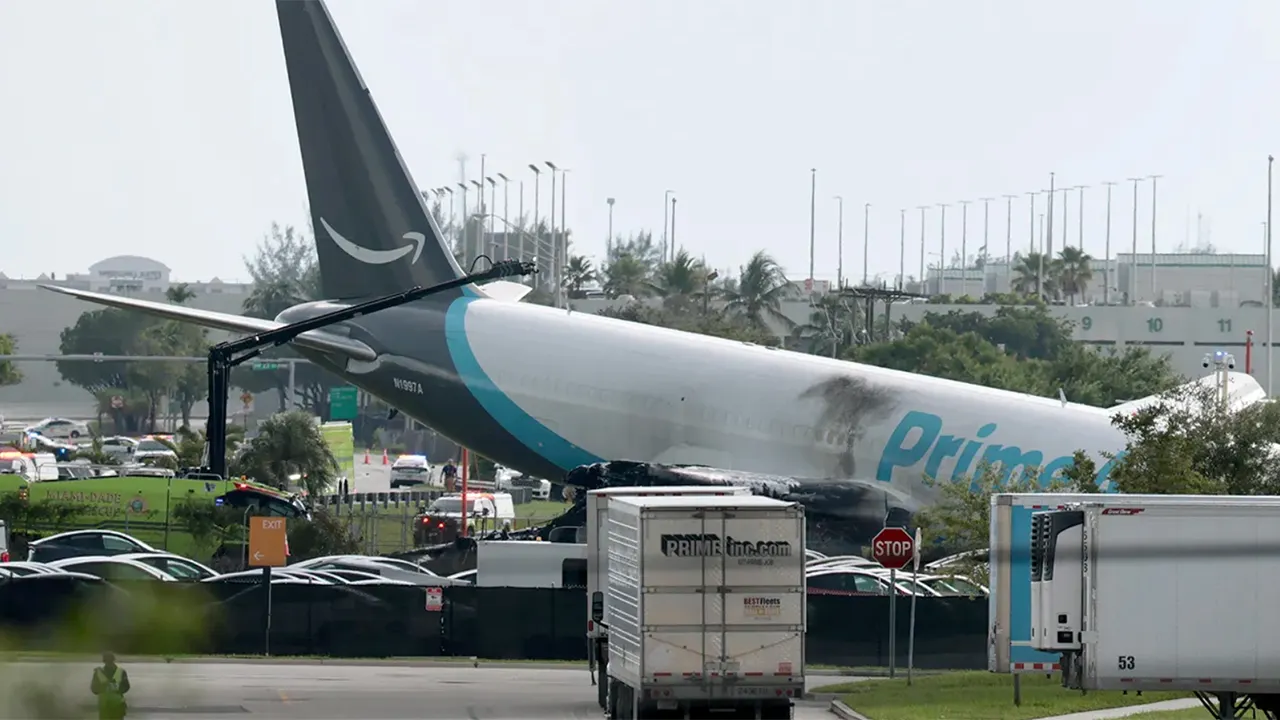
Officials say at least five people are dead and five others injured after an an Amazon cargo plane overran the runway, struck multiple vehicles and caught fire at Miami International Airport.
Key Takeaways:
- **Operational Scrutiny & Supply Chain Resilience:** The crash places Amazon’s outsourced air cargo operations under intense scrutiny, potentially impacting delivery reliability and increasing due diligence costs for its “asset-light” logistics model.
- **Financial & Reputational Risk for Partners:** For cargo operator 21 Air, this incident poses a severe financial and reputational threat, with potential contract termination and significant liability exposure, highlighting the cascading risks in outsourced supply chains.
- **Aviation Safety & Regulatory Outlook:** The FAA and NTSB investigation will focus on operational protocols and aircraft maintenance, potentially leading to new industry-wide safety mandates and heightened insurance premiums across the air freight sector, affecting profitability.
Miami International Airport (MIA) became the scene of a tragic incident on Sunday, sending shockwaves through the logistics and aviation sectors. An Amazon Air cargo plane, operated by partner carrier 21 Air, overran the runway upon landing, resulting in at least five fatalities and multiple injuries. This catastrophic event immediately draws financial journalists’ attention not just to the human cost, but to the intricate web of market implications for Amazon, its logistics partners, Boeing, and the broader air cargo industry.
The aircraft, Prime Air Flight 7598, a Boeing 767-300 freighter, was attempting to land after a flight from San Juan, Puerto Rico, when it veered off course, collided with multiple ground vehicles, and erupted in flames. Amazon was swift to confirm its cooperation with authorities, acknowledging 21 Air as the operator. This incident marks a significant operational challenge for Amazon’s rapidly expanding air cargo network, which is a critical component of its global fulfillment strategy.
Amazon Air represents a cornerstone of the e-commerce giant’s efforts to control its supply chain, reduce reliance on third-party carriers like FedEx and UPS, and ensure expedited deliveries, especially during peak seasons. By leveraging a network of third-party air cargo operators such as 21 Air and Atlas Air, Amazon employs an “asset-light” model. This strategy allows Amazon to scale its operations quickly without incurring the massive capital expenditures associated with owning and maintaining a proprietary fleet of aircraft and directly employing flight crews. While cost-effective, such a model inherently introduces a layer of operational risk tied to the performance and safety records of its partners.
An Amazon cargo plane is seen after it crashed at Miami International Airport on September 6, 2026, in Miami, Florida. (Joe Raedle/Getty Images)
For 21 Air, a relatively smaller cargo carrier, the financial and reputational fallout will be immediate and severe. Operating on behalf of a titan like Amazon Air is a significant revenue stream, and the loss of an aircraft, coupled with the tragic loss of life and potential liability, could jeopardize the company’s future contracts and even its operational viability. Insurance payouts, while substantial, may not cover the full extent of the damages, legal costs, and the ultimate impact on business relationships. The incident will undoubtedly lead Amazon to conduct a rigorous review of its contractual agreements, safety protocols, and due diligence processes for all its air cargo partners.
Boeing, the manufacturer of the converted 767-300 freighter, also faces renewed scrutiny. Although the aircraft was originally delivered as a passenger plane in 1994 and later converted for cargo use, any aviation incident involving its airframes inevitably draws attention to maintenance, conversion processes, and overall aircraft integrity. In a post-737 MAX era, where aviation safety has been a dominant narrative, Boeing’s involvement, even indirectly, contributes to broader market sentiment regarding aircraft reliability and manufacturing standards. The company’s statement of condolences and commitment to supporting the NTSB investigation is standard, but the incident adds another data point to the ongoing dialogue around older aircraft conversions and their operational lifespan.
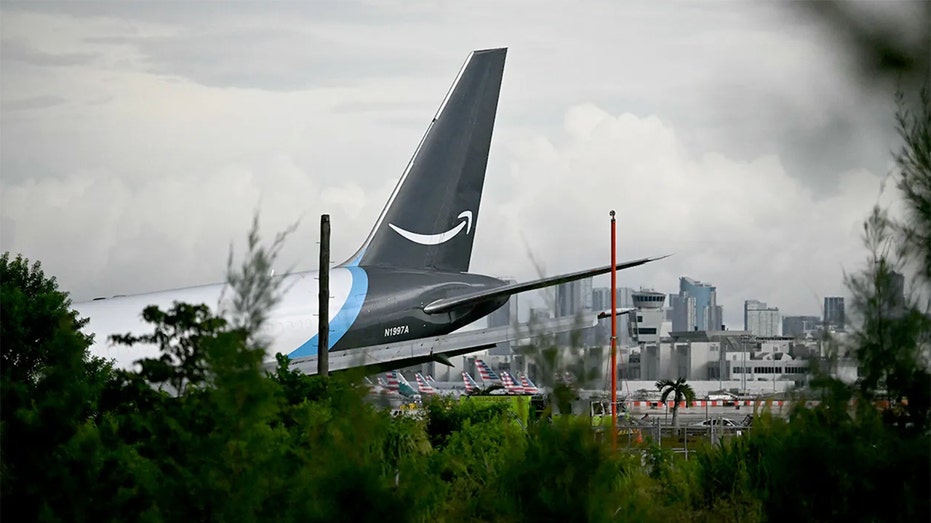
Prime Air Flight 7598 overran the runway while attempting to land at Miami International Airport around 2 p.m. local time after departing San Juan, Puerto Rico.(CHANDAN KHANNA / AFP via Getty Images)
The Federal Aviation Administration (FAA) and National Transportation Safety Board (NTSB) have initiated investigations, which will delve deep into potential factors ranging from mechanical failure and weather conditions to pilot error and ground control issues. The findings of this probe could have far-reaching implications for the entire air cargo industry. Previous cargo aircraft accidents, such as the 2019 Atlas Air Boeing 767 crash also operating for Amazon Air, have led to heightened regulatory oversight and, in some cases, revised operational procedures. Should this investigation uncover systemic issues, it could trigger new safety mandates, more stringent compliance requirements, and potentially increased operational costs for all air freight carriers, impacting their profitability margins.
From a financial perspective, the immediate costs include aircraft replacement (covered by insurance, though premiums may rise), clean-up, and potential legal settlements related to fatalities and injuries. More importantly, the incident raises questions about the robustness of Amazon’s supply chain resilience. While Amazon boasts a highly diversified logistics network, a disruption or perceived safety flaw in its dedicated air cargo operations could impact delivery timelines, especially for time-sensitive goods. Investors will be closely watching for any signs of operational slowdowns, increased expenditures on safety upgrades, or shifts in consumer confidence regarding Amazon’s delivery promises.
The broader air cargo market, which has seen fluctuating demand post-pandemic, already grapples with challenges such as rising fuel costs, labor shortages, and geopolitical uncertainties. An incident of this magnitude could lead to a tightening of insurance markets for cargo carriers, resulting in higher premiums across the board. Furthermore, it might prompt a re-evaluation of risk-sharing models between e-commerce giants and their outsourced logistics providers. The emphasis on speed in e-commerce fulfillment has always balanced with safety, and this tragedy underscores the immense pressure under which these operations function.

It was not immediately clear whether the crash would affect Amazon Air operations or package deliveries.(KAZUHIRO NOGI/AFP via Getty Images)
While Amazon’s vast scale and robust financial health mean it can absorb such shocks, the incident serves as a stark reminder of the inherent risks in complex global logistics. The company’s stock performance will likely reflect short-term investor anxiety, though any sustained impact would depend on the investigation’s findings and Amazon’s response to mitigate future risks. The pressure on Amazon to demonstrate unwavering commitment to safety, both within its direct operations and across its partner network, will be paramount.
GET FOX BUSINESS ON THE GO BY CLICKING HERE
Fox News Digital’s Bonny Chu contributed to this report.
Market Impact:
The Miami incident is expected to trigger increased investor scrutiny on Amazon’s logistics risk management and outsourced partner vetting processes, potentially leading to a short-term dip in AWS (Amazon Web Services, which is Amazon’s stock symbol) share price as concerns about operational continuity and brand reputation surface. For the air cargo sector, particularly smaller operators like 21 Air, the direct financial and reputational damage could be catastrophic, prompting stricter contract terms from major clients and a potential contraction in the number of third-party air freight providers. The broader aviation insurance market is likely to harden, pushing up premiums for cargo operators. Furthermore, the FAA/NTSB investigation’s findings could impose new, more stringent safety regulations, increasing compliance costs across the entire air freight industry and potentially impacting the profitability and operational flexibility of carriers and their e-commerce partners.