
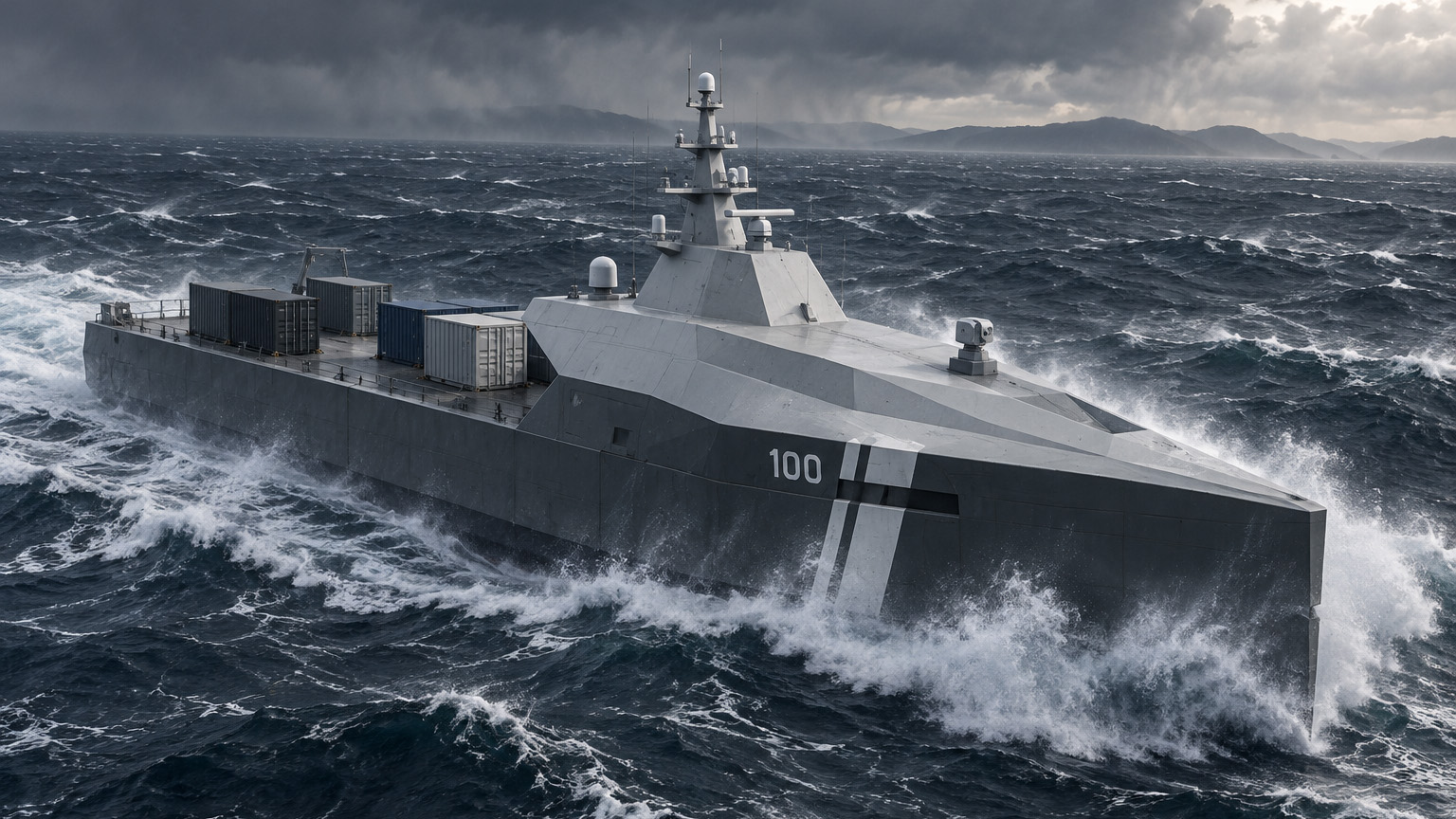
Rolls-Royce mtu Engines Certified for Autonomous US Naval Vessels
In a significant development for naval autonomy, the US Navy has certified Rolls-Royce’s mtu Series 4000 and Series 2000 marine engines for integration into autonomous naval vessels. This certification follows extensive reliability testing, specifically designed to confirm the engines’ capability to operate for prolonged periods without requiring human intervention for maintenance, as announced by Rolls-Royce.
The approval enables the Series 4000 engines to be deployed in autonomous applications, offering substantial power outputs. These engines can provide up to 4,300 kilowatts (kW) for propulsion and up to 3,000 kilowatts electrical (kWe) for onboard power generation. The Series 4000 is available in various configurations, including V8, V12, V16, and V20 cylinder layouts, allowing for flexibility in vessel design and power requirements.
Rolls-Royce reported that the Series 4000 engines successfully completed two separate 720-hour durability tests to earn their certification. These tests are critical for demonstrating the robustness required for unmanned operations. The Series 2000 engine, a smaller but equally vital component of Rolls-Royce’s marine portfolio, received its certification based on a combination of rigorous component testing and thousands of hours of documented operational experience in various maritime environments. This platform is capable of delivering up to 1,939 kW for propulsion and is offered in V10, V12, and V16 configurations.
The core objective of these stringent tests is to establish that the propulsion systems can reliably support an unmanned vessel throughout a typical 30-day deployment. This includes operating without the need for any preventive or corrective maintenance on the main propulsion unit, its associated fuel systems, or lubrication systems. Such sustained, autonomous operation is fundamental to the US Navy’s vision for future unmanned fleets, which aim to increase operational endurance and reduce logistical footprints.
Scott Hanson, Vice President of Governmental Sales at Rolls-Royce Power Systems in North America, commented on the significance of the certification. He highlighted that the approval for unmanned operations underscores the established reliability and advanced technological capabilities inherent in their mtu Series 4000 and 2000 marine propulsion systems. Hanson further noted that mtu engines have historically provided dependable and mission-ready power for naval crews. He added that as autonomous missions increasingly become central to naval strategic planning, Rolls-Royce is demonstrating its capacity to supply the necessary power systems, long-endurance capabilities, and technological solutions to meet the evolving operational demands of unmanned vessels.
This certification arrives at a time when the US Navy is actively expanding its integration of unmanned surface vessels (USVs) into its fleet. This strategic shift is driven by multiple objectives, including the desire to enhance overall fleet capacity, extend the duration of maritime operations, and reduce the necessity of deploying human personnel into potentially hazardous environments. USVs are envisioned to undertake a variety of missions, from intelligence, surveillance, and reconnaissance (ISR) to anti-submarine warfare (ASW) and logistics support, thereby augmenting the capabilities of traditional crewed vessels.
One of the US Navy’s most recognized autonomous platforms, the *Sea Hunter*, already utilizes two mtu 12V 2000 engines for its propulsion. Rolls-Royce has indicated that *Sea Hunter* has accumulated tens of thousands of operational hours since its christening in 2016, providing valuable real-world data and validating the performance of the mtu engines in an autonomous context. Both *Sea Hunter* and its sister vessel, *Seahawk*, were deployed operationally earlier this year as part of the US Navy’s inaugural division dedicated to unmanned surface vessels, further signaling the Navy’s commitment to advancing autonomous maritime capabilities.
The certification of propulsion systems represents one crucial step within a broader, multi-faceted process required before autonomous vessels can be routinely and widely deployed. Rolls-Royce also emphasized that US Navy requirements extend beyond engine reliability, placing significant emphasis on the sophistication of control systems, robust cybersecurity measures, and the implementation of safety-critical functions. These elements are essential for ensuring the secure, effective, and responsible operation of unmanned systems as they become more prominent across global maritime operations and naval strategies.
Why This Matters
The certification of Rolls-Royce mtu engines for autonomous US naval vessels marks a pivotal advancement in the evolution of modern naval warfare and maritime technology. This development is significant for several reasons:
- Enabling Naval Strategy:It directly supports the US Navy’s strategic pivot towards a more distributed and autonomous fleet. By ensuring reliable, long-endurance propulsion for unmanned surface vessels, this certification removes a critical technological barrier to the routine deployment of USVs. This enables the Navy to expand its operational reach, maintain continuous presence in key maritime areas, and potentially reduce risk to personnel in dangerous zones.
- Technological Validation:The rigorous 720-hour durability tests and thousands of hours of operational experience underscore the maturity and robustness of the propulsion technology. This provides confidence that complex autonomous systems can perform critical functions for extended periods without human intervention, a foundational requirement for future unmanned operations across defense and commercial sectors.
- Industry Leadership:For Rolls-Royce, this certification solidifies its position as a leading provider of advanced propulsion systems for next-generation naval platforms. It demonstrates the company’s capability to innovate and adapt its technology to meet the evolving demands of defense clients, particularly in the rapidly growing field of maritime autonomy.
- Cost and Efficiency Implications:Autonomous vessels, once fully integrated and operational, hold the potential to offer significant cost efficiencies in terms of personnel, training, and logistical support compared to traditional crewed vessels. The ability to operate for 30 days without maintenance contributes directly to these efficiency gains by reducing operational downtime and resupply needs.
- Broader Maritime Impact:While specifically for naval applications, the underlying technological advancements in engine reliability and autonomous operation have potential spillover effects for the broader maritime industry. Concepts proven in naval contexts often find their way into commercial shipping, influencing the development of autonomous cargo vessels, research ships, and other maritime platforms.
- Addressing Future Threats:The development of advanced autonomous capabilities is crucial for maintaining a technological edge in an increasingly complex global security environment. Reliable unmanned platforms can perform a range of missions, from surveillance and reconnaissance to counter-piracy and anti-submarine warfare, enhancing overall maritime security capabilities.
In essence, this certification is not merely about engine approval; it represents a tangible step towards a future where autonomous vessels play a central and increasingly vital role in naval operations, reshaping global maritime strategy and technological innovation.