
Key Takeaways
- Cooling Market Amidst High Rates:The U.S. housing market is experiencing a significant cooldown, driven primarily by elevated mortgage rates that have severely impacted affordability and buyer demand, leading to widespread price reductions, especially in regions that saw rapid appreciation during the pandemic.
- Regional Divergence and Inventory Dynamics:While national and regional median list prices per square foot show declines, the market exhibits considerable geographic nuance. “Boomtowns” like Austin and Tampa are seeing larger corrections due to increased inventory meeting subdued demand, whereas some competitive markets like San Francisco show complex price movements influenced by the mix of available housing stock rather than a loss of fundamental value.
- Monetary Policy’s Lingering Shadow:The Federal Reserve’s aggressive monetary tightening cycle, aimed at curbing inflation, continues to exert downward pressure on housing activity. The sustained higher-for-longer interest rate environment is reshaping buyer expectations, challenging homebuilders, and recalibrating real estate valuations across the investment landscape.
Circle Squared Alternative Investments founder Jeff Sica discusses Fed Chair Kevin Warsh’s hawkish rate outlook and the housing market on ‘Varney & Co.’
The U.S. housing market is unmistakably shifting gears, with the vibrant activity of the summer months giving way to a more subdued autumn outlook. As the Federal Reserve maintains a hawkish stance on interest rates, echoed by figures like former Fed Chair Kevin Warsh, the ripple effects are profoundly reshaping the residential real estate landscape, pushing home sellers to meet buyers halfway with significant price adjustments.
This evolving dynamic is a direct consequence of sustained high mortgage rates, which have become a formidable barrier to entry for many prospective homebuyers, particularly in metro areas that witnessed unprecedented price surges during the pandemic-era boom. The affordability crisis, exacerbated by borrowing costs not seen in decades, is forcing a recalibration of market expectations and valuations.
A recent comprehensive analysis by Realtor.com provides quantitative evidence of this deceleration, revealing that the national price per square foot has decreased year over year for the tenth consecutive month in August, settling at 1.8% below year-ago levels. This consistent trend underscores a fundamental change in market power, shifting from sellers to buyers.
Regionally, the cooling trend is largely pervasive. Median list prices experienced year-over-year declines in three of the four major regions: the Northeast saw a 3.6% dip, the South a 2.6% reduction, and the West a 2.1% decrease. The Midwest, traditionally more insulated from extreme price swings, managed to remain flat, indicative of regional economic differences and housing supply-demand balances.
THE TOP CITIES IN AMERICA WHERE RENTING BEATS BUYING BY $1,000
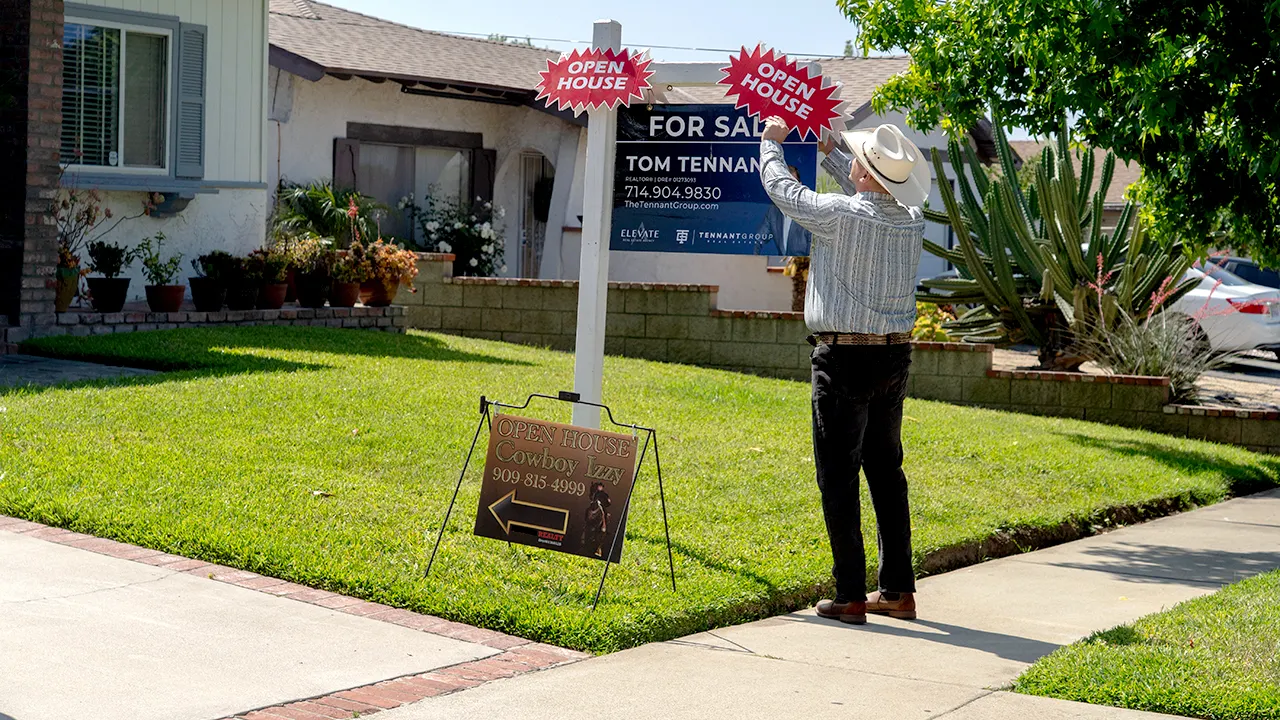
Nationally, median list prices fell for the 10th straight month in August.(iStock/Getty Images Plus)
The granular data paints an even clearer picture of this market correction. Out of the top 50 metropolitan areas in the U.S., a significant 36 recorded a decline in the median list price per square foot in August compared to the prior year. The most notable declines were observed in Austin (-8.1%), Tampa (-5.6%), and Memphis (-4.1%). These cities were poster children for pandemic-driven migration and rapid appreciation, suggesting that they are now undergoing the most significant ‘giving back’ of those prior gains.
Conversely, a select few metros continued to defy the broader trend, registering gains. Providence, R.I., led this group with a 9.3% increase, followed by Indianapolis (+4.4%) and Chicago (+3.6%). These markets often benefit from a more stable job base, relative affordability, or persistent inventory shortages that continue to support price growth despite higher rates.
Realtor.com senior economist Jake Krimmel elucidated the underlying commonality among the declining markets: “One common thread for most markets – including Austin, Tampa, San Antonio, Denver – is 2020-22 boomtowns continuing to give back some of their pandemic-era gains. These are also, by and large, places with much more inventory now than pre-pandemic norms.” This phenomenon highlights the sensitivity of housing markets to supply-demand equilibrium; when a surge in inventory coincides with diminishing buyer affordability, price corrections become inevitable.
SLOWING LABOR MARKET CREATES NEW HURDLE FOR FIRST-TIME HOMEBUYERS FACING AFFORDABILITY SQUEEZE

Most areas which have expanded housing inventory are seeing larger price declines.(Joshua Lott/Bloomberg via Getty Images)
The slowing labor market, as indicated by recent economic data, adds another layer of complexity to the challenges facing prospective homebuyers. A less robust job market can erode consumer confidence, reduce household savings, and tighten lending standards, further dampening demand, especially for first-time buyers who are already grappling with the steepest affordability squeeze in decades. This interconnectedness between monetary policy, labor market health, and housing affordability underscores the intricate web of economic forces at play.
San Francisco, a perennial anomaly in the U.S. housing narrative, presents a nuanced case. Despite seeing a 3.9% decline in list price per square foot in August year-over-year – ranking fourth nationally – its market remains hypercompetitive. This apparent paradox is explained by specific inventory dynamics. The number of active listings in San Francisco was down 16.3% in July from the prior year, indicating a compressed housing market with limited choices. Despite the decrease, the median listing price in the city remains exceptionally high at $908,700, though it has fallen 5.2% year-over-year.
THESE ARE AMERICA’S HOTTEST HOUSING MARKETS – SEE WHICH AREAS MADE THE LIST
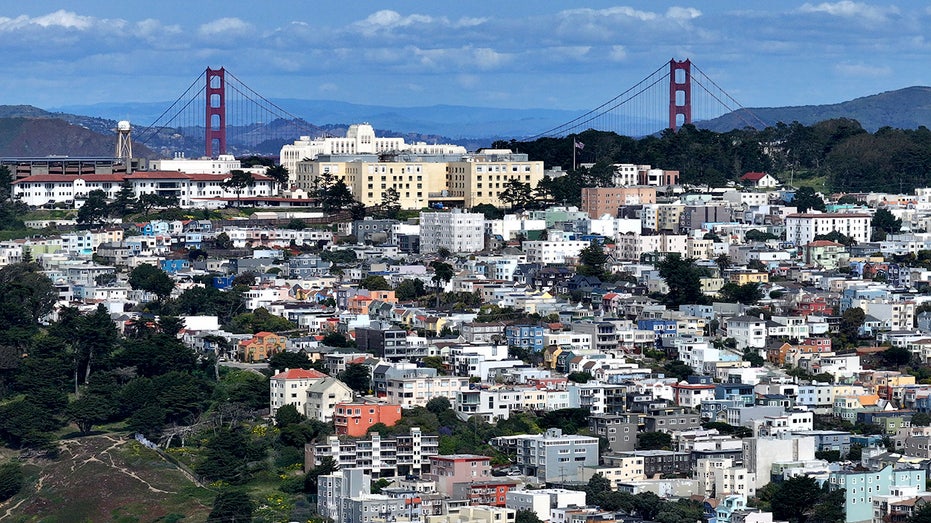
Median list prices fell in San Francisco, though the city’s housing market remains highly competitive.(Tayfun Coskun/Anadolu via Getty Images)
Krimmel clarified San Francisco’s situation: “It’s not about San Francisco homes losing value, but rather how expensive the available inventory is this year relative to last.” He elaborated, “There are fewer small, pricey homes in the center of the city for sale. They are scarce and selling fast. On the flip side, this year there are relatively more large, less expensive per-square-foot homes coming up for sale in outer suburbs.” This insight highlights that aggregate price per square foot metrics can sometimes obscure underlying shifts in the composition of available housing stock, especially in luxury or supply-constrained markets. The city’s tech-heavy economy, while facing headwinds, still supports a segment of buyers willing and able to pay premium prices for desirable properties, albeit with a shifting preference towards more space in suburban locales.
Other major metro areas experiencing significant annual declines in listing price per square foot, according to Realtor.com’s analysis, include San Antonio (-3.6%), Denver (-3.4%), Baltimore (-3.2%), San Diego (-2.7%), Orlando (-2.6%), and Portland, Oregon (-2.4%). These markets, like the boomtowns mentioned earlier, often share characteristics of recent rapid growth, increasing inventory, and sensitivity to higher interest rates.
GET FOX BUSINESS ON THE GO BY CLICKING HERE
Market Impact
The ongoing deceleration in the housing market, fueled by persistent high interest rates and evolving supply-demand dynamics, carries significant implications for various sectors of the financial market. For mortgage lenders, the cooling demand translates to reduced origination volumes and tighter profit margins, potentially impacting their earnings and stock performance. Homebuilders, while facing headwinds, may pivot towards more affordable housing solutions or offer incentives to attract buyers, influencing their operational strategies and investor sentiment. Residential REITs, particularly those focused on single-family rentals, might see a moderation in rent growth, though the underlying affordability crisis could still drive demand for rental properties. More broadly, a sustained cooling in housing values could exert downward pressure on inflation, a key objective for the Federal Reserve. However, a sharp correction could also trigger a negative wealth effect, impacting consumer spending and potentially slowing overall economic growth. Investors will be closely watching for signs of stabilization in mortgage rates and any shifts in Fed policy, as these will be crucial determinants for the future trajectory of the housing market and its ripple effects across the economy.