
Fox News chief congressional correspondent Chad Pergram reports on the Senate debating a college sports bill on NIL rules on ‘The Bottom Line.’
Key Takeaways:
- Systemic Financial Malfeasance Threatens Market Integrity:Manchester City’s alleged 114 breaches represent a systemic challenge to the Premier League’s financial fair play framework, potentially distorting competitive balance and undermining the league’s credibility as a global sports business.
- Global Brand & Investment Implications:The scandal’s ripple effect extends beyond sporting outcomes, impacting the Premier League’s brand equity, its lucrative broadcasting deals, sponsorship valuations, and the broader City Football Group’s global investment portfolio, including clubs in major international markets.
- Precedent-Setting Sanctions Crucial for Market Trust:The severity of potential penalties – ranging from significant financial fines and stripped titles to relegation – will set a vital precedent for financial governance in professional sports, influencing investor confidence and the future enforcement of fair competition rules across the global football economy.
Manchester City FC stands at the precipice of a potentially seismic reckoning within the global sports economy. An independent panel, operating under the auspices of the Premier League Judicial Panel’s chairman, has reportedly delivered a verdict finding the club guilty of an astonishing 114 of 115 financial charges. These charges, spanning nearly a decade, meticulously detail alleged irregularities in the club’s financing of sponsorship deals, management compensation, and player remuneration. This landmark case, which first surfaced in February 2023 following a rigorous four-year investigation triggered by leaked incriminating emails, casts a long shadow over the integrity of one of the world’s most lucrative and prestigious sports leagues.
The Premier League, a behemoth in the global sports entertainment market, has cultivated an unrivaled international following and commands astronomical broadcasting rights, making its financial integrity paramount for its continued commercial success. Kids all over the world wear Premier League club jerseys these days, reflecting a global merchandise market worth billions. You’ve undoubtedly seen Barcelona, Real Madrid, and yes, Manchester City jerseys at about any soccer game, demonstrating the immense brand value tied to these sporting entities.
I’ll disclose right off the top that I’m an Arsenal fan; Arsenal is one of City’s biggest rivals, and the current reigning champion of the Premier League. My bias aside, the implications for the league’s competitive landscape and commercial reputation are undeniable.
“The Premier League process remains ongoing, with significant elements to be completed, and subject to strict confidentiality. As such Manchester City FC’s position remains consistent with the club’s statement of February 2023,” City told The Athletic in a statement, maintaining its denial of wrongdoing amidst intense market scrutiny.
Andrew Fox, a senior fellow at London’s Henry Jackson Society (and fan of Premier League club Aston Villa), articulated the market’s anxiety to FOX Business: “This has been a long time in coming and the credibility of the whole Premier League rides on what happens next. This is the biggest scandal in the history of English football, and Manchester City must face the harshest punishment if the league is to restore its shattered integrity.” This sentiment underscores the critical need for a robust regulatory response to protect the league’s brand equity and investor confidence.
City’s title haul has been gaudy since its takeover by majority owner Sheikh Mansour of the United Arab Emirates in 2008, under the City Football Group. Prior to that, it had last won the Premier League (then called the First Division) in the 1967-68 season. Since then, it has amassed eight league titles along with a case full of other cup wins, culminating in the UEFA Champions League triumph in 2023. This rapid ascent, funded by significant capital injection, implicitly carried the expectation of adherence to financial fair play rules, a cornerstone of competitive markets.
CLIPPERS FACE FEDERAL CRIMINAL PROBE AFTER NBA PUNISHES TEAM OVER KAWHI LEONARD DEALS
Josko Gvardiol, Bernardo Silva, Erling Haaland and Rodri of Manchester City celebrate 2nd goal during the Premier League match between Manchester City and Wolverhampton Wanderers at Etihad Stadium on May 4, 2024 in Manchester, England.(Neal Simpson/Sportsphoto/Allstar via Getty Images)
The Premier League’s recent history can be divided into a kind of BC-AD on that takeover. Prior to 2008, Manchester City’s Cityzens were mostly the “noisy neighbors” to their more successful rivals, Manchester United’s Red Devils. After that came a gaudy trophy haul as the club built a soccer empire that spans the globe, an empire whose foundations are now under intense scrutiny.
On the business side, by 2009, Manchester City was pulling in massive sponsorship deals, attracting the world’s best players and managers, and went from an also-ran to a feared behemoth. The 115 financial charges relate to that time, from 2009 to 2018, precisely when Manchester City’s rise began and it won multiple league titles and multiple tournament trophies. It later captured the biggest prize in club soccer worldwide – the UEFA Champions League – in 2023. These alleged financial irregularities, if proven definitively, would mean that City’s competitive advantage was not solely earned on the pitch but potentially derived from artificial inflation of revenues and circumvention of cost controls, profoundly distorting the player transfer market and sponsor investment landscape.
So the financial shenanigans that Manchester City has been found guilty of do matter, and their market ramifications are far-reaching. For one thing, City owns New York City FC, which plays in the top soccer league in the U.S. – Major League Soccer – along with clubs in Spain, France, Belgium, Brazil and even China – a truly global empire, the City Football Group. This interconnected financial ecosystem means that any reputational damage or sanctions could reverberate across its entire global commercial footprint, impacting valuations of sister clubs and brand partnerships. Furthermore, players move between leagues every summer and winter, and players City bought by allegedly breaking the rules affect the other clubs where those players may have gone to play otherwise, creating an unfair competitive market for player acquisition and development across the sport.
ADIDAS BECOMES UNRIVALED’S OFFICIAL UNIFORM AND PERFORMANCE APPAREL PARTNER IN MULTIYEAR PARTNERSHIP
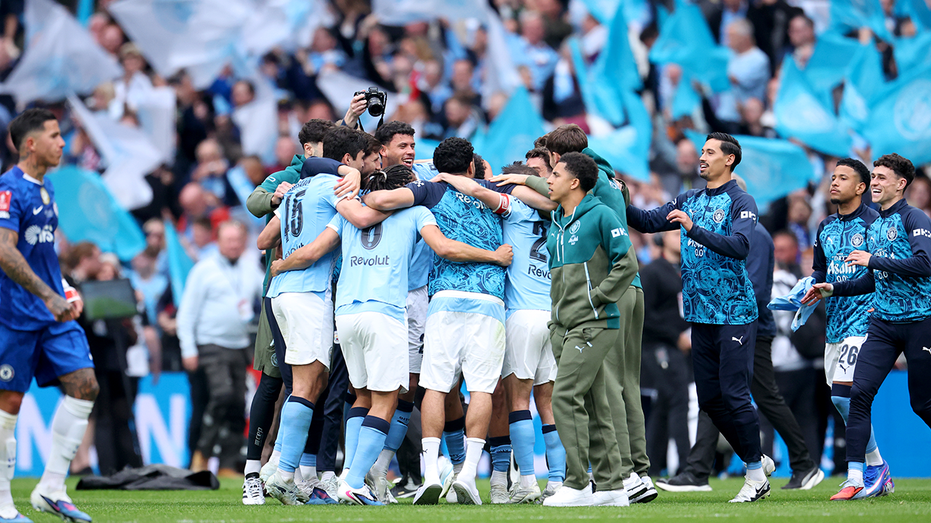
Manchester City players celebrate after winning the Emirates FA Cup Final match between Chelsea and Manchester City on May 16, 2026 in London, England. (Photo by Ed Sykes/Sportsphoto/Allstar via Getty Images)
As early as 2003, then-Arsenal boss Arsene Wenger explained it as only “Le Professeur” could – “financial doping.” Think of it like the Lance Armstrong case. He cheated through doping and won multiple titles that others fairly competed against him to win. He robbed competitors of titles they may have won. His cheating was, like that of City, systemic. It corrupted the sport itself, undermining the fundamental principles of a fair and competitive market, essential for any robust economic sector.
Manchester City’s charges carry the same weight, but with tangible market impacts. They not only affect the titles the club won, but the titles others didn’t win, final finishing places, which in turn affect which other competitions clubs qualify for, including the lucrative UEFA Champions League, and even relegation to the next league down. These outcomes have profound financial consequences: millions in broadcasting revenue, prize money, increased player market value, and enhanced sponsorship opportunities. So it’s more than fair to say that City’s actions have impacted every single other club in England, and the players and managers at those clubs, and their careers, by distorting the financial playing field. And by extension, clubs and players worldwide.
It’s easy to say sports don’t really matter, but they do. We love them. We love to debate them. We love to rip our team after losses and praise it to the skies after wins. As well as entertainment, they’re big business, a major economic engine. Fans pay for tickets and merch, contributing to significant revenue streams, and spend their precious time watching games and supporting them in other ways. Networks pay billions for broadcast rights, and the Premier League is a truly global league whose games are aired live in the United States, across Europe, and around the world, making its integrity a global commodity.
According toDeloitte, Manchester City generates over $800 million in revenue, ranking it above every other domestic competitor but one and most worldwide. The question now becomes: how much of this impressive financial performance was achieved through legitimate competitive means, and how much was artificially inflated by the alleged breaches?
PREMIER LEAGUE FINDS MANCHESTER CITY GUILTY OF MORE THAN 100 FINANCIAL CHARGES: REPORT
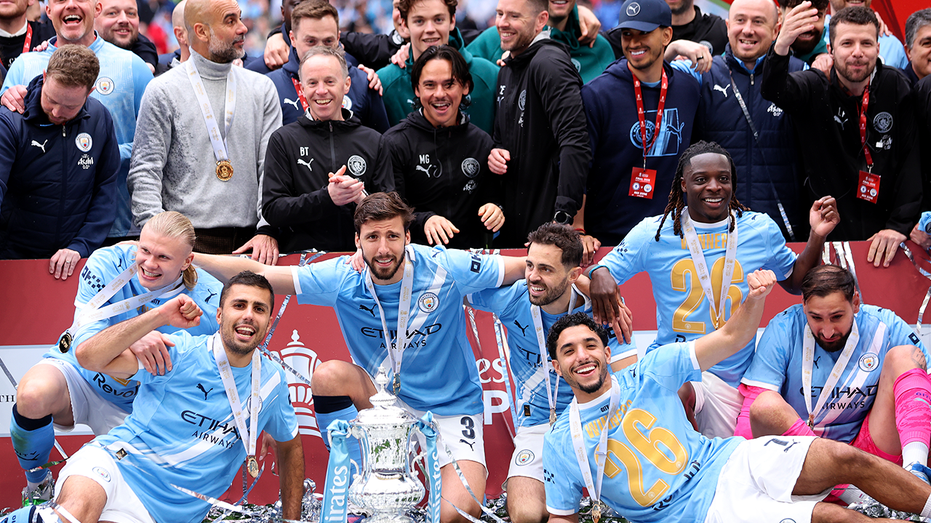
Erling Haaland, Pep Guardiola, Rodri, Ruben Dias, Bernardo Silva, OMar Marmoush, Jeremy Doku and Gianluigi Donnarumma of manchester City celebrate with the trophy after winning the Emirates FA Cup Final match between Chelsea and Manchester City on Ma(Photo by Ed Sykes/Sportsphoto/Allstar via Getty Images)
3 LESSONS FROM LANCE ARMSTRONG’S FALL
The case of the 114 financial breaches is bigger than the Los Angeles Clippers’ recent case. In fact, this is arguably the biggest sports cheating case anywhere, ever, due to the scale, duration, and the global economic footprint of the Premier League and City Football Group.
Like the Armstrong case, which rocked the entire sport of cycling down to the local team and bike shop, City’s case has dragged on for years and across seasons, creating prolonged market uncertainty and impacting stakeholder confidence across the sport’s financial ecosystem.
So what should happen? The punishments haven’t been decided yet, and City will appeal this verdict, signaling a protracted legal battle. Lance Armstrong was stripped of his seven Tour de France titles, and he was banned from competitive sports for life, a stark warning of severe repercussions for systemic fraud.
As Fox noted above, City should face the harshest possible penalty, assuming their expected appeals fail, to restore market trust. There are recent precedents on that side of the pond. Everton and Nottingham Forest have both been found guilty of singular breaches of the rules, and had points deducted. Chelsea self-reported violations by previous owners, and faced relatively light sanctions for opening up. Manchester City has denied all charges and fought every step of the way, and the UAE government even hit out at the British government over the case, adding a geopolitical layer to the financial dispute.
GET FOX BUSINESS ON THE GO BY CLICKING HERE
Relegation one or two leagues down? Expulsion from the English Football League itself? Significant financial penalties that impact their market valuation? Titles stripped, with massive ramifications for historical records and prize money distribution?
That’s all on the table. The sport’s integrity, and by extension its commercial viability and investor appeal, is too. Fairness in sports matters because it underpins the entire economic model of competitive professional leagues.
Market Impact
The outcome of the Manchester City financial charges will send a powerful message across the global sports investment landscape. For the Premier League, its brand premium – built on competitive excellence and perceived fairness – is directly at stake. A perceived lenient punishment could erode investor confidence, potentially devaluing future broadcasting rights negotiations and dampening sponsor interest across all member clubs, as the integrity of the “product” itself is questioned. Conversely, robust sanctions, while painful for Manchester City, could bolster the league’s reputation as a well-governed entity, reinforcing the importance of Financial Fair Play (FFP) regulations for sustainable growth. For Manchester City itself, severe penalties like relegation or substantial financial fines would drastically impact its revenue streams, player valuations, and overall enterprise value, potentially requiring a significant re-evaluation by its owners, the City Football Group. This case is not merely about football; it’s a test of regulatory enforcement in a multi-billion-dollar global entertainment industry, with repercussions for how capital is deployed and managed in professional sports worldwide.