
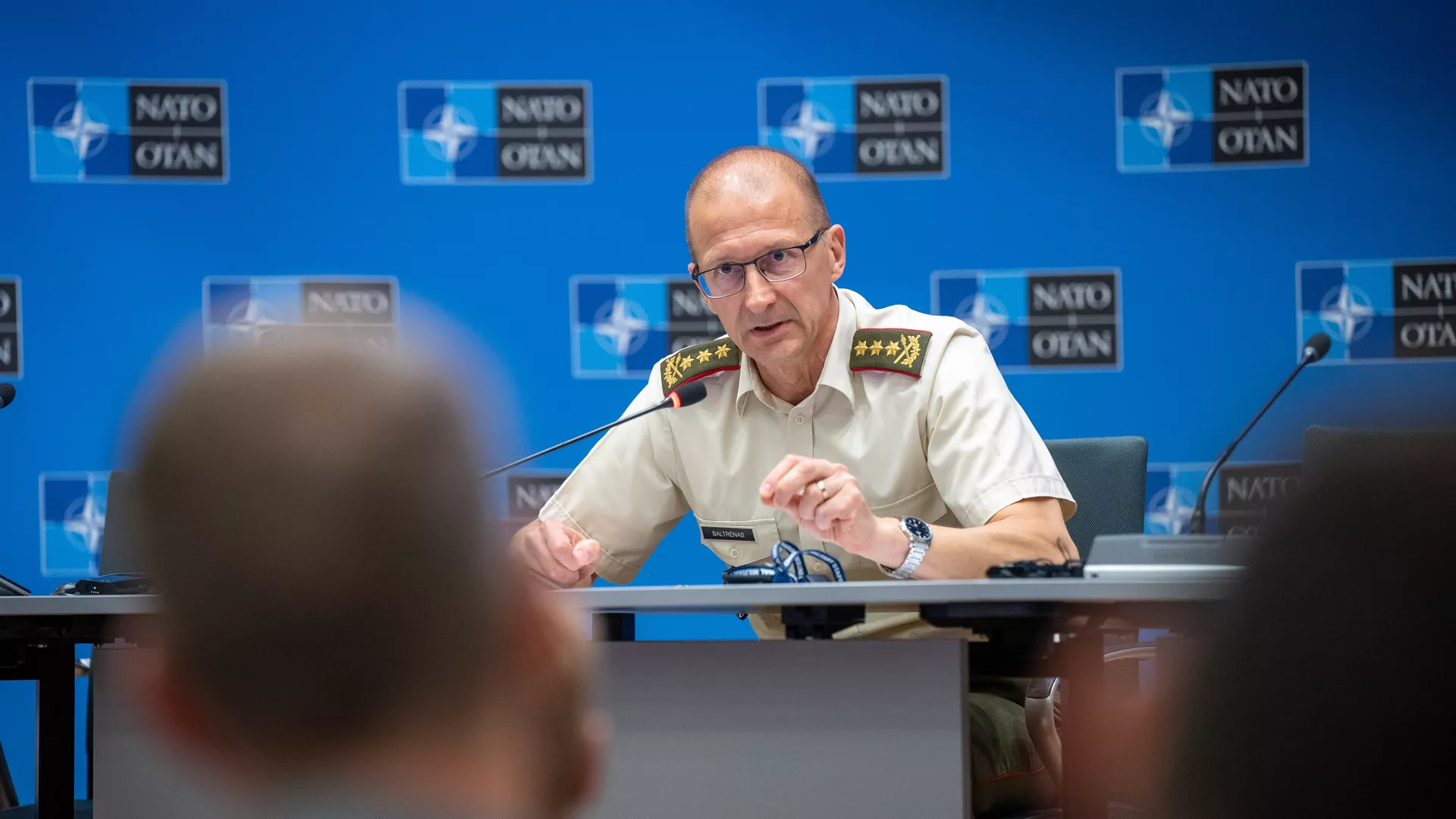
NATO Defence College Students Engage with Alliance Leadership on Evolving Security Challenges
Students participating in the NATO Defence College’s (NDC) senior and regional cooperation courses recently undertook a crucial visit to alliance headquarters, immersing themselves in high-level discussions on key strategic issues. The agenda for the day focused on the concept of “burden shifting,” the evolving strategic imperatives facing NATO in the wake of recent high-level meetings, and the alliance’s assessment of a turbulent global security environment.
The visit, which took place on September 28, was hosted by Lieutenant General Remigijus Baltrėnas, Director General of the International Military Staff (IMS). Briefings were delivered by experts drawn from both the International Staff (IS) and the IMS, providing students with a comprehensive overview of NATO’s operational and administrative structures.
During his session, Lieutenant General Baltrėnas outlined the fundamental role and responsibilities of the International Military Staff. He emphasized, “The International Military Staff serves as the vital intermediary between the NATO Military Committee and two strategic commands.” He further elaborated on its primary functions, which include processing critical information and directing guidance to NATO’s strategic commands, fostering consensus among the diverse member nations to achieve agreement on complex military issues, and offering high-level military strategic advice directly to the North Atlantic Council (NAC), the principal political decision-making body of NATO.
Baltrėnas informed the students that the IMS operates with a comprehensive “360-degree approach” to military decision-making. This holistic methodology ensures oversight across all operational domains, including land, cyber, digital, and joint air and space operations. The IMS relies heavily on the expertise of personnel seconded by member nations, who bring specialized knowledge and experience, complementing the deep expertise already resident within the alliance’s strategic commands.
A central theme of the discussions was “burden shifting,” a term that has gained prominence within the alliance. This concept refers to the progressive transfer of responsibility for conventional defence capabilities in Europe from the United States to its European allies and Canada. This process is distinct from the long-standing debate surrounding “burden sharing,” which primarily concerned the financial contributions and defence spending levels of individual allies. Burden shifting has evolved from a mere talking point into a foundational planning assumption for NATO over the past two years. Its inclusion in the curriculum for the senior course at the NATO Defence College signals a clear expectation that the alliance’s next generation of one and two-star officers will need to deeply understand and integrate this principle into their strategic thinking and future planning.
The International Military Staff itself comprises approximately 500 military and civilian personnel drawn from NATO member countries, all working collaboratively at the alliance’s headquarters in Brussels. The Director General of the IMS is accountable to the Military Committee for the efficient functioning of the staff. Furthermore, the Director General is empowered to act on the Military Committee’s behalf on routine matters and possesses the authority to take executive action in urgent cases, provided such actions align with established alliance policy.
The Military Committee (MC) stands as the alliance’s most senior military authority. It is composed of the Chiefs of Defence (CHODs) of all member states, representing the highest military leadership from each nation. The MC serves as the crucial link between the North Atlantic Council on the political side and NATO’s two strategic military commands: Allied Command Operations (ACO), responsible for the planning and execution of all NATO military operations, and Allied Command Transformation (ACT), focused on promoting and overseeing the transformation of NATO’s military structure, forces, and capabilities. The members of the Military Committee last convened in Copenhagen on September 19, underscoring the ongoing nature of their strategic consultations.
The NATO Defence College, situated in Rome, Italy, plays a vital role in preparing future leaders for the alliance. It conducts the rigorous senior course, specifically designed for officers and officials who are slated to move into strategic-level appointments within NATO or their national defence establishments. In addition to this flagship course, the college also offers shorter programs tailored for partner countries through its regional cooperation programme. The United Kingdom, for instance, routinely sends its officers to both types of courses, with the NDC forming an integral part of the broader educational pipeline that also includes institutions like the Royal College of Defence Studies at home, ensuring a consistent standard of strategic leadership development.
Why This Matters
This engagement between future NATO leaders and alliance headquarters underscores several critical aspects of contemporary international security. Firstly, the NATO Defence College’s role in educating senior officers and officials is paramount. These individuals will be responsible for implementing strategic decisions and navigating complex geopolitical landscapes in the coming years. Their early exposure to the alliance’s operational realities, strategic challenges, and internal mechanisms is vital for fostering a cohesive and effective leadership cadre.
Secondly, the focus on “burden shifting” highlights a significant evolution in transatlantic security. This concept reflects a recognition that Europe must take greater ownership of its conventional defence capabilities, reducing reliance on the United States as Washington increasingly shifts its strategic focus to other global priorities, particularly in the Indo-Pacific. The successful implementation of burden shifting is not merely about resource allocation; it directly impacts NATO’s overall resilience, its ability to deter aggression, and the long-term sustainability of the transatlantic bond. It requires substantial investment, enhanced military capabilities, and strong political will from European and Canadian allies.
Thirdly, discussions about “strategic imperatives” and a “turbulent security environment” acknowledge the profound changes in the global security landscape. Russia’s ongoing war in Ukraine, the rise of hybrid warfare, persistent cyber threats, and the increasing strategic competition with China all demand a robust and adaptable NATO. The alliance must continually reassess its doctrines, capabilities, and readiness to effectively counter these multifaceted threats. The insights gained by these students will directly inform their contributions to developing and executing these necessary adaptations.
Finally, understanding the intricate workings of the International Military Staff and the Military Committee is crucial. These bodies are the backbone of NATO’s military decision-making and operational coherence. Their ability to process information, build consensus, and provide strategic advice directly influences the alliance’s capacity to act decisively and effectively in times of crisis. For future leaders, grasping these internal dynamics is essential for navigating the complexities of alliance politics and military coordination. In essence, these discussions are not academic exercises but direct reflections of how NATO is preparing to defend its members and maintain stability in an increasingly unpredictable world.