
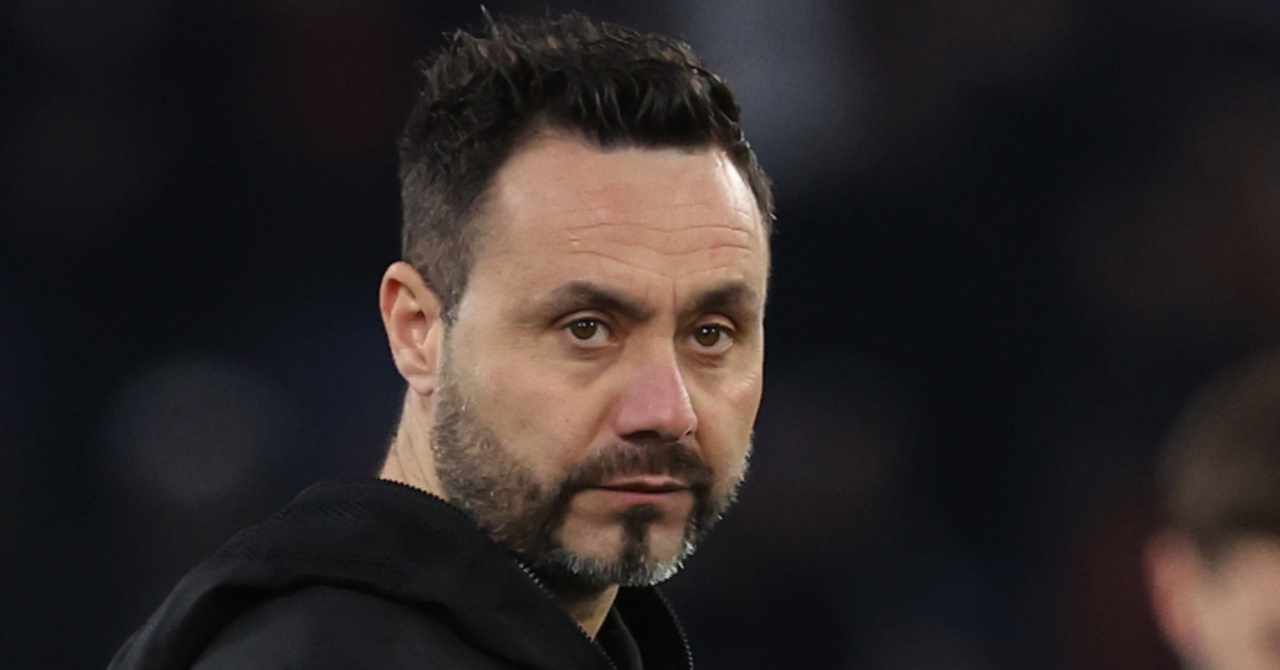
The White Hart Lane faithful are restless. Five Premier League matches, zero wins, and the club rooted to the foot of the table. A narrative of despair, yet from the executive suites, a surprising beacon of calm shines through. Tottenham chief executive Vinai Venkatesham has thrown his weight, unequivocally, behind manager Roberto De Zerbi, a move that is both a strategic vote of confidence and a desperate plea for patience amidst the swirling tempest.
This isn’t merely a slow start; it’s a seismic shockwave rocking a club that committed a staggering £380 million to new signings over the summer. The irony is stark: unprecedented financial outlay met with unprecedented on-field failure, at least in terms of raw points. After successive 17th-placed finishes – a damning indictment of past regimes – the pressure on De Zerbi is immense. Every touchline instruction, every substitution, every post-match interview is scrutinized under the microscope of a demanding fanbase hungry for success.
But Venkatesham, a man surely feeling the heat from the top, insists there are “encouraging signs beyond the points total.” What precisely these signs are remains a topic of fervent debate among pundits and supporters alike. Is it the underlying data? Improved xG (expected goals) metrics that haven’t translated into actual goals? Higher possession stats? The integration of new, exciting talent? Or is it simply the club’s leadership buying time, hoping to avoid another costly managerial upheaval in a footballing landscape where patience is a rapidly dwindling commodity?
“The club had made significant changes over the summer, both on and off the pitch, and recognised that these might take time to take full effect,” Venkatesham stated, attempting to temper expectations while simultaneously defending the club’s strategic direction. This is a tightrope walk between unwavering faith and a pragmatic acknowledgement of the mountain to climb. He further “expressed confidence in Roberto De Zerbi, in the players brought in and in the changes made, noting the considerable work under way behind the scenes.” Such language often precedes a sacking in modern football, yet here, it’s presented as a shield against the inevitable calls for change. The true test, however, will be whether this behind-the-scenes work materializes into tangible results on the pitch.
Venkatesham Explains Tottenham’s Financial Tightrope Walk

Adding another layer of complexity to the narrative, Venkatesham meticulously outlined the stringent financial situation facing Spurs, despite the astronomical summer spending. The Lewis family, the club’s majority owners, injected another £120m of capital last month – a significant cash injection that underscores both their commitment and the underlying financial pressures. Yet, Venkatesham was clear: financial regulations, specifically Financial Fair Play (FFP), continue to be a genuine constraint, dictating much of their transfer strategy.
“The club needed to improve as a seller of players, having achieved limited returns in previous years and doing so is important in modern football for compliance with financial regulations,” Venkatesham explained. This highlights a critical, often overlooked aspect of elite football: a club cannot simply spend its way to success without a robust selling strategy. For years, Spurs have struggled to offload fringe players for significant fees, creating an unsustainable cycle.
The numbers paint a stark picture: “Financial regulations represented a genuine constraint. The club had not recorded a profit since 2019 and its costs were rising through investment in the men’s team in wages and transfer fees.” This lack of profitability, combined with escalating operational costs, means that every pound spent and earned is under intense scrutiny. The twin blows of “successive 17th-placed finishes and the absence of European revenue this season had also affected the club’s revenue position,” creating a self-perpetuating cycle of underperformance and financial pressure. Without the lucrative prize money and broadcasting rights from European competitions, the financial gap only widens, making compliance with FFP even more challenging.
Game Highlights: A Nightmare Start
While specific match details weren’t provided in the initial statement, the grim reality of “bottom after five matches” allows us to reconstruct the painful narrative of Tottenham’s season so far. Each game has been a cruel twist of the knife, highlighting recurring issues that De Zerbi desperately needs to address.
- Matchday 1 vs. Newcastle (A) – Lost 2-1:A promising start, taking an early lead, was quickly undone by defensive naivety. Two quick goals conceded from set-pieces exposed a lack of organization and communication at the back. Despite flashes of attacking flair, the team couldn’t recover, setting a worrying precedent.
- Matchday 2 vs. West Ham (H) – Drew 0-0:Against a resolute West Ham side, Spurs dominated possession but lacked cutting edge. Waves of attack broke down at the final third, with star striker Harry Kane isolated and new attacking signings struggling to link up. The home crowd grew restless as frustration mounted with every missed opportunity.
- Matchday 3 vs. Brighton (A) – Lost 3-0:A performance described as “abject” by some. Tactically outmaneuvered and plagued by individual errors, Tottenham capitulated in the second half. A controversial penalty decision and a red card for a rash challenge only compounded the misery, leaving De Zerbi questioning his team’s discipline and mental fortitude.
- Matchday 4 vs. Aston Villa (H) – Drew 1-1:Another game of two halves. An energetic first half saw Spurs create chances, finally scoring through a moment of individual brilliance. However, a familiar pattern emerged in the second: sitting deep, inviting pressure, and ultimately conceding a late equalizer to a simple long ball, showcasing a worrying inability to kill off games.
- Matchday 5 vs. Crystal Palace (A) – Lost 2-0:A flat, uninspired performance that saw Spurs largely outfought and outthought. While possession numbers were respectable, the team rarely threatened the Palace goal. Two well-taken goals by the opposition exposed the porous defence once more, leaving Tottenham staring up from the bottom of the league, with confidence visibly shattered.
These ‘highlights’ paint a picture of a team struggling with defensive solidity, lacking a clinical edge in attack, and prone to mental collapses under pressure. The £380 million investment is yet to translate into the robust, resilient team the fans crave.
Prediction: A Glimmer of Hope, But a Long Road Ahead
Vinai Venkatesham’s public backing for Roberto De Zerbi isn’t merely a gesture; it’s a strategic decision. Given the colossal summer outlay and the financial constraints outlined, sacking De Zerbi now would not only be a massive financial hit but also an admission of colossal failure, potentially destabilizing the club further. The “significant changes” and “work under way behind the scenes” suggest a long-term project, not a quick fix.
While the initial results are dreadful, there *is* a squad teeming with individual talent. The “encouraging signs” could genuinely refer to underlying data that shows a team creating chances or controlling possession, even if they aren’t finishing them. De Zerbi has a track record of implementing an attractive, attacking style of play, and given time, with the right personnel gelling, that could eventually click.
However, football is a results business, and patience wears thin quickly. My prediction is that De Zerbi will weather this immediate storm, largely due to Venkatesham’s backing and the sheer cost of severance. Tottenham will experience a gradual, albeit inconsistent, upturn in performances and results as the new signings begin to integrate and De Zerbi’s tactical philosophy takes firmer root. They will climb out of the relegation zone, perhaps even reaching the lower half of mid-table by Christmas. But the severe points deficit and the deep-seated issues (defensive fragility, mental resilience) will prevent any serious challenge for European qualification this season. The campaign will be one of transition and consolidation, with De Zerbi likely to remain in charge until the summer, but under immense pressure to deliver a much stronger start to the next season. A top-half finish, perhaps 9th or 10th, would be considered a salvage operation, setting the stage for another make-or-break transfer window. The journey out of this abyss will be long, arduous, and fraught with continued challenges.