
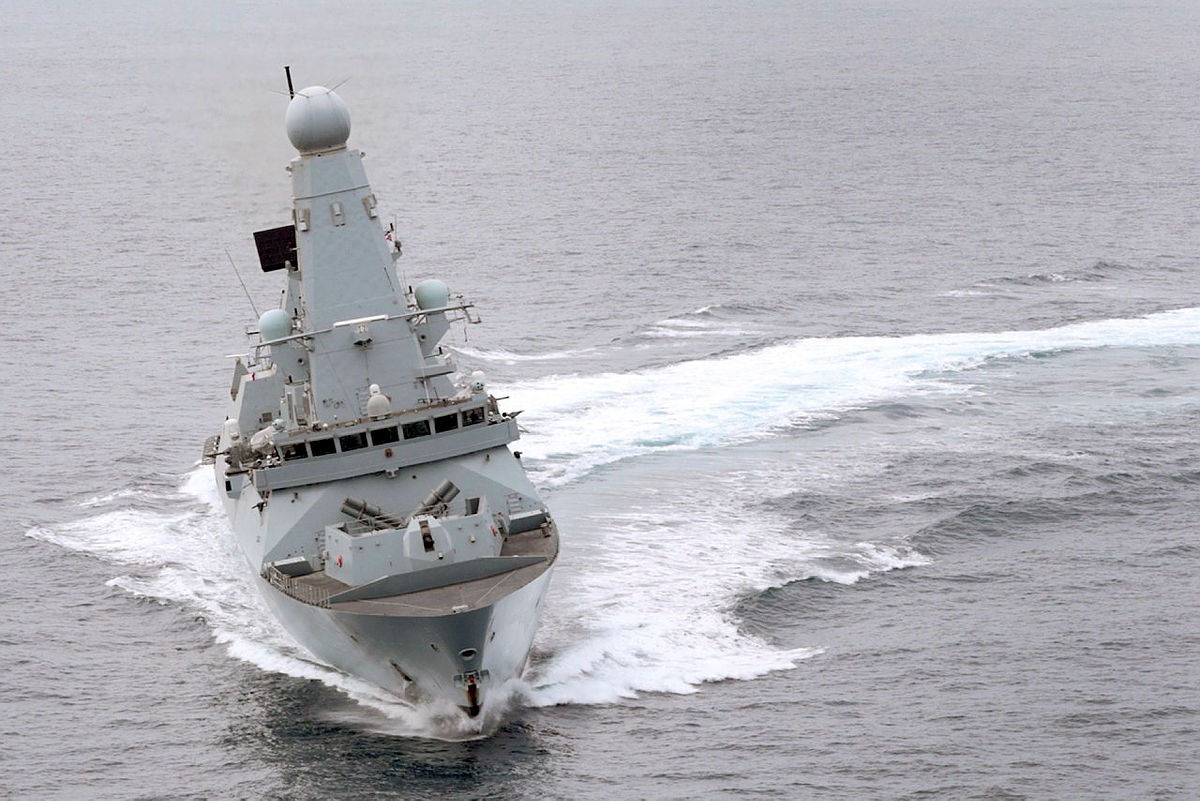
HMS Daring Signals Imminent Return to Sea with First Fuelling in Years
PORTSMOUTH, UK– In a significant development for the Royal Navy, the Type 45 destroyer HMS Daring has completed its first fuelling operation in nearly a decade, a clear indication that the warship is nearing its return to active service. The bunkering procedure, which involves taking on marine fuel, marks a crucial milestone following extensive refit work and years spent alongside in port.
The event was publicly announced on Tuesday evening via the ship’s official social media channels, highlighting the unusual nature of the occasion after such a prolonged period of inactivity. The communication notably quoted a broadcast over the ship’s main address system, stating:“Do you hear there. No smoking, no naked lights, fuelling Ship.”This standard command, unheard on Daring for many years, serves to alert the ship’s company to the presence of highly flammable fuel and mandates strict safety protocols, including the prohibition of all ignition sources. A photograph accompanying the announcement depicted a bunkering tanker secured alongside the destroyer, with hoses extended across to transfer fuel, overseen by a Royal Navy rating on the upper deck.
For a warship, taking on fuel is a fundamental preparatory step for any deployment or significant movement, including sea trials. This operation strongly suggests that HMS Daring is now in the final stages of readiness before commencing a series of essential tests at sea, designed to ensure all systems are fully operational and crew proficient following her extensive period of maintenance.
HMS Daring has been out of service since April 2017, accumulating an unprecedented duration of time tied up alongside. Last year, reports noted she had surpassed 3,000 days in port; by current estimates, this figure has extended to approximately 3,470 days, equating to over nine and a half years. This extended period has been attributed to a comprehensive overhaul, most notably addressing critical engineering issues that affected the entire Type 45 class.
Central to Daring’s refit was the Power Improvement Project (PIP), a vital undertaking aimed at rectifying a long-standing vulnerability within the Type 45 destroyers. The original design of these advanced air-defence ships was found to have a flaw in their diesel generator configuration, which placed them at risk of complete power loss at sea in certain operational conditions. The PIP involved the replacement of these problematic diesel generators with more robust and reliable units, enhancing the resilience and reliability of the ship’s power supply for propulsion and all onboard systems. Beyond the PIP, Daring also underwent a broader package of refit work, encompassing general maintenance, systems upgrades, and structural inspections, all necessary after such a prolonged period out of active duty.
Following the completion of these extensive works, HMS Daring returned to her homeport of Portsmouth in early 2023. Since then, she has remained alongside, undergoing further preparations and crew training. The current stage involves the full complementation of her crew, a process that precedes the rigorous schedule of trials. These ‘shakedown’ trials, anticipated to commence around the turn of the year (late 2023/early 2024), will mark Daring’s first movement away from the naval base wall since 2017, putting her redesigned power systems and other refurbished components to the test in a real-world maritime environment.
The Power Improvement Project has been systematically implemented across the Type 45 destroyer fleet, addressing the critical power generation issues ship by ship. HMS Dauntless, another vessel in the class, successfully completed the same upgrade work prior to Daring. The strategic objective behind these extensive upgrades and refits is to ensure the Type 45 destroyers, designed as potent air-defence platforms, remain operational and effective well into the 2030s. Furthermore, the Ministry of Defence is reportedly conducting a study to ascertain whether their projected out-of-service dates can be extended even further, underscoring the Royal Navy’s commitment to maximizing the operational lifespan of these crucial assets within its fleet.
Why This Matters
The impending return to service of HMS Daring carries significant implications for the United Kingdom’s naval capabilities, industrial base, and geopolitical standing. Her lengthy period out of commission has been a salient example of the challenges faced by the Royal Navy in maintaining its fleet readiness, particularly with sophisticated, high-value assets like the Type 45 destroyers.
Enhancing Naval Readiness and Capability:Each Type 45 destroyer is a cornerstone of the Royal Navy’s ability to project power and defend national interests globally. These destroyers are equipped with the advanced Sea Viper missile system, making them critical for fleet air defence, especially for protecting aircraft carriers like HMS Queen Elizabeth and HMS Prince of Wales. With HMS Daring’s return, the Royal Navy will regain a vital asset, bringing the fleet closer to its full operational strength. This directly contributes to the UK’s ability to fulfil its NATO commitments, participate in international operations, and maintain a credible deterrent presence in contested maritime regions.
Validation of the Power Improvement Project:The successful re-entry of HMS Daring into service will serve as a crucial validation of the Power Improvement Project. This multi-million-pound engineering solution was designed to address a fundamental flaw that plagued the Type 45 class, impacting their reliability and operational availability. Demonstrating the effectiveness of the PIP through Daring’s successful sea trials will build confidence in the longevity and capability of the entire class, proving that the significant investment in these ships was justified and that a critical design vulnerability has been overcome.
Economic and Industrial Impact:The extensive refit work, including the PIP, has provided substantial work for UK shipyards, engineering firms, and a network of suppliers. This sustained activity supports skilled jobs, fosters naval engineering expertise, and contributes to the broader defence industrial base. The continuity of such projects is essential for maintaining the capabilities required to build and maintain complex warships, ensuring the UK retains a sovereign capacity in naval shipbuilding and repair.
Geopolitical Posture:In an increasingly complex global security environment, the availability of front-line warships sends a clear message about a nation’s commitment to its security and its allies. A fully operational Type 45 fleet enhances the UK’s diplomatic leverage and its capacity to respond to crises, from safeguarding shipping lanes to supporting humanitarian efforts. The delay in Daring’s return has, in part, constrained the Royal Navy’s ability to deploy its full complement of these powerful destroyers. Her reintegration will alleviate some of this pressure, allowing for greater operational flexibility and presence on the world stage.
Future of the Type 45 Class:The success of Daring’s refit and her subsequent operational deployment will be pivotal in informing decisions about the long-term future of the Type 45 class. With studies already underway to potentially extend their service life beyond the 2030s, the performance and reliability demonstrated by Daring will directly influence these strategic planning efforts. This has implications for future naval procurement and the overall shape of the Royal Navy’s surface fleet for decades to come, ensuring the UK maintains formidable air defence capabilities well into the future.