
Check out what’s clicking on FoxBusiness.com.
Key Takeaways for Investors:
- **Brand Integrity & Consumer Trust:** The recall of 7UP Tropical Zero Sugar, due to mislabeled full-sugar product, highlights the critical importance of accurate labeling and quality control, especially in the health-conscious zero-sugar segment. This directly impacts consumer trust, a cornerstone for beverage giants like Keurig Dr Pepper (KDP).
- **Supply Chain Vulnerability & Costs:** While initiated by bottler Admiral Beverage Corporation, the incident exposes potential vulnerabilities in the broader beverage supply chain. Recalls incur significant direct costs (logistics, disposal) and indirect costs (reputational damage, potential sales loss, increased scrutiny), which can ultimately weigh on parent company financials and investor sentiment.
- **Regulatory Scrutiny & Market Perception:** The Class II FDA classification, though less severe, still signals regulatory attention. Such incidents can prompt intensified oversight, potentially leading to stricter compliance requirements across the industry, and may cause investors to re-evaluate risk profiles for beverage manufacturers and their bottling partners.
A recent product recall involving over 77,000 cans of 7UP Tropical Zero Sugar has brought supply chain integrity and brand trust into sharp focus within the highly competitive beverage market. The Utah-based Admiral Beverage Corporation initiated a voluntary recall on August 20 after discovering that some packages labeled as the zero-sugar variant actually contained the full-sugar version of the popular soft drink. This mislabeling creates a significant concern for consumers, particularly those managing dietary restrictions, and carries notable implications for the involved companies and the broader industry.
The recall, covering 3,240 cases or 77,760 individual 12-ounce cans distributed exclusively in Utah, specifically targets 7UP Tropical sold in 12-packs. According to the U.S. Food and Drug Administration (FDA) enforcement report, the core issue is the potential for undeclared sugar, a critical factor for individuals with diabetes or those adhering to sugar-restricted diets. The affected product can be identified by lot code UT06176, a best-by date of March 17, 2027, and UPC 0 78000 03798 2.
The FDA classified this as a Class II recall on September 29, over a month after the company began its voluntary action. A Class II designation indicates that exposure to the recalled product may cause temporary or medically reversible adverse health consequences, or that the probability of serious adverse health consequences is remote. While not as immediately alarming as a Class I recall, which involves serious injury or death, a Class II recall still underscores a lapse in quality control that can erode consumer confidence and trigger regulatory scrutiny.
For Keurig Dr Pepper (KDP), the parent company of the 7UP brand, this incident, though seemingly minor in scope, touches on several sensitive market nerves. The beverage industry, particularly the carbonated soft drink (CSD) segment, has been aggressively pivoting towards healthier, low-sugar, and zero-sugar alternatives to meet evolving consumer preferences and combat declining full-sugar soda consumption. Brands like 7UP Zero Sugar are crucial components of KDP’s strategy to maintain market share and appeal to a broader, health-conscious demographic. Any incident that undermines the integrity of these “better-for-you” products can have disproportionate effects on brand perception and, ultimately, sales volumes.
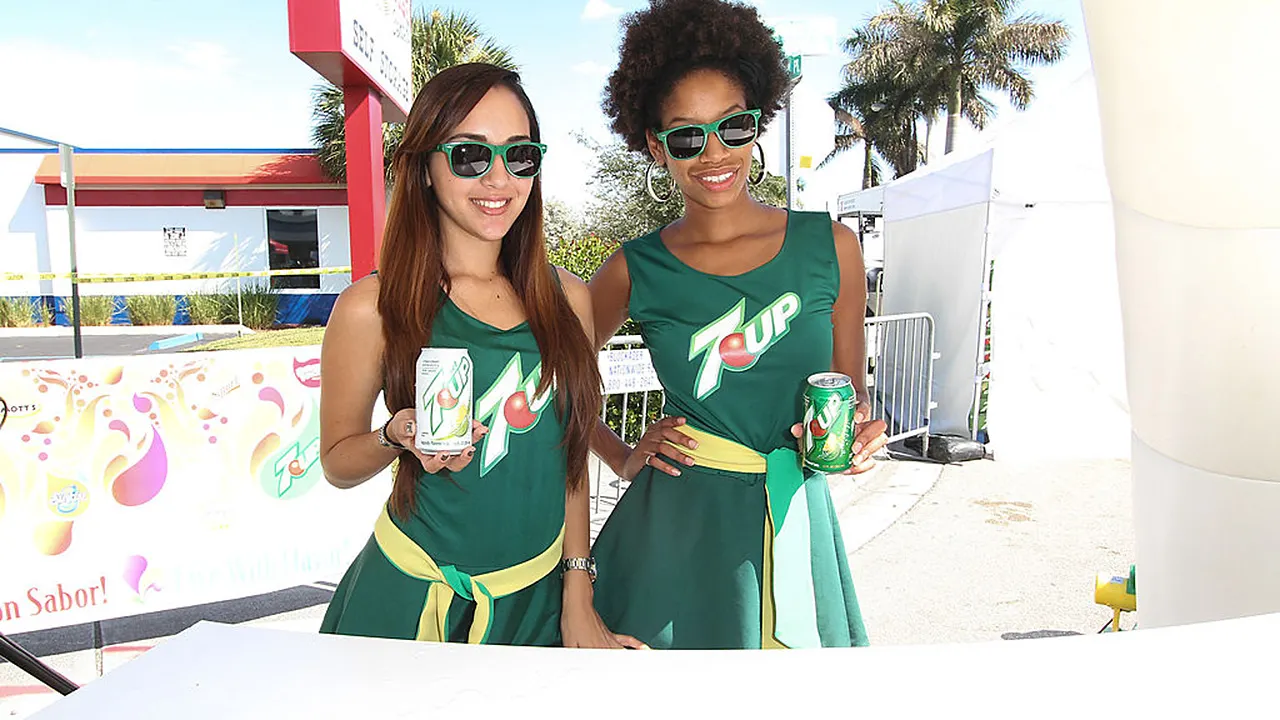
Admiral Beverage Corporation initiated the voluntary recall on Aug. 20 of 7UP Tropical.(Kevin Carter/Getty Images, File / Getty Images)
The financial implications for KDP, which saw its stock close down -2.22% at $30.34 recently, could be multifaceted. While direct costs of this specific recall for a regional distribution are likely manageable, the reputational damage is harder to quantify. Investors often punish companies that exhibit quality control issues, especially when those issues compromise the health or dietary integrity of their products. This incident could lead to increased internal auditing, potential fines if regulatory investigations reveal negligence, and the more subtle but potent erosion of brand loyalty among consumers who specifically seek out zero-sugar options.
Admiral Beverage Corporation, based in Worland, Wyoming, operates the production facility in Pleasant View, Utah, identified in the FDA report. As a bottler and distributor, Admiral Beverage plays a critical role in the supply chain for major beverage companies. While the recall was initiated by Admiral, the ultimate brand owner, Keurig Dr Pepper, bears the brunt of the brand risk. This dynamic highlights the intricate web of relationships within the beverage supply chain and the importance of robust contractual agreements and oversight between brand owners and their bottling partners. A breakdown at any point can ripple upwards, affecting the entire value chain.
The ongoing nature of the recall and the lack of a public news release for the recall itself raise further questions. Typically, companies are eager to communicate transparently to mitigate public relations damage and reassure consumers. The FDA listing also did not identify the specific retailers that received the affected 7UP Tropical, nor did it indicate distribution beyond Utah, leaving a degree of ambiguity for consumers and market observers. This limited information can sometimes fuel speculation and uncertainty, which the market generally dislikes.
The FDA listing does not identify the retailers that received the affected 7UP Tropical.(Sarah Silbiger/Getty Images, File / Getty Images)
In a market increasingly saturated with choice, and where consumer preferences are heavily swayed by health trends and ingredient transparency, mislabeling issues carry an outsized weight. The “zero sugar” claim is a powerful marketing tool and a critical differentiator. When that promise is broken, even inadvertently, it can lead to a significant breach of trust. For consumers who depend on accurate nutritional information for health reasons, such an error is not merely an inconvenience but a serious health risk. This could prompt a segment of the population to become more wary of all “zero sugar” products, potentially benefiting alternative categories or brands with perceived stronger quality control.
Beyond the immediate financial and reputational implications for KDP and Admiral Beverage, this recall serves as a broader reminder to the beverage industry about the paramount importance of stringent quality assurance protocols at every stage of production and distribution. As supply chains become more global and complex, the potential for human error or mechanical malfunction increases. Investing in state-of-the-art automation, rigorous employee training, and multi-layered checking systems becomes not just good practice, but a critical imperative for maintaining market share and investor confidence.
| Ticker | Security | Last | Change | Change % |
|---|---|---|---|---|
| KDP | KEURIG DR PEPPER INC. | 30.34 | -0.69 | -2.22% |
FOX Business reached out to Admiral Beverage Corporation and Keurig Dr Pepper for additional information about the recall, including how the labeling error occurred, whether any consumer complaints or adverse reactions have been reported, which retailers received the affected products and what consumers who purchased the recalled soda should do. The transparency in addressing these questions will be key to managing the market’s perception of the incident.
CLICK HERE TO GET FOX BUSINESS ON THE GO
Market Impact:
This localized recall, while not expected to cause significant immediate financial distress for a company the size of Keurig Dr Pepper, underscores persistent vulnerabilities in the beverage industry’s supply chain and quality control. For investors, it serves as a reminder of the latent risks associated with brand integrity, particularly in the highly competitive and health-sensitive zero-sugar segment. The incident could prompt a marginal re-evaluation of KDP’s operational execution risk and may lead to increased scrutiny from regulators across the industry regarding labeling accuracy. While the stock’s recent dip may not be solely attributable to this event, any erosion of consumer trust in “zero sugar” claims could dampen growth prospects for the entire category, potentially shifting investor interest towards brands with demonstrably robust quality assurance records or alternative beverage segments.