
Key Takeaways:
- Lucid Motors drastically cut EV production by 54% in Q3, a deliberate strategy to align output with persistently weak demand for its luxury vehicles, marking the third consecutive quarterly decline.
- Under new CEO Silvio Napoli, the company is undergoing a significant “simplification” effort, including extensive layoffs, leadership restructuring, and delaying the crucial, more affordable Cosmos EV to avoid past product launch mistakes.
- Lucid’s struggles to find a market for its premium EVs are starkly highlighted by its failure to meet ambitious past projections and the contrasting recent success of rival Rivian with its mass-market R2 SUV.
Lucid’s Strategic Retreat: Production Halves as CEO Reworks Ailing EV Maker
In a bold and somewhat painful strategic pivot, Lucid Motors dramatically scaled back its electric vehicle (EV) production in the third quarter of this year, building just 2,954 units. This figure represents a staggering 54% drop from the same period a year ago and marks the third consecutive quarter of declining output. The company states this is a deliberate move to better align production with the challenging demand landscape for its high-end EVs, signaling a period of internal restructuring aimed at long-term viability rather than immediate volume.
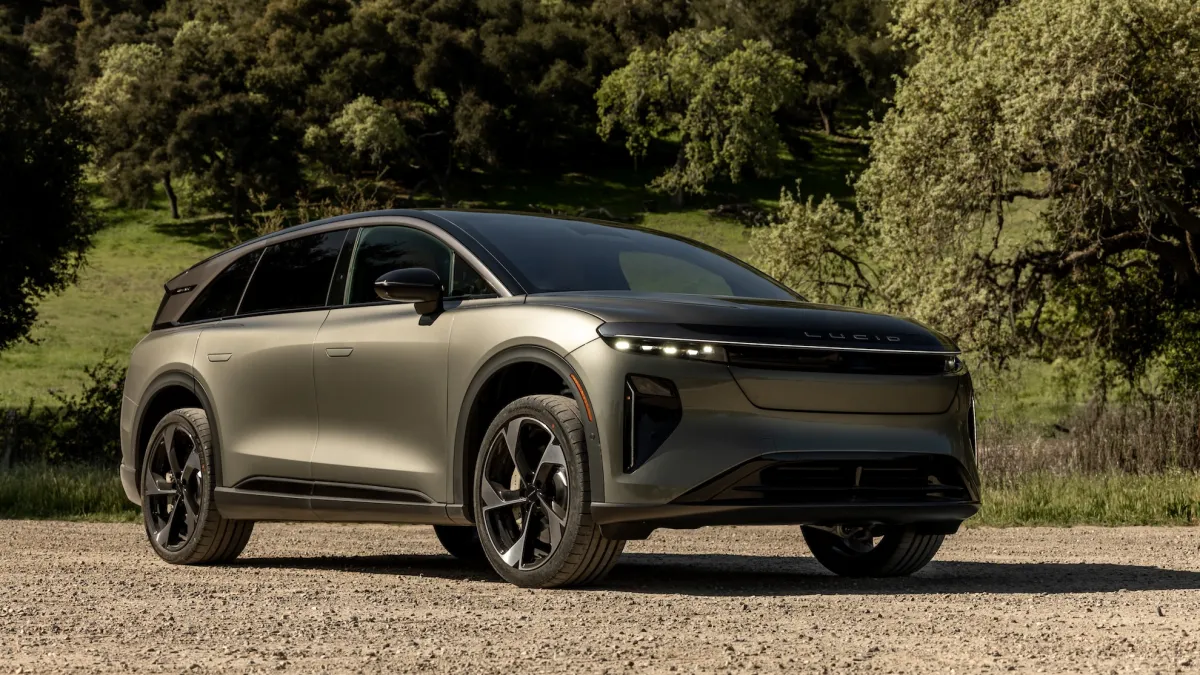
This latest production output is the lowest quarterly total for Lucid since the first quarter of 2025, a period just after the luxury EV manufacturer had begun the production of its second model, the Gravity SUV. The numbers underscore a persistent struggle for Lucid to translate its highly acclaimed technology and luxurious offerings into substantial sales, a challenge that new CEO Silvio Napoli is aggressively tackling.
The Q3 Numbers: A Deeper Dive into the Demand-Supply Mismatch
While production plummeted, Lucid’s delivery figures offered little solace. The company delivered 3,806 EVs in the third quarter, a number roughly flat with the second quarter but still down approximately 200 vehicles from the third quarter of 2025. The persistent gap between vehicles built and vehicles delivered tells a critical story: Lucid has struggled to find enough buyers for its premium sedans and SUVs. In fact, in five of the last six quarters, Lucid has built more vehicles than it has managed to sell and deliver to customers, leading to an inventory overhang that necessitates the current production cuts.
The implications of this supply-demand imbalance are profound. For a relatively young EV manufacturer, efficient capital allocation and a lean operational structure are paramount. Producing vehicles that sit unsold on lots ties up valuable resources and capital, increasing overheads and hindering profitability prospects. The current strategy, while resulting in lower production figures that might alarm some investors, appears to be a necessary step to right-size the company’s manufacturing efforts to actual market appetite.
CEO’s Turnaround Gambit: “Simplifying the Company”
Lucid’s new CEO, Silvio Napoli, has wasted no time in orchestrating a comprehensive overhaul, characterized by an intense focus on “simplifying the company.” This effort extends beyond just production adjustments, touching nearly every facet of the organization. Over the past few months, Napoli has overseen the painful but necessary layoff of approximately 1,500 employees, a significant workforce reduction aimed at streamlining operations and reducing costs.
Further measures include a complete restructuring of the company’s leadership team and the elimination of a second production shift at its manufacturing facility in Arizona. These decisive actions are projected to generate substantial cost savings, with Lucid targeting an impressive $1.4 billion. The underlying philosophy behind these aggressive moves is clear: to create a leaner, more agile, and ultimately more financially sustainable company, capable of navigating the competitive and capital-intensive EV market.
The Delayed Promise: Cosmos and the Future Market
Amidst these restructuring efforts, Lucid has also made a pivotal decision regarding its future product pipeline: the delay of its third EV model, the Cosmos. The Cosmos is envisioned to be a game-changer for Lucid, designed to be much more accessible with a starting price expected to be under $50,000. This price point is critical as it would allow Lucid to tap into a significantly broader consumer market, moving beyond the ultra-luxury segment where its current models reside.
However, Napoli has cautioned shareholders against rushing the Cosmos to market, drawing lessons from past missteps. On a previous earnings call, he stated, “We will not repeat the mistakes of the past by bringing a product to market before it is ready.” This reflects an understanding that a flawed product launch, particularly for a model intended for a wider audience, could inflict irreparable damage on the brand and negate the benefits of its lower price point. The delay, while potentially frustrating for those eager for a more affordable Lucid, underscores a commitment to quality and readiness over speed, a lesson learned the hard way.
Lucid’s Unfulfilled Vision vs. Rivian’s Rise
Lucid’s current struggles are thrown into even sharper relief when juxtaposed with the company’s grand ambitions from its 2021 public debut. At the time of its merger with a special purpose acquisition company (SPAC), Lucid Motors raised a substantial $4 billion and projected shipping as many as 90,000 EVs in 2024 alone. These figures now appear wildly optimistic, highlighting a significant disconnect between initial projections and market realities.
Adding to the pressure, rival EV upstart Rivian recently posted its best quarter in history. While Rivian didn’t break out specific delivery figures for its new, more affordable R2 SUV, the company shipped nearly 20,000 vehicles in the third quarter – the first full quarter with the R2 in production. This impressive surge, up from 12,194 in the second quarter, demonstrates a clear market appetite for well-executed, more attainably priced electric vehicles, a segment Lucid has yet to successfully penetrate. Rivian’s success serves as a stark reminder of the challenges Lucid faces in broadening its appeal beyond the niche luxury market.
The CEO’s Candid Admission: Acknowledging Past Missteps
Perhaps one of the most striking aspects of Lucid’s current phase is the candid assessment provided by CEO Silvio Napoli himself. On Lucid’s second-quarter earnings call in August, Napoli didn’t shy away from acknowledging the company’s past shortcomings. His remarks offered a rare and refreshing glimpse into the internal reckoning underway.
“While there is no question that Lucid brought leading innovations and outstanding products to the market, we have disappointed on several fronts, and for far too long,” he admitted. Napoli didn’t stop there, detailing specific areas of failure: “We have not executed consistently. We missed commitments, launched products before they were ready, underinvested in service, responded too slowly to quality issues, and allowed complexity to slow decisions down.” This unfiltered self-criticism underscores the depth of the problems Napoli inherited and the urgency with which he is pursuing his “simplification” strategy. It paints a picture of a company with brilliant engineering but a troubled operational history, now under pressure to mature and execute flawlessly.
The Road Ahead: High Stakes and Hard Choices
Lucid Motors is at a critical juncture. The strategic decision to intentionally cut production, streamline operations, and delay a key product like the Cosmos is a high-stakes gamble. It signifies a painful but necessary pivot away from chasing volume at all costs towards building a more robust and efficient foundation. The success of this turnaround hinges on Napoli’s ability to not only cut costs but also to rectify the execution failures he so openly acknowledged. The market is increasingly demanding and unforgiving, particularly for EV startups that burn through capital without clear paths to profitability. The delayed Cosmos, if launched flawlessly, could be the key to unlocking a wider customer base and securing Lucid’s long-term future. However, the path there is fraught with challenges, and every decision from here on will be scrutinized.
Bottom Line
Lucid Motors is undergoing a profound and necessary transformation, deliberately sacrificing short-term production volume to address deep-seated operational inefficiencies and a persistent mismatch between supply and demand for its luxury EVs. Under new CEO Silvio Napoli, the company is cutting costs, streamlining leadership, and critically, delaying its more affordable Cosmos model to ensure a flawless launch. While these actions signal a painful but strategic retreat from past ambitions, they are crucial steps toward building a more sustainable and market-aligned business model in the fiercely competitive electric vehicle landscape. The future of Lucid hinges on its ability to execute this reset flawlessly and finally translate its innovative technology into widespread commercial success.
When you purchase through links in our articles, we may earn a small commission. This doesn’t affect our editorial independence.
{content}
Source:{feed_title}