
National Economic Council director Kevin Hassett joins ‘Sunday Morning Futures’ to discuss inflation, calls for Jerome Powell to resign from his role as the Federal Reserve Board chair and more.
**Key Takeaways:**
* **Threat to Fed Independence:** Kevin Hassett’s call for former Fed Chair Jerome Powell to resign from the Board highlights escalating concerns over the central bank’s perceived independence, a cornerstone of market stability.
* **Policy Uncertainty:** The ongoing tension between political leadership and the Federal Reserve, particularly regarding interest rate policy, introduces significant uncertainty into financial markets and investor sentiment.
* **Market Repercussions:** Any perceived politicization of monetary policy or a weakening of the Fed’s autonomy could lead to increased market volatility, shifts in asset valuations, and a potential loss of confidence in U.S. economic governance.
In a move that sends ripples through Washington and Wall Street alike, National Economic Council Director Kevin Hassett has publicly called for former Federal Reserve Chair Jerome Powell to step down from the Federal Reserve Board. Speaking on “Sunday Morning Futures,” Hassett argued that Powell’s continued tenure after his chairmanship is “completely unprecedented” and detrimental to preserving the central bank’s crucial independence.
Hassett’s remarks are not merely a procedural observation; they underscore a deeper, more profound debate about the autonomy of the institution responsible for guiding the nation’s monetary policy. In financial circles, the independence of the Federal Reserve is considered sacrosanct. It insulates monetary policy decisions from short-term political pressures, allowing the Fed to focus on its dual mandate of maximizing employment and maintaining price stability – often requiring unpopular decisions, such as raising interest rates to curb inflation, even when economic growth is desired by political leaders. Any perceived erosion of this independence can directly translate into market uncertainty, affecting everything from bond yields to equity valuations and the strength of the U.S. dollar.
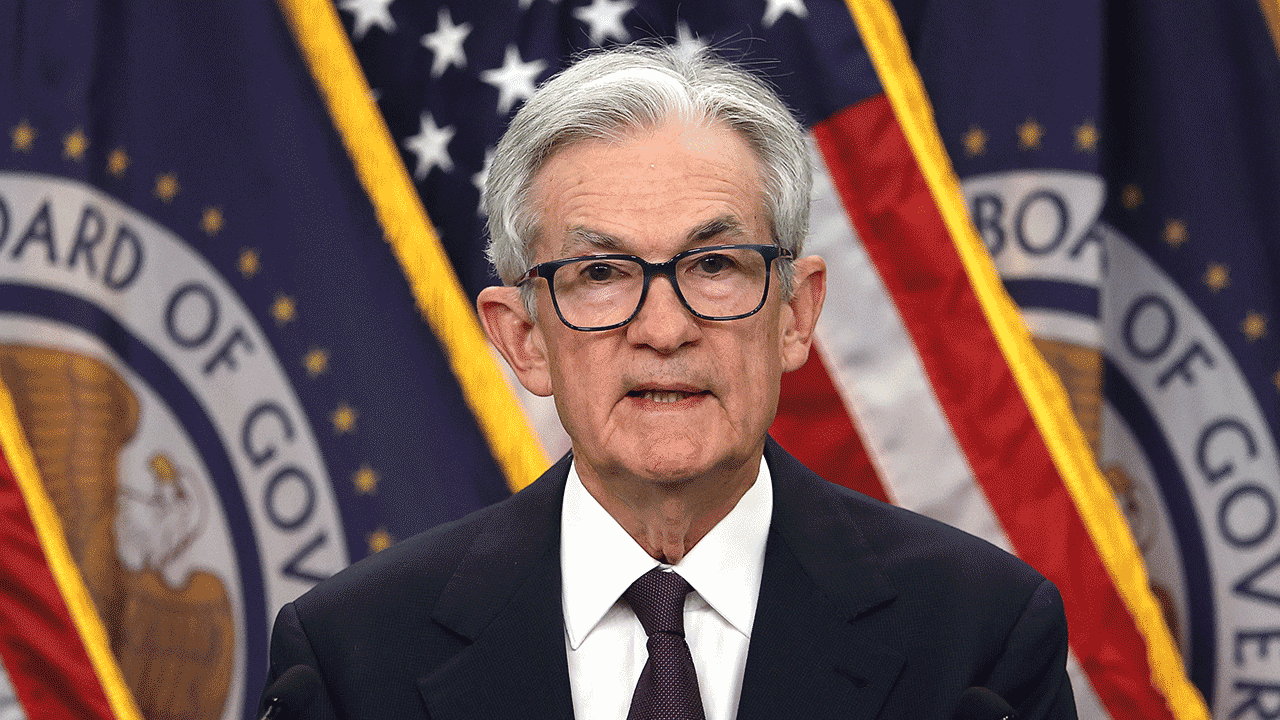
Federal Reserve Board Chairman Jerome Powell holds a news conference on June 18, 2025, in Washington, D.C.(Win McNamee/Getty Images)
“I think that it’s time for him to move on and to respect the independence of the Fed,” Hassett told Larry Kudlow, articulating a sentiment that resonates with those who fear a politicized central bank. “End this sort of partisan divide that’s very visible at the Fed, and let’s move on to the way the Fed used to be in the past.” This “partisan divide” is a key concern for investors, as it can inject unpredictability into monetary policy, making it harder to forecast economic trajectories and market movements.
The “unprecedented” nature of Powell’s hypothetical continued presence, as Hassett describes it, is a central plank of his argument. Historically, former Fed Chairs, upon completing their terms, have typically departed from the Board to allow their successors unencumbered leadership and to prevent any perception of an enduring shadow of influence. While there’s no strict legal barrier, the tradition upholds the notion of a clean break and fresh perspective. Hassett’s analogy to a corporation getting a new CEO — where “the old CEO doesn’t sit in the office next to him” — highlights the perceived awkwardness and potential for conflicting signals that could confuse markets and undermine the authority of the current Chair.
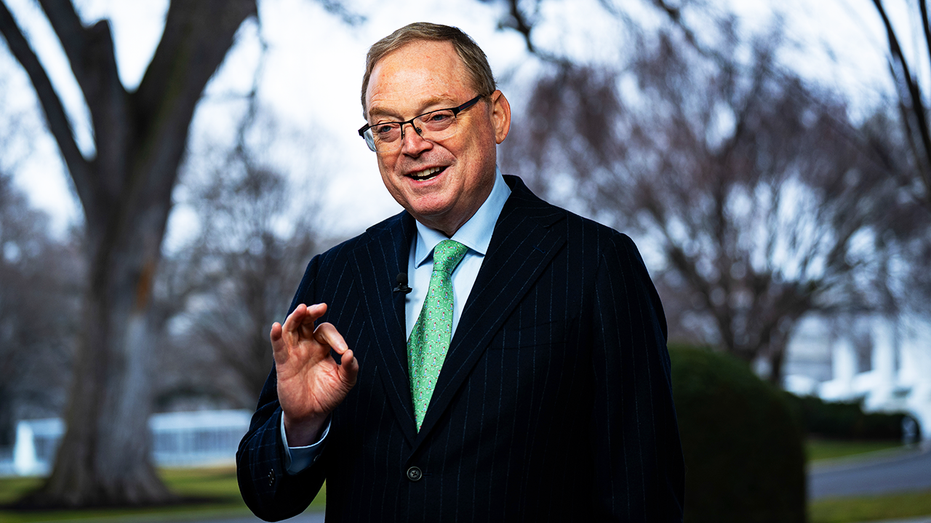
White House National Economic Council Director Kevin Hassett.(Al Drago/Bloomberg)
“It’s completely unprecedented that somebody would have their chairmanship end and not resign right away,” Hassett reiterated, stressing the importance of trust in the institution. “I think the best way for him to preserve the independence of the Fed is to trust the people that we put there who really, really believe in the independence of the Fed.” This sentiment suggests that the current administration seeks to solidify its influence over the institution by ensuring all Board members align with its broader economic vision, potentially impacting the future direction of interest rates and quantitative easing/tightening policies. For markets, this could signal a more dovish or hawkish stance than anticipated, leading to shifts in bond yields, particularly for longer-dated U.S. Treasuries, and affecting sectors sensitive to borrowing costs.
The deeper context for Hassett’s remarks lies in the well-documented tension between the President and Jerome Powell. This feud, which began with President Donald Trump’s vocal disagreements over the Fed’s benchmark interest rate decisions, has escalated into a broader confrontation over the central bank’s policy direction and its leadership. The President has repeatedly advocated for lower interest rates, believing they would further stimulate economic growth and maintain a competitive edge for American businesses. The Fed, under Powell’s leadership, maintained a stance guided by economic data, balancing growth with inflation concerns, sometimes necessitating rate hikes that drew presidential ire.
Former Reagan economist Art Laffer and American Action Forum President Douglas Holtz-Eakin join ‘Kudlow’ to discuss Jerome Powell’s leadership of the Federal Reserve, inflation trends and the U.S. economy.
Trump’s pressure campaign has been intense and highly public, a departure from previous administrations that typically respected the Fed’s operational independence, even if they disagreed privately. His public criticisms, and at times personal attacks, have fueled speculation about the Fed’s ability to withstand political influence. This perceived pressure creates a “political risk premium” in financial markets, where investors demand higher returns to compensate for the added uncertainty surrounding monetary policy decisions. Such a premium can be seen in increased volatility in equity markets, particularly in growth-sensitive sectors, and a potential weakening of the U.S. dollar if international investors become wary of policy stability.
Adding another layer to the narrative, Powell was previously investigated by the Department of Justice for cost overruns associated with multibillion-dollar renovation projects at the Federal Reserve’s Washington, D.C., headquarters. While U.S. Attorney General Todd Blanche confirmed that no charges would be brought and the Justice Department would not reopen a criminal investigation, the mere existence of such a probe provided political ammunition and contributed to the public’s perception of turmoil within the central bank. Although cleared, such scrutiny can still erode public trust and provide fodder for critics seeking to challenge the Fed’s leadership or independence, further complicating market assessments of the institution’s stability and impartiality.
The ability of the President to fill a vacant seat on the Board is also a significant factor. A departure by Powell would open a valuable opportunity for the administration to appoint a new governor, potentially shifting the delicate balance of monetary policy leanings on the Federal Open Market Committee (FOMC). Such an appointment could influence future votes on key policy tools like the federal funds rate and the size of the Fed’s balance sheet, directly impacting credit conditions, economic growth, and inflation expectations. Investors constantly monitor these appointments for clues about the future trajectory of monetary policy, adjusting their portfolios accordingly.
FOX Business reached out to Powell for comment but did not immediately hear back. The silence, in itself, leaves room for continued speculation and market sensitivity to future developments in this high-stakes institutional power struggle.
Fox News Digital’s Amanda Macias contributed to this report.
Market Impact:
The ongoing political pressure on the Federal Reserve, highlighted by calls for Board member resignations and the broader debate over central bank independence, poses tangible risks to financial market stability. Investors typically prize certainty and autonomy in monetary policy-making, as it allows for predictable economic management. Any perception that the Fed’s decisions are influenced by political rather than economic imperatives could trigger increased volatility across asset classes. We could see a rise in Treasury yields as bond investors demand a higher risk premium for potential policy missteps or inflationary pressures resulting from politically motivated rate cuts. The U.S. dollar, often seen as a safe haven due to the stability of American institutions, could face downward pressure if global confidence in the Fed’s independence erodes. Equity markets, particularly those sensitive to interest rate changes and economic uncertainty, would likely react with heightened caution, potentially leading to corrections or sector-specific headwinds. Fundamentally, the long-term impact could be a loss of both domestic and international investor confidence in the U.S. financial system’s governance, making it more challenging for the Fed to achieve its dual mandate effectively.