
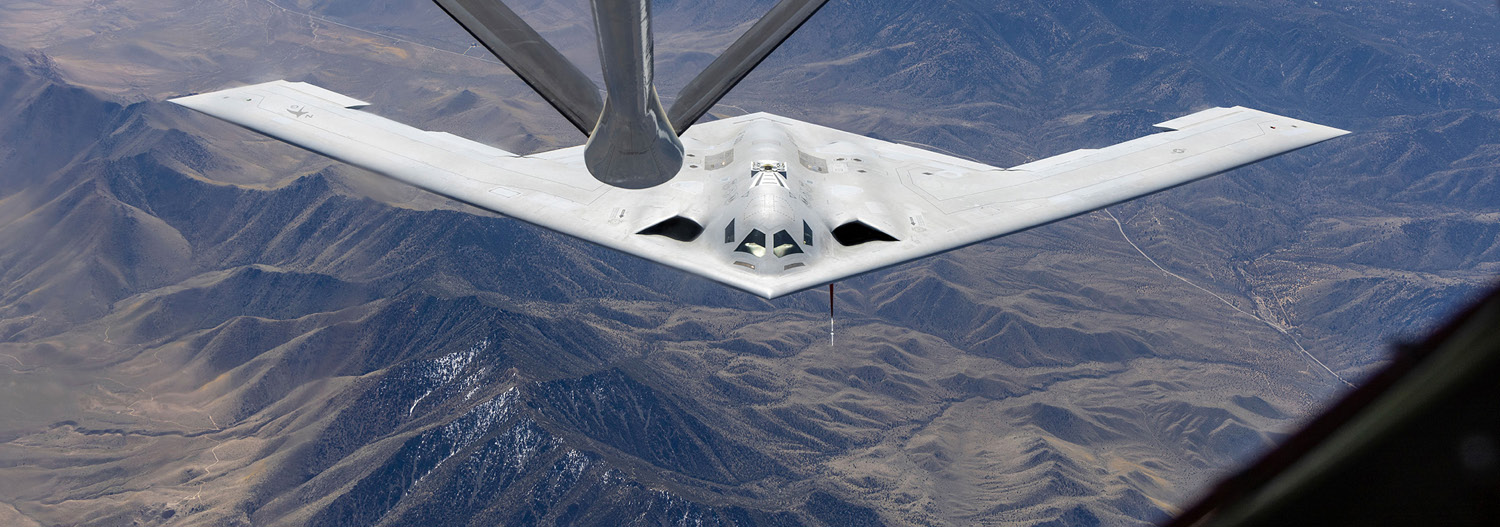
PALMDALE, California – Northrop Grumman has initiated construction on a significant new production facility for the B-21 Raider stealth bomber, a development announced jointly by the company and the U.S. Air Force on October 6, 2026. This expansion coincides with positive reports from senior Air Force officials regarding the ongoing testing of the bomber, which remains on schedule for its planned operational introduction in 2027.
Secretary of the Air Force Troy Meink underscored the urgency and importance of the project in a social media post, stating, “It’s more than construction. We’re moving fast to build B-21s!”
The Air Force Test Center at Edwards Air Force Base, California, is actively conducting flight tests for the B-21 Raider, which first flew in 2023. Two of the advanced bombers are currently known to be undergoing rigorous evaluation at the base. Brig. Gen. Mark Massaro, who leads the Air Force Test Center, provided a positive assessment of the program’s progress during a discussion hosted by AFA’s Mitchell Institute for Aerospace Studies on October 6, 2026.
“I can’t give you many details about specifics on how it’s going, but I am very closely tied into that program and have been getting regular updates,” Massaro stated, emphasizing that “We are actively testing right now.”
The new production facility, located less than 30 miles from the testing site at Edwards, will add approximately 1 million square feet of space to Northrop Grumman’s existing Air Force Plant 42 operations in Palmdale. Secretary Meink confirmed that this new construction will serve as the “final assembly line” for the next-generation bombers, significantly enhancing manufacturing capabilities.
The groundbreaking ceremony, which took place on September 29, 2026, was described by the Air Force as “a significant step toward expanding production capacity for the B-21 Raider and delivering combat capability to the Joint Force faster.” This expansion is part of a broader strategy to accelerate the bomber’s production. In February 2026, Air Force officials reached an agreement with Northrop Grumman to increase B-21 production capacity by 25 percent. This initiative is being funded through a $4.5 billion allocation from the “One Big Beautiful Bill” legislation, which was passed in 2025. Northrop Grumman is also making a substantial investment of its own, with CEO Kathy Warden announcing in April 2026 that the company would contribute $2.5 billion towards bolstering B-21 production capabilities.
While the official program of record for the B-21 Raider currently mandates a minimum of 100 bombers, there have been increasing calls from senior military leaders for a larger fleet. Adm. Richard Correll, head of U.S. Strategic Command, and Adm. Samuel Paparo, who leads U.S. Pacific Command, have publicly advocated for an increased B-21 procurement. Furthermore, Secretary of Defense Pete Hegseth informed lawmakers in April 2026 that the Air Force would require “a lot more” than 100 B-21s in the future, signaling a potential shift in long-term acquisition strategy.
Despite these discussions, the Air Force has not yet formally committed to acquiring more than 100 bombers. However, top leaders have indicated an openness to reconsidering the fleet size. Air Force Chief of Staff Gen. Ken Wilsbach told Air & Space Forces Magazine in July 2026, “At some point in the future, we’ll consider additional buys.” He added that discussions with Northrop Grumman were focused on how such an increase could be achieved without extending the production timeline. The precise number of additional bombers, if any, the service plans to acquire is anticipated to be revealed with the Air Force’s 2028 budget request, which is expected in spring 2027, according to Air Force Deputy Chief of Staff for Plans and Programs Lt. Gen. David H. Tabor.
In parallel with production discussions, the Air Force Test Center at Edwards is employing an innovative “integrated test” approach for the B-21, which involves developmental test pilots flying alongside operational test pilots. Brig. Gen. Massaro elaborated on this strategy, stating, “One of the areas that we’re really getting into, which we have done in the past, but in a big way, we’re moving forward in programs like the B-21… is that integrated test.”
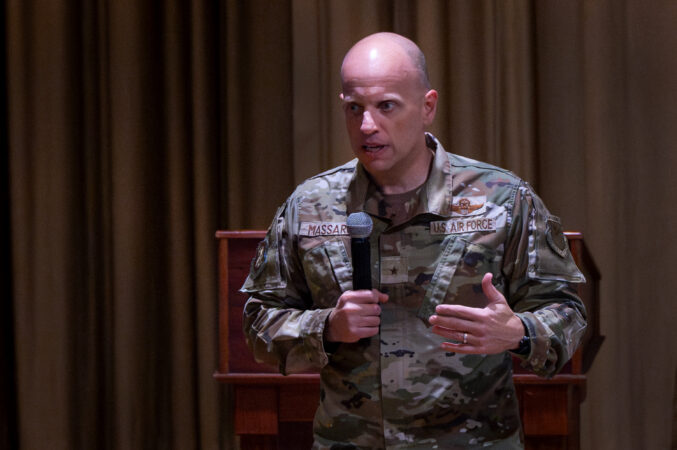
He further explained that this approach ensures “the warfighter and our operators have earlier insight into a lot of the developmental test work to be able to get information to make comments and understanding of what things might need to change earlier in a development cycle, but then also influence and discuss how this is going to be operated best. You’re bringing that operator in earlier into the Test Center test execution phase.” Massaro highlighted this integrated test construct as a key focus for the B-21 program and numerous other initiatives within the Air Force.
Why This Matters
The developments surrounding the B-21 Raider, including the groundbreaking of a new production facility and accelerated testing, carry significant implications for global security, technological advancement, and defense industrial capacity. As a long-range, stealthy, nuclear-capable bomber, the B-21 is designed to be a cornerstone of the U.S. military’s power projection and strategic deterrence capabilities for decades to come. Its introduction comes at a time of heightened geopolitical competition, particularly with peer adversaries like China and Russia, making its timely deployment and robust production capacity critical.
Expanding B-21 production addresses concerns about maintaining a credible deterrent in an increasingly complex security environment. A larger and more capable bomber fleet enhances the ability of the U.S. to hold targets at risk globally, ensuring strategic stability and protecting national interests. The integrated testing approach, involving both developmental and operational pilots, aims to streamline the transition from testing to active service, potentially reducing future operational challenges and costs. This method is a shift towards fielding advanced weapon systems more rapidly and efficiently.
From an economic perspective, the multi-billion-dollar investment by both the Air Force and Northrop Grumman represents a significant commitment to the defense industrial base. The creation of a new, large-scale assembly line supports high-tech manufacturing jobs and fosters innovation within the aerospace sector. This long-term investment ensures that the United States maintains a technological edge in air power, which is essential for its role as a global security provider. The ongoing debate about increasing the total number of B-21s beyond the initial 100 aircraft reflects a broader strategic re-evaluation of future force requirements in a rapidly evolving global landscape, indicating that this program is poised to be one of the most significant defense procurements of its generation.