
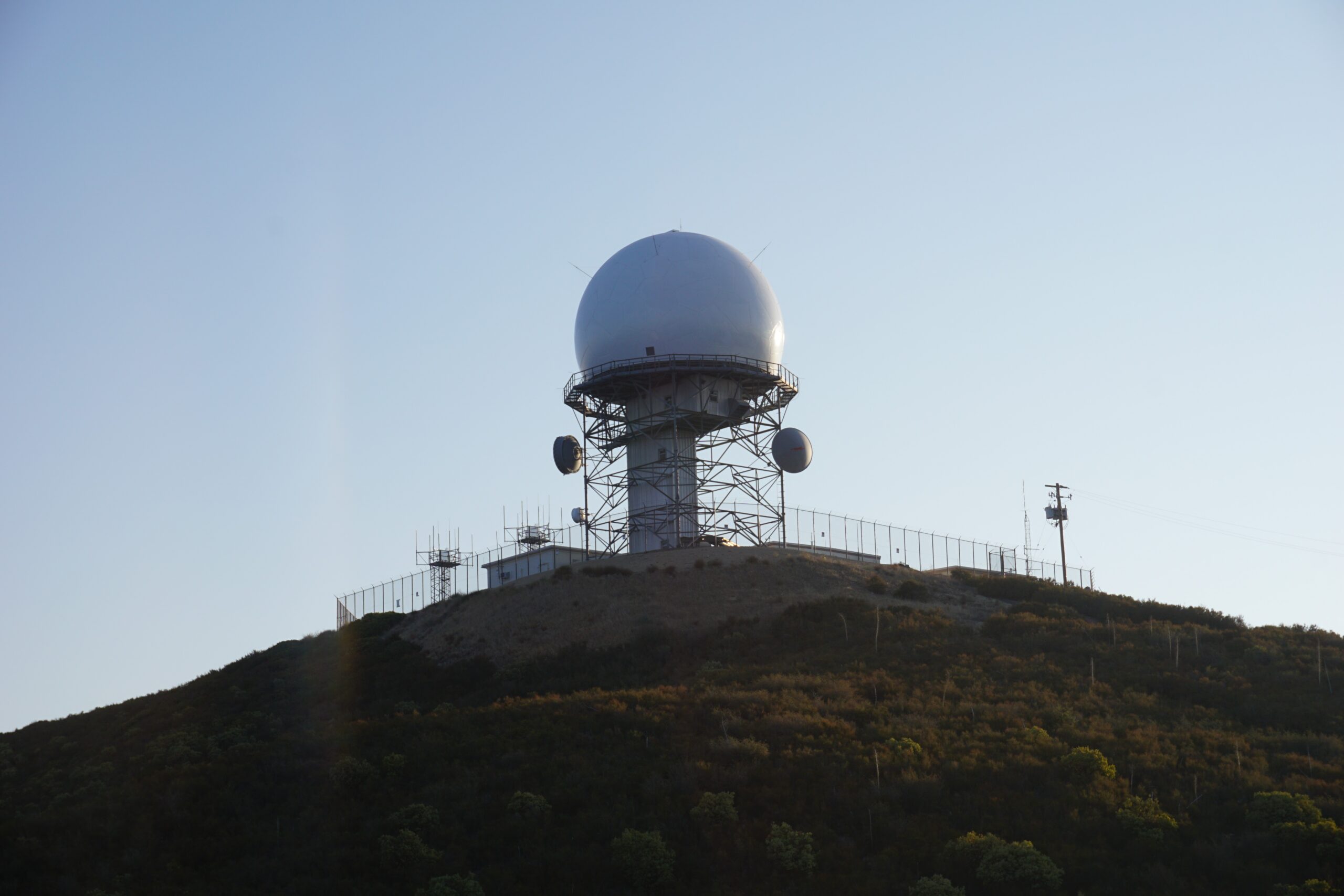
The United States Air Force has initiated a process to replace its long-serving Air Route Surveillance Radar-4 (ARSR-4) system, a critical component of the nation’s air defense infrastructure for nearly three decades. This extensive network of radars is responsible for monitoring U.S. coastlines, international borders, and several strategically important remote locations against potential aerial threats.
On September 21, the Air Force Life Cycle Management Center (AFLCMC) issued a “sources sought” notice, indicating its intent to identify potential industry partners capable of providing new technologies to either sustain or enhance the ARSR-4’s vital mission. An update to this initial notice was subsequently posted on Sam.gov on October 13, though specific technical details remain classified.
While the precise number of replacement radars required for the existing 44-site network and the associated cost have not yet been determined, these factors will be assessed through ongoing market research, according to Mark Wyatt, a spokesperson for Air Force Materiel Command. Furthermore, a public development timeline for the project is not yet available, with responses to the sources sought notice originally due by October 21.
Wyatt confirmed that the AFLCMC is seeking a replacement system with an instrumented range of 250 nautical miles, matching the operational capability of the current ARSR-4. A primary function of the ARSR-4 has been its ability to differentiate genuine aircraft or potential missile threats from various forms of radar “clutter,” which is often more pronounced at lower altitudes. Historically, the system has performed this task effectively. However, the modern aerial landscape introduces new challenges, particularly the proliferation of large structures like wind farms, which can significantly interfere with a radar’s clarity and detection capabilities.
“Wind farms are one of many sources of clutter that any solution would have to address,” Wyatt explained. He clarified that the Air Force is not dictating a specific technical approach to resolve this persistent challenge for radar systems, instead inviting innovative solutions from industry.
Prospective industry bidders have the flexibility to propose replacement options that can either integrate with the existing Monopulse Maintenance Surveillance Radar (MMSR) or offer an entirely new solution to replace it. The MMSR plays a crucial role in conjunction with the ARSR-4 by actively “interrogating” aircraft transponders. It achieves this by transmitting coded radio frequency pulses, to which compliant aircraft transponders respond.
Utilizing the monopulse technique, the MMSR can precisely determine an aircraft’s azimuth from a single pulse received from its transponder, a significant advantage over systems that require multiple sweeps to establish a target’s position. The MMSR unit is physically mounted on the ARSR-4, and the two systems rotate synchronously to provide continuous surveillance of the airspace.
ARSR-4 Locations
The 44 ARSR-4 radar sites are strategically distributed across the United States and in key overseas territories, ensuring comprehensive coverage. These locations include:
- Ajo, Ariz.
- Bootlegger Ridge, Mont.
- Bucks Harbor, Maine
- Caribou, Maine
- Cross City, Fla.
- Deming, N.M.
- Eagle Peak, Texas
- Empire, Mich.
- FAA Academy (Training Site), Okla.
- Falls City, Ore.
- Finley, N.D.
- Fort Fisher, N.C.
- Fort Green, Fla.
- Gibbsboro, N.J.
- Jedburg, S.C.
- King Mountain, Texas
- Lake Charles, La.
- Lakeside, Mont.
- Makah, Wash.
- Melbourne, Fla.
- Mica Peak, Wash.
- Mill Valley, Calif.
- Morales, Texas
- Mount Kaala, Hawaii
- Mount Laguna, Calif.
- Key West, Fla.
- Nashwauk, Minn.
- North Truro, Mass.
- Oceana Naval Air Station, Va.
- Oilton, Texas
- Mount Santa Rosa, Guam
- Paso Robles, Calif.
- Rainbow Ridge, Calif.
- Remsen, N.Y.
- Riverhead, N.Y.
- Rocksprings, Texas
- San Clemente Island, Calif.
- Slidell, La.
- Tamiami, Fla.
- Tyndall Air Force Base, Fla.
- Vandenberg Space Force Base, Calif.
- Watford City, N.D.
- Whitehouse, Fla.
- Guantanamo Bay Naval Base, Cuba
Evolution of Air Route Surveillance Radar
The majority of the existing 44 ARSR-4 radars were procured by the Air Force in the 1990s, representing a significant upgrade from earlier models that had been monitoring U.S. airspace since the late 1950s. The history of the ARSR family illustrates a continuous evolution of radar technology.
The foundational ARSR-1, developed by Raytheon, entered service in 1958. Initially designed to manage the burgeoning growth of civil aviation, it offered a detection range of 170-200 nautical miles. This early system incorporated Army/Navy/Fixed Radar Surveillance-20 (AN/FPS-20) and later variants of the AN/FPS-66 radars. In the 1960s, Raytheon introduced the ARSR-2 (AN/FPS-115), which focused on improving maintenance ease and overall reliability. Notably, both the ARSR-1 and ARSR-2 generations relied on vacuum tube technology.
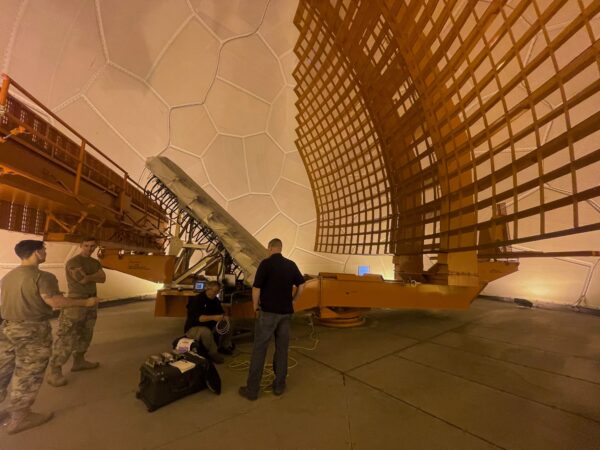
The ARSR-3, built around the Westinghouse Electric Corporation’s AN/FPS-130 radar base, was fielded in the 1970s. This generation significantly extended detection ranges beyond 240 nautical miles and was integrated into joint military-civil air defense networks. The most recent iteration, the ARSR-4, also developed by Westinghouse and commissioned in the 1990s, represented a major technological leap. It was the first radar in the family to offer three-dimensional target tracking, enabling operators to simultaneously measure a target’s range, azimuth, and altitude. This system also provided advanced look-down and clutter rejection capabilities, crucial for modern military operations. In 1996, Northrop Grumman acquired Westinghouse’s radar and electronic warfare programs, consolidating these technologies within its Electronic Systems sector.
While the ARSR-4 network primarily guards the perimeter of the country, along with key locations like Guam and Guantanamo Bay, Cuba, the Federal Aviation Administration (FAA) manages a separate but complementary network of Common Air Route Surveillance Radars (CARSR) for monitoring the U.S. interior. The CARSR system has an estimated range of 200 nautical miles, and its complete replacement rollout, which involved refitting the internal electronics while maintaining existing sites, towers, and mechanical controls, was concluded in 2015.
The strategic importance of the ARSR-4 sites is underscored by their locations. For instance, the ARSR-4 radar at Watford City, N.D., is situated approximately 165 miles from Minot Air Force Base, N.D., home to the 91st Missile Wing, and 263 miles from Malmstrom Air Force Base, Mont. This positioning places hundreds of intercontinental ballistic missile (ICBM) silos within its surveillance range, highlighting its critical role in national defense.
Why This Matters
The Air Force’s initiative to replace the ARSR-4 system carries significant implications across several domains:
National Security and Air Defense:At its core, this modernization effort is crucial for maintaining and enhancing the national security of the United States. The ARSR-4 network provides essential early warning and surveillance capabilities, acting as the first line of defense against potential aerial incursions, whether from conventional aircraft, advanced stealth platforms, or missile threats. A modern, more capable radar system ensures that the U.S. military can effectively detect, track, and respond to threats that may evolve in sophistication and speed, safeguarding vital assets and population centers.
Technological Advancement and Capability Gap:Three decades is a substantial lifespan for any advanced technology, particularly in rapidly evolving fields like radar and electronic warfare. The current ARSR-4, while robust, faces limitations posed by its age and the emergence of new challenges, such as large-scale wind farms that can create radar clutter. Replacing it with a next-generation system will introduce advanced capabilities in target discrimination, clutter rejection, and potentially multi-spectral detection, ensuring the Air Force can maintain a technological edge against adversaries who are continuously developing more sophisticated air and missile platforms.
Protection of Strategic Assets:The strategic placement of ARSR-4 sites, such as the one near ICBM fields in North Dakota and Montana, underscores their role in protecting critical national defense assets. A modernized radar system will enhance the ability to monitor and protect these high-value targets, contributing directly to the nation’s nuclear deterrent and overall strategic stability.
Economic Impact and Defense Industry:The replacement program represents a significant government investment and will likely result in substantial contracts for defense contractors and technology firms. This endeavor will stimulate job creation, foster research and development in cutting-edge radar technologies, and contribute to the health of the U.S. defense industrial base, promoting innovation and competitiveness within the sector.
Integration with Broader Defense Networks:Modern radar systems are not standalone units but integral parts of larger, interconnected air defense and command-and-control networks. A new ARSR system would need to seamlessly integrate with existing and future military and civilian air traffic control systems, improving data sharing, situational awareness, and collaborative responses across various agencies and branches of service. This ensures a unified and coherent picture of the airspace for both defense and civil aviation purposes.
A Larger Network
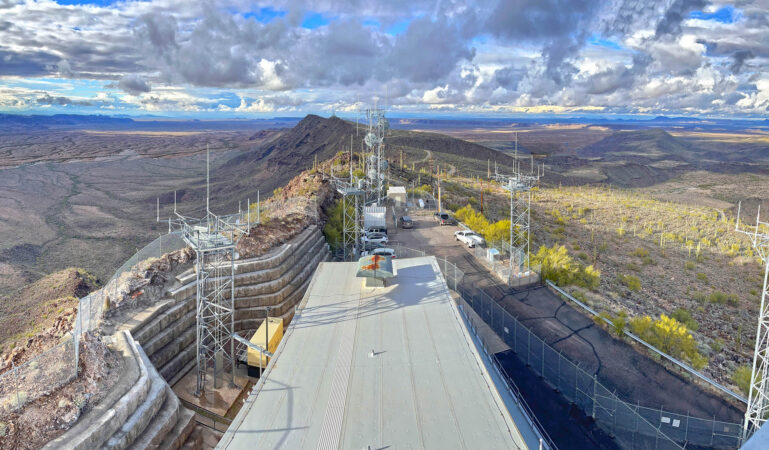
The North American Aerospace Defense Command (NORAD) and its component forces are currently engaged in a comprehensive, multi-billion-dollar modernization effort to enhance aerospace and missile defense capabilities across the continent. This expansive initiative aims to counter evolving global threats by integrating a diverse array of radar and surveillance systems, each designed to detect, track, and identify potential incursions into North American airspace and monitor objects in space. The image above shows personnel conducting a technical inspection at the Ajo Defense Program Facility in Arizona, highlighting a critical ground-based component of this intricate network.
At the foundational level, systems like the ARSR-4 (Air Route Surveillance Radar) are integral pieces of this larger detection network. While the ARSR-4 primarily serves air traffic control functions, monitoring civilian aircraft at high altitudes, its data is integrated into NORAD’s overarching surveillance picture. This integration allows it to contribute to a comprehensive understanding of air activity, helping to differentiate routine flights from potential unknown or hostile contacts, thus bolstering the initial layer of defense.
For surveillance in the challenging extreme cold weather conditions of the Arctic, a vital region for North American defense, the U.S. Air Force and NORAD rely on the AN/FPS-117 and the AN/Transportable Phased Array System-77. These robust systems, known collectively as the Northern Warning System (NWS), are specifically engineered to operate in harsh environments, providing detection capabilities out to approximately 250 nautical miles. They form a crucial northern perimeter, offering early warning against air-breathing threats approaching from polar directions.
Beyond atmospheric threats, the U.S. Space Force plays a critical role in monitoring ballistic missiles and objects in orbit. The AN/Frequency Precision and Quantization-16 Perimeter Acquisition Radar Attack Characterization System (PARCS) is a key asset in this domain, capable of tracking missiles and precisely identifying space objects out to approximately 2,000 miles. Complementing PARCS, the Space Force also operates the AN/FPS-108 COBRA DANE radar. Located on Shemya Island, Alaska, COBRA DANE is particularly suited for tracking ballistic missiles over similar ranges (up to 2,000 miles) and monitoring high-altitude space objects, extending its reach to roughly 25,000 miles. These systems provide essential early warning and detailed data for both missile defense and space domain awareness.
Further extending the nation’s vigilant gaze into deep space, the Space Force’s 20th Space Surveillance Squadron, based at Eglin Air Force Base, Florida, operates the powerful AN/FPS-85 Phased Array Radar. This radar possesses the capability to track objects beyond 22,000 miles, enabling comprehensive monitoring of satellites in geosynchronous orbit and other distant space assets. The combined efforts of these Space Force systems are essential for maintaining a detailed and current understanding of the space environment, which is vital for national security and the protection of critical orbital infrastructure.
Modernizing for Emerging Threats: Hypersonics and Beyond
The contemporary geopolitical landscape, characterized by the proliferation of advanced weapons technologies, has necessitated a significant overhaul of North American defense systems. A primary catalyst for this modernization is the emergence of hypersonic missiles, which present a unique challenge due to their extreme speed (Mach 5 and above), unpredictable maneuverability, and ability to fly at lower altitudes than traditional ballistic missiles. To address this evolving threat, NORAD is actively developing and deploying high-frequency systems, specifically over-the-horizon radar (OTHR) networks, designed to detect these formidable weapons from extended ranges.
The Homeland Defense OTHR project, which commenced in 2022, represents a substantial bilateral investment and collaborative effort between the United States and Canada. The U.S. has allocated an estimated $6-7 billion to this critical project, with Canada contributing approximately $3.1 billion. This joint venture aims to establish a robust radar capability that can detect threats at much greater distances than conventional line-of-sight radars. Initial Operating Capability (IOC), signifying the system’s foundational functionality, is projected for 2028-2029, with Full Operational Capability (FOC), indicating complete deployment and integration, targeted for 2031.
In parallel with the Homeland Defense OTHR, Canada is independently advancing its Polar OTHR project, with an estimated cost of up to $3.5 billion. This initiative is an integral part of Canada’s broader $38.6 billion commitment to modernize its portion of NORAD’s defense infrastructure. The Polar OTHR is currently in the site procurement phase, with operational deployment anticipated by 2029 and FOC expected by 2033. When fully operational, these OTHR systems will provide unparalleled long-range detection capabilities, particularly crucial for monitoring approaches over the vast and strategically significant Arctic region.
Further bolstering the Northern Warning System, the U.S. is leading the “Crossbow” modernization project. This initiative, estimated to cost up to $6 billion, is focused on upgrading the existing NWS infrastructure to enhance its resilience, extend its detection range, and improve its ability to integrate with newer defense systems. The rollout of these upgraded components is expected to continue until 2028, with the entire “Crossbow” project concluding by 2035.
Concurrently, the High-Altitude and Mobile Near-Space Surveillance Systems (HAMS) project is developing flexible and adaptable surveillance platforms. With a contract ceiling of $4.2 billion, HAMS is currently undergoing field testing and initial low-altitude deployments. This innovative system is designed to provide dynamic and adaptable coverage, capable of filling potential surveillance gaps and offering surge capacity for various defense scenarios. Full integration into a cloud-based command-and-control network is anticipated by 2028, which will enable seamless data sharing and rapid response capabilities across the entire North American defense architecture.
Why This Matters
The extensive and costly modernization efforts currently underway for North American aerospace and missile defense systems are profoundly significant, with far-reaching implications for national security, international relations, and technological advancement:
National Security and Deterrence:The paramount importance of this modernization lies in its direct impact on protecting the homelands of both the United States and Canada. By continuously upgrading and expanding surveillance and detection capabilities, NORAD aims to maintain a credible deterrent against potential adversaries. The ability to detect and track emerging threats—ranging from conventional aircraft to advanced hypersonic missiles and sophisticated space objects—at the earliest possible moment provides critical time for decision-makers to assess situations and formulate appropriate responses. This enhanced situational awareness directly contributes to national stability and security by minimizing vulnerabilities.
Addressing Evolving Threats:The global security landscape is in a constant state of flux, characterized by rapid advancements in military technology. The rise of sophisticated weaponry, particularly hypersonic missiles, which combine extreme speed with unpredictable maneuverability, poses a significant challenge to traditional defense systems. This modernization directly addresses these new realities, ensuring that North America is equipped to counter threats that could potentially bypass older detection methods. Similarly, enhanced space surveillance is becoming increasingly vital given the growing militarization of space and the proliferation of satellites by various nations, necessitating constant vigilance to protect critical orbital assets.
Strengthening the U.S.-Canada Alliance:The substantial joint investment and coordinated development of advanced systems, such as the Homeland Defense OTHR, underscore the enduring and critical defense relationship between the United States and Canada. NORAD itself stands as a testament to this deep-rooted alliance, and these new projects further solidify their commitment to mutual defense. This unparalleled level of cooperation serves as a powerful model for international security partnerships and significantly enhances the collective defense posture of North America on the global stage.
Technological Advancement and Innovation:These multi-billion-dollar projects are not merely about acquiring new equipment; they are actively pushing the boundaries of radar technology, advanced data processing, and integrated network solutions. From developing radars capable of sustained operation in extreme Arctic conditions to creating sophisticated cloud-based command-and-control networks for real-time threat assessment, these modernization efforts foster significant innovation. This not only enhances immediate defense capabilities but also drives broader technological advancements that can have applications in civilian technology and scientific research.
Economic Impact and Strategic Investment:The billions of dollars allocated to these programs represent a substantial economic investment for both nations. While costly, these expenditures are considered essential for national defense, stimulating various industries, creating skilled jobs, and ensuring a robust defense industrial base. They reflect a strategic decision by both governments to prioritize security in an increasingly complex global environment, demonstrating a long-term commitment to safeguarding their territories, populations, and critical infrastructure.
Ultimately, the ongoing overhaul of North American aerospace and missile defense systems represents more than just an upgrade of military hardware; it is a fundamental retooling to secure the continent against a new generation of sophisticated threats, ensuring resilience, continuous vigilance, and robust preparedness in an increasingly uncertain world.