
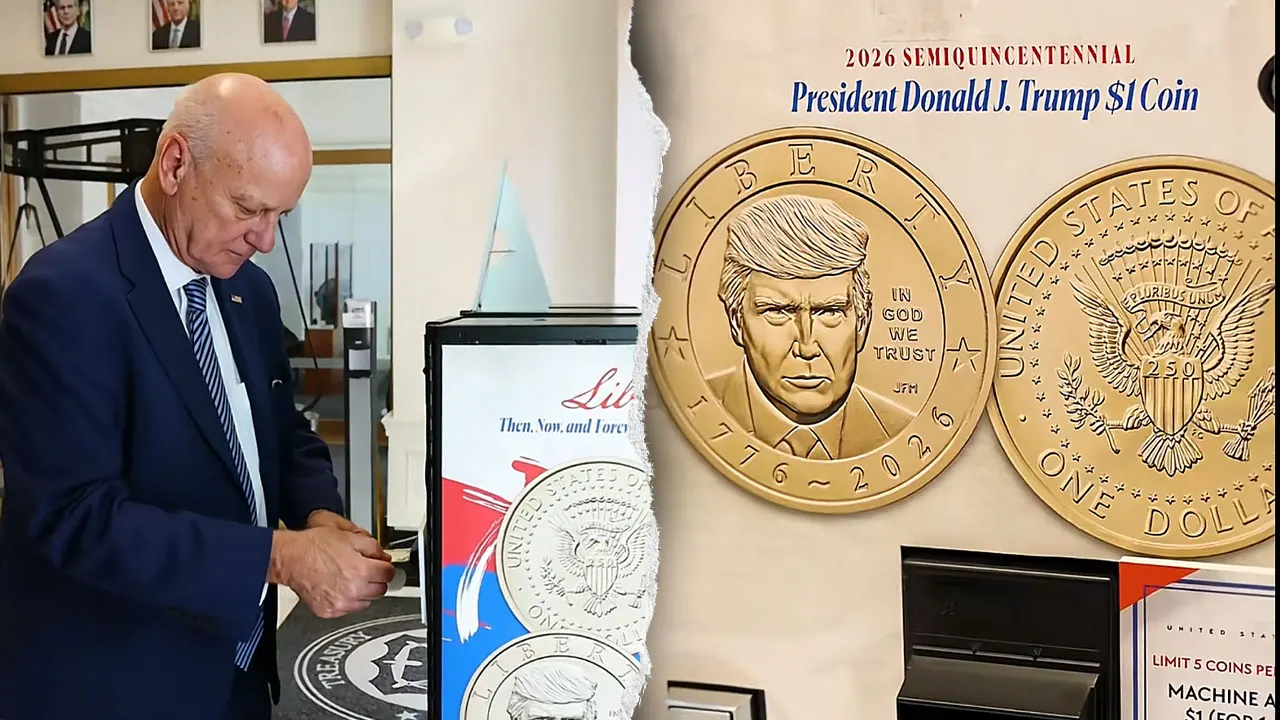
Brandon Beach encourages Americans to obtain the coins at banks next month and use them to make purchases at coffee shops (Credit: @ustreasury).
**Key Takeaways:**
1. **Collector’s Item vs. Circulation Challenge:** The newly minted Donald Trump dollar coins, initially sold at a significant premium by the U.S. Mint as collector’s items, are now being promoted for general circulation by the Treasury Department in a highly politicized manner, raising questions about their practical adoption and the Mint’s revenue strategy.
2. **Unconventional Treasury Communication:** A U.S. Treasury official’s use of TikTok to issue a “challenge” to use these coins in “liberal coffee shops” represents an unprecedented and politically charged public relations approach for a federal financial institution, potentially blurring the lines between monetary policy communication and political messaging.
3. **Uncertainty in Distribution and Value:** Despite the call for broader use, there remains a lack of clarity regarding how and when these coins will be available at commercial banks, and crucially, whether they will be obtainable at face value, which is essential for their widespread acceptance as legal tender rather than a novelty item.
In a move that intertwines numismatic novelty with political provocation, the U.S. Treasury Department is actively encouraging Americans to deploy newly minted dollar coins featuring the likeness of former President Donald Trump into everyday commerce, specifically targeting businesses perceived as “liberal.” This initiative, disseminated via a TikTok video from a U.S. Treasury official, introduces a unique dimension to the circulation of U.S. currency, prompting market observers to consider its implications for consumer behavior, the numismatic market, and the public’s perception of federal financial institutions.
U.S. Treasurer Brandon Beach spearheaded the call in a widely shared TikTok clip posted Wednesday, urging citizens to acquire rolls of these dollar coins from banks next month. His directive was explicit and politically charged: “This is the dollar coin. It will be in the banks next month,” Beach stated, removing coins from a bank roll. “And I want to challenge you to go get a roll of dollar coins next month. And then I want you to go to your favorite liberal coffee shop with your top dollar coins. Buy a cup of coffee. Watch their heads explode. They will not like it. But I love it. And I love this president. And I love this coin.”
This challenge, originating from the Treasury Department’s official TikTok account, follows the U.S. Mint’s September launch of the Trump-themed currency. These coins are part of the nation’s 250th anniversary commemorations, ostensibly designed to honor a former president as per the Presidential $1 Coin Program. However, their initial marketing and pricing strategy firmly positioned them within the collector’s market.
TREASURY UNVEILS $1 GOLD COIN WITH TRUMP’S IMAGE ON FRONT
The U.S. Mint is now offering these $1 Trump coins for sale.(United States Mint on X)
The Trump dollar coins went on sale through the U.S. Mint in September, with a roll of 25 priced at $61 and a bag of 100 selling for $154.50. This pricing structure, significantly above their face value, highlights the U.S. Mint’s dual role: producing currency for circulation and generating revenue through the sale of collectible items. The substantial premium for these initial sales suggests a primary target audience of numismatists and political memorabilia collectors, rather than the general public seeking transactional currency. The difference between face value and sale price contributes to seigniorage, a profit made by a government from issuing currency, particularly pronounced in the collector market.
Despite the premium pricing for collectors, the Mint also indicated the coins could be used for everyday transactions, positioning them as legal tender. “These coins are also in circulation, so check your pocket change,” the U.S. Mint wrote in a September post on X, a statement that now appears to lay groundwork for the Treasury’s current push for broader circulation.
TRUMP-EMBLAZONED $1 COINS GO ON SALE — AND THE MINT IS CHARGING A MAJOR MARK-UP
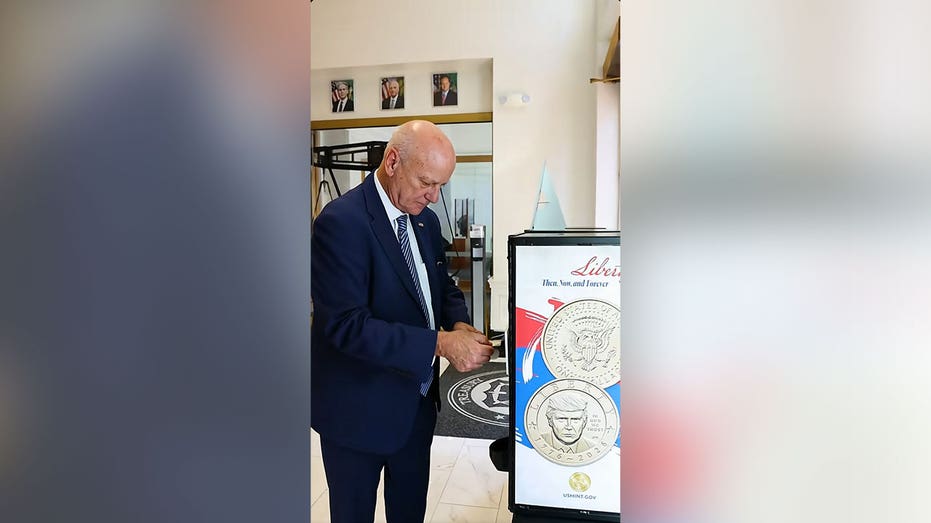
U.S. Treasurer Brandon Beach stands beside a display featuring President Donald Trump’s new dollar coin in a Treasury Department TikTok video.(@ustreasury / Unknown)
The U.S. has a checkered history with dollar coins in circulation. Previous attempts, such as the Susan B. Anthony dollar, the Sacagawea dollar, and the subsequent Presidential $1 Coin Program (which the Trump coin falls under), have largely failed to gain widespread acceptance in daily transactions. Americans have historically preferred the convenience of dollar bills, leading to dollar coins primarily serving as collector’s items or being used in limited applications like vending machines or public transportation. Beach’s announcement of availability at banks next month suggests a renewed effort to circumvent this historical hurdle, potentially pushing the coins into the mainstream financial ecosystem.
The coins feature Trump’s likeness beneath the word “LIBERTY,” with the years “1776 ~ 2026” below his portrait and “IN GOD WE TRUST” alongside it, commemorating America’s 250th anniversary. Produced in Philadelphia with circulating finishes, the Mint’s product description confirmed they had not been placed into general circulation prior to their premium sale, yet retain their status as legal tender. This distinction is crucial: while the coin technically holds $1 of value, its market value as a collectible has been significantly higher, complicating its role as transactional currency.
However, the practicalities of this challenge present several questions for market participants. Beach’s announcement that the coins will be available at banks next month suggests Americans could have another way to obtain the currency beyond purchasing it directly from the Mint at a premium. Yet, the Treasury Department has not specified which banks will carry the coins, their distribution schedule, or, most critically, whether they will be available at face value. Obtaining them at face value is a prerequisite for widespread adoption; otherwise, consumers would be effectively paying a premium for a transactional medium, which is economically irrational for daily purchases.
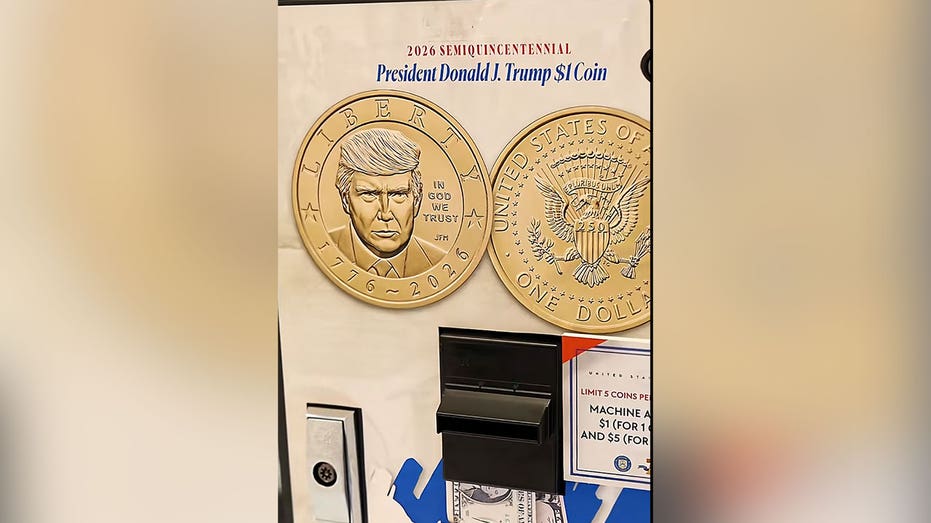
A dollar coin exchange machine featured in a Treasury Department TikTok video displays the front and back of the 2026 Trump dollar coin, commemorating America’s 250th anniversary. (@ustreasury / Unknown)
FOX Business reached out to the Treasury Department for clarification on the coins’ availability at commercial banks, distribution schedule, and whether customers will be able to obtain them at face value. The answers to these questions will significantly dictate the success of this push, determining whether these coins remain primarily a political symbol and collector’s item or truly become a circulating medium of exchange.
The Treasury Department, traditionally a pillar of financial stability and neutrality, engaging in such a politically charged public relations campaign via social media is a notable departure from historical norms. It introduces an element of politicization into the very fabric of national currency, which could have subtle but long-term implications for public trust in financial institutions.
CLICK HERE TO GET FOX BUSINESS ON THE GO
Market Impact:
The market impact of the Trump dollar coin initiative is likely to be multifaceted, though perhaps limited in macro-economic terms. For the numismatic market, the Treasury’s promotion could stimulate increased collector interest, potentially driving secondary market prices for these specific issues, especially if future availability at face value remains limited or perceived as such. Retail businesses, particularly the “liberal coffee shops” targeted by the challenge, might face minor operational adjustments or, more likely, symbolic interactions. While the practical use of dollar coins remains low given the prevalence of digital payments and dollar bills, any increase could marginally affect cash handling procedures. More broadly, the politicization of legal tender by a federal financial agency could subtly influence public perception of currency as a neutral medium of exchange, possibly contributing to a broader trend of institutional trust erosion if similar strategies become common. Furthermore, this initiative highlights the U.S. Mint’s ongoing efforts to monetize collectible coinage and raises questions about the efficacy and intent behind previous unsuccessful attempts to boost dollar coin circulation. Ultimately, the success of this “challenge” hinges on the Treasury’s ability to ensure widespread, face-value availability, a factor still awaiting clear articulation.