
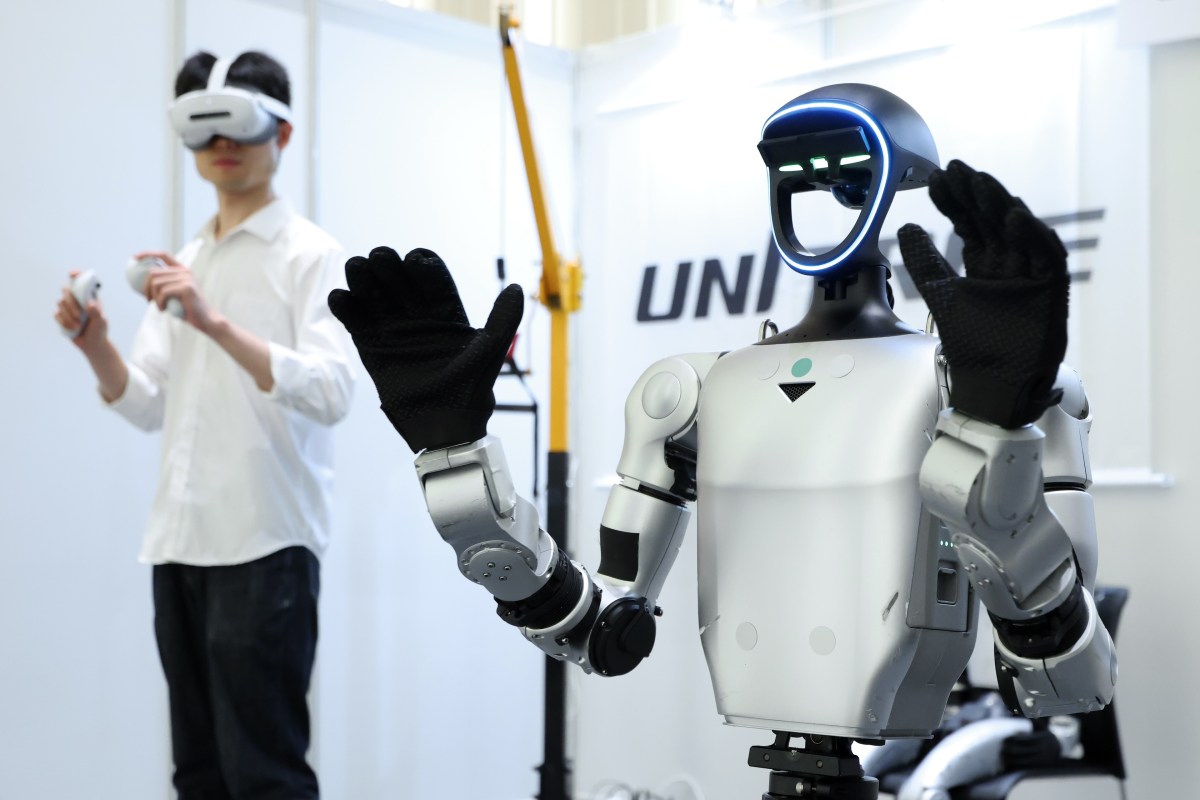
Robotics: Are We in the “Lego Era” or on the Brink of a “ChatGPT Moment”? An NVIDIA Alum Weighs In
The world of robotics stands at a fascinating crossroads, grappling with a fundamental question: Is the industry poised for a revolutionary “ChatGPT moment”—a sudden, transformative breakthrough driven by a general foundation model—or is it still in a foundational “Lego era,” patiently assembling the basic building blocks for future innovation? This critical debate, with significant implications for development and investment, was recently brought to light by Amulya Vishwanath, a veteran of NVIDIA’s robotics platforms and now an early-stage venture capitalist.
Key Takeaways:
- “Lego Era” vs. “ChatGPT Moment”:Amulya Vishwanath posits that robotics is currently in its foundational “Lego era,” focusing on perfecting basic components, a view that contrasts sharply with expectations of an imminent, general AI-driven “ChatGPT moment” for robotics.
- Strategic Investment in Physical AI:As the founder of Techable VC, Vishwanath leverages her deep NVIDIA experience to invest “first checks” in physical AI, targeting foundational innovations across robotics, materials science, and life sciences, aligning with her “Lego era” thesis.
- Building Blocks Before Breakthroughs:Her investment strategy emphasizes the crucial need for robust, modular hardware, software, and safety standards as the essential groundwork before a truly generalized and widely applicable robotics AI can emerge.
Vishwanath, who dedicated seven impactful years to leading product marketing for NVIDIA’s robotics platforms, offers a compelling perspective: robotics, she argues, is currently mired in its “Lego era.” Her analogy paints a vivid picture of an industry where the fundamental components—everything from precision actuators and dexterous robotic hands to sophisticated software architectures and universally accepted safety standards—are still under active development, refinement, and even reinvention. It’s a period of painstaking construction, where each brick must be perfectly crafted before complex structures can reliably rise.
This grounded viewpoint stands in direct opposition to a burgeoning school of thought that anticipates a rapid, transformative shift. Many believe that robotics, empowered by a singular, overarching general foundation model, is on the precipice of its own “ChatGPT moment.” This refers to that pivotal day in late 2022 when OpenAI unveiled its shockingly capable chatbot, fundamentally altering perceptions of AI’s immediate potential. Proponents of this view, such as Pim de Witte, CEO of General Intuition, have articulated to TechCrunch’s Equity podcast that such a single, powerful foundation model would render much of today’s specialized robotics work redundant, ushering in an era of unprecedented automation and adaptability.
The “Lego Era” Unpacked: Foundations First
To truly appreciate Vishwanath’s “Lego era” analogy, one must delve into the multifaceted challenges still facing the robotics sector. Unlike the largely software-driven realm of large language models, physical AI operates in the tangible world, necessitating robust and reliable hardware at its core. Basic building blocks like advanced actuators that can offer both strength and precision, robotic hands capable of delicate manipulation, and locomotion systems adaptable to diverse terrains are far from standardized or perfected.
Beyond hardware, the software landscape remains fragmented. Developing universal programming interfaces, robust simulation environments, and adaptable perception systems that can consistently interpret complex real-world data are monumental tasks. Furthermore, the integration of AI into physical systems introduces complex safety and ethical considerations, requiring the establishment of stringent and widely adopted standards—a foundational “brick” that is still very much under construction. Vishwanath’s perspective suggests that focusing efforts on these granular improvements is not merely incremental but essential, providing the stable bedrock upon which truly intelligent and versatile robots can eventually operate. This period of foundational work, while perhaps less glamorous than talk of AI singularity, is crucial for long-term, sustainable progress.
The Allure of a “ChatGPT Moment” for Robotics
Conversely, the vision of a “ChatGPT moment” for robotics is incredibly compelling. Imagine a single AI model capable of understanding, learning, and performing a vast array of physical tasks without extensive retraining or specialized programming. Such a model could theoretically democratize robotics, making sophisticated automation accessible to a much broader range of industries and applications. Pim de Witte’s comments on the Equity podcast earlier this year encapsulate this hope, suggesting that a general foundation model would streamline development by abstracting away much of the underlying complexity, allowing robots to adapt to new environments and tasks with unprecedented speed and efficiency.
The appeal is understandable: it promises to leapfrog years of painstaking, specialized development by providing a universal intelligence layer. This could mean robots that teach themselves new skills, generalize learned behaviors across different environments, and even communicate seamlessly with humans and other machines. It’s a future where a robot isn’t just programmed to perform one specific action but can dynamically problem-solve and execute a multitude of commands based on high-level instructions, much like how ChatGPT can generate diverse text outputs from a simple prompt. However, Vishwanath’s stance implies that while this future is aspirational, it might be premature to expect it without the robust underlying infrastructure that the “Lego era” is building.
From NVIDIA to Early-Stage VC: Amulya Vishwanath’s Strategic Pivot
Amulya Vishwanath’s journey from a senior executive at a tech giant like NVIDIA to the founder and managing partner of her own early-stage venture capital firm, Techable VC, offers crucial insights into her investment philosophy. Her seven years at NVIDIA, a company at the forefront of AI and accelerated computing, particularly in the robotics space, provided her with an unparalleled vantage point. She witnessed firsthand the intricate challenges and immense potential within the sector, giving her a deep, practical understanding of what it takes to build and scale robotics technologies. This experience makes her assessment of the industry’s current state particularly weighty.
Her transition also marks a significant milestone, as she is noted as one of the first women executives to spin out of NVIDIA to launch an independent early-stage firm. This move highlights not only her entrepreneurial drive but also her commitment to shaping the future of physical AI from the ground up.
At Techable VC, Vishwanath is not chasing the next flashy AI integration; instead, she’s methodically placing “first checks” into startups focused on “physical AI across robotics, materials science, and life sciences.” This investment thesis is a direct reflection of her “Lego era” belief. She’s looking for the companies that are meticulously crafting those foundational bricks: novel materials that enhance robot dexterity and durability, advanced sensing technologies that improve perception, more efficient power systems, and innovative biological interfaces that blur the lines between machines and life. Her firm is betting on the long game, recognizing that breakthroughs in these core areas are what will ultimately enable the sophisticated, generalized robotics of tomorrow.
Navigating the Investment Landscape in Physical AI
Investing in physical AI is inherently different from pure software plays. It often requires significant capital for research and development, longer product cycles, and the navigation of complex regulatory and safety environments. Vishwanath’s background provides her with a unique lens to evaluate these opportunities, allowing her to identify genuine innovation amidst the hype. She understands the nuances of integrating hardware and software, the challenges of real-world deployment, and the market potential for robust, reliable components.
Her approach suggests a strategic patience – recognizing that while the “ChatGPT moment” may eventually arrive, the groundwork being laid today by focused, foundational innovators will be indispensable. These “Lego builders” are creating the infrastructure, the tools, and the basic capabilities that will support any future generalized AI model, ensuring it can interact effectively and safely with the physical world.
The discussion on TechCrunch’s Equity podcast, hosted by Dominic-Madori Davis, provided a valuable platform for Vishwanath to articulate this nuanced vision. It underscores the importance of diverse perspectives in the tech investment landscape, particularly from individuals with deep operational experience within the very fields they are now funding.
Bottom Line:
While the promise of a “ChatGPT moment” for robotics is a powerful vision, Amulya Vishwanath’s grounded “Lego era” perspective offers a pragmatic and essential counterpoint. Her strategic investments through Techable VC underscore the critical need to cultivate foundational innovations in physical AI, recognizing that the long-term success of generalized robotics hinges on the meticulous construction of robust, reliable, and safe building blocks. The future of robotics, it seems, will be built brick by painstaking brick, even as we dream of the grand architectures to come.
Source:{feed_title}