
British Carrier Strike Group Returns Fifth-Generation Airpower to High North Amidst Escalating Arctic Tensions
PORTSMOUTH, UK – The United Kingdom is poised to project significant military capability into the High North and North Atlantic, as the aircraft carrier HMS Prince of Wales is scheduled to depart Portsmouth on Sunday, October 18. This deployment, part of the second phase of Operation Firecrest, will see British F-35B Lightning II fifth-generation fighter jets operate from the carrier in the challenging Arctic environment, marking a critical return of advanced airpower to a strategically vital region.
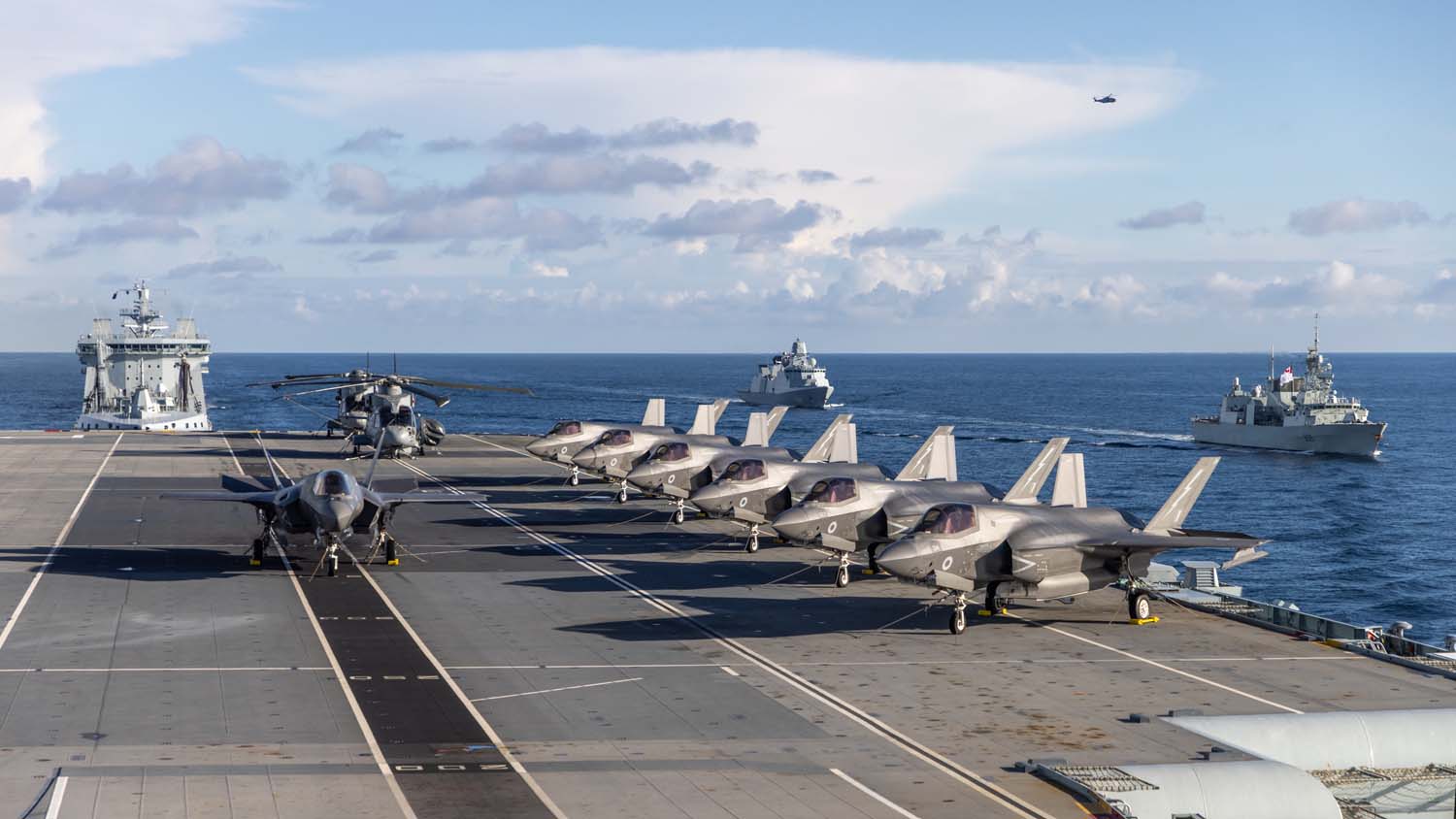
HMS Prince of Wales, one of the Royal Navy’s two Queen Elizabeth-class aircraft carriers, will lead a formidable strike group. Its air wing is central to the deployment’s mission, comprising advanced F-35B jets, Merlin Mk4 Commando transport helicopters, Merlin Mk2 anti-submarine warfare (ASW) helicopters, Wildcat reconnaissance and light attack helicopters, and Malloy drones for various unmanned missions. Accompanying the carrier will be the Type 45 destroyer HMS Dauntless, renowned for its sophisticated air defense capabilities, and more than 1,200 British personnel, underscoring the scale and complexity of the operation.
Louise Sandher-Jones, the Minister for the Armed Forces, emphasized the strategic intent behind the deployment. “The deployment of HMS Prince of Wales and her air wing to the High North and the North Atlantic, operating under NATO leadership, is a clear demonstration of the UK’s commitment to the Alliance and contribution to the enduring security and stability of the North Atlantic,” she stated. This highlights the UK’s dedication to collective defense and its role in reinforcing NATO’s eastern flank, particularly in a region experiencing renewed geopolitical competition.
Commodore Richard Hewitt, who commands the UK Carrier Strike Group staff, articulated the collaborative nature of the mission. “Led by the UK Flagship HMS Prince of Wales, the Strike Group will bring together a range of assets and capabilities, while taking every opportunity to train, operate and integrate with our NATO allies and partners,” Hewitt said. This commitment to interoperability and joint training with allies such as Norway, Denmark, and Germany is a cornerstone of NATO strategy, ensuring that member states can effectively operate together in complex scenarios.
The F-35B Lightning II jets, capable of Short Take-Off and Vertical Landing (STOVL), are flown by a joint force of Royal Navy and Royal Air Force pilots based at RAF Marham. Their deployment to the Arctic presents unique operational challenges that differ significantly from previous exercises in warmer waters, such as those in the Indo-Pacific. The extreme conditions of the High North, including persistent deck icing, corrosive salt spray freezing on critical surfaces, frequent low cloud cover, limited daylight hours during winter months, and a constantly moving sea state, all impose severe demands on aircraft operations. For a STOVL aircraft like the F-35B, landing vertically onto a pitching and rolling deck in such conditions requires exceptional pilot skill and aircraft systems resilience.
Furthermore, maintaining these sophisticated fifth-generation aircraft on an exposed flight deck in sub-zero temperatures presents considerable logistical and engineering hurdles. The harsh environment accelerates the degradation of both human performance and equipment, particularly the F-35B’s sensitive stealth coatings, advanced sensors, and complex avionics. A major objective of this deployment is to rigorously test and prove the resilience of these critical components—the stealth materials, the integrated sensor suites, and the entire logistics chain—under the most arduous operational conditions. This rigorous testing is paramount to ensuring the UK’s capability to project advanced airpower globally, irrespective of environmental extremes.
The strategic backdrop to this deployment is the increasing military presence and assertiveness of Russia in the Arctic. Russia’s Northern Fleet, based on the Kola Peninsula, is a significant naval power capable of projecting influence across the North Atlantic and beyond. The UK government’s recently published Arctic Policy Framework explicitly identifies Russia’s expanded patrols and new capabilities across multiple domains—including submarine, surface, air, and potentially cyber—as a potential threat to Britain, Western Europe, and North America. In response, the same document commits the UK to bolstering its defense contributions in the region, including plans to double the number of troops deployed to Norway to two thousand over the next three years and taking on a role in NATO air policing from Iceland.
Operating under NATO command, the UK Carrier Strike Group will actively contribute to the alliance’s Neptune Strike series of exercises. This series is designed to demonstrate NATO’s ability to integrate high-end naval forces, including carrier strike groups, into complex, multi-domain operations. By working alongside Norwegian, Danish, and German forces, the deployment aims to enhance operational readiness, strengthen interoperability, and improve the collective preparedness of allied nations to respond to contingencies in a region the Royal Navy describes as “increasingly important.” This “importance” stems from melting ice opening new shipping lanes, potential resource extraction, and the region’s critical role in global security architecture.
Beyond its military objectives, HMS Prince of Wales will also serve as a platform for diplomatic engagement. During its deployment, the carrier will host the Atlantic Future Forum and the International Sea Power Conference in Oslo. These high-profile events will bring together defense leaders, industry representatives, and policymakers to discuss pressing issues concerning Euro-Atlantic security, fostering dialogue and strengthening partnerships. The carrier’s presence thus leverages both hard power and soft power, showcasing British capabilities while facilitating crucial international discussions.
The ship is scheduled to depart Portsmouth Naval Base at 17:00 on Sunday, October 18, weather permitting, marking the commencement of a pivotal mission for the Royal Navy and the broader NATO alliance in the High North.
Why This Matters
The deployment of HMS Prince of Wales and its F-35B air wing to the Arctic and North Atlantic carries significant implications across several dimensions:
- Geopolitical Reassertion:This mission represents a clear reassertion of the United Kingdom’s commitment to security in the High North, a region of escalating strategic competition. By projecting advanced military power into this challenging environment, the UK signals its resolve to protect its interests and those of its allies, directly addressing concerns about Russian expansion and influence in the Arctic.
- NATO Deterrence and Cohesion:Operating under NATO command and integrating with allied forces from Norway, Denmark, and Germany, the deployment reinforces the principle of collective defense. It demonstrates NATO’s ability to operate high-end assets in demanding conditions, thereby strengthening deterrence against potential adversaries and reassuring frontline allies of the alliance’s readiness and unity.
- Operational Readiness in Extreme Environments:Successfully operating fifth-generation aircraft and carrier strike groups in the Arctic tests the limits of military technology and human endurance. Proving the resilience of F-35B stealth coatings, advanced sensors, and complex logistics chains in sub-zero temperatures, icing, and rough seas is crucial for ensuring that these capabilities are truly global and can be deployed anywhere, anytime, under any conditions. This enhances the overall operational readiness and credibility of the Royal Navy and Royal Air Force.
- Technological Demonstration and Innovation:The deployment serves as a live demonstration of the F-35B Lightning II’s versatility and the Queen Elizabeth-class carrier’s ability to sustain advanced air operations far from home. It also fosters innovation in maintenance, logistics, and operational procedures for extreme climates, contributing valuable lessons for future military deployments and technological development.
- Strategic Diplomacy and Influence:Hosting high-level forums like the Atlantic Future Forum and the International Sea Power Conference aboard HMS Prince of Wales in Oslo transforms the carrier into a platform for strategic dialogue. This leverages “soft power” alongside military presence, allowing the UK to lead discussions on Euro-Atlantic security, foster international partnerships, and project influence beyond direct military action.
- Future of Arctic Security:As climate change opens new shipping routes and potential access to natural resources in the Arctic, the region’s strategic importance will only grow. This deployment positions the UK and NATO to play a proactive role in shaping the future security architecture of the Arctic, influencing governance, safety, and stability in an increasingly contested domain.