
Unlock the White House Watch newsletter for free
Your guide to what Trump’s second term means for Washington, business and the world
Key Takeaways
- Geopolitical Strategy Meets Energy Markets:Trump’s envoy engages in complex diplomatic maneuvers, directly linking peace efforts and a hostage negotiation to global energy prices, particularly diesel, reflecting an explicit US policy pivot aimed at domestic economic stability ahead of elections.
- Uncertainty for Ukraine’s Economic Future:While discussions aim for Ukraine’s long-term security and post-war reconstruction, escalating tensions between Washington and Kyiv over military aid and strategic strikes introduce significant uncertainty for international investment and the nation’s economic resilience.
- Shifting Sanctions Landscape & European Concerns:The US move to ease sanctions on Russian diesel signals a potential re-evaluation of the global sanctions regime, raising concerns among European allies about energy security, unified pressure on Moscow, and the broader geopolitical risk premium on markets.
In a high-stakes diplomatic play echoing through global commodity markets and geopolitical risk assessments, a Trump envoy has embarked on a dual mission from Norway to Russia. These talks, ostensibly focused on peace and prisoner release, carry profound implications for energy prices, international sanctions efficacy, and the future investment landscape of Eastern Europe, particularly as the US navigates domestic electoral pressures.
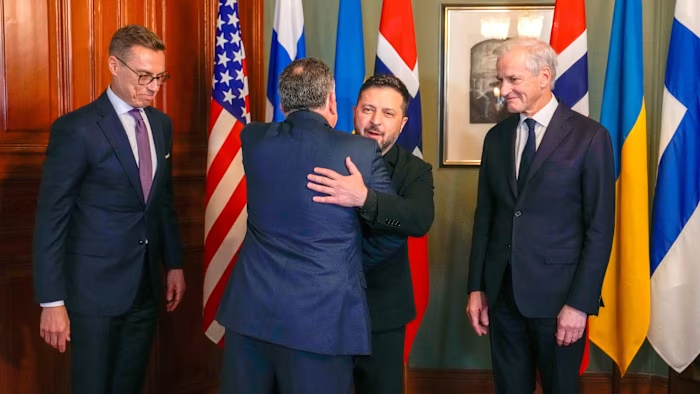
Trump envoy Steve Witkoff’s meeting with Ukrainian President Volodymyr Zelenskyy in Oslo on Tuesday, preceding his travel to Russia for discussions with Vladimir Putin, transcends mere diplomatic theatre. For investors, this mission injects a fresh wave of geopolitical uncertainty, potentially impacting everything from defense sector stocks to sovereign bond yields in Eastern Europe. The very act of engaging directly with Moscow, especially on terms that could alleviate pressure, is being closely watched for its impact on global risk premiums and the stability of the international order.
Prime Minister Jonas Gahr Støre is hosting the Oslo talks, also attended by Finnish President Alexander Stubb and representatives from France, Germany, the UK and Poland, the EU and Nato. This broad European involvement underscores the continent’s deep economic and security stakes in the conflict’s resolution and the potential for shifts in transatlantic alliances. European capital markets, already sensitive to energy supply and geopolitical stability, will be particularly attuned to any signals emerging from these multilateral discussions.
Witkoff’s subsequent journey to Russia, following the Oslo deliberations, aims to present the ideas developed to Putin. A critical component of this visit is the expected effort to secure the release of Stephen Hubbard, a retired American schoolteacher wrongfully imprisoned in Russia for over four years. While primarily a humanitarian issue, the negotiation for Hubbard’s release is steeped in the transactional foreign policy that often accompanies US-Russia relations. Previous hostage deals have frequently involved the exchange of convicted Russians, a precedent that can influence market perception of diplomatic breakthroughs – or breakdowns – and even the future of sanctions architecture. Any deal here could be seen as a precursor to broader engagements, potentially signaling a thaw or a deepening of a transactional foreign policy that prioritizes specific outcomes over broader alliances, with implications for investor confidence in the predictability of international relations.
Speaking to reporters on Tuesday, Russian deputy foreign minister Sergei Ryabkov confirmed that Russia and the US were “in contact” over detained citizens, stating, “Dialogue is ongoing through intelligence channels.” Such acknowledgements, while seemingly procedural, can subtly influence market sentiment by suggesting lines of communication remain open, potentially reducing the tail risk of full diplomatic isolation for Russia, a factor that could impact the Ruble’s stability and the performance of Russian-linked assets.
The growing friction between Presidents Trump and Zelenskyy, described as reaching their “lowest point since their public spat in the Oval Office last year,” is directly tied to market-sensitive issues. Trump’s insistence that Ukraine halt long-range strikes on Russian oil refineries is an explicit attempt to “ease global diesel prices ahead of midterm elections next month.” This stance directly impacts energy futures, particularly for crude oil and refined products. A stable, lower price environment for diesel is a boon for transport and industrial sectors, but Ukraine’s compliance (or lack thereof) creates significant volatility. The implicit trade-off – reduced military aid for energy price stability – reflects a transactional foreign policy that directly influences defense contractors and the broader energy market complex.
“We’ve given a lot to Ukraine. They’ve given nothing to us,” Trump said on Monday, a sentiment that resonates with a segment of the electorate but sends tremors through Kyiv and European capitals, raising concerns about the reliability of future US aid packages and their impact on Ukraine’s long-term economic viability and ability to defend its critical infrastructure, which is crucial for reconstruction investment.
The Oslo talks are expected to build on a meeting in Miami earlier this month, which was attended by US, Ukrainian and European officials, indicating a sustained diplomatic push. The discussions are focused on two parallel tracks, each with profound market implications. The first is centred on securing Ukraine’s long-term future through security guarantees, closer integration with Europe, and a postwar economic plan to support reconstruction and investment. This track, if successful, could unlock significant foreign direct investment (FDI), multilateral aid, and bond issuance opportunities for Ukraine, transforming it into a major reconstruction play for global capital.

The second track seeks to lay the groundwork for a lasting peace with Russia, including proposals for a new European security architecture while exploring opportunities for postwar economic co-operation with Moscow. This highly speculative path could radically alter global trade flows and investment patterns. While fraught with political and ethical challenges, a partial reintegration of Russia into the global economy could shift commodity supply chains and open new markets, albeit under strict conditions and with profound ethical and political considerations for investors.
European officials are also understandably “eager to ensure that they have a voice in the talks,” given their direct economic exposure to the conflict and Russian energy. Trump’s unilateral moves to alleviate pressure on Putin, particularly concerning diesel sanctions, could strain transatlantic relations and complicate Europe’s own energy diversification strategies. This divergence in policy adds another layer of uncertainty for businesses operating across the NATO alliance, potentially impacting trade agreements and investment flows.
Earlier this month, the US president announced that he had struck a deal with Putin to lift sanctions on Russian diesel in a bid to tame energy prices – a seismic event for energy traders and geopolitical analysts alike. This move, coupled with his decision not to impose further sanctions on Moscow’s war economy as mandated by new legislation passed last month, challenges the collective Western sanctions strategy. For European economies still grappling with energy security concerns, this unilateral action by the US raises questions about the consistency of allied policy and could lead to increased volatility in European energy markets. It also signals a potential re-rating of Russian energy assets, albeit with significant political risk.
The unexplained restrictions on the Starlink communications system, which Kyiv said was still active on Monday, crucial for Ukrainian drone operations, introduces a technological and operational dimension with significant market relevance. Beyond its military implications, it underscores the fragility of critical digital infrastructure in conflict zones and the power of private sector entities in global conflicts. For tech investors, it highlights the dual-use nature of advanced technologies and the complex regulatory and geopolitical risks involved in operating such services.
Kyiv’s suggestion that Ukraine would refrain from hitting refineries if Washington agreed to provide additional air-defence interceptors able to shoot down Russian ballistic missiles highlights the desperate strategic choices being made, each with immediate market repercussions on energy security and defense spending. One senior Ukrainian official described the suggestion as a “last option” in the face of US insistence that Kyiv stop hitting energy infrastructure.
Zelenskyy’s complaints on Monday that deliveries of anti-air missiles were being “blocked” underscore the direct link between military aid and Ukraine’s ability to protect its critical infrastructure. For defense contractors, this signals potential instability in orders and delivery schedules, while for Ukraine’s economy, it means continued vulnerability, deterring long-term foreign direct investment. “If you can’t rein in Putin, then give us interceptor missiles so I can protect our energy infrastructure,” Zelenskyy implored, directly linking military hardware to economic resilience.
Additional reporting by Anastasia Stognei in Berlin
Market Impact
The ongoing diplomatic maneuvering and shifting US policy stance will reverberate across several key market segments. Energy markets, particularly crude oil and refined products like diesel, are highly susceptible to rhetoric and actions surrounding Russian supply and Ukrainian targeting, leading to increased price volatility. Defense sector stocks may face headwinds or tailwinds depending on the consistency and quantum of military aid, with shifts in US policy potentially impacting order books. Investor sentiment towards emerging markets, especially within Eastern Europe, will remain largely dictated by the perceived trajectory of the conflict and the stability of any emerging peace framework, directly influencing bond yields and equity valuations. Furthermore, the potential re-evaluation of the global sanctions architecture, especially concerning Russian energy, could significantly impact trade financing, currency valuations (particularly the Euro and Ruble), and the broader geopolitical risk premium that currently weighs on long-term investment decisions. Companies with exposure to international trade and critical supply chains should brace for continued uncertainty and potential policy shifts emanating from these complex, intertwined negotiations.