
A Barrons Roundtable panel discusses Tesla CEO Elon Musks plans to showcase the companys flying car, the Tesla Roadster.
**Key Takeaways:**
* **Innovation Premium vs. Execution Risk:** Tesla’s audacious unveiling of the “flying” Roadster highlights its long-term vision and commitment to pushing technological boundaries, reinforcing the “innovation premium” investors often apply to TSLA. However, the 2028 production target and history of delays introduce significant execution risk and raise questions about capital allocation and investor patience in a maturing EV market.
* **Luxury EV Race Intensifies:** Ferrari CEO Benedetto Vigna’s unusually effusive praise for a direct competitor signals the escalating pressure on even ultra-luxury automakers to embrace radical innovation. This acknowledgment underscores the critical need for heritage brands like Ferrari to balance their iconic legacy with the imperative to electrify and innovate, as evidenced by their own Luce EV strategy.
* **Convergence of Tech & Auto:** The integration of SpaceX-derived thruster technology into the Roadster exemplifies a growing trend of cross-industry technological convergence. This blurring of lines between automotive, aerospace, and software sectors is redefining performance expectations and could shape future investment themes in mobility and advanced engineering.
The automotive world, often seen as a mature, capital-intensive industry, recently witnessed a spectacle that challenged conventional wisdom and sent ripples through financial markets. Tesla CEO Elon Musk’s dramatic showcase of the redesigned Tesla Roadster, complete with “flying” maneuvers and unprecedented acceleration, not only captured public imagination but also drew rare commendation from an unexpected corner: Ferrari CEO Benedetto Vigna. Vigna’s praise underscores a crucial market dynamic – even in established sectors, the capacity for disruptive innovation remains potent, driving both opportunity and competitive pressure.
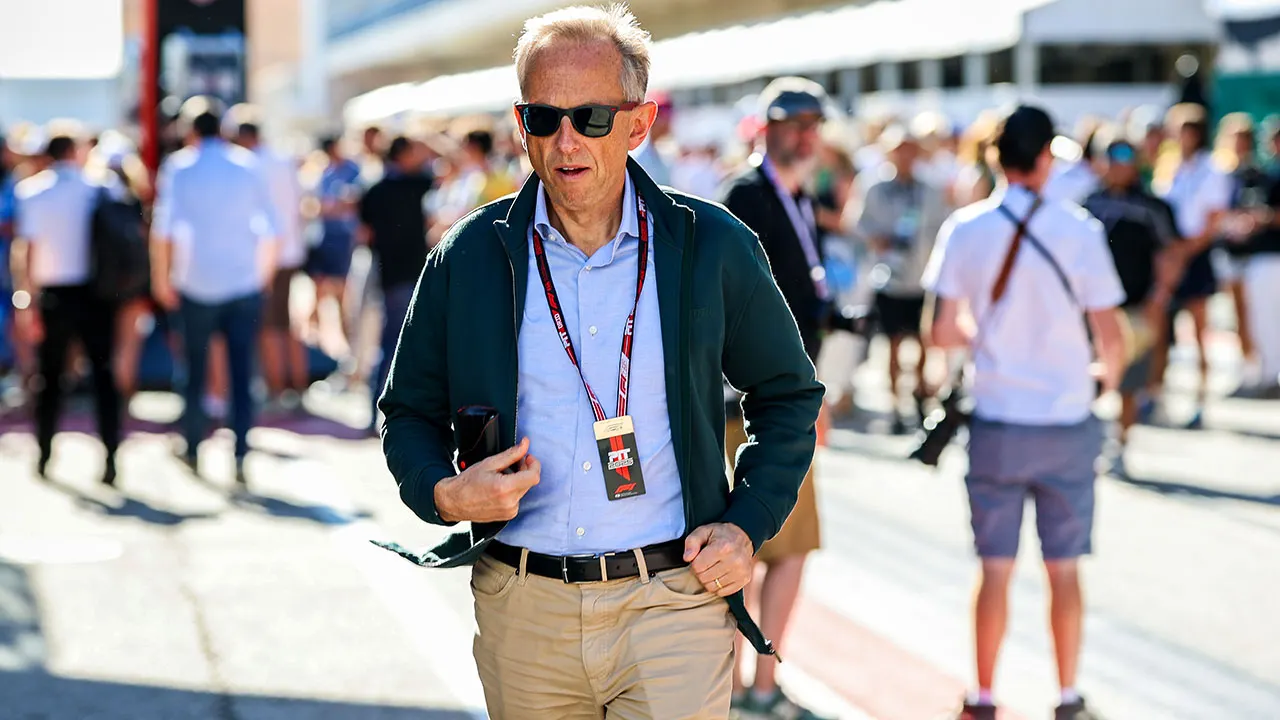
Ferrari CEO Benedetto Vigna on Tuesday offered praise for Tesla’s redesigned Roadster sports car, saying that the next-generation vehicle showed that the auto industry has capacity for daring innovation even in a more mature market. This endorsement, coming from the head of an iconic luxury brand revered for its engineering prowess and exclusivity, is highly significant. It suggests that even traditional automotive powerhouses are closely watching, and perhaps learning from, Tesla’s audacious approach to product development and market presentation. For investors, Vigna’s comments implicitly acknowledge the competitive threat and the high bar set by Tesla in the burgeoning ultra-luxury electric vehicle (EV) segment.
Tesla marked the launch of the Roadster last week with a demonstration that included stunts and airborne maneuvers using thrusters the EV company developed with SpaceX. Tesla CEO Elon Musk, who also leads SpaceX, said production of the Roadster would start in 2028. The integration of aerospace technology, leveraging the synergy between Musk’s two ventures, is a potent narrative for Tesla investors. It frames Tesla not merely as an automaker, but as a vanguard technology company capable of revolutionary engineering feats. This narrative is a key component of Tesla’s often-discussed “innovation premium” in its stock valuation, allowing it to command a higher multiple compared to traditional automakers, even amidst fluctuating profitability and delivery challenges.
Vigna was interviewed at an auto conference organized by Italian magazine Quattroruote and said the Tesla Roadster launch was a 10 out of 10 for technology and 10 out of 10 for presentation. “It certainly shows that also in the automotive world there’s still a lot to be done. We have to keep dreaming,” Vigna said. “As a European, thank you for showing us how that, even in an old world, you can still innovate and dare.” This statement, while gracious, also carries a strategic undertone. For Ferrari, a brand that thrives on exclusivity and performance, acknowledging a competitor’s groundbreaking innovation can be seen as a way to signal its own commitment to pushing boundaries, rather than being left behind. In a market where electrification is a core imperative, demonstrating a forward-looking mindset is crucial for investor confidence.
**TESLA’S NEW ROADSTER MAKES A FLYING DEBUT, HITTING 60 MPH IN UNDER A SECOND**
Ferrari CEO Benedetto Vigna said that innovation can still exist in a maturing auto industry.(Kym Illman/Getty Images)
Tesla’s Roadster was seen flying, performing a midair flip and accelerating from zero to 60 mph in under a second during the presentation, which was held at a SpaceX test site in McGregor, Texas. These unprecedented performance metrics, particularly the rumored sub-1-second 0-60 mph time and the “flying” capability, are designed to generate immense buzz and solidify Tesla’s image as a leader in advanced mobility. For investors, such spectacles often translate into heightened brand perception and potential for future growth, even if the practical applications of such extreme features are niche.
Tesla shares initially rose following the unveiling of the Roadster, though financial analysts cautioned that deliveries are still off into the future after the model had faced years of delays. This dichotomy is critical for market participants. While the immediate “wow” factor can drive short-term price movements, seasoned investors will focus on execution risk. The Roadster’s history, with a prototype first revealed in 2017 and initial delivery promises for 2020, followed by the new 2028 target, highlights Tesla’s recurring challenge of translating ambitious concepts into timely mass production. Such delays can impact future revenue streams, tie up capital, and erode investor confidence if not managed effectively.
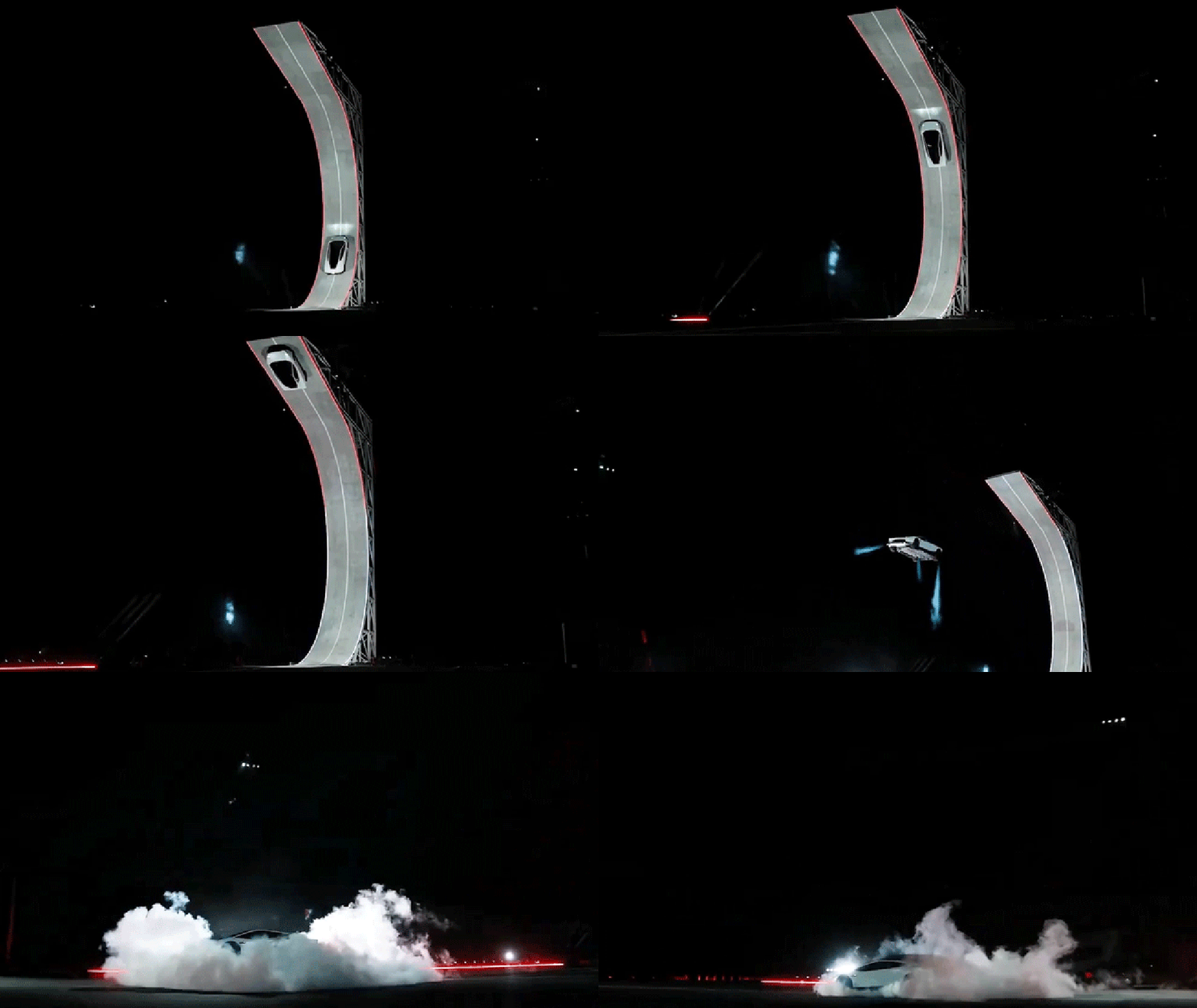
Tesla performed aerial stunts using the Roadster’s thrusters at the unveiling.(Tesla/X)
The Musk-led automaker is allowing interested customers to reserve variants of the Roadster, with a $50,000 payment for the “Performance” version and a $250,000 payment for the “Thrust” version that includes “acceleration thrusters.” An invite-only “Rocket” variant is a single-seat model with a “full flight system.” These reservation payments, while not a primary source of capital for a company of Tesla’s size, provide an interest-free funding mechanism and a strong indicator of demand for ultra-high-end, futuristic vehicles. For financial analysts, these deposits offer a glimpse into the potential revenue pipeline for a niche, high-margin product several years down the line, provided production targets are met.
Ferrari, for its part, is navigating its own delicate transition into the EV era. The company unveiled the Luce, its first fully electric vehicle, in May and has been trying to win over skeptics after shares fell following the announcement. This contrasting market reaction to Ferrari’s EV launch versus Tesla’s Roadster showcase highlights the unique challenges heritage luxury brands face. Investors in Ferrari are not just buying into performance; they are investing in an exclusive brand identity, sound, and a driving experience meticulously crafted over decades. The electrification of such a brand risks alienating purists while simultaneously needing to attract new, tech-savvy luxury buyers. The initial dip in Ferrari’s stock (RACE) after the Luce announcement signals investor apprehension about this balance, making Vigna’s emphasis on “daring innovation” even more poignant.
**FERRARI’S FIRST EV SELLS FOR STAGGERING $40M AT MONTEREY AUCTION**
| Ticker | Security | Last | Change | Change % |
|---|---|---|---|---|
| RACE | FERRARI NV | 400.24 | +5.99 | +1.52% |
| TSLA | TESLA INC. | 373.71 | +5.65 | +1.54% |
The Luce was developed in a collaboration with former Apple design chief Jony Ive and the team from his LoveFrom studio. This strategic partnership with a design icon underscores Ferrari’s understanding that the luxury EV market requires more than just performance; it demands groundbreaking design and user experience. Vigna emphasized that risk-taking is necessary, and that outside influence was vital to Ferrari’s development of Luce. “If we had worked on our own, we wouldn’t have done what we did. In other words, we tackled a whole series of questions and came up with some answers prompted by people who were observing us from the outside,” Vigna said. For investors, this signals a willingness to adapt and innovate, crucial for long-term growth in a rapidly evolving automotive landscape. The successful sale of a Ferrari EV for an astonishing $40 million at auction, while an outlier, demonstrates the underlying demand for exclusive electric vehicles within the ultra-luxury segment, a segment both Tesla and Ferrari are vying for.
**CLICK HERE TO DOWNLOAD THE FOX NEWS APP**
*Reuters contributed to this report.*
**Market Impact:**
The unveiling of Tesla’s Roadster, coupled with Ferrari’s CEO’s surprising approbation, has multifaceted implications for the automotive and broader technology markets. For Tesla (TSLA), the event reinforces its status as a leading innovator, potentially sustaining its growth-stock valuation, but the distant 2028 production target will keep investor focus on near-term profitability and delivery metrics for its existing models. For Ferrari (RACE), Vigna’s comments can be interpreted as a strategic acknowledgment of the competitive landscape, signaling the necessity for all luxury brands to push boundaries in electrification. This dynamic will likely intensify the race among high-end automakers to develop compelling EV offerings, driving further R&D expenditure and strategic partnerships. Moreover, the integration of aerospace technology into a consumer vehicle highlights a burgeoning trend of cross-industry tech transfer, opening new investment avenues in advanced materials, propulsion systems, and software platforms across mobility sectors. Ultimately, the market will continue to scrutinize the ability of both visionary concepts and heritage brands to deliver on their ambitious electrification strategies, balancing innovation with execution to capture long-term shareholder value.